


Compared to their muscular counterparts on the front of the thigh, the quadriceps, the hamstrings usually receive far less attention. This imbalance is evident both in the empirical research literature and on the gym floor. In typical training environments, most lifters perform plenty of squats, leg presses, and lunges—compound movements that aggressively target the quads whether an individual intends it or not. The hamstrings, on the other hand, rarely accumulate that same automatic training volume. Unless athletes deliberately program targeted exercises like leg curls and hip hinges, the posterior thigh muscles often end up treated as an afterthought in a comprehensive physical preparation routine.
Within the realm of exercise science, the quads also tend to be significantly easier to study. Most individuals store less subcutaneous fat over the anterior compartment of the thigh, and the individual heads of the quadriceps are far easier to image using diagnostic ultrasound because they consistently sit closer to the skin than the deeper, more complex architecture of the hamstrings.
However, a robust body of research regarding hamstring training does exist, even if many recreational lifters and general fitness enthusiasts remain unaware of it. Much of this academic progress can be credited to the field of strength and conditioning. Because hamstring strains are notoriously prevalent and debilitating in sports, targeted hamstring training—specifically the implementation of Nordic curls—has received heightened scientific attention as a clinical and practical intervention designed to reduce the risk of acute strain injuries. Looking closely at the current literature reveals vital insights into optimal exercise selection for maximizing hamstring hypertrophy.
To understand why exercise variation matters so much for the back of the leg, a brief anatomical review is necessary. The hamstrings are not a single, uniform muscle, but rather a complex group comprised of four distinct heads: the long and short heads of the biceps femoris, the semitendinosus, and the semimembranosus. All four heads share the primary mechanical function of flexing the knee joint, a motion mirrored during a standard leg curl. With the sole exception of the short head of the biceps femoris, the remaining hamstring heads also cross the hip joint, meaning they actively assist in extending the hips during movements like deadlifts and bridges.
Given this biarticular nature, logical exercise selection for the hamstrings inherently demands two distinct mechanical categories: knee flexion movements, such as leg curls, and hip extension movements, such as hip hinges. Crucially, however, common compound leg exercises like standard squats and heavy leg presses are likely not effective options for stimulating meaningful hamstring growth.

This mechanical limitation has been illustrated clearly in recent clinical investigations. One recent study directly compared the barbell hip thrust to the heavy barbell squat, finding that neither movement produced substantial hypertrophy in the hamstring muscle group. A second study compared standard squats performed to 90 degrees of knee flexion against deeper squats performed to 140 degrees of knee flexion. Once again, neither variation yielded significant growth in the hamstrings, despite the extreme ranges of motion and high mechanical loads involved.
The underlying physiological reason for this lack of growth likely relates to the biarticular nature of the hamstrings. In any compound movement that requires an individual to extend the knees and the hips simultaneously—such as rising out of the bottom of a heavy squat—the hamstrings act as a mechanical double-edged sword. While they can assist in extending the hips, they simultaneously generate internal joint torque that attempts to flex the knees, thereby actively working against the force being generated by the quadriceps. To circumvent this internal mechanical conflict, the central nervous system typically recruits prime movers that do not present this dual-action issue, specifically the gluteus maximus and the adductor magnus. As a result, compound exercises that require massive amounts of torque to achieve simultaneous knee and hip extension are simply suboptimal for direct hamstring hypertrophy.
Instead, if coaches and athletes want to make hip hinges effective for hamstring development, training protocols must keep the knee joint relatively fixed throughout the movement, keeping the mechanical demands placed on knee extension to a minimum. Interestingly, localized hypertrophy patterns within the muscle group appear to differ significantly between pure leg curls and traditional hip hinges.
For instance, a recent study by Kawama and colleagues investigated the effects of varying training frequencies using an eccentric-only, lengthened partial stiff-legged deadlift exercise. The results demonstrated that the long head of the biceps femoris, the semimembranosus, and the semitendinosus all grew quite well under these conditions, whereas the short head of the biceps femoris failed to experience comparable hypertrophic gains.
Further supporting the need for exercise variation, several studies have directly compared specific hip hinge variants to leg curl variants. In an early foundational study, Bourne and researchers compared the 45-degree back extension exercise directly against the demanding Nordic hamstring curl. The findings revealed that the long head of the biceps femoris and the semimembranosus experienced superior growth from the 45-degree back extension, whereas the short head of the biceps femoris and the semitendinosus favored the intense mechanical stimulus of the Nordic hamstring curl.

Similarly, a recent study led by Morin and collaborators compared the Nordic hamstring curl directly to the stiff-legged deadlift. The data showed that the Nordic hamstring curl resulted in greater hypertrophic development of the semitendinosus compared to the stiff-legged deadlift, whereas the stiff-legged deadlift promoted greater growth in the semimembranosus. Both movements stimulated similar levels of growth in the long head of the biceps femoris, though the researchers unfortunately did not measure changes in the short head.
When viewed collectively, these three distinct studies indicate that hip hinges are likely slightly more effective for developing the long head of the biceps femoris and the semimembranosus. Conversely, leg curls appear slightly more advantageous for targeting the short head and the semitendinosus. Beyond basic functional anatomy, this divergence provides a compelling, evidence-based rationale for including both movement categories within a balanced training program.
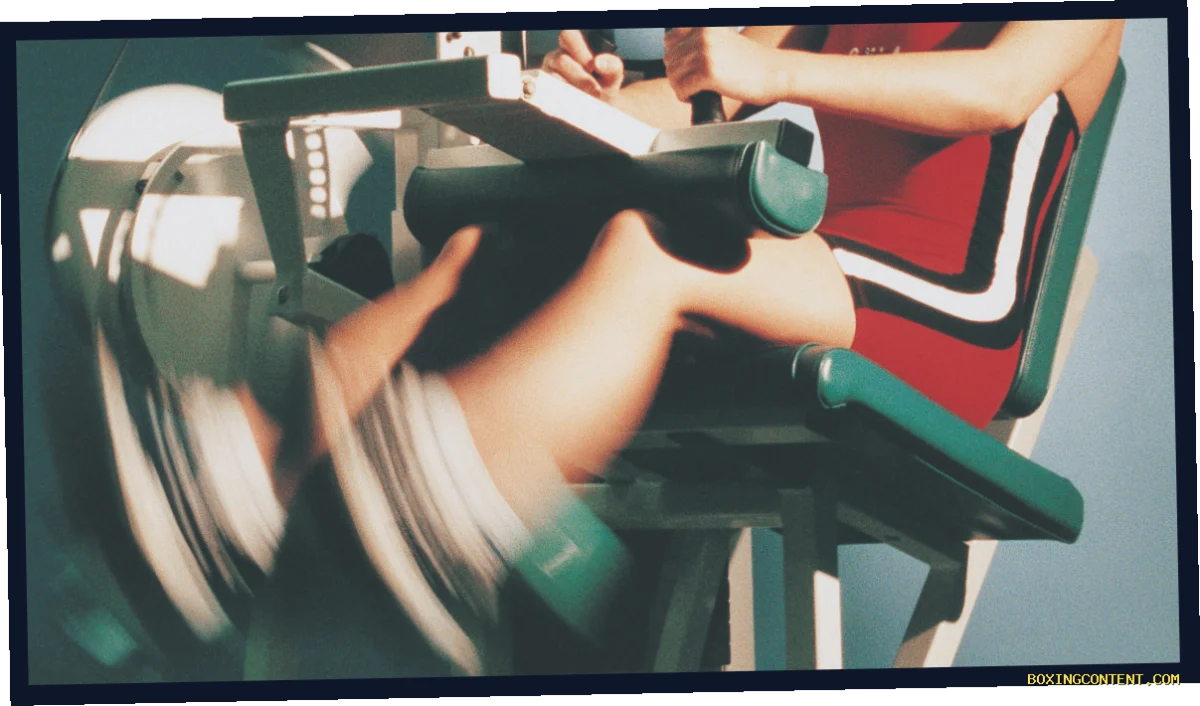
Additional insight into optimizing exercise selection comes from research conducted by Maeo and colleagues, which helps clarify the specific nuances of choosing the right type of leg curl. Their first study compared the seated leg curl directly against the traditional lying leg curl variant. Performing a leg curl from a seated position places the hips in a flexed state, which increases the passive stretch placed upon the biarticular hamstrings relative to a lying leg curl. Conversely, the sartorius—a knee flexor that also actively flexes the hip—is placed in a more elongated position during the lying leg curl compared to the seated variation. The results demonstrated that the seated leg curl led to greater hypertrophic growth of the biarticular hamstrings, while the lying leg curl produced superior growth in the sartorius.
A subsequent study by the same research group compared the seated leg curl, modified with an intentional forward lean of the torso to introduce an even greater stretch, against the classic Nordic hamstring curl. While the seated leg curl emphasizes a deep stretch for the biarticular hamstrings, the Nordic curl emphasizes high resistance specifically in the lengthened phase of the movement, becoming increasingly difficult as the individual lowers themselves toward the floor. Ultimately, the Nordic curl led to greater growth in the short head of the biceps femoris and the sartorius, whereas the seated leg curl drove greater development in the long head and the semimembranosus. Growth rates for the semitendinosus, gracilis, and popliteus muscles remained similar between the two groups.
Taken together, these two investigations suggest that the seated leg curl is likely the single best option for prioritizing overall hamstring growth. However, the lying leg curl remains a valuable tool for stimulating the sartorius, and the Nordic curl offers targeted benefits for the short head of the biceps femoris. It is also important to acknowledge that these studies compared individual leg curl variations in isolation; in the context of a comprehensive routine that also includes hip hinges, these localized outcomes may interact differently.

Two additional studies, while not strictly focused on exercise selection, offer valuable context for refining hamstring training protocols. The first, a conference abstract by Maeo and colleagues, compared the effects of performing half-repetitions restricted to the stretched position against traditional full range of motion repetitions using a multi-hip machine. The data indicated that hypertrophic gains in both the hamstrings and the glutes were generally greater when utilizing the lengthened partial repetition technique. Experimenting with this specialized technique for hamstring isolation work may yield positive results for dedicated lifters.
The second study, conducted by Cadeo and researchers, investigated the effects of performing lying leg curls with the ankle fully plantarflexed versus fully dorsiflexed to observe the impact on the long head of the biceps femoris. This methodological manipulation was designed to alter the operational length of the gastrocnemius—a calf muscle that also assists in knee flexion—thereby shifting mechanical workload toward or away from the hamstrings. Interestingly, ankle positioning had no significant impact on the overall growth observed. Consequently, foot and ankle position during leg curls appears to be largely a matter of personal comfort and preference rather than a critical mechanical variable.
In summary, maximizing hamstring development requires a thoughtful combination of both hip hinges and leg curls. While hip hinges tend to bias the long head of the biceps femoris and the semimembranosus, leg curls are better suited for targeting the semitendinosus and the short head. Among the available leg curl alternatives, the seated variation appears to be the most effective overall choice for total volume and growth, while lying curls and Nordic variations offer distinct, complementary benefits. Together, these scientific findings underscore the importance of building a well-rounded hamstring routine that incorporates both movement types and carefully selected exercise variations.