


When it comes to tracking body composition at home, millions of fitness enthusiasts rely on smart scales to measure everything from total weight to estimated body fat percentage. However, the accuracy of these consumer-grade electronic devices has long been a subject of debate among athletes, coaches, and researchers. Recently, a popular fitness content creator on the Iron Oath Fitness channel decided to tackle this controversy head-on by putting a collection of popular smart scales through a rigorous, real-world accuracy test.
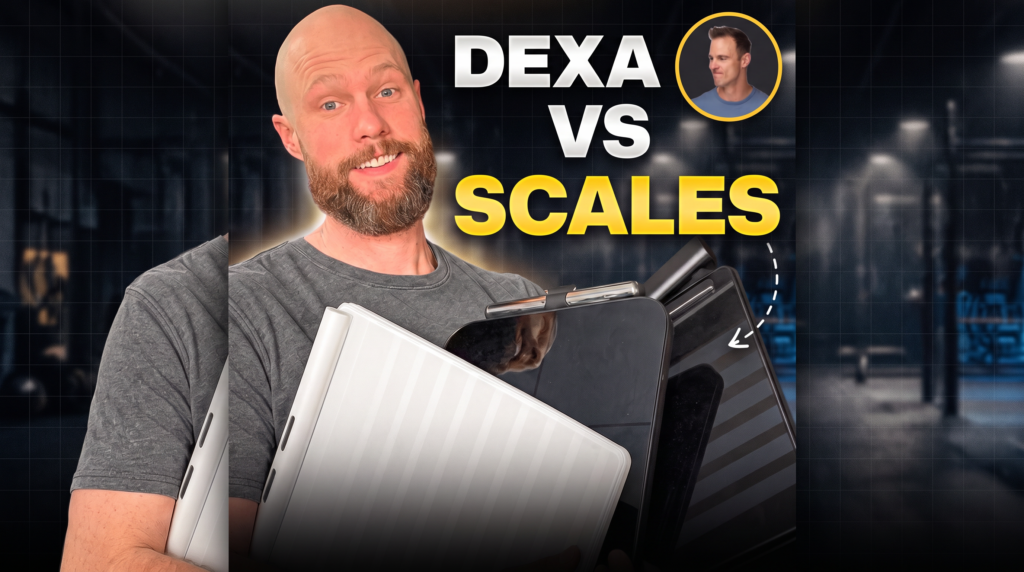
In a newly published video, the creator pitted two distinct models from Withings against the Hume Body Pod, comparing their digital outputs directly against the gold standard of body composition analysis: a professional DEXA scan. The results of the experiment revealed significant discrepancies between the devices, with one affordable scale landing almost dead-on with the clinical imaging machine while a pricier model missed the mark by nearly three percentage points.
The findings challenge prevailing consumer assumptions about the relationship between hardware cost and measurement precision in the fitness technology market. For anyone who has spent hours reading online reviews trying to decide which gadget deserves a coveted spot in their bathroom, the outcome of this comprehensive head-to-head evaluation offers a surprising perspective on home health tracking.
The Scoreboard: Hume Came Closest to DEXA
After meticulously gathering, recording, and tallying every reading from the various devices, the creator announced the results of the experiment without drawing out unnecessary suspense. When the final numbers were compiled and compared against the baseline metrics provided by the clinical scan, one specific brand emerged as the standout performer of the group.
Reviewing the data collected during the test morning, the Hume device sat remarkably close to the clinical baseline, landing within just a few tenths of a point of the DEXA scan’s body fat percentage evaluation. In stark contrast, both Withings units tested during the experiment drifted notably high, overestimating the creator’s body fat percentage by two to three full points.
The experiment introduced a fascinating twist that caught many tech enthusiasts off guard: the most expensive and technologically advanced Withings model in the lineup—a newer device equipped with double the number of sensors compared to its predecessor—actually strayed the furthest from the clinical benchmark among all the consumer scales tested. This unexpected outcome immediately raised questions about whether loading consumer devices with additional internal sensors automatically translates to superior real-world accuracy.
How the Test Was Setup
To ensure that the results of the experiment carried genuine validity, maintaining strict consistency throughout the testing protocol was paramount. The creator visited the exact same clinical DEXA facility that had been utilized in a previous comparative video, effectively eliminating any geographical or facility-related variables from the equation.
Every possible environmental and physiological factor was controlled as tightly as possible to mimic laboratory conditions. The creator conducted the entire series of measurements in a fasted state, explicitly noting that he had not consumed any food or liquids prior to stepping onto the glass platforms. Furthermore, he wore identical clothing for every single device test and even removed his Whoop fitness tracker to prevent any localized weight interference.
Precision extended down to the physical placement of the technology itself. Each individual scale was carefully moved and positioned onto the exact same spot on the floor before the creator stepped on to record his metrics. While the technical execution was largely smooth, the experiment did highlight minor user experience quirks, such as the Hume scale’s requirement that its accompanying mobile application must remain actively open on a smartphone during the weigh-in process for a body fat reading to successfully register.
Why DEXA Was the Yardstick
To understand why this particular experiment generated such significant interest within the fitness community, it is necessary to examine why the DEXA scan is treated as the premier yardstick for body composition analysis. Dual-energy X-ray absorptiometry operates by firing low-dose X-ray beams at two distinct energy levels through the human body. Because human bone tissue absorbs these energy beams at a different rate than soft tissue, specialized internal software can accurately separate and quantify bone mineral density, total fat mass, and lean muscle mass.
While medical professionals and researchers widely accept DEXA as the gold standard for evaluating body composition and skeletal health, experts acknowledge that even this clinical method is not entirely infallible. Readings can still experience minor variations depending on the specific machine manufacturer, the technician operating the equipment, and the hydration status of the individual being scanned.
Nevertheless, compared to standard consumer alternatives, the clinical precision of DEXA provided a reliable baseline against which the consumer devices could be judged. As the creator noted during the video walkthrough, it serves as the ultimate benchmark for understanding what is actually happening beneath the skin.
The InBody Wildcard
To add further depth to the evaluation, the creator also incorporated a session on an InBody device, introducing a fascinating financial and technological wildcard into the discussion. The InBody system relies on the exact same core technology found in all three consumer smart scales: bioelectrical impedance analysis, which passes a weak, harmless electrical current through the body to estimate tissue composition. However, while consumer scales typically cost between $100 and $500, a commercial InBody station commonly carries a hefty price tag of roughly $15,000.
This massive financial disparity prompted the creator to reflect on the value proposition of modern health technology. The core question highlighted in the video is whether spending hundreds of dollars on a home device can realistically rival the output of equipment found in specialized clinics and commercial facilities.
Despite its five-figure valuation, the InBody station produced a reading of 8.8% body fat—a figure that left the creator skeptical, as it painted a picture of leanness far beyond his actual current conditioning. Reflecting on the result, he remarked that while he might not know his exact percentage down to a decimal, he was certain he was not sitting at 8.8%. The wildcard test ultimately underscored a humbling reality for fitness enthusiasts: a higher price tag in the realm of body composition analysis does not automatically guarantee a spot-on reading.
Weight Matched, Fat Estimates Didn’t
When analyzing the raw data collected from the morning testing session, an interesting pattern emerged regarding total body weight versus estimated fat mass. Across all three consumer smart scales, the recorded weights landed remarkably close to one another, clustering tightly between 177 and 178 pounds. The DEXA scan, meanwhile, recorded a total weight that was roughly a pound and a half to two pounds higher than the consumer devices.
The creator pointed out that this close alignment in total weight measurement actually lends a degree of indirect credibility to the scales’ underlying algorithms. Because bioelectrical impedance scales calculate body composition by first measuring total mass and electrical resistance, the device must allocate that mass somewhere within its software calculations—categorizing it either as fat mass or lean muscle mass.
However, experts note that this logical framework has distinct limitations in practice. Two separate electronic devices can easily agree on a user’s total body weight while splitting that mass into fat and lean compartments in entirely different ways. That exact divergence was clearly demonstrated during the test, as the scales produced varying body composition percentages despite capturing nearly identical total weight figures.
Why One Lucky Match Isn’t a Guarantee
While the Hume scale’s ability to closely match the DEXA scan results generated immediate intrigue, the creator was quick to offer a vital disclaimer regarding consumer expectations. Smart scales, and the Hume brand in particular, often provoke polarizing reactions among fitness consumers. While some online reviewers and users rave about their precision, others dismiss the technology as unreliable, sharing personal anecdotes where their own clinical comparisons yielded vastly different conclusions.
This variability emphasizes why a single test conducted by one individual on a single morning should not be treated as an absolute industry-wide endorsement. The creator explicitly noted that an audience member’s individual unit might not perform with the exact same level of accuracy as the specific device he tested.
Furthermore, bioelectrical impedance estimates are notoriously sensitive to external physiological variables. Factors such as daily fluctuations in hydration levels, the timing and composition of recent meals, and even skin moisture can cause impedance readings to swing wildly from day to day. Even the most carefully calibrated smart scale cannot completely eliminate the inherent biological volatility of electrical resistance measurements.
What to Do With Your Own Scale
For consumers who already own one of these expensive electronic devices, the creator’s overarching advice is simple: do not panic over a single mismatched percentage. Instead of viewing a smart scale as a definitive clinical instrument designed to provide absolute truth, users should reframe their perspective and treat the device as a practical tool for monitoring general health trends over time.
As the creator emphasized during the conclusion of his analysis, the absolute accuracy of a single reading matters far less than the consistency of the data collected over weeks and months. He noted that a home scale is simply another tool in a fitness toolkit—it does not need to be flawlessly accurate to provide actionable insights.
Many experienced athletes and fitness professionals ultimately prefer to rely on basic, straightforward electronic scales that prioritize consistent weight tracking over complex body composition estimates. By simply stepping on the platform at the same time each day, observing the broader directional trend, and making necessary adjustments to diet and training, individuals can effectively manage their fitness journeys without needing to invest heavily in advanced multi-frequency consumer hardware.