

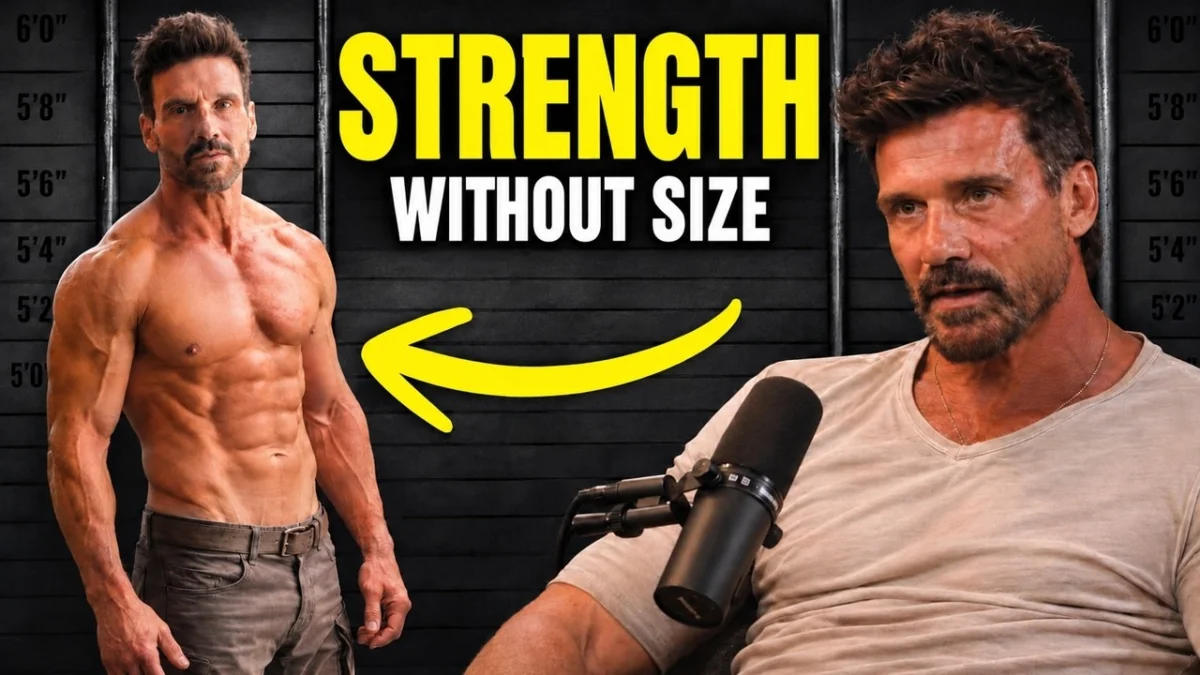
While some movements in his regimen are heavy and others explosive, the philosophy guiding his approach is deeply personal—one particular element he openly refers to as his "therapy." Yet, perhaps most surprisingly for a veteran of high-intensity physical preparation, Grillo completely bypasses two muscle groups that typically dominate the routines of most gym-goers: the biceps and the triceps. By deliberately skipping direct arm isolation work, Grillo’s routine challenges standard bodybuilding tropes, focusing instead on functional power, joint health, and overarching physical longevity.
The Big Idea: Heavy Lifts, Fast Hands, Strong Core
At its core, Grillo’s training philosophy centers on heavy compound lifts, explosive power generation, specialized boxing skill work, and a demanding finishing core circuit. In this schema, traditional vanity muscles take a definitive backseat to functional capability and injury prevention. Grillo has been consistent in his messaging regarding his physical routines, emphasizing that his motivation extends far beyond aesthetics.
"I don’t do biceps. I don’t do triceps. We do core, heavy exercises on the chest, squats, deadlifts," Grillo explains, outlining a philosophy that prioritizes compound movements over isolated muscle enhancement.
His dedication to physical training is not a recent endeavor prompted by Hollywood demands or mid-life concerns. Grillo’s relationship with physical conditioning began roughly around the age of 12, when wrestling first entered his life and laid the foundation for a lifelong discipline. For Grillo, while the visual benefits of training are undeniable, the ultimate objective remains rooted in enduring health. "Everyone wants to look good, but it’s about health," he notes, framing his daily physical exertions as an investment in his long-term well-being rather than a superficial pursuit.
Exercise 1: Shadow Boxing
The entry point to Grillo’s training session avoids heavy iron entirely, beginning instead with an intentional period of shadow boxing. Before touching a single barbell or dumbbell, the actor spends approximately 20 minutes throwing controlled punches at thin air, working without the aid of a heavy bag or a sparring partner.
This initial phase serves a critical physiological purpose for the veteran actor. By engaging in prolonged, controlled movement patterns without external resistance, Grillo allows his circulatory system to adapt gradually to the demands of the upcoming workout.
"A little shadow boxing, get the blood flowing, a little sweat going, loosen up my old body," Grillo describes, detailing the preparatory nature of the exercise.
The immediate result is an elevated heart rate, improved circulation throughout the body, and joints that are thoroughly primed and lubricated for the significantly heavier work scheduled later in the session. This thoughtful integration of martial arts movements into a standard fitness framework highlights how Grillo bridges the gap between traditional athletic conditioning and combat sports preparation.
Exercise 2: Barbell Shrugs
Transitioning from dynamic movement to loaded resistance, Grillo’s routine incorporates heavy barbell shrugs to target the trapezius muscles. The trapezius is a large, diamond-shaped muscle group that spans from the base of the skull down the neck and across the upper back and shoulders. Developing strength in this region is essential not only for aesthetic thickness in the upper body, but more importantly for stabilizing the shoulder girdle during heavy lifting and athletic movements.
Grillo approaches this movement with a structured framework designed to maximize strength output without sacrificing form. Following a series of progressive warm-up sets to prepare the muscles and nervous system, the routine transitions into heavy working sets.
"We would do a couple of warm-up sets and then five sets of our heavy exercise. In this case, it’s shrugs," Grillo explains.
This underlying pattern—warming up thoroughly followed by five heavy working sets typically performed for around eight repetitions—serves as a blueprint that can be adapted across various muscle groups, allowing practitioners to swap in foundational compound movements like the bench press, squats, or deadlifts depending on the day of the week.
Exercise 3: Lateral Raises and Bent-Over Lateral Raises
To ensure comprehensive development and stability in the upper body, Grillo’s routine addresses the shoulders with precision, utilizing both standard lateral raises and bent-over lateral raises to cover all three deltoid heads. The shoulder joint is inherently mobile and complex, requiring balanced strength across the anterior, lateral, and posterior deltoids to function correctly under stress.
By incorporating isolation movements for the shoulders alongside his heavy compound lifts, Grillo ensures that the joint remains stable and resilient. This targeted attention to the shoulder complex is particularly vital for someone who spends a significant amount of time throwing punches, as the deltoids play a crucial role in arm deceleration and stabilization during striking.
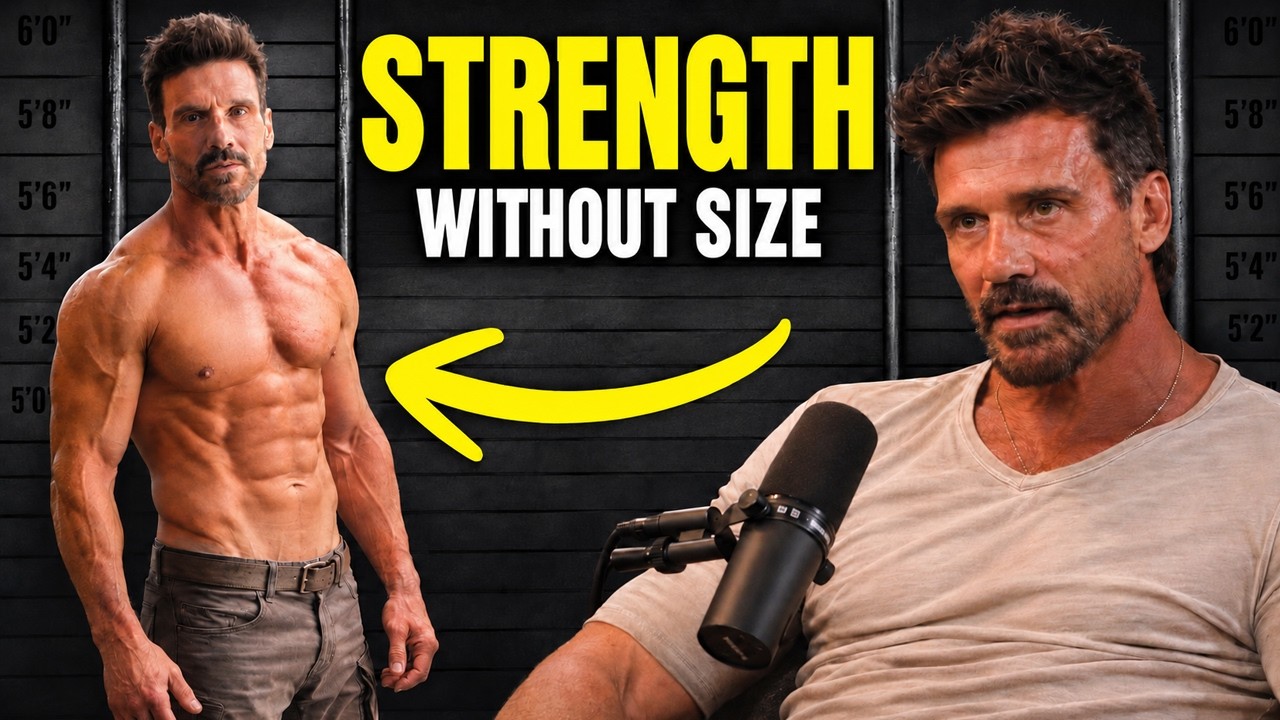
"You want to cover the whole thing and get him in boxing and all sports and shoulders. Very important," Grillo notes, emphasizing that balanced shoulder development is indispensable for athletic versatility and injury prevention.
Exercise 4: Explosive Pushups
Moving further into the session, the routine shifts toward plyometric work through explosive pushups, where the primary objective is generating maximum force in the minimum possible amount of time. This ballistic movement forces the chest, anterior shoulders, and triceps to fire rapidly, while the core musculature must work continuously to maintain a rigid, stable plank position throughout the execution of the exercise.
However, Grillo’s approach to explosive pushups diverges sharply from standard endurance training protocols. Rather than grinding through repetitions until absolute failure, Grillo performs specific sets with a strict focus on movement velocity.
"The whole goal is speed," he states, outlining a protocol where the moment performance begins to degrade, the set is terminated.
Instead of chasing fatigue, Grillo performs structured sets of ten repetitions, deliberately stopping the movement the instant the execution velocity drops. This method ensures that the nervous system remains fresh and that the exercise trains power output rather than muscular exhaustion.
Exercise 5: Boxing Padwork
A central pillar of Grillo’s daily regimen involves intensive boxing padwork with a trainer holding focus mitts. Rather than varying combinations randomly, Grillo repeats identical sequences day after day. While the physical exertion provides an undeniable cardiovascular stimulus and substantial calorie burn, the primary goals of this repetition are precision, timing, coordination, and the development of deep muscle memory.
"We do the same thing every day, the same thing over and over and over again so that it just flows and it’s just natural," Grillo explains, describing the meticulous nature of his striking practice.
The repetition becomes so deeply ingrained in his physical consciousness that the movement patterns often manifest spontaneously in daily life, such as when he finds himself shadowing combinations while walking through grocery store aisles. Beyond the physical conditioning, this padwork serves a psychological function for the actor, acting as a mental release valve that clears his mind.
"It’s my therapy. So it keeps my brain moving and where the head goes the body follows," Grillo shares, highlighting the profound mental connection he maintains with his training.
Exercise 6: The Intense Core Circuit
True to his philosophy of prioritizing functional strength and structural integrity, Grillo concludes every training session with a dedicated core circuit. Rather than relying on a single abdominal exercise, the circuit incorporates multiple movements designed to target different regions of the midsection from various angles. The structure typically involves performing designated repetitions across multiple rounds, maintaining a high level of intensity without requiring excessive time commitments.
"Finish every workout with core. It’s not long but it’s super intense and it doesn’t look difficult," Grillo advises, noting that the deceptive simplicity of midsection work often belies its true physiological demand.
By placing the core circuit at the conclusion of the workout, Grillo ensures that his midsection is forced to stabilize his torso when his entire body is already fatigued, mirroring the physical demands encountered in both combat sports and demanding daily activities.
How to Borrow This Routine Without Wrecking Yourself
When examining a celebrity fitness regimen, context remains essential. Grillo’s ability to execute a high-frequency, intense routine is the direct result of approximately five decades of consistent physical training. His approach reflects decades of personal adaptation and experiential learning rather than a one-size-fits-all clinical protocol designed for the general public. Fitness commentators often warn that no single workout can magically reverse the aging process, despite the sensationalized promises frequently found in headline-driven media. Instead, long-term consistency over many years remains the primary driver of physical health and longevity.
For those looking to incorporate elements of Grillo’s routine into their own lives, practical scaling is necessary to prevent overtraining or injury. Beginners and intermediate trainees are advised to adapt the volume, load, and intensity to match their current physical capabilities, utilizing lighter weights, modified plyometrics, and reduced working sets while maintaining the underlying philosophy of prioritizing compound movements, functional mobility, and core stability. Ultimately, stripping away the celebrity context reveals a straightforward, enduring message: physical fitness is a lifelong commitment built on daily habits rather than a reactionary pursuit undertaken later in life. By starting from their current baseline, maintaining consistency, and focusing on sustainable movement, individuals can apply the core tenets of Grillo’s routine to support their own long-term health and physical capability.