Denzel Bentley was supposed to be fighting for a world title. Instead, he was moments away from becoming an Amazon delivery driver, forced to navigate the grim economic reality of a sport that can chew up even its most decorated domestic champions and leave them stranded in the cold.
Having ended 2024 on a high note by capturing the British middleweight title for a remarkable third time and subsequently adding the prestigious European crown to his collection, Bentley, 31, had every reason to believe a golden opportunity at the global stage was just around the corner. At that juncture in his career, all momentum pointed toward a world championship eliminator or a direct shot at a major belt.
Meetings with his promoter, Queensberry, offered the Londoner plenty of hope and verbal encouragement. However, as the months dragged on, fight cards were announced without his name on them, and the promises that had kept him motivated began to fade. The silence from the promotional side was deafening, plunging the fighter into an unexpected and frustrating period of inactivity.
During his prolonged time in the wilderness, Bentley was left with a rapidly dwindling bank account. Without a regular fight purse to rely on, the financial pressure began to mount, forcing him to look at entirely new ways to earn money just to stay afloat and pay his bills. Without the income associated with a high-profile athlete, a chance conversation with his cousin nearly pushed Bentley into a completely different line of work: taking up the role of a delivery driver.
"After a year out, I thought I needed to do something," Bentley told BBC Sport, reflecting on the bleak financial realities of modern professional boxing when momentum suddenly halts.
"I’m not bad with my money and was able to hold myself up to that point, but it was starting to bite. My cousin said download the Amazon app and you can get a zero-hour contract. It was an app where you could check in and see if there was delivery work in your area.
"I downloaded it and signed in, but there were no jobs in my area. I remember always refreshing and checking, but there were no jobs in my area—that’s the only reason I didn’t do it."
Fate, it seemed, intervened just in the nick of time, sparing the reigning European and British champion from trading his boxing gloves for delivery parcels. That near-miss with the gig economy marked a historic low point in a career that was about to take an astonishing, career-defining upward trajectory.
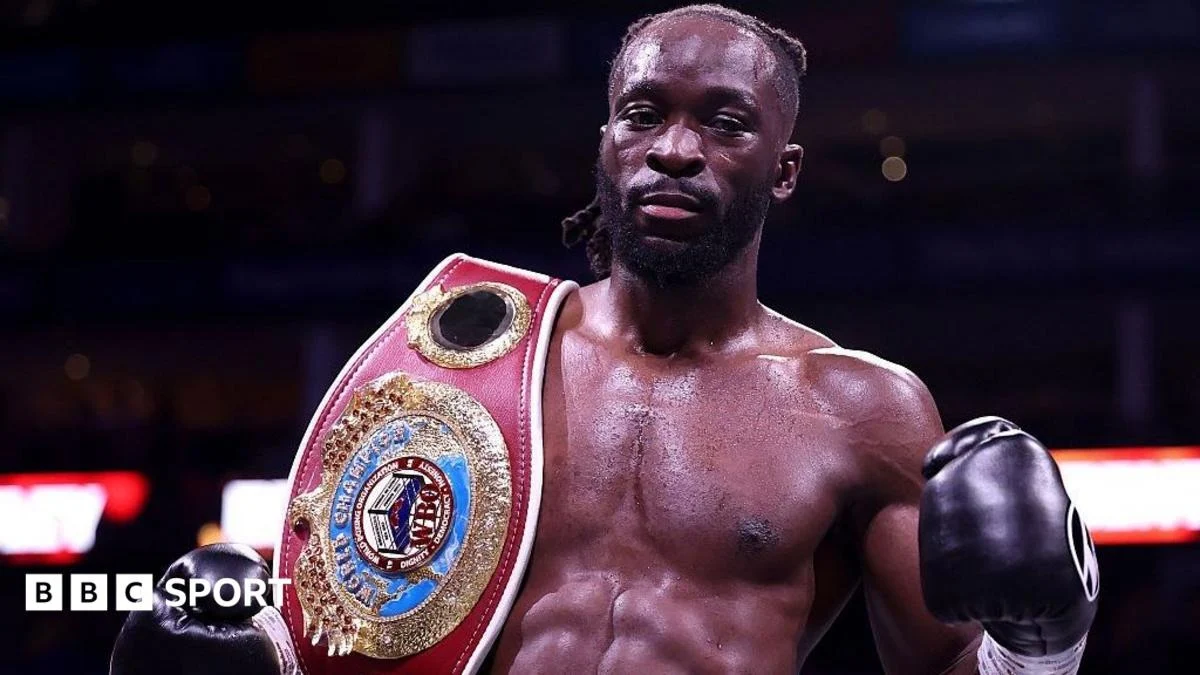
Bentley’s grueling 16-month absence from the ring ultimately counted for something when he finally secured a major breakthrough, capturing the WBO interim middleweight title by overcoming Endry Saavedra in a stellar performance in April 2026. That victory proved that despite the promotional roadblocks and financial anxieties, his elite capabilities inside the squared circle had not diminished.
Just three months later, the landscape of the middleweight division shifted dramatically in his favor. Bentley was elevated to full world champion status following Janibek Alimkhanuly’s strategic decision to vacate the belt and move up to the super-middleweight division.
Finally, after years of grinding through the domestic ranks, overcoming promotional hurdles, and staring down the prospect of delivery driving, Bentley had achieved his lifelong goal of becoming a world champion. It was the culmination of relentless dedication, an unforgettable milestone for a fighter who had taken the hard road to the top.
However, the tumultuous nature of professional boxing ensured that his time at the summit was fleeting. His championship reign lasted just 102 days, a brief window in which he made no defenses of the belt, after he agreed to face Shane Mosley Jr. rather than satisfying his mandatory challenger commitments immediately.
Bentley, who is now scheduled to face the experienced American at London’s iconic Copper Box Arena on Saturday, admitted to experiencing frustration over the political and organizational decisions surrounding his short-lived reign. Yet, he remains remarkably pragmatic and optimistic, firmly believing that his new promotional home with Zuffa Boxing can provide the stable pathway he needs to get right back into the world title mix.
"I’ve moved over to Zuffa and everyone thinks it’s a money move," Bentley said of his strategic switch.
"Firstly, I do want to get compensated rightly for the job I have—it’s a demanding job and we take a lot of punches.
"But I want to become world champion again. All of the above can be true, I don’t have to sacrifice one for the other. I’ve asked Zuffa to get me back in position to win another one. They said no problem."
Bentley’s resilient mindset is deeply rooted in an unconventional background that is a far cry from the sleek, polished gym environments of modern elite athletes. His introduction to the sport did not happen through traditional amateur club pathways or structured youth programs; instead, it began in a makeshift fight club run by his brother on their local housing estate.
Armed with little more than a protective headguard, a pair of boxing gloves, and a willing friend, Bentley—who now boasts a professional record of 22 wins, three losses, and one draw—had his very first taste of combat sport amidst the concrete and brick of his neighborhood.
It did not take long, however, for the young enthusiast to realize that street sparring bore very little resemblance to the technical discipline of the real sport. The harsh realities of a regulated gym environment quickly dismantled his early misconceptions.
"When I went to college, I met a friend who boxed, and because of what I’d been doing in the streets with my brother, I said, ‘Yeah, I can box too’," Bentley recalled.
"Pero I found out it was really different. I remember calling the punches the wrong names. I thought it was left jab, right jab, but it’s obviously a jab and a right hand or a cross.
"I was hitting the bags but had the wrong form, and then I was getting battered in sparring. I thought, ‘OK, this wasn’t what I was doing,’ but I wanted to learn how to do it properly."
Learning how to do it properly meant committing himself to regular gym sessions, but simply getting to training presented its own distinct set of logistical and financial hurdles. Before he could afford reliable transport or afford the luxury of consistent travel, Bentley had to get creative, utilizing London’s public bike-hire infrastructure to maintain his rigorous training schedule.
"I was short on money, had sold my car, and didn’t really want to spend money on buses. I would rent out the Santander bikes," Bentley explained, detailing the practical challenges of his early fighting days.
"I would put in £2 and pace down the road to make sure I didn’t take more than 30 minutes, and then park up and come home. It wouldn’t charge me extra as long as I never went over half an hour.
"Before that, I would walk to the gym. I lived in Battersea and the gym was in Bermondsey.
"I’d just put my music in and people would ask, ‘Oh, you like walking to the gym?’ but I just didn’t have any other choice. When I discovered the bikes, it was a game-changer."
That same resourcefulness and grit have defined Bentley’s entire career, carrying him from the estate fight clubs and bicycle commutes of South London through the dark days of near-destitution and cancelled promises, all the way to world championship glory. As he steps into the ring at the Copper Box Arena this weekend to face Shane Mosley Jr., Bentley carries with him not only the ambitions of a former world titleholder but the hardened determination of a fighter who knows precisely what it means to be pushed to the very edge.