
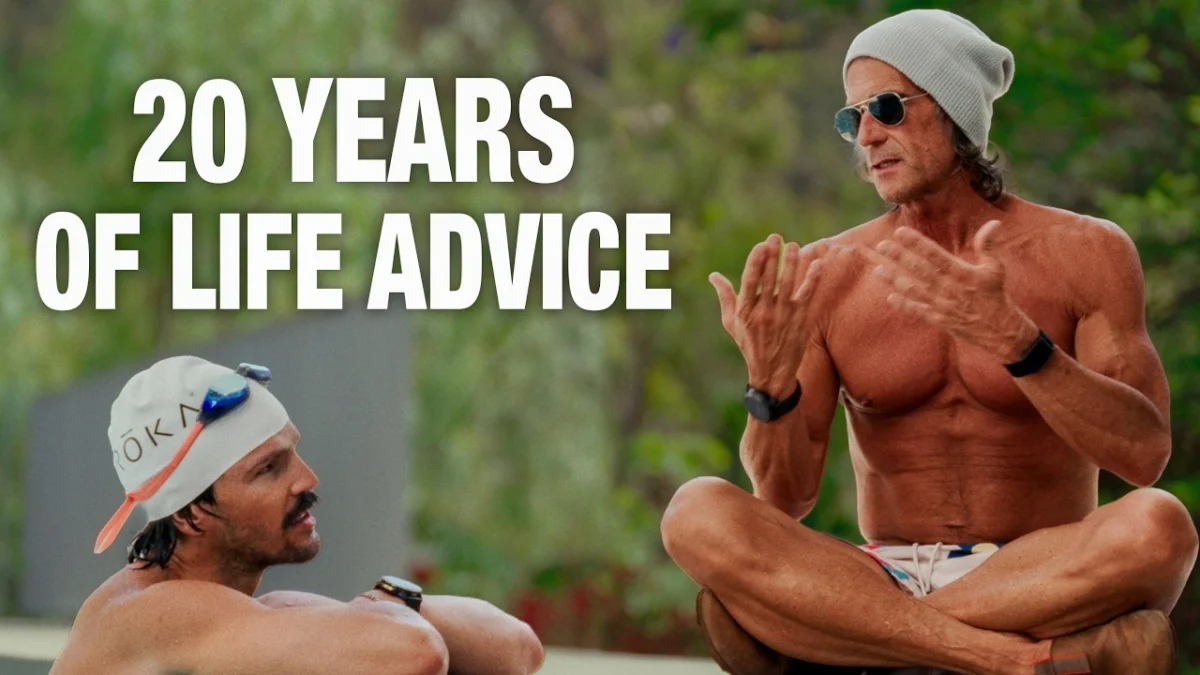
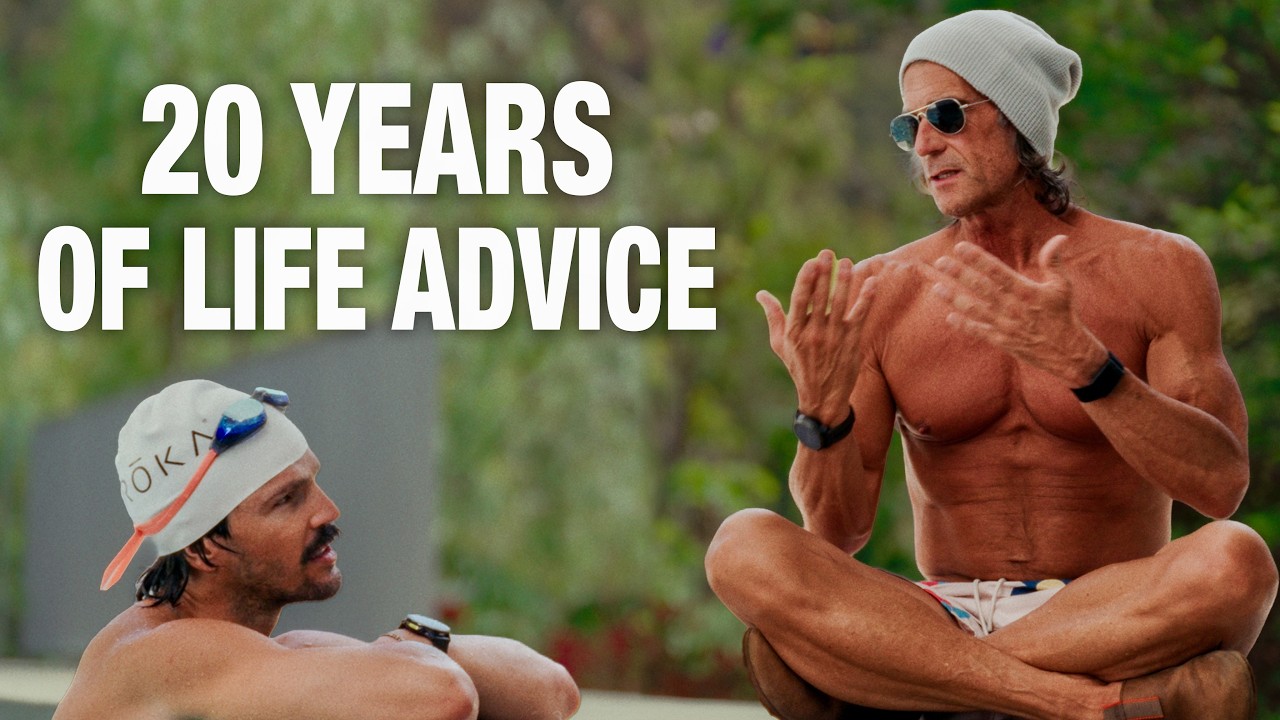
As endurance athlete, author, and podcast host Rich Roll recently marked his milestone 60th birthday, he found himself reflecting on the hard-won wisdom accumulated over two decades of pushing the human body to its absolute limits. Beginning his remarkable endurance journey around the age of 40, Roll has spent the last twenty years tackling grueling ultramarathons, triathlons, and extreme physical feats that few humans ever attempt. Yet, when he recently sat down in his backyard for a podcast episode with chef and hybrid athlete Dan Churchill—who at 37 is currently training for his very first IRONMAN—Roll’s retrospective advice focused very little on split times, training volume, or advanced periodization plans.
Instead, Roll’s reflections centered on the interpersonal, mental, and foundational elements of life that athletes so often sacrifice in the relentless pursuit of peak performance. By breaking down his philosophy into what he calls "three buckets"—doing, undoing, and being—Roll offered a candid look at the hidden costs of obsession and the subtle shifts in perspective that can fundamentally change the way anyone chases a major goal.
Lesson One: Never Lose Sight of Who Matters Most
Roll has never shied away from discussing his past. An individual with an obsessive-compulsive personality type who thrives on extremes, his personal history includes a hard-fought recovery from substance addiction. While that same intensity has undoubtedly fueled his extraordinary athletic achievements, Roll is quick to acknowledge its double-edged nature. That level of single-minded focus is capable of driving outstanding performances, but it can equally blind a person to the things and people that matter most in everyday life.
Having been married for over 23 years, Roll offered a direct warning to Churchill, who recently tied the knot. He cautioned the younger athlete to guard his relationship fiercely, using a stark metaphor to describe the collateral damage of unchecked athletic ambition: you do not want to become an "Ironman widow."
This warning targets a familiar trope within the endurance community, where athletes become so completely consumed by their training schedules that all other facets of life begin to fade into the background. According to Roll, physical presence is not enough; quality time and genuine emotional availability far outweigh the sheer number of hours spent under the same roof. Coming home completely bedraggled and exhausted after a full day of training, only to remain emotionally unavailable to a partner, is a classic trap that many driven individuals fall into without realizing the toll it takes.
Lesson Two: The Boring Stuff Is the Real Secret
When it comes to the physical mechanics of training, Roll’s second major takeaway sounds deceptively simple, yet it is frequently ignored by athletes who feel invincible. Mobility, flexibility, and proper muscle activation work deserve absolute priority, long before aches and pains turn into chronic injuries. In Roll’s view, the little things are actually the big things.
He specifically pointed to the importance of warm-ups, core activation, and targeted glute activation for endurance athletes. Reflecting on his own physical journey, Roll noted that skipping such foundational work contributed significantly to his back pain, though he acknowledges that an underlying congenital defect would have eventually required surgical intervention regardless. Following his recovery and surgery, however, his perspective sharpened considerably. He realized that easy-to-dismiss daily routines are non-negotiable insurance policies, and delaying them in the hope of catching up later is a strategy destined for failure.
Roll emphasized that these preventative habits must be integrated into the beginning of a routine because waiting until later means they simply will not happen. Framing mobility as an insurance policy against injury, he noted that if you run enough miles over enough years, getting hurt eventually becomes a matter of when rather than if. Citing the work of movement specialist Kelly Starrett as a vital guide, Roll recommended carving out just 15 minutes a day for this maintenance work—even though it often feels pointless in the moment because it does not deliver the immediate gratification of a hard workout or an increased heart rate.
The Three Buckets: Doing, Undoing, and Being
To better understand his relationship with sport and ambition, Roll organizes his philosophy into three distinct categories: doing, undoing, and being. Most athletes, he observed, spend their entire lives filling only the first bucket.
The first category, "Doing," represents the practical, gritty side of athletics. It encompasses consistency, momentum, and a willingness to cultivate a healthy relationship with discomfort. Achieving ambitious goals demands what Roll calls "contrary action"—doing the hard things even when every fiber of your being wants to quit. He stressed that the tiny habits practiced in the privacy of one’s own home, away from public view and external applause, are what ultimately make the biggest difference in performance and character.
However, constant doing eventually hits an impenetrable ceiling. True growth requires moving into the second category: "Undoing." This involves examining the internal narratives and stories we tell ourselves about our limits, motivations, and self-worth through tools like therapy, meditation, and deep mindfulness. During their conversation, Roll pressed Churchill with a pointed question designed to cut through superficial ambition: Is your drive fueled by a desire for external validation, or is it genuinely about building healthy self-esteem?
Turning the analytical lens onto his own past, Roll confessed that for many years, his entire sense of worthiness depended entirely on being perceived as special. He felt deeply undeserving of acceptance and love unless he was actively distinguishing himself as someone capable of feats that ordinary people could not achieve. While that profound insecurity fueled his climb to incredible athletic heights, it also acted as a severe psychological limiter, driving his efforts through anxiety and a lack of self-acceptance rather than joy. Untangling those old stories, he discovered, is the true key to unlocking human potential. Endurance racing taught him that everyone is tiptoeing atop a massive, deep reservoir of capability that they are barely beginning to tap into.
The third category, "Being," has now become Roll’s absolute highest priority. Cultivating presence, deep gratitude, and a profound sense of awe for simply possessing a strong, capable body is the ultimate point of the entire athletic endeavor. Roll readily admitted to wearing metaphorical blinders in the past while chasing specific performance targets, causing him to completely miss out on the simple beauty of his actual life unfolding around him.
Why Stillness Is Harder Than an Ultramarathon
Perhaps the most surprising revelation from a man who has completed some of the most brutal multi-day endurance races on the planet is his admission that sitting quietly in stillness is far more difficult than running an ultramarathon. For someone wired for high output, doing nothing immediately triggers intense feelings of guilt regarding productivity. Roll frequently catches himself mentally scanning his environment, calculating what he is currently producing, where he might be falling behind, and what tasks need immediate attention.
His ultimate realization, however, is that no medal, accolade, or external achievement will ever fill the internal void that remains when a person is disconnected from themselves. Only authentic availability in the present moment can truly nourish the human spirit.
Holding Everything More Lightly
Reaching the age of 60 brought a distinct emotional resonance, even for someone who has traditionally rejected the conventional psychological hang-ups surrounding aging. Today, metrics like podcast rankings, download numbers, and public applause hold virtually no appeal for him. Instead, he aims to hold everything in his life a little bit more lightly, while still honoring the deep-seated competitive spirit that defines his character. Competition remains an important part of who he is, but the harsh self-punishment that once characterized his training philosophy has been permanently retired.
Reflecting on wedding photographs from more than 23 years ago that somehow feel as though they were taken just yesterday, Roll acknowledged that earlier phases of his life occasionally found him falling short of being fully present for his wife and children. Rather than wallowing in regret or harsh self-judgment, he now chooses to focus on making living amends through mindful, everyday attention.
Roll closed his conversation with Churchill by returning to a fundamental question of personal agency in a world characterized by constant change: Is your life happening to you, or are you happening to your life? Most people, he argued, possess vastly more power over their personal trajectory than they realize, often mistaking temporary identities—such as professional status or athletic achievements—for permanent truths. Ultimately, what truly matters is how you make your loved ones feel and how willingly you share hard-earned wisdom for the benefit of others. As Roll reminded his listeners, life is undeniably long, but it is also remarkably short, making the ultimate prescription simple: enjoy every single minute.