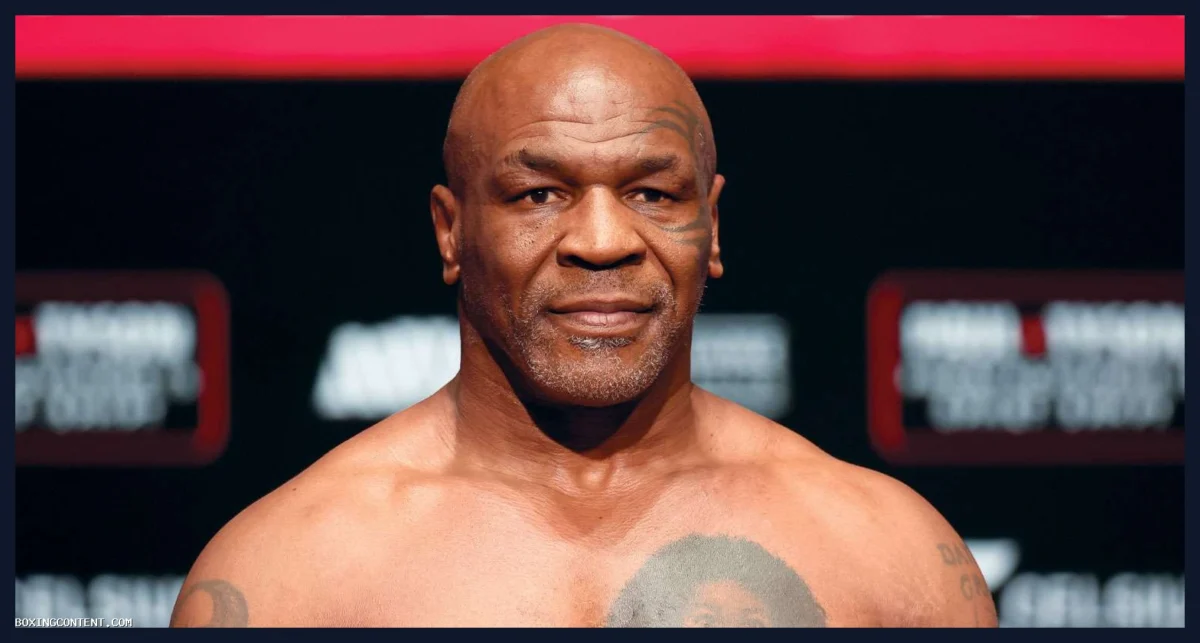
When it comes to the storied history of heavyweight boxing, few figures command the awe, terror, and fascination inspired by Mike Tyson. Bursting onto the professional scene in the mid-1980s, "Iron Mike" fundamentally altered the landscape of the sport with an unprecedented combination of ferocious hand speed, elusive head movement, and devastating knockout power that left opponents unconscious before they could fully process the danger.
Long before he became a cultural icon and a fixture of modern combat sports media, Tyson was a teenage phenomenon tearing through the division. Just over 18 months after making his professional debut, he etched his name into the record books by defeating Trevor Berbick inside two dominant rounds. That victory captured the WBC heavyweight championship and made Tyson the youngest world heavyweight champion in the history of the sport at just 20 years old—a record that remains unbroken and stands as a testament to his meteoric and terrifying rise.
What followed was a period of absolute division dominance that cemented his legacy among the all-time greats. Tyson systematically unified the belts, securing victories over elite contenders and fellow champions such as Larry Holmes, Michael Spinks, Tony Tucker, and James Smith. By defeating his rivals with chilling efficiency, Tyson earned undisputed status, ruling over the heavyweight division with an aura of invincibility that had not been seen since the peak years of Muhammad Ali or Joe Frazier.
However, the pinnacle of boxing is notoriously unforgiving. In February 1990, the sports world was left in a state of collective shock when James "Buster" Douglas delivered a sensational upset victory over Tyson in Tokyo, ending his legendary undefeated run and stripping him of his undisputed crown. While the defeat marked the end of his first and most dominant reign, Tyson’s journey was far from over. He demonstrated remarkable resilience years later by mounting a successful comeback, capturing world honors once more in 1996 by defeating Frank Bruno to claim the WBC title.
Yet, as the decade progressed, the heavyweight division evolved, and Tyson encountered fellow generational talents who would define the era alongside him. Subsequent high-profile defeats to Evander Holyfield and Lennox Lewis ultimately brought an end to Tyson’s time as a serious, dominant contender at the very top of the division. These rivalry matches, steeped in drama and elite-level competition, pitted Tyson against some of the finest athletes to ever lace up a pair of gloves.
Reflecting on those legendary battles and looking back across a career that spanned decades, Tyson has often been asked to evaluate his peers. When recently considering the absolute best fighter he ever shared the ring with, Tyson revealed that there is only one possible answer, pointing directly to the man universally known as "The Real Deal." Speaking to The Ring magazine, Tyson offered a concise yet profoundly respectful appraisal of his former rival.
"Holyfield," Tyson stated simply, highlighting the attributes that set his adversary apart. "Great champion, chin, heart, determination, work ethic, demeanour."
The respect was forged through fire and controversy, rooted in two of the most memorable and explosive encounters in boxing history. Holyfield and Tyson first met in the ring in November 1996, in a bout that carried immense anticipation. Holyfield, written off by many pundits who considered him past his physical prime, produced a tactical and physical masterclass. He absorbed Tyson’s early power and gradually broke down the champion, ultimately stopping Tyson in the eleventh round to reclaim a portion of the heavyweight championship of the world.
That first encounter set the stage for one of the most infamous rematches in sporting history. Seven months later, in June 1997, the two warriors met again in a bout that would transcend the sport. The rematch erupted into chaos and became globally known simply as the "Bite Fight" after Tyson bit Holyfield’s ears during the contest, resulting in a third-round disqualification and a temporary revocation of Tyson’s boxing license. The incident remains one of the most surreal moments in sports history, yet despite the volatile nature of their rivalry, the passage of time has allowed for deep mutual respect regarding their in-ring capabilities.
Holyfield’s own accolades and credentials inside the squared circle speak volumes, providing ample context for Tyson’s high praise. Before moving up to conquer the heavyweight division, Holyfield achieved legendary status in the cruiserweight ranks, where he successfully became the undisputed champion by unifying the WBC, WBA, and IBF titles through a series of grueling and memorable battles.
Upon transitioning to the banner heavyweight division, Holyfield repeated that extraordinary feat by capturing world championships against the best fighters of his generation, cementing a reputation for facing any challenger without hesitation. To this day, Evander Holyfield remains unique in the annals of combat sports history, standing proudly as the only four-time world heavyweight champion the sport has ever seen. For Mike Tyson, a man who shared the canvas with the greatest punchers, tacticians, and champions of a golden era, acknowledging Holyfield as the ultimate test of his career underscores the extraordinary magnitude of their shared history.