

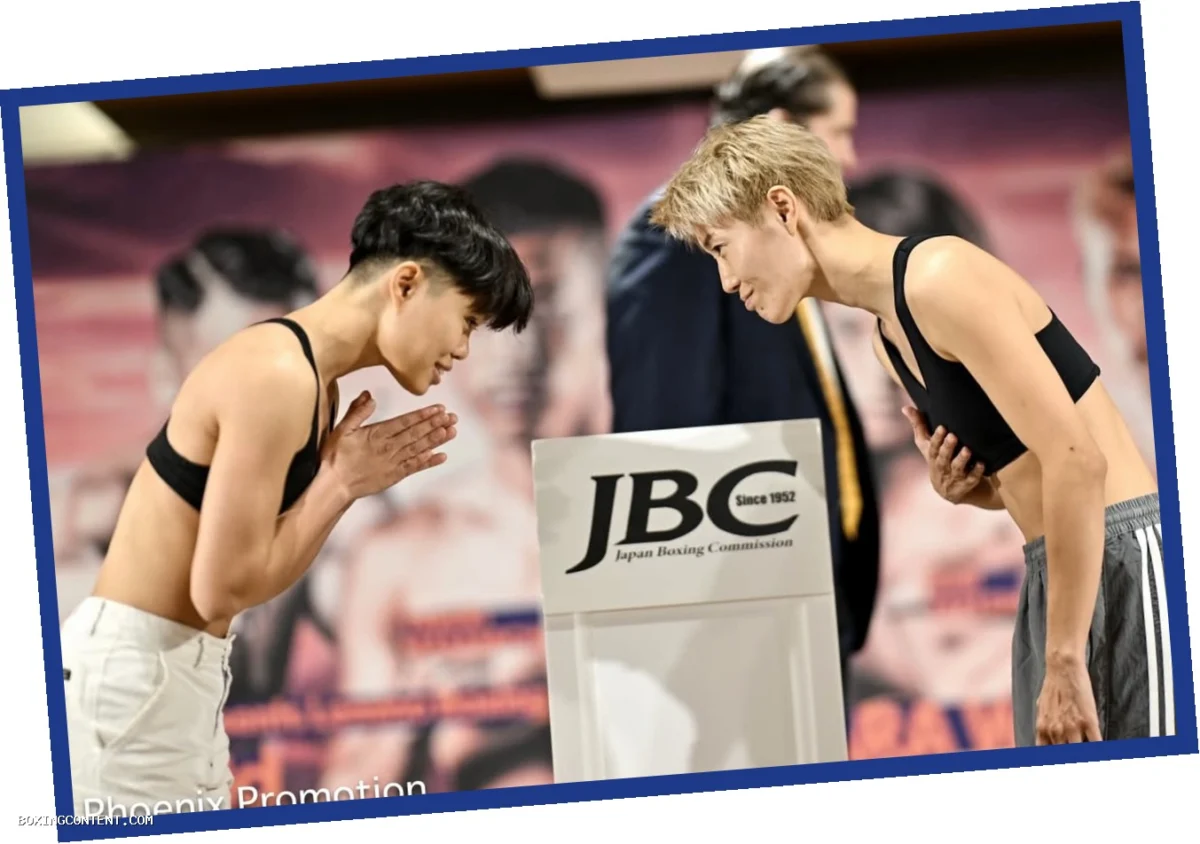
The capital city of Japan is preparing to host a major contest in the lightest weight class of women’s professional boxing this Thursday, November 26, as local contender Madoka Wada takes on Thai challenger Watcharaporn Namphon in a high-stakes World Boxing Association (WBA) Light Minimumweight title eliminator. Set at the 102-pound weight limit, the upcoming bout carries immense consequences for both fighters, with the winner earning a direct path to challenge for the world championship. As the event approaches, boxing observers are focusing on what promises to be a captivating encounter between two distinct approaches to the sport, set against the backdrop of one of Asia’s premier combat sports hubs.
The 102-pound division, designated by the WBA as the light minimumweight class, represents one of the most fast-paced and technically demanding weight categories in professional boxing. Due to the light weight limit, bouts in this division are frequently defined by rapid hand speed, continuous foot movement, high punch volume, and minimal margins for error. Thursday’s eliminator presents a classic international matchup, bringing together Japan’s rich legacy in the lower weight classes and Thailand’s long-standing tradition of aggressive, high-intensity combat sports practitioners.
For Madoka Wada, the upcoming bout in Tokyo offers a prime opportunity to leverage her substantial experience and technical pedigree on home soil. As a seasoned local contender, Wada has built a reputation grounded in competitive toughness, tactical discipline, and sharp execution. Fighting out of a southpaw stance, she possesses a structural orientation that frequently presents complex strategic challenges for orthodox opponents. Her stance allows her to establish non-traditional angles, control distance with an active right jab, and clear lanes for her straight left hand and right hook combinations.
Wada’s established ring methodology relies heavily on spatial awareness and distance control. Entering this championship eliminator, her primary tactical objective will be to establish control over the tempo from the opening bell. By operating behind precise combinations initiated from mid-range, she aims to dictate the terms of engagement and keep the action fluid. For Wada, maintaining a clean boxing rhythm depends on sharp footwork, stepping out of lateral danger zones, and discouraging her opponent’s forward momentum before close-range exchanges can take hold.
Her extensive background on prominent competitive stages provides her with a level of calm under pressure that could prove decisive in a match of this magnitude. In high-stakes title eliminators, fighters who can execute their strategic blueprint without being drawn into wild exchanges hold a distinct advantage. Wada’s framework relies on choosing her punch selections carefully, preserving energy through efficient movement, and enforcing a structured out-boxing dynamic that limits the scoring opportunities of an aggressive opponent.
Standing across the ring will be Watcharaporn Namphon, a determined challenger from Thailand who travels to Tokyo intent on pulling off a notable victory on foreign soil. Namphon’s approach to boxing contrasts sharply with that of her Japanese counterpart. Rather than engaging in a patient, distance-based contest, the Thai fighter operates at her best when turning the ring into a high-pressure, physical environment. Her identity in the ring is built on constant forward motion, physical strength, and a high volume of punches delivered at close range.
Recognizing the technical accuracy and range control of Wada, Namphon’s strategic path to victory depends on her ability to rapidly close the gap and negate open space. For a pressure fighter taking on a skilled southpaw, allowing the bout to remain at long or mid-range often leads to being picked off by jabs and counter punches. Consequently, Namphon is expected to push forward from the early rounds, cutting off the ring to take away Wada’s lateral escape routes and forcing the action into the pocket where her physical strength can be fully utilized.
A core component of Namphon’s game plan involves a dedicated investment in heavy body attacks. By targeting the midsection of the mobile Japanese southpaw, the Thai challenger aims to gradually reduce Wada’s foot speed and sap her stamina as the fight progresses into the middle and late rounds. Body punching serves a vital function in breaking down reliant footwork, while also forcing an opponent to lower their guard and open up targets to the head. Namphon’s willingness to push through incoming shots in order to land her own close-range salvos makes her a constant physical threat over the course of the bout.
The contrast between Wada’s calculated mid-range precision and Namphon’s relentless inside pressure creates a classic confrontation of styles. In matches of this dynamic, the competitor who succeeds in controlling the distance almost invariably controls the outcome of the fight. If Wada can establish her jab early, pivot away from the ropes, and force Namphon to chase her through open space, the contest will lean heavily in favor of the local favorite. Under those conditions, Wada can score cleanly with counter combinations while minimizing unnecessary physical wear.
Conversely, if Namphon can turn the contest into an inside battle, the conditions shift significantly. Fighting on the inside demands upper-body strength, leverage, and continuous short punches—areas where the Thai contender excels. By crowding Wada, smothering her lead hand, and pinning her against the ropes, Namphon can disrupt the timing and rhythm of the Tokyo native. The ability to absorb shots while closing the distance will test Namphon’s resilience, just as the burden of absorbing relentless physical pressure will test Wada’s stamina and composure.
The southpaw versus orthodox dynamic introduces additional technical nuance to the matchup. For Wada, keeping her lead right foot positioned outside of Namphon’s lead left foot will be essential for creating favorable punching lanes and escaping to her right away from Namphon’s primary power threats. For Namphon, stepping inside the southpaw guard to throw straight right hands down the center, followed by left hooks to the body, represents a direct route to breaching Wada’s defensive guard. Every round will involve a continuous struggle for ring position, with both corners focused on how minor spatial adjustments influence the flow of action.
Competing away from home presents inherent challenges for any international fighter, and Namphon must navigate those circumstances as she enters foreign territory. Traveling to Tokyo requires adapting to a foreign environment, performing in front of an unfamiliar crowd supporting the local favorite, and managing the psychological weight of attempting to secure a decisive result on road scorecards. Historically, visiting fighters who succeed under these conditions rely on relentless work rate and physical pressure to make their performance clear to the scoring officials.
For Wada, competing in front of her home fans in Tokyo offers familiar surroundings and strong local backing, though it also carries the weight of expectations. Local supporters will look to see their representative display elite craftsmanship and defend home turf in a major international bout. Managing the emotion of a high-profile home fight requires disciplined focus, ensuring that enthusiasm translates into technical execution rather than overextended aggression.
The stakes of Thursday’s contest extend directly to the top of the division. The victor of this title eliminator will establish themselves as the primary contender for the WBA Light Minimumweight World Championship, securing a mandatory spot to fight for the world title. In a weight class where opportunities at the top level require exceptional consistency, earning a direct shot at the 102-pound crown represents a crucial milestone for both athletes.
As fight night approaches this Thursday, November 26, Tokyo is set to host a compelling study in contrast, strategy, and determination. Whether Wada’s southpaw precision and big-stage experience hold firm, or Namphon’s relentless pressure and body attack yield an upset victory away from home, this WBA Light Minimumweight title eliminator stands as a significant event for the 102-pound division. Both competitors step into the ring fully aware of what is on the line, prepared to fight for their place at the summit of world boxing.