

Fifa’s high-stakes auction of the broadcast and streaming rights for the 2030 and 2034 Fifa World Cups in the United States will reveal much about soccer’s position in a sporting ecosystem that has for so long dismissed the sport as a foreign pursuit best served by niche outlets.
The journey of soccer in the United States has been long and arduous. Consider that the greatest result in the United States men’s national team’s history—a famous 1-0 victory over England at the 1950 World Cup—warranted barely a mention in the contemporary local press. Decades later, even a host of global superstars led by Pelé and a variety of experimental rule changes designed specifically to attract domestic audiences could not make the original North American Soccer League (NASL) a commercial success.
However, in the four decades since the NASL shuttered its operations in 1984, a four-decade project to make the world’s game America’s game has finally borne fruit. It is a journey that effectively began in earnest by awarding the United States the 1994 men’s World Cup, and has since seen historic triumphs by the women’s national team, the sustained launch and expansion of professional leagues for both men and women, and, most recently, the arrival of Lionel Messi in Major League Soccer (MLS).
The foundational groundwork laid by the successful delivery of USA 94 allowed the 2026 tournament across North America to transform into a major national cultural and sporting event. Average television viewership for the tournament surged by an astounding 116 per cent compared to the 2022 tournament in Qatar, drawing an average of 7.7 million viewers across Fox’s flagship broadcast network, its FS1 cable channel, and its Tubi streaming platform, with matches also carried on the broadcaster’s Fox One streaming service.
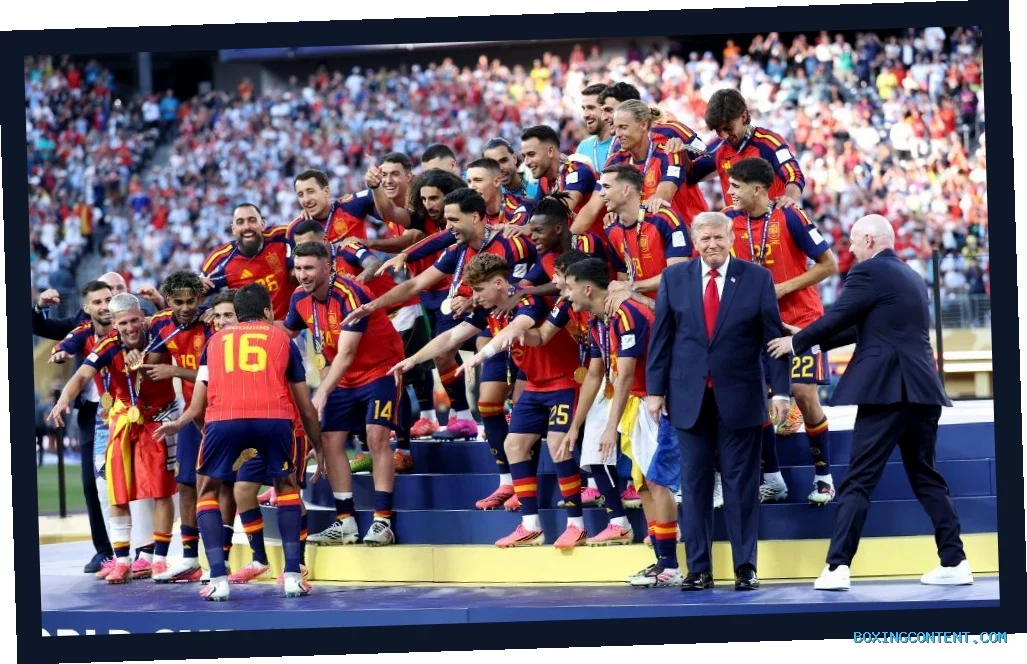
The tournament final itself attracted a massive audience of 65 million viewers across Fox and the Spanish-language network Telemundo. This staggering figure made it the most-watched live sporting event in the United States, outside of the Super Bowl, since the infamous figure skating rivalry between Nancy Kerrigan and Tonya Harding captivated the nation at the 1994 Winter Olympic Games.
As a result, the United States is no longer an afterthought for Fifa and its thinly veiled desire for continuous, aggressive revenue growth. It is now arguably the governing body’s single most important commercial market.
From Hot Potato to Hot Property
Early historical antipathy for soccer across the United States was clearly reflected in early World Cup broadcast arrangements. NBC’s delayed transmission of the 1966 final stands as the first standalone soccer broadcast in US television history, but comprehensive coverage remained either entirely absent or strictly limited to brief highlights until 1982, when ESPN and the broader expansion of cable television arrived on the scene.
It was not until 1998 that every single match of a World Cup was finally shown live to US audiences. Even in the modern era, the domestic Spanish-language broadcast rights regularly command a higher financial premium than their English-language counterparts, underscoring the vital demographic importance of Hispanic fans to the sport’s domestic footprint.
Fifa now possesses an exceptionally attractive product situated firmly within the world’s largest and most lucrative sports media market, where consumers have proven consistently willing to pay for premium content.
Not only that, but the US market is also largely free from the pesky media regulators found in most countries in Europe. European authorities frequently insist on strict free-to-air (FTA) coverage mandates and heavily limit the number of commercial breaks that can be broadcast during an hour of television. These regulatory hurdles often restrict the number of potential bidders and cap the overall revenue Fifa can extract.
World soccer’s governing body exercised this newfound commercial freedom during the summer tournament by permitting broadcasters to air commercial advertisements during mandatory three-minute hydration breaks implemented during each half of play. Ostensibly, this was an operational measure designed to safeguard player welfare under high ambient temperatures. However, these hydration breaks were made mandatory regardless of the actual matchday temperature.
This predictable pause in play allowed Fox to charge premium rates to advertisers right in the middle of live match action, enabling the network to further monetize its broadcast assets.
Fifa predictably attempted to distance itself from accusations of overcommercialization by pointing out that it made no additional revenue directly from the measure, as the overarching broadcast contracts had been finalized long before the policy decision was made.
Nevertheless, there is no denying that the massive scale of the 2026 World Cup—and Fox’s resulting record revenues—will permanently elevate the valuation of future media rights deals. This is especially true in a country like the United States, where sports fans are regularly and comfortably bombarded with commercial advertising throughout National Football League (NFL) broadcasts.
Market Appetite
The World Cup has emphatically proven itself as a ratings powerhouse at a time when traditional linear broadcasters and digital streaming platforms are increasingly desperate for premium live sporting rights. In the modern, fragmented media landscape, live sports remain virtually the only guaranteed method to capture huge, simultaneous live audiences while serving as an exceptionally effective tool for subscriber acquisition and retention.
Changing consumer viewing habits, coupled with a surging domestic interest in soccer, have seen the Premier League, Uefa Champions League, and several other elite European competitions secure immensely lucrative broadcast deals with major streaming services. These platforms are eager to fill their digital libraries with compelling content that attracts a highly engaged, relatively diverse audience willing to pay a recurring fee to watch their favorite sport.
Featuring 104 matches played during a summer window when only Major League Baseball (MLB), the Women’s National Basketball Association (WNBA), and a handful of other leagues are staging their regular seasons, the World Cup offers an unmatched volume and schedule that potential media partners deeply value.
On top of that, the tournament uniquely harnesses the powerful emotional pull of patriotism alongside its undisputed status as the most prestigious prize in global sport, generating the kind of widespread crossover appeal witnessed vividly over the summer.

A Bumper Payday?
Accordingly, virtually every single major broadcaster and streaming service operating in the United States has been linked at various points with a potential bid for the upcoming rights package. This raised the enticing prospect of a ferocious bidding war between some of the most well-resourced traditional media companies in the world and deep-pocketed big tech firms.
However, when the deadline for expressions of interest arrived, only two primary bidders formally registered their interest: incumbent broadcaster Fox and streaming giant Netflix. While the financial analysts and accountants at Fifa headquarters in Zurich might have initially hoped for a broader field of competitors, there is virtually no realistic scenario short of an unforeseen act of God that will prevent Fifa from enjoying a significant, multi-million-dollar uplift in its media rights revenue.
Back in 2011, Fox paid US$425 million for the US English-language rights to cover all men’s and women’s tournaments spanning the 2015 to 2022 cycle, while Spanish-language partner Telemundo forked out US$600 million. At the conclusion of that landmark contract, outside observers might have naturally expected Fifa to cash in immediately on seven consecutive years of explosive soccer growth across the United States, compounded by the immense prospect of a home World Cup in 2026 delivering unprecedented domestic interest and record-shattering ratings.
Indeed, many media industry observers estimated that the US rights for the 2026 tournament alone could easily have been worth up to US$1.5 billion on an open market. There was just one major complication. Instead of putting the rights out to an open competitive tender, Fox had quietly been handed the rights for the 2026 tournament for just US$485 million back in 2015—years before the formal hosting rights had even been awarded to North America.
According to reporting by The New York Times, that early extension was orchestrated primarily to avoid the severe prospect of legal litigation over Fifa’s controversial decision to shift the 2022 World Cup in Qatar from the traditional summer window to the winter, which would have forced Fox to broadcast soccer directly against its high-value commitments to the NFL, the NBA, and college football. It ultimately turned out to be arguably the deal of the century for the network—so remarkably favorable that Fifa reportedly even considered attempting to reclaim the rights despite the inevitable legal fallout.
The Contenders
The World Cup, and major live sport in general, remains so critically important to Fox’s overall programming strategy—given that the network has largely steered clear of the broader, expensive streaming wars—that it remains intensely motivated to retain the rights moving forward, even if it requires paying a substantially higher price.
Remaining with Fox would carry numerous distinct advantages for Fifa. These include a long-standing, pre-existing commercial relationship, the undeniable fact that Fox can offer the massive, frictionless household reach of a traditional over-the-air broadcast network, and widespread critical praise for its production quality and punditry during the summer tournament. Fox hopes its joint-bid strategy with Univision will strongly appeal to stakeholders who prefer to maintain the established industry status quo.
Amazon, which has rapidly evolved into a major media partner for the NFL and NBA in the United States, as well as holding rights to the Uefa Champions League in several key European markets, was also reported to have submitted a bid. The tech titan’s overarching sports strategy centers on utilizing live rights to bolster its core e-commerce and retail business, with Amazon Prime subscribers historically spending significantly more money on its retail platform than non-subscribers.
Major sporting events have consistently proven to be a significant engine for new user sign-ups for the firm, which could easily monetize the broadcast rights through innovative advertising avenues—such as interactive, personalized advertisements deployed during the aforementioned mandatory hydration breaks.
However, Netflix emerges as arguably the most intriguing and disruptive option on the table. The streaming pioneer’s recent programming strategy has shifted significantly toward major live events possessing broad cultural crossover appeal, such as NFL matchups on Christmas Day, the MLB All-Star Game, and high-profile live boxing broadcasts.
Netflix has already successfully secured the North American rights for the 2027 and 2031 Fifa Women’s World Cups, and is slated to serve as a senior broadcast partner for the 2030 men’s tournament in Spain, which is one of the co-hosts of the upcoming global event.
While Netflix lacks a traditional over-the-air broadcast network and would require viewers to maintain an active paid subscription to watch most matches, it operates with a relatively soft paywall and boasts immense global and domestic reach, particularly among highly coveted younger demographics.
Acquiring the US rights for the men’s tournament would allow the platform to position and market itself as the definitive "home of the World Cup" in the United States, creating an exceptionally compelling marketing narrative. Sublicensing select matches to a traditional broadcast network would also remain a viable operational option for Netflix, even if such a move is not legally mandated by domestic regulators.
An Open Goal or Near Miss?
Yet, several major players notable for their size have deliberately stayed away from the auction process. Much like Fox, traditional sports networks such as ESPN, CBS (under Skydance), and NBC must meticulously reserve vast capital reserves to fund upcoming, skyrocketing NFL media rights renegotiations. Meanwhile, major digital platforms like YouTube TV and Apple TV have reportedly chosen not to enter the fray. DAZN, which notably acquired the global rights to the 2025 Fifa Club World Cup for US$1 billion and maintains an existing technology partnership on the Fifa+ platform, also declined to table a formal offer. Industry insiders suggest that a major financial push of this magnitude might require fresh investment from 2034 tournament hosts SURJ Sports Investment to materialize.
Complicating matters further is the logistical reality that both the 2030 tournament—jointly hosted across Spain, Morocco, and Portugal—and the 2034 event in Saudi Arabia will be held in time zones highly unfavorable for prime-time US television audiences. Furthermore, the 2034 tournament will almost certainly be scheduled during the winter months, resulting in the exact same domestic scheduling conflicts with established American sports leagues that plagued the Qatar 2022 cycle.
Despite these hurdles, Fifa still harbors strong expectations of generating between US$1 billion and US$2 billion from the total rights package. According to reports from The Guardian, the governing body has already initiated a second round of bidding in an aggressive effort to drive up the final price, with Netflix’s current financial offer widely thought to be leading the pack at this stage.
In many respects, Fox’s historic, cut-price deal for a home tournament remains a stark anomaly, and it is tempting to wonder whether Fifa’s past administrative maneuvers ultimately caused it to miss out on an even more massive financial payday in 2026. Yet, when all is said and done, the ultimate financial and strategic results of this current media rights auction will say far more about the enduring, structural growth of soccer and the long-term positioning of the World Cup in America than any single tournament played this past summer.