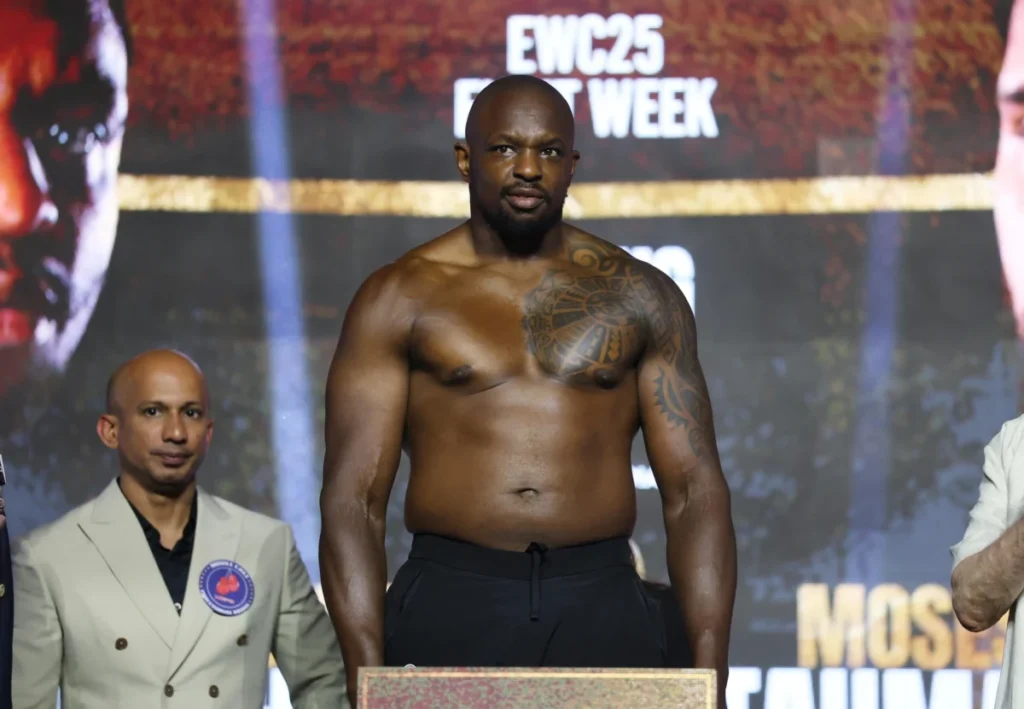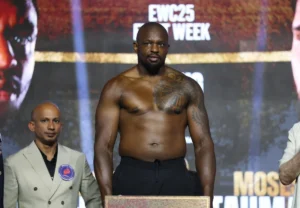
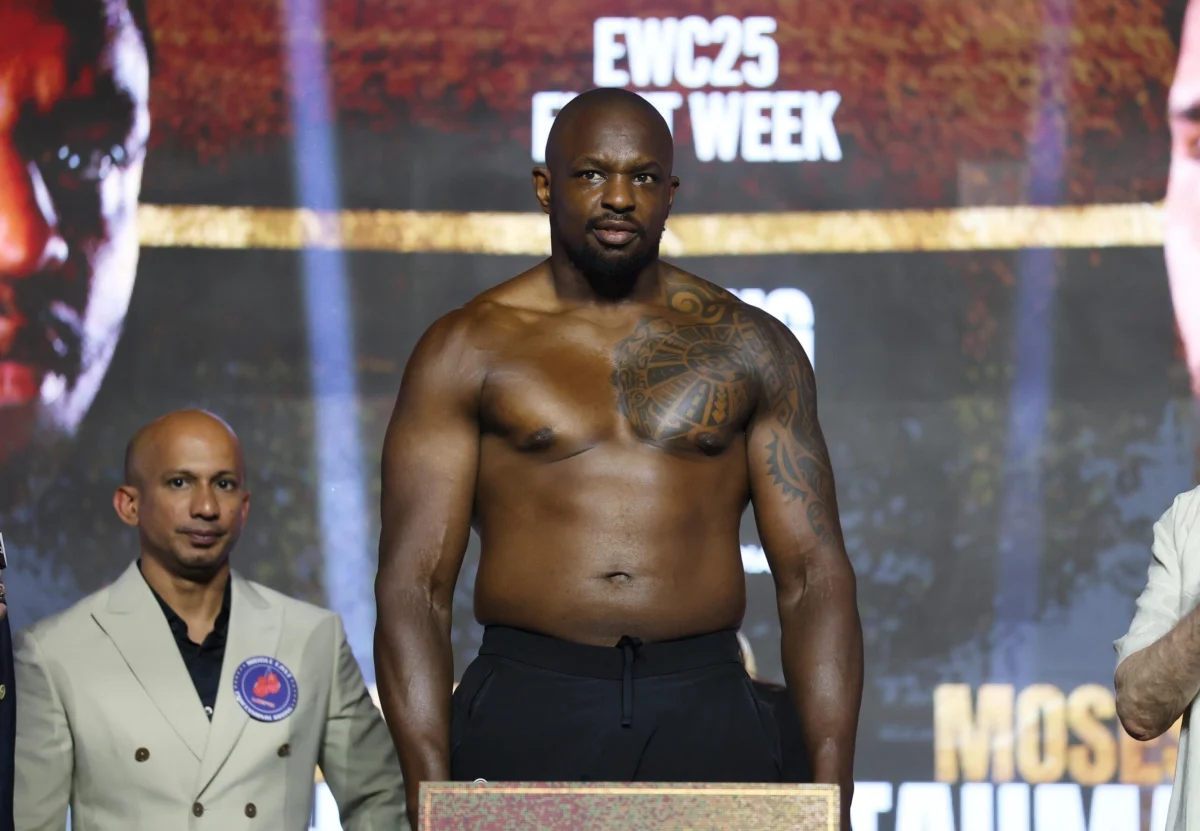
The heavyweight landscape has been delivered another dramatic twist as veteran British contender Dillian Whyte has officially stepped forward to offer his services as a replacement opponent for former WBC heavyweight champion Deontay Wilder. The sudden opening arose following the unexpected withdrawal of Jai Opetaia from his scheduled bout against Wilder, which was slated to serve as one of the premier co-featured attractions on the massive December 11 event headlined by the long-awaited collision between Tyson Fury and Anthony Joshua. With Wilder left searching for a willing and high-profile dance partner to keep his spot on the blockbuster card intact, Whyte has made it clear that he is ready, willing, and eager to finally lock horns with the American power-puncher after years of missed connections and lingering animosity.
Speaking in an interview with Sky Sports, Whyte lost no time in putting his name at the top of the list of potential suitors. The Brixton heavyweight emphasized that a showdown against Wilder is a contest he has been actively pursuing for nearly a decade, viewing the current scenario not merely as a convenient short-notice rescue job, but as the potential fulfillment of a long-overdue rivalry that has simmered in the background of the division for years. According to Whyte, the desire to test himself against the former champion remains as strong as ever, and he believes his promotional team stands fully prepared to finalize terms if Wilder and his handlers are genuinely interested in striking a deal.
"I’ve already waited 100 years for him, so if he wants it in December, then let’s go," Whyte stated plainly when assessing the possibility of stepping into the ring on short notice. Reflecting on the lengthy history between the two veteran heavyweights, Whyte highlighted just how persistent his desire to secure this specific matchup has been throughout his professional career. "I’ve been trying to fight him for 100 years. I’ve always believed that I could have beaten him."
In evaluating what Wilder brings to the ring, Whyte demonstrated a clear awareness of the unique hazards posed by the former titlist while remaining entirely resolute in his belief that he possesses the ideal skill set and temperament to overcome them. Wilder has long been regarded as one of the most explosive single-punch knockout artists in boxing history, relying on speed, range, and a devastating right hand that can alter the course of a fight in a fraction of a second. Whyte acknowledged those dangerous attributes without hesitation, recognizing the physical traits that have made Wilder such a formidable entity in the weight class over the last decade.
"He’s a big puncher, he’s wiry, and he’s fast and all that," Whyte admitted, offering a candid assessment of the American’s athletic tools and athletic lineage. However, rather than being intimidated by those traits, Whyte emphasized that his confidence stems from his own tactical approach and psychological resilience. "I just believe that I have the mentality and the style to beat him and cause him all sorts of problems. And I still believe that."
The sudden opportunity for Whyte to make his pitch comes at a critical juncture for the December 11 spectacle. The card, anchored by the long-awaited showdown between Fury and Joshua, was structured as a flagship event for the sport, with Wilder’s bout intended to provide major star power in the supporting slots. However, the removal of Opetaia created an immediate void, leaving event organizers and Wilder’s camp scrambling to locate a substitute capable of preserving the matchup’s marquee appeal.
In the immediate wake of Opetaia’s departure, several heavyweights began throwing their names into the mix, hoping to secure a lucrative spot on one of the most widely covered broadcasts of the year. Yet, among the prospective candidates who have expressed interest, few possess the established name recognition, high-profile resume, and built-in promotional storyline that Whyte carries into negotiations. For organizers seeking a seamless transition that retains strong interest from both transatlantic and global fight fans, a pairing between Wilder and Whyte presents an immediate narrative, drawing upon years of prior media exchanges, near-miss negotiations, and parallel careers at the top level of the division.
While the storybook appeal of a Wilder versus Whyte clash is clear, the potential matchup arrives during a complex period in Whyte’s career trajectory. The British contender is coming off a particularly difficult setback in 2025, when he suffered a swift defeat at the hands of fast-rising powerhouse Moses Itauma. In that high-stakes encounter, Whyte was overwhelmed early, falling victim to a rapid blitz that resulted in a dramatic first-round stoppage. That loss raised lingering questions among analysts and observers regarding how much the veteran heavy-hitter has left in reserve after enduring years of grueling ring wars against elite opposition.
Despite that recent, decisive defeat to Itauma, Whyte remains unfazed by external skepticism surrounding his form or physical condition. He maintains that a single negative outing does not define his remaining capabilities or erase the stylistic advantages he believes he holds over someone with Wilder’s specific fighting rhythm. From Whyte’s perspective, the setback against Itauma was a tough night in a long career, and the opportunity to jump directly into a high-stakes clash with Wilder on a platform as large as the December 11 card represents an ideal chance to silence critics and instantly re-establish his standing among the division’s top names.
The underlying friction between Whyte and Wilder is rooted in years of administrative delays and public spats. During Wilder’s reign as the WBC world champion, Whyte spent a prolonged period ranked as the sanctioning body’s top contender and interim titleholder, repeatedly demanding a mandatory title opportunity that ultimately never materialized. Throughout that timeframe, Whyte routinely expressed frustration over what he characterized as a persistent reluctance from Wilder’s team to finalize a deal, fueling a feud that played out across international media over several years.
Throughout those years of waiting, Whyte consistently argued that his physical, pressure-oriented style was tailor-made to exploit Wilder’s technical flaws. Known for his rugged inside fighting, physical grappling, and powerful left hook, Whyte has always believed that imposing a grinding, uncomfortable pace on Wilder is the key to neutralizing the American’s long-range right hand. While Wilder built his career on highlight-reel knockouts, Whyte has long contended that the former champion struggles when forced into deep waters by a heavy, relentless opponent who is unbothered by incoming fire. That conviction remains central to Whyte’s outlook today; despite the passage of time and recent career hurdles, he retains the firm belief that his core tactical identity remains the ultimate foil to Wilder’s style.
From a promotional and competitive perspective, putting Wilder and Whyte together on short notice would add an extra layer of drama to an already stacked event. Both fighters find themselves at stages in their respective careers where victory is essential to remaining relevant in the world title picture, while a loss could effectively derail future main-event opportunities.
For Wilder, finding an opponent on short notice who brings instant name recognition and genuine fan interest is a challenging task. Agreeing to face a well-known veteran like Whyte ensures that his fight remains a major focal point of the event. At the same time, Wilder’s team must weigh the risks of taking on a seasoned, highly motivated contender who has spent years studying his movements and actively seeking a way to land his own defining shots.
For Whyte, taking the fight represents an all-or-nothing opportunity that bypasses the traditional, slow rebuilding process typically required after a first-round knockout loss. By volunteering to step into the ring with one of the division’s most dangerous punchers on limited preparation time, Whyte reinforces the fearless, fighter-first reputation that has defined his career. A victory over Wilder on December 11 would instantly revitalize his career, transforming a difficult period into one of the most remarkable turnarounds in recent heavyweight memory.
The December 11 card continues to generate immense anticipation across the sports world, with the main event between Fury and Joshua serving as the centerpiece. Adding a high-profile showdown between Wilder and Whyte to the lineup would reinforce the night’s status as a historic showcase for the heavyweight division, featuring four of the most prominent big men of the modern era on a single stage.
With the date fast approaching, the decision now rests with Wilder, his management, and the event promoters as they evaluate their options. Whyte has made his intentions public, leaving no doubt about his willingness to take the assignment. Having spent years tracking Wilder from afar, Whyte’s message is clear: he is ready to fight, his team is available to talk, and if Wilder wants to lock horns on December 11, the long-awaited battle can finally take place.