
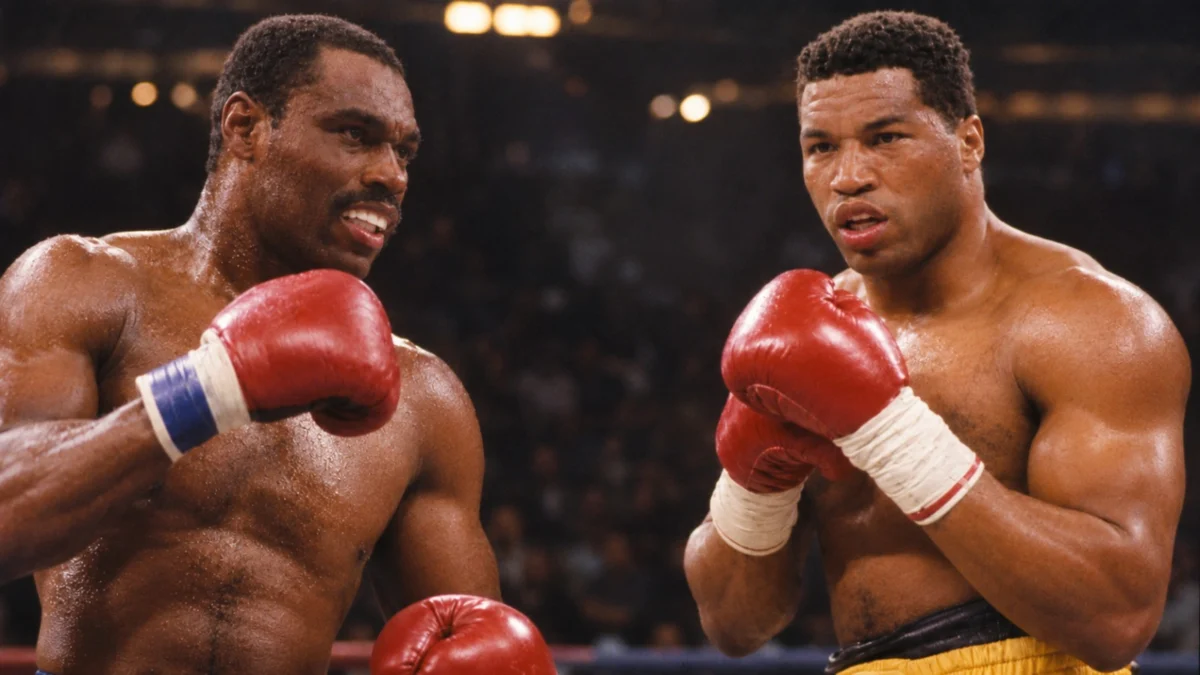
Heavyweight boxing has long been a theater for high drama, high stakes, and unforgettable controversies, but few moments in the sport’s rich history match the bizarre circumstances surrounding the February 1993 clash between former world champion Ray Mercer and contender Jesse Ferguson. What was supposed to be a straightforward stepping stone for Mercer on his path to a lucrative world title opportunity instead devolved into a stunning upset, a criminal investigation, and a sensational court trial that gripped the sports world.
The event, held at the historic Madison Square Garden on February 6, 1993, was meant to showcase Mercer’s dominance. A decorated 1988 Olympic gold medalist and former WBO heavyweight champion, Mercer entered the ring as the heavy favorite. A victory over Ferguson seemed almost procedural, a necessary hurdle to clear before stepping into a multi-million-dollar showdown with reigning heavyweight king Riddick Bowe. The projected payday for the Bowe fight hovered around an astonishing $2.5 million, a monumental purse that placed immense professional and financial pressure on Mercer’s shoulders.
However, the script was completely rewritten inside the squared circle. Ferguson, a rugged and determined competitor, refused to roll over. Over ten grueling rounds, Ferguson frustrated the heavily favored champion, neutralizing his offense and landing enough clean punches to sway the judges. When the final bell sounded, the Madison Square Garden crowd awaited the scorecards, only to witness a major upset. Ferguson was awarded a decisive unanimous decision victory, instantly derailing Mercer’s championship trajectory and altering the landscape of the heavyweight division.
While the loss itself was a massive shock to the boxing establishment, the true magnitude of the night’s fallout would only emerge in the weeks and months that followed, transforming a standard athletic defeat into a serious legal battle involving allegations of sports bribery.
The $100,000 Mid-Fight Offer
The narrative of the fight shifted dramatically when prosecutors later alleged that Mercer, realizing he was failing to secure the upper hand against an opponent he was expected to easily dispatch, attempted to buy his way to victory. According to court filings and statements from investigators, Mercer allegedly offered Ferguson $100,000 mid-fight to take a dive and lose the contest.
Law enforcement and boxing investigators claimed that the initial approach was made during the third round of the bout. As the rounds progressed and Mercer continued to struggle against Ferguson’s tactical defense and counter-punching, the bribery offer was reportedly repeated. Investigators meticulously reviewed broadcast footage recorded by HBO, operating on the belief that the audio captured during the live telecast might have inadvertently recorded the clandestine exchanges between the two heavyweights.
When weighed against a potential $2.5 million payday awaiting the winner of a Riddick Bowe title fight, the alleged $100,000 payout represented a relatively minor investment for Mercer to secure his next career milestone. Yet, despite the financial temptation, Ferguson firmly rejected the overture. Instead of complying with the alleged fix, Ferguson fought on with fierce determination, ultimately delivering the performance of a lifetime and sealing one of the most consequential victories of his professional career.
Mercer Charged and Acquitted
The fallout from the allegations moved swiftly from the sports pages to the criminal justice system. In June 1993, just four months after their Madison Square Garden encounter, Ray Mercer was formally charged with attempted sports bribery. The former champion maintained his innocence from the outset, vehemently denying the accusations and entering a plea of not guilty as legal preparations began.

The case eventually proceeded to trial in March 1994, drawing intense media scrutiny to a courtroom in New York. The trial featured dramatic testimony from Ferguson, who took the stand to detail the alleged mid-fight offers, alongside prosecutors who presented audio and video evidence gathered from the HBO broadcast recordings.
Mercer’s defense team aggressively contested the charges, arguing that verbal jousting, trash talk, and unusual conversations between competitors during the heat of a high-stakes athletic contest were commonplace and should not be misconstrued as criminal activity. The defense successfully raised reasonable doubts regarding the interpretation of the ring exchanges and the true intent behind the fighters’ dialogue.
On March 29, 1994, a New York jury delivered its verdict, acquitting Mercer of the attempted sports bribery charge. The legal cloud hanging over the former Olympic champion was finally lifted, allowing him to focus entirely on rebuilding his storied boxing career.
Ferguson Gets His Title Shot
With the victory over Mercer firmly on his resume, Jesse Ferguson capitalized on his newfound momentum and earned a direct opportunity at the heavyweight championship. On May 22, 1993, just months after defeating Mercer, Ferguson challenged Riddick Bowe for the heavyweight crown. However, Bowe proved to be an insurmountable obstacle, stopping Ferguson in the second round to retain his title.
Meanwhile, the unfinished business between Mercer and Ferguson demanded a resolution inside the ring. In November 1993, while Mercer’s criminal trial was still months away from commencing, the two heavyweights agreed to a high-profile rematch. Promoted under the dramatic banner of “The Final Verdict,” the second bout gave Mercer an immediate chance to redeem his reputation and avenge his earlier loss, even though the legal proceedings regarding the bribery allegations remained unresolved.
The rematch proved to be a fiercely contested battle, but this time, Mercer did enough to convince the judges, securing a hard-fought victory by split decision.
The bizarre controversy surrounding the first meeting became an extraordinary and defining chapter in Mercer’s lengthy career. Following the incident, Mercer continued to share the ring with many of the era’s greatest fighters, taking on legends such as Lennox Lewis, Evander Holyfield, and Wladimir Klitschko.
Looking back, Mercer had entered the Madison Square Garden ring on that winter evening in February 1993 expecting a routine victory that would propel him toward a multimillion-dollar world championship opportunity. Instead, he suffered a stunning defeat, watched as his vanquisher stepped into the title opportunity he had craved, and ultimately found himself defending his character and freedom in a court of law. Although he was ultimately cleared of all criminal wrongdoing, the enduring legacy of the $100,000 accusation ensured that the first encounter between Ray Mercer and Jesse Ferguson would forever be remembered as one of the most uniquely controversial nights in modern boxing history.