


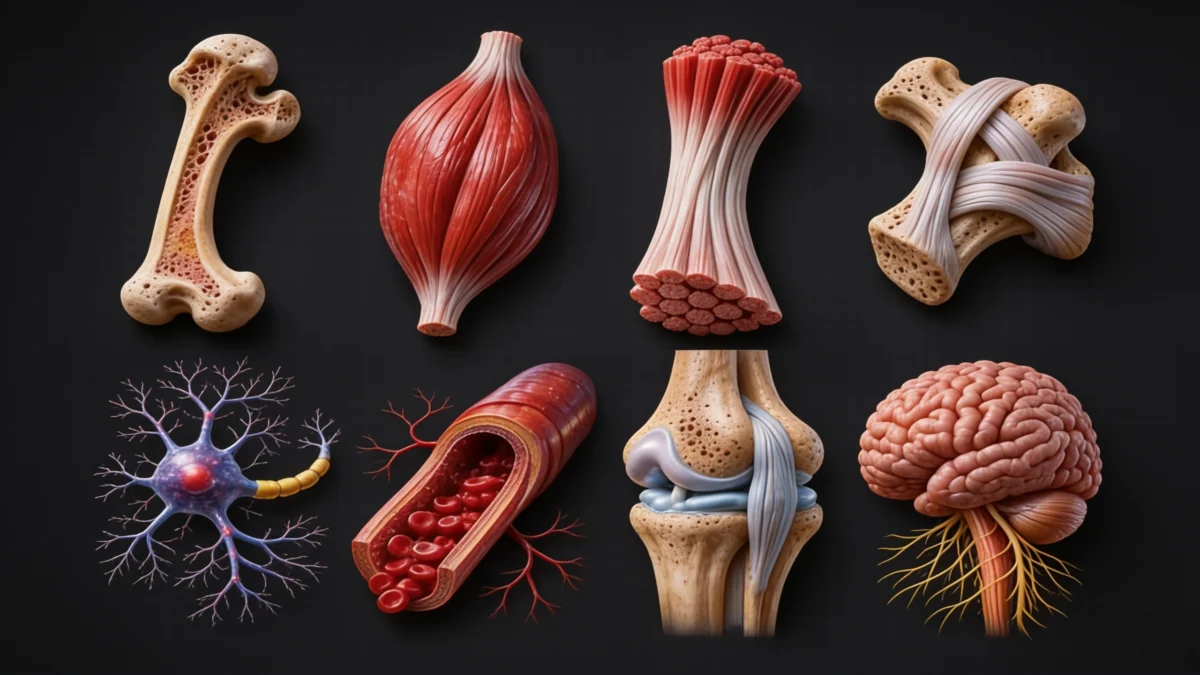
Our Anatomy That Are Captivating the Internet
A viral anatomy post currently making the rounds across social media is drawing widespread attention not just for its striking visuals, but for the staggering numbers it uses to describe the human body. Inside every person sits a complex and finely tuned biological infrastructure composed of 206 bones, over 600 muscles, and roughly 86 billion brain neurons. Working seamlessly in concert, these foundational components power every human action, from taking a simple step to maintaining a steady heartbeat and processing complex sensory experiences.
While these figures are widely cited in modern educational materials, a closer examination reveals that several of these numbers carry surprising backstories, while others shift dramatically across a person’s lifespan. The viral discussion has prompted many to reexamine the internal machinery that sustains everyday life. For centuries, scientists and anatomists have studied this intricate biological architecture, tracing a direct line of scientific inquiry from 16th-century anatomist Andreas Vesalius to the advanced techniques of modern neuroscience that continue to refine our understanding of human physiology.
Three Numbers That Define Human Movement
The human body is often understood through the distinct systems that govern movement, support, and thought. The interplay between the skeletal frame, muscular system, and neurological network creates a dynamic machine capable of remarkable endurance and precision. However, the popular understanding of these systems often relies on generalized figures that mask a much more complex biological reality.
One of the most notable examples of this complexity can be found in the human skeleton. While adults possess a standard framework of 206 bones, human development tells a significantly different story during the earliest stages of life.
Why Babies Have More Bones Than Adults
A surprising biological fact that often catches people off guard is that newborns actually enter the world with roughly 270 to 300 bones. The discrepancy between the infant skeleton and the adult frame does not mean that bones disappear or vanish over time. Instead, many of these skeletal elements are initially separate at birth to facilitate childbirth and rapid early growth, and they gradually fuse together throughout childhood and adolescence.
This process of ossification and fusion explains how the human skeleton transitions from a highly flexible framework optimized for birth and early development into the sturdy structural support system characteristic of adulthood. The human skeleton features a wide array of extremes, ranging from the longest and strongest bone in the leg, the femur, to the tiny bones housed within the middle ear that transmit sound vibrations.
Muscles Do Far More Than Flex
When people think of muscles, they typically picture the skeletal muscles responsible for athletic performance, lifting objects, and general physical movement. However, muscle tissue performs a vastly broader array of physiological functions that are essential for survival. Beyond voluntary movement and maintaining posture, specialized muscle tissues keep blood circulating continuously through the heart and propel food along the digestive tract through involuntary contractions.
Because of this diverse range of responsibilities, movement is only one entry on a remarkably long resume of muscular duties. Determining the exact number of muscles in the human body has long been a subject of scientific discussion. Anatomists generally rely on the standard figure of more than 600 named skeletal muscles, though some comprehensive tallies exceed 650. This variation largely depends on how individual anatomists choose to divide, group, and classify specific muscle bundles and overlapping tissue layers.
The Neuron Count Scientists Had to Correct
Perhaps the most fascinating correction highlighted in the viral anatomical discussion involves the human brain. For decades, popular science culture maintained the widely accepted belief that the human brain contained precisely 100 billion neurons. Like many tidy round numbers, it was repeated frequently in textbooks, articles, and documentaries, but it ultimately turned out to be inaccurate.
A landmark 2009 study conducted by neuroscientist Suzana Herculano-Houzel fundamentally shifted that baseline. Utilizing a method known as isotropic fractionation—a technique designed to dissolve brain tissue and accurately count cell nuclei rather than relying on older, less reliable estimation models—Herculano-Houzel and her team arrived at a new figure. Their research demonstrated that the human brain contains approximately 86 billion neurons.
Scientists emphasize that 86 billion remains an approximation derived from sampling methods rather than a literal, individual census of every single brain cell, but it represents a significant refinement in neuroscientific data.
Connections Matter More Than Cell Count
While the downward adjustment of the neuron count surprised many outside the scientific community, neuroscientists point out that the sheer number of individual cells tells only part of the story. The true complexity of the human brain lies in how these neurons communicate with one another across specialized junctions known as synapses.
Current scientific estimates place the brain’s total number of synaptic connections at around 100 trillion. This vast, intricate web of communication is where human memory, emotion, reasoning, and consciousness truly reside. The correction of the neuron count serves as a broader reminder that human biological complexity is often easy to misjudge, and that popular science frequently preserves outdated figures long after empirical research has established more accurate data.
Tendons vs. Ligaments: Commonly Confused, Clearly Different
In addition to bones, muscles, and the brain, the musculoskeletal system relies heavily on connective tissues to maintain structural integrity and facilitate movement. Tendons and ligaments are frequently confused by the general public, yet they serve distinctly different anatomical purposes. Tendons connect skeletal muscles to bones, transmitting the force generated by muscle contraction to move the skeleton. Ligaments, conversely, connect bones to other bones, stabilizing joints and preventing excessive or dangerous ranges of motion.
Despite their different roles, both structures consist primarily of collagen fibers, with tendons relying heavily on type I collagen to withstand high tensile loads. Both tissues also share a notable physiological trait: they receive a relatively sparse blood supply compared to organs like the liver or muscles.
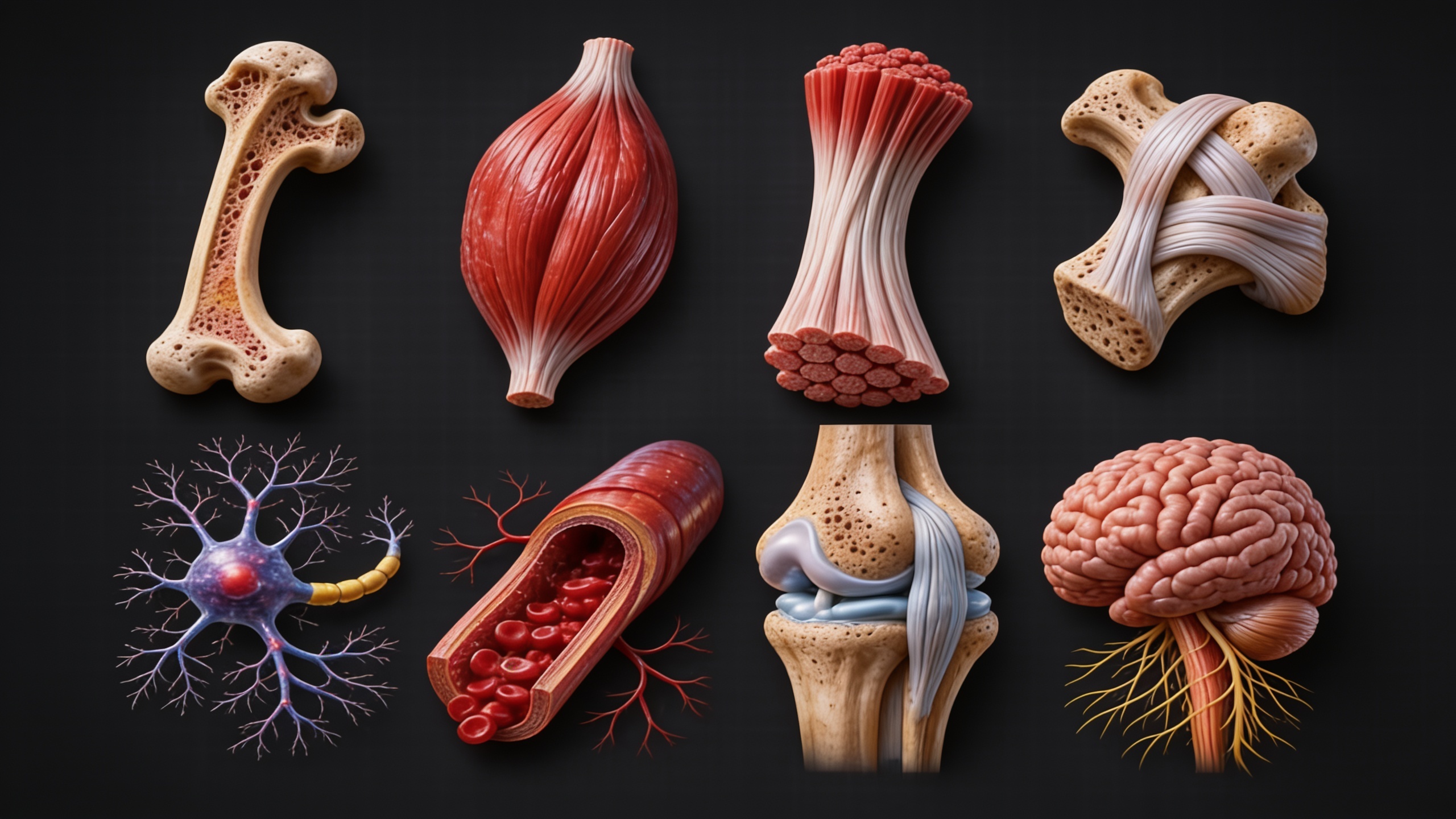
This limited circulation explains why tendon and ligament injuries tend to heal so sluggishly. The slow delivery of oxygen and nutrients means that cellular repair processes take considerable time, making patience a clinical reality rather than a mere cliché for anyone recovering from a connective tissue injury.
Two Nervous Systems, One Network
To coordinate the vast network of bones, muscles, tendons, and ligaments, the human body relies on the nervous system, which is broadly divided into two main components. The central nervous system, consisting of the brain and spinal cord, acts as the primary command center, processing incoming sensory data and issuing motor commands. The peripheral nervous system branches out across the entire body, transmitting signals between the central command center and the limbs, organs, and tissues.
Whether a person is performing a delicate task like signing a birthday card or an explosive action like sprinting for a bus, the entire apparatus depends on bones, muscles, tendons, ligaments, and nerves functioning as a single, highly integrated biological unit.
When One System Falters, Others Follow
Because these physiological components are deeply interconnected, the relationship between them cuts both ways. Damage or trauma to a nerve can quickly impair the function of the muscles it serves, frequently leading to muscle weakness and, if left unaddressed over time, progressive atrophy.
Anatomists and physiologists continually emphasize this cascading effect because clinical issues rarely remain strictly confined to a single tissue type. A failure or injury in one part of the musculoskeletal or nervous system inevitably places increased stress on adjacent structures, altering biomechanics and potentially causing widespread complications.
Understanding the intricacies of human anatomy fundamentally transforms how individuals approach injury prevention, physical rehabilitation, and athletic performance. Knowing the specific roles and limitations of each biological structure makes it significantly easier to make informed choices regarding health, conditioning, and recovery. As ongoing scientific research continues to refine our knowledge of the human body, the staggering numbers behind our internal machinery serve as a lasting testament to the remarkable complexity of human life.