
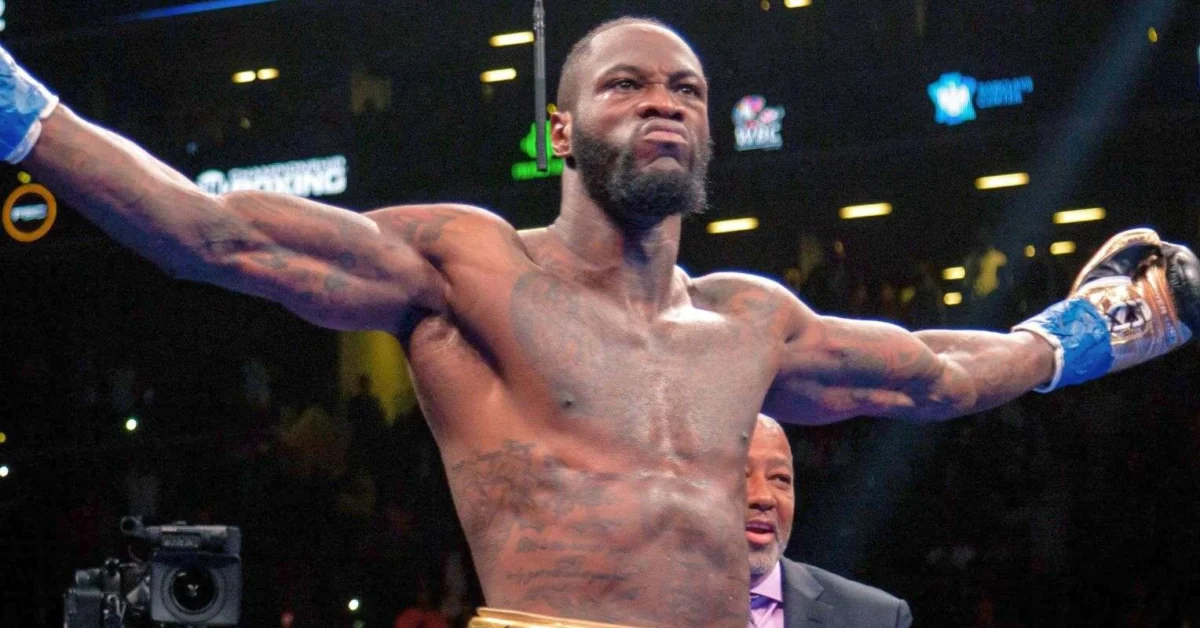
While many within the boxing community and media circles feel his storied career may finally draw to a close on December 11, former WBC heavyweight champion Deontay Wilder is already looking far beyond his immediate future. The hard-hitting American puncher believes he could revisit a major heavyweight rivalry and potentially secure long-talked-about matchups as late as 2027, provided he successfully navigates a series of challenging hurdles standing directly in his path.
Before any long-term plans can materialize, the 40-year-old veteran must first complete a fascinating upcoming assignment against Australia’s elite cruiserweight standout Jai Opetaia. This high-stakes encounter is scheduled to feature prominently on the blockbuster undercard of the upcoming Tyson Fury versus Anthony Joshua event, which is set to take place at Cardiff’s iconic Principality Stadium. The inclusion of Wilder and Opetaia adds an extra layer of global intrigue to an already massive fight night, capturing the attention of boxing traditionalists and casual fans alike.
Opetaia enters this upcoming chapter with an unblemished reputation and a fierce competitive drive. Operating at the 200lbs cruiserweight limit, the Australian star cemented his status as a two-time world champion by securing decisive, unanimous point victories over Mairis Briedis on two separate occasions. Demonstrating his relentless forward momentum and devastating finishing ability, Opetaia is currently coming off an impressive ninth-round technical knockout victory over Noel Mikaelian, a bout that took place in September and further showcased his elite-tier credentials inside the squared circle.
As a direct result of these dominant performances, many boxing analysts and observers firmly consider Opetaia to be the leading cruiserweight in the world today. However, the landscape of the division remains dynamic and full of potential blockbuster fights. With fellow standout David Benavidez currently holding two major titles in and around the weight class, the overarching hope and expectation within the sport is that Opetaia and Benavidez will eventually collide to determine undisputed supremacy sometime next year.
Until those division-defining unification talks reach a definitive conclusion, however, Opetaia must make a calculated and dangerous heavyweight excursion. He will step up in scale and power to face the former WBC heavyweight champion Wilder. Wilder himself enters the ring looking to build upon his recent momentum, coming off a hard-fought and tactical split-decision victory over fellow veteran Derek Chisora in April. That gritty win served as an important reminder of Wilder’s enduring resilience and ability to navigate rough waters, even at this advanced stage of his professional career.
If the American knockout artist manages to emerge victorious against the ambitious Opetaia in Cardiff, the 40-year-old may then explore a potential showdown with long-time rival Anthony Joshua. Wilder has previously been in active negotiations with the British star on several occasions over the years, though a deal has famously always eluded them at the final hour. A matchup between Wilder and Joshua has long been considered one of the most compelling and commercially viable fights that the heavyweight division could possibly produce, given the immense punching power and global star power possessed by both men.
Yet, while candidly insisting that he would love to face the 37-year-old British powerhouse, Wilder has revealed to Playbook Boxing that the ultimate decision regarding the fight is largely out of his hands. Navigating the complex political landscape of modern heavyweight boxing remains a notoriously difficult endeavor, and Wilder understands that promotional agreements and corporate management structures carry far more weight than simple personal ambition.
Reflecting on the persistent obstacles that have historically derailed the matchup, Wilder explained his current perspective to Playbook Boxing, noting the intricate web of decision-makers involved in Joshua’s career trajectory.
"I would love that fight, but it ain’t up to me," Wilder told Playbook Boxing. "I think it’s partially up to Joshua, [but] not fully. Whoever manages him and runs the whole operation [is mostly responsible]."
Wilder further elaborated on the emotional and professional toll that continuous, failed negotiations have taken on him over the years. Given how close the two fighters have come in the past to sharing a ring, the ongoing uncertainty surrounding the prospective bout has proven to be a source of frustration for the American veteran, who prefers to focus on the tasks directly in front of him rather than chasing ghosts from the past.
"I don’t even like talking about this situation with me and him, because I’ve had a lot of disappointments," Wilder admitted.
Those disappointments are well-documented within the annals of recent boxing history. Following multiple previous attempts to finalize terms and secure a date, the two heavyweights were finally on a collision course to face one another in a monumental showdown set for 2024. Everything appeared to be falling into place for the long-awaited clash, only for the entire landscape to shift dramatically when Wilder suffered a comprehensive defeat in his 2023 encounter against New Zealand’s Joseph Parker. That unexpected loss effectively derailed the Joshua fight, forcing both men to take divergent paths and rebuild their respective positions within a fiercely competitive heavyweight division.
Now, with a new calendar year approaching and an intriguing battle against Jai Opetaia awaiting him on the Tyson Fury versus Anthony Joshua undercard at Cardiff’s Principality Stadium, Deontay Wilder finds himself at another critical juncture in his remarkable career. Whether he ultimately brings down the curtain on his time in the sport or manages to defy the odds to set up a lucrative 2027 rivalry, the former champion remains focused on proving that his formidable right hand still possesses the power to alter the course of the heavyweight division.