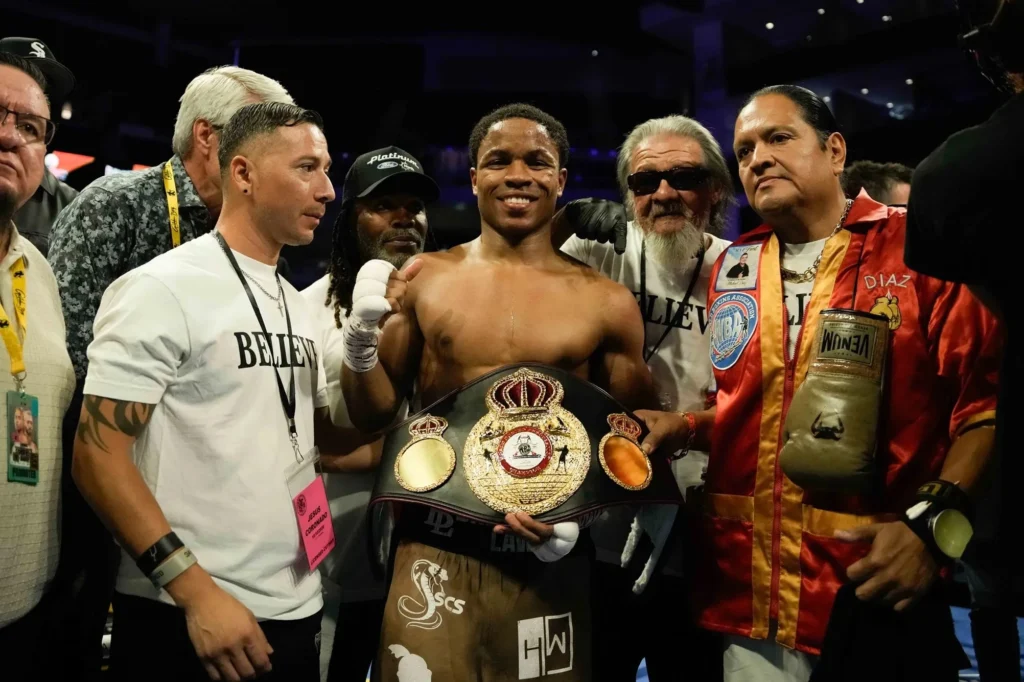


The lightweight division takes center stage in Carson, California, this Saturday night as undefeated American prospect Charlie Sheehy prepares for the most significant test of his young professional career. In a championship contest that highlights the classic intersection of rising domestic talent and battle-tested international resolve, Sheehy will step into the ring against seasoned Argentine contender José Matías Romero with the vacant WBA Continental North America Lightweight Championship on the line. The scheduled bout presents an intriguing tactical contrast, pitting the refined, long-range boxing skills of an unbeaten California native against the deep experience and relentless pressure of a South American veteran who travels to foreign territory with the explicit goal of halting a rising trajectory.
For Sheehy, the high-stakes contest in Carson represents a crucial opportunity to convert high-profile prospect status into tangible regional championship credentials. Holding an impressive unblemished record of 13 wins in as many professional outings, the California native enters the weekend with the momentum of an undefeated ledger and the comfort of competing in front of a home-state crowd. However, stepping up to contest a title sanctioned by the World Boxing Association brings an elevated standard of scrutiny and tactical demand. Championship matches of this magnitude serve as defining turning points for rising fighters, testing not only their technical foundation and athletic ability, but also their ring intelligence, adaptability, and capacity to handle the escalating intensity brought by opponents who have competed extensively across the international landscape.
Throughout his 13 professional victories, Sheehy has established a clear boxing identity built around tactical discipline, sharp timing, and effective distance control. Operating primarily from mid-range, the California prospect relies heavily on an active, authoritative jab to measure distance, control the tempo of exchanges, and dictate terms against incoming opponents. His offensive construct is centered on setting up clean, highly calculated sequences, using his lead hand to disrupt his opponent’s rhythm before unleashing precise, crisp combinations targeted directly at the head. Rather than engaging in reckless exchanges, Sheehy’s methodology is rooted in patience and spatial awareness, choosing his moments to strike while maintaining a tight, responsible defensive structure.
A primary key to Sheehy’s game plan in this regional championship match will be his footwork and physical reach advantage. To successfully execute his tactical approach against a pressuring opponent, the undefeated prospect must stay light on his feet and constantly alter his angles of exit. Remaining a stationary target against a grinding inside fighter plays directly into the opposition’s strengths; therefore, Sheehy’s success will hinge on his ability to circle away from danger, maintain maximum fighting distance, and operate effectively off the outer perimeter of the canvas. By leveraging his superior reach and maintaining lateral movement, Sheehy aims to establish control on the judges’ scorecards from the very first bell, piling up early points while denying his challenger a fixed target to lean on or corner.
Standing in the opposing corner is José Matías Romero, a fighter whose career has been defined by durability, composure, and extensive exposure to high-level international competition. Journeying from Argentina to compete on U.S. soil, Romero brings a wealth of ring time accumulated against diverse opposition around the globe. Unfazed by fighting on foreign soil or facing hostile crowds, the Argentine contender enters the bout with a proven track record of maintaining his cool under pressure. His international campaign has hardened his approach, instilling a calm, unhurried demeanor that allows him to stay focused even when facing faster, more visually explosive boxers who attempt to sprint out to early leads.
Stylistically, Romero represents a classic South American pressure fighter who relies on constant forward movement, high durability, and methodical work on the inside. The Argentine is known for his physical resilience, compact defensive guard, and ability to trouble quicker, high-output opponents through sustained physical contact. Rather than trying to box from the outside where longer, faster fighters maintain a natural edge, Romero thrives when he can close the distance and reduce the space between himself and his opponent. His strategic goal in Carson will be to cut off the ring, limit Sheehy’s movement, and turn the contest into a physical battle of strength and endurance inside close range. By keeping physical pressure on Sheehy and working continuously, Romero intends to gradually wear down the prospect’s pace as the fight progresses.

The clash between Sheehy and Romero is fundamentally a battle over ring geometry and fighting rhythm. For Sheehy, the objective is to keep the fight in open space, where his long-range strikes, jabs, and fluid head combinations can operate cleanly without interruption. If Sheehy can keep the contest centered in the middle of the ring, he can use his speed and leverage to pick apart Romero’s forward advances, neutralizing the Argentine’s offensive output before it gets started. Conversely, Romero’s mission is to smother that open space rapidly, forcing Sheehy to fight continuously without room to rest or reset. If Romero can successfully herd Sheehy toward the ropes or pin him in the corners, the dynamic of the bout will shift from an outside technical display to a grueling physical battle.
As the rounds add up, conditioning and stamina will inevitably become key factors in determining the outcome. Sheehy’s preferred style of constant lateral movement and high-frequency jab output requires significant energy expenditure, which can become increasingly difficult to sustain if he is forced into repeated physical clinches or prolonged exchanges inside. Romero’s methodical inside work is specifically designed to drain an athletic opponent’s engine. By leaning on the younger fighter, smothering his extension, and subjecting him to non-stop body work and pressure, the Argentine aims to slow down Sheehy’s footwork and reduce his punch output over the second half of the fight. How effectively Sheehy manages his energy while operating under persistent forward pressure will be one of the most critical elements of the bout.
From a scoring perspective, the matchup presents a fascinating study in contrasting ring styles. Sheehy’s clean jab work and sharp combinations are naturally appealing to judges who value long-range scoring, crisp technique, and defensive movement. For Sheehy to build a comfortable lead, his jab must function not only as an offensive set-up shot, but also as an assertive defensive barrier—stopping Romero in his tracks before he can set his feet to throw heavy punches. On the other hand, Romero’s steady work rate, inside volume, and physical control of the ring space can sway the scoring if he succeeds in making Sheehy look uncomfortable or forced into defensive retreats. The boxer who controls the distance during the opening rounds will likely dictate the overall narrative and scoring trend of the fight.
In professional boxing, the jump from undefeated prospect to regional champion is rarely easy. A record of 13 consecutive victories showcases talent and high potential, but meeting a seasoned foreign contender like Romero provides a true measure of a fighter’s ceiling. Rising prospects must demonstrate that they can navigate difficult moments, adjust to unconventional rhythm breaks, and remain composed when an opponent absorbs their best shots and continues to press forward. Romero has spent years testing prospects and contenders around the world, making him a formidable obstacle for an unblemished record. Sheehy’s ability to handle the physical demands of a high-pressure veteran will offer clear answers regarding his readiness for top-tier contention.
The showdown in Carson takes place during a highly active period for the lightweight division across major sanctioning bodies like the WBA, where regional titles serve as crucial gateways to world rankings. The competitive drive within the weight class is mirrored in other major international matchups, such as the upcoming clash between Zelfa Barrett and Gavin Gwynne for the WBA Intercontinental Lightweight Title. As fighters like Barrett and Gwynne clash for international position, the winner of the Saturday night bout between Sheehy and Romero for the WBA Continental North America belt will similarly position themselves for higher positioning within the WBA lightweight hierarchy, opening up opportunities for even larger bouts down the road.
As fight night approaches in Carson, both fighters are finalizing their game plans for a bout that promises high tactical drama. Sheehy enters the arena looking to defend his perfect record on home soil, seeking a signature victory that earns him his first regional championship belt and confirms his place among the division’s top rising talents. Romero arrives as the determined road warrior, eager to bring his South American grit to foreign soil once again, disrupt an undefeated record, and return home with the regional title.
Ultimately, Saturday’s championship fight will come down to which fighter can impose his strategy on the match. If Sheehy maintains his spatial discipline, keeps his jab active, and lands clean combinations while avoiding the ropes, his athletic abilities and reach advantage should carry him to a decisive victory. If Romero can withstand Sheehy’s early combinations, cut off the ring effectively, and drag the prospect into a grinding inside battle, the veteran’s durability and experience could produce a major victory. Fight fans in Carson and watching across the globe are set for a compelling lightweight clash that will reshape the immediate future for both competitors.