

For countless lifters striving to build an impressive physique, stubborn biceps that stubbornly refuse to grow represent one of the most frustrating plateaus in the weight room. While some muscle groups respond favorably to almost any stimulus, arms often demand a more nuanced approach to break through stagnant measurements. In a recent, comprehensive YouTube fitness experiment, a popular content creator decided to take matters into his own hands by testing three of the most widely recommended bicep training regimens over a grueling 90-day period.
The experiment was designed to answer a singular, burning question: which popular protocol actually delivers real, measurable growth? Along the way, the creator encountered unexpected hurdles. One plan severely compromised his recovery capacity, another nearly sidelined him with stubborn elbow tendinopathy, and a third finally shattered his long-standing growth plateau. Ultimately, the winning strategy came with a subtle twist that the vast majority of gym-goers routinely overlook in their daily routines.
The Bottom Line: Specialization Won
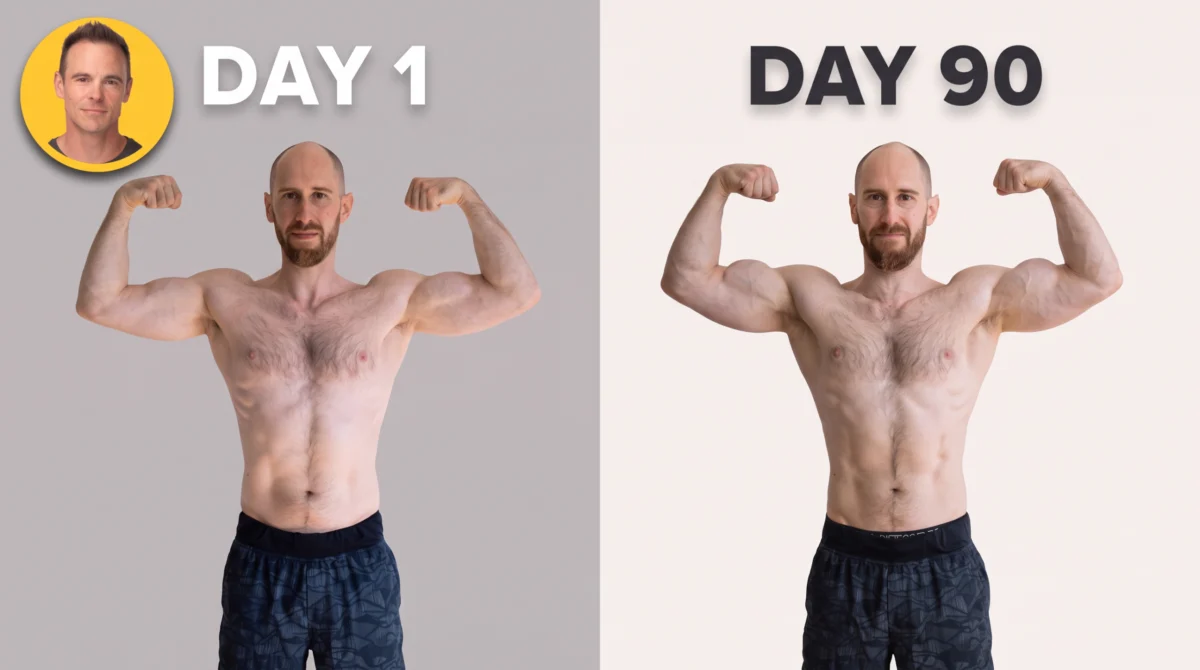
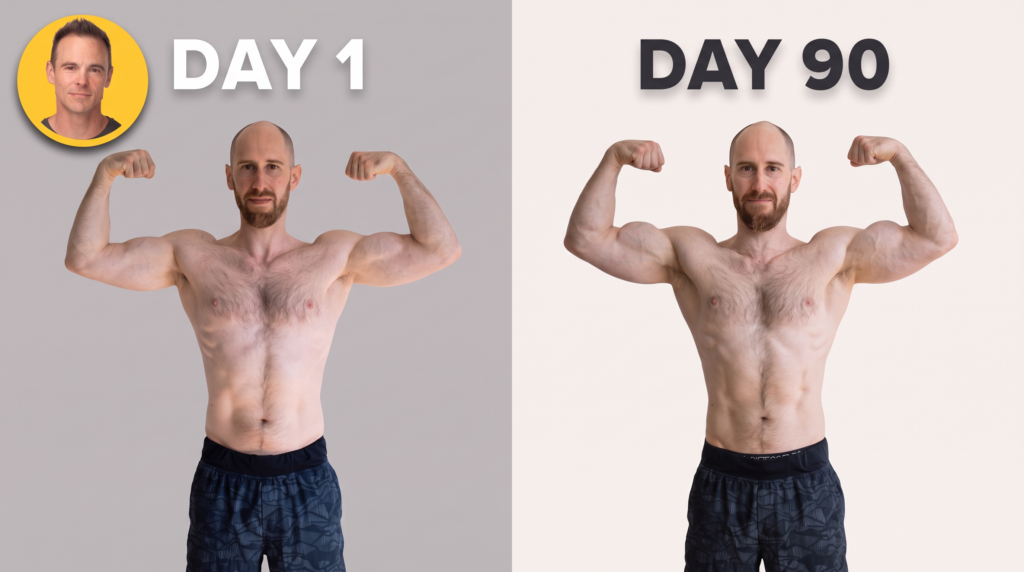
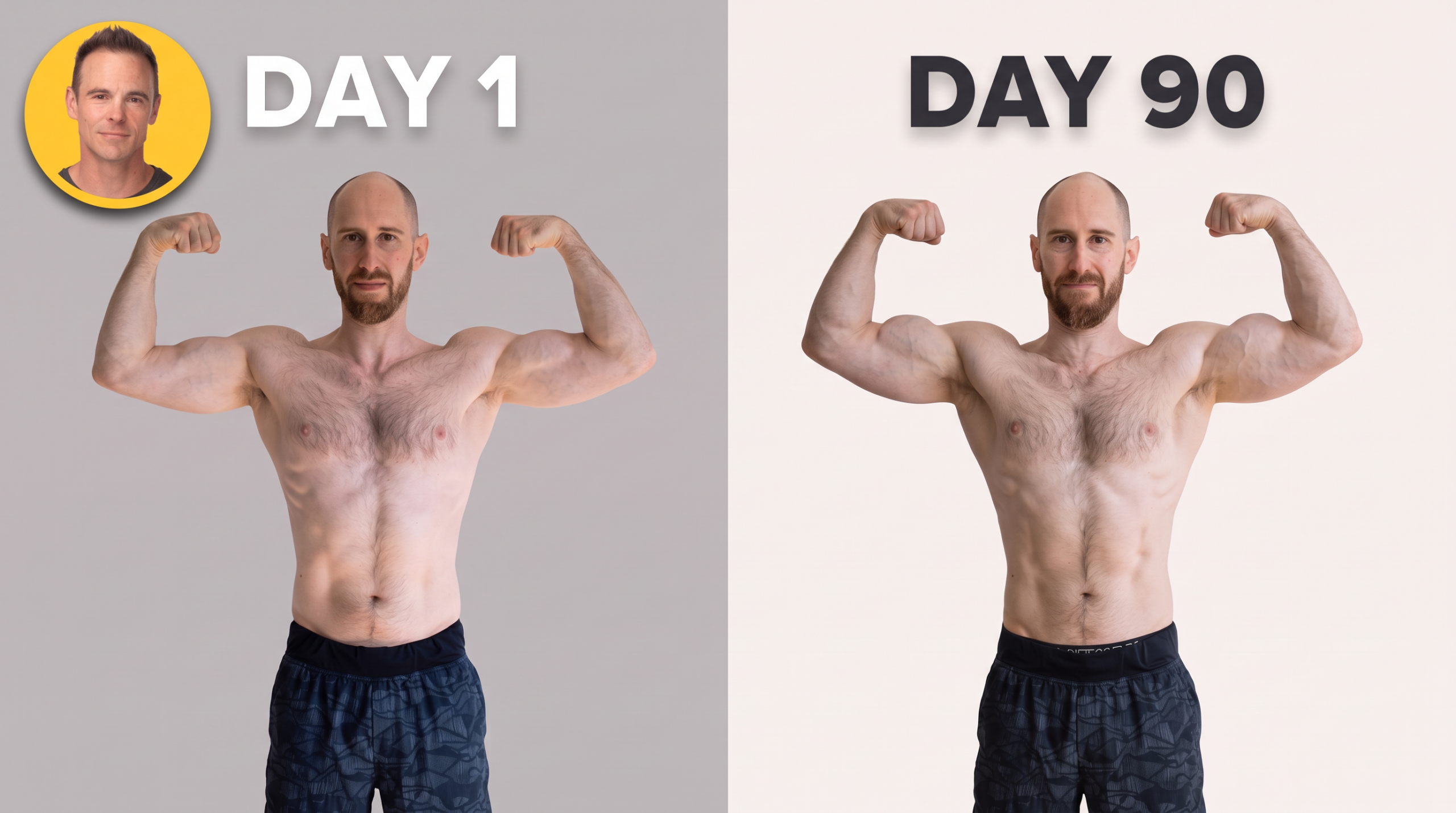
When the dust settled and all three phases of the experiment concluded, specialization training paired with heavier, lower-rep sets during the final month produced the most impressive results. Both of the creator’s arms finished the 90-day trial measuring an identical 35.5 inches, effectively bringing his historically lagging left arm up to par and completely correcting a noticeable symmetry imbalance that had persisted early on.
To verify the physical changes objectively, a follow-up DEXA scan was conducted. The results confirmed that he suffered no muscle loss anywhere else in his body while successfully gaining just over two pounds of hard, lean mass. He began the experiment with a starting body fat percentage of 16 percent and a baseline lean mass of 127 pounds.
Raw strength metrics improved concurrently with the visual changes. On day one of the project, a strict EZ-bar curl test—performed with his back, pelvis, and head rigidly glued to a squat rack to eliminate any possibility of body English or momentum—resulted in abrupt failure at 80 pounds. By the time final testing rolled around, that exact same weight went up cleanly and without hesitation. Reflecting on the strict form requirements of the test, the creator noted that keeping his back, head, and tailbone firmly attached was initially a massive struggle, making the eventual clean lift a definitive sign of genuine physical progress.
Plan 1: Biceps Every Single Day
Training a single muscle group every single day sounds like a guaranteed recipe for overtraining and a recovery nightmare. Yet, because plenty of online fitness circles fiercely advocate for the benefits of daily frequency, the creator kicked off his experiment by committing to five grueling sets to failure, performed every single day without a day off.
To protect his hardworking joints and tendons from catastrophic overuse injuries, exercise variations were systematically rotated throughout the week. On certain aggressive days, the volume was doubled up into two separate sessions, consisting of hammer curls performed before heading to work followed by preacher curls later that afternoon. The underlying logic was deceptively simple: higher training volume inherently drives greater muscle growth, and this specific protocol consistently delivered upward of 30 working sets per week.
However, reality quickly set in and the execution proved messy. By the third week, systemic fatigue began deeply impacting his broader performance in the gym. During a routine pull-up session, the accumulated systemic exhaustion was so severe that he remarked it was the worst pull-up set he had performed in over a month, explicitly noting that his overall strength felt entirely cooked for the day.
When day thirty measurements were finally recorded, the data told a decidedly muted story. His right arm hovered around 34.5 inches, while his left arm had stubbornly failed to register any measurable growth at all. Despite the disappointing tape metrics, post-phase comparison photos hinted at a subtle visual difference, leaving the creator to wonder if his eyes were simply playing tricks on him in search of confirmation bias.
Plan 2: The Specialization Approach
Transitioning into the second phase, the total weekly set count remained largely identical, but the overall training structure underwent a dramatic overhaul. Instead of hammering the biceps daily, workouts were consolidated into four or five sessions per week, purposefully scheduled at the very beginning of training blocks when his physical energy levels were highest.
This phase introduced a critical strategic shift: sets for nearly every other muscle group in his routine were aggressively slashed to bare-minimum maintenance levels. By dialing back volume elsewhere, his body’s localized recovery resources could be entirely redirected toward bicep hypertrophy. Genetically speaking, individual muscle responsiveness varies wildly, and for this particular lifter, both biceps and quads had historically proven to be his slowest-responding muscle groups.
With strategic rest days successfully reintroduced into his weekly schedule, positive progress materialized almost immediately. An early personal record on the preacher curl landed cleanly, serving as a reliable benchmark since the bench configuration physically locks the elbows in place and prevents any form of cheating.
Consistent, incremental weekly increases of a single pound while maintaining strict rep ranges kept momentum moving forward. Complicating the phase slightly was an overlapping 100-day calisthenics program that introduced three dedicated back workouts per week, meaning his back volume suddenly mirrored his bicep volume. Because the biceps are heavily recruited as secondary movers during compound pulling movements, a significant portion of the growth stimulus was undoubtedly shared. Consequently, every single direct bicep set had to be pushed to true muscular failure to ensure adequate adaptation.
By day sixty, tape measurements surprisingly showed both arms sitting at just over 35 inches, displaying near-perfect symmetry. This outcome left the creator genuinely perplexed, especially given that his chronically lagging left arm had refused to budge during the initial daily training phase. His working theory was that the deliberate shift toward single-arm isolation work forced both limbs to perform identical amounts of isolated labor, thereby forcing the weaker side to catch up.
Plan 3: Heavy Sets, 6 to 8 Reps
For the final month of the rigorous 90-day challenge, the rep scheme shifted away from the moderate 8-to-12 range down into heavier loads targeting 6 to 8 reps. Because his overall strength gains during the previous phases had felt somewhat underwhelming, finishing the experiment with a dedicated strength-focused block seemed like a logical progression.
While contemporary sports science literature generally suggests that lighter loads are by no means inferior for hypertrophy and that excessively heavy lifting can sometimes be less efficient, the creator leaned into personal anecdotal experience. His earlier 100-day pull-up project, which was heavily saturated with intense, heavy training, had previously yielded the most significant back growth of his lifting career. Ultimately, muscle hypertrophy occurs effectively across a broad spectrum of repetition ranges, provided an individual selects loads that allow for safe, progressive overload.
The heavy lifting, however, quickly introduced physical complications. Just five days into the heavy phase, his right elbow flared up with sharp, nagging pain. The combination of heavy barbell curls alongside his ongoing calisthenics routine proved to be too much for his joints to handle, and the discomfort soon began radiating into other upper-body lifts.
Recognizing the threat to the experiment, he immediately implemented active recovery protocols, utilizing ice therapy and introducing a crucial pre-workout routine. Before touching his main working weights, he began holding moderate-weight isometrics for 30-second holds in targeted joint positions.
The targeted isometric holds successfully eliminated the joint pain, allowing training to resume safely. Although progress was undeniably slow, strength steadily climbed, evidenced by hammer curls progressing from 35 pounds for 12 reps up to a more robust 42.5 pounds for 6 reps. Diligently tracking every single training session made these incremental victories clearly visible.
After extensively testing a wide array of movements throughout the entire 90 days, three specific bicep exercises earned permanent, non-negotiable spots in his routine: cable curls for continuous tension, strict preacher curls for eliminating momentum, and heavy hammer curls for targeting the brachialis and brachioradialis.
Reflecting on the overarching takeaways from the experiment, the creator noted that structural manipulation of volume and frequency matters far more than simply piling on endless junk volume. While this was ultimately a single-person case study whose results cannot be universally applied to every lifter—especially given that factors like pumps, time of day, hydration, and overlapping back calisthenics undoubtedly influenced the data—the fundamental lesson remains intact. By deliberately experimenting with training structure rather than blindly adding more work to an already bloated routine, he successfully coaxed his most stubborn muscle group into sustained growth.