

When it comes to building a bigger, stronger chest, many gym-goers assume they need an elaborate arsenal of equipment, including adjustable incline benches, cable crossover machines, and heavily loaded barbells. However, according to a recent instructional breakdown by fitness expert Jeff Cavaliere of ATHLEAN-X, all a lifter truly needs to spur serious hypertrophy is a flat bench and a trusty pair of dumbbells.
In his detailed analysis, Cavaliere demonstrated that dumbbells offer a distinct biomechanical advantage over barbells due to their independent movement paths and freedom of wrist rotation. By making strategic adjustments to form, grip, and exercise selection, lifters can bypass the limitations of traditional flat-bench routines, target stubborn upper chest fibers without an incline, and uncover strength imbalances that are often masked by fixed barbell bars.
The comprehensive breakdown offers a fresh perspective on traditional movements, emphasizing that small, intentional modifications can dramatically alter muscle recruitment and overall training efficacy.
Tip 1: Drive Through Your Feet
One of the most common oversights in dumbbell bench pressing is the total neglect of lower-body engagement. While leg drive is widely recognized as a fundamental requirement for maximizing power and safety during a heavy barbell bench press, many lifters treat the dumbbell press as purely an upper-body exercise. Cavaliere stresses that skipping leg drive on a dumbbell setup means leaving significant weight, and consequently muscle gains, on the table.
To properly execute this technique, lifters must consciously generate counterforce through the floor, visualizing the movement not as simply pushing the body down into the padding, but rather as sliding upward along the bench. Under a barbell, this counterforce happens almost instinctively because the barbell rack provides a fixed target and physical cue. Because dumbbells float freely in space without offering any structural feedback, lifters must create that crucial tension deliberately to stabilize the torso and maximize pressing power.
Tip 2: Lead With Your Thumbs
One of the primary benefits of utilizing dumbbells instead of a barbell is the elimination of fixed hand placement. A barbell locks both hands onto a single rigid bar, restricting the natural movement of the wrists and shoulders. Dumbbells, by contrast, allow for independent wrist rotation, which opens the door for a superior chest contraction at the peak of every repetition.
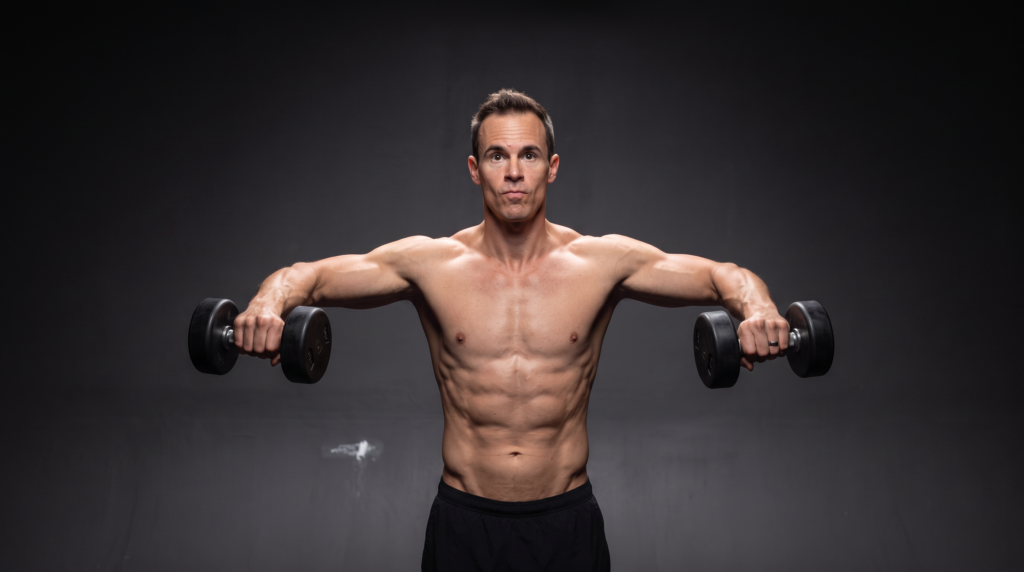
The primary function of the pectoral muscles is horizontal adduction—pulling the upper arms across the body and bringing the hands toward each other. Cavaliere points out that by slightly rotating the dumbbells so that the thumbs lead the movement rather than the pinkies, lifters can achieve a deeper and more complete contraction. This subtle shift clears an extra three to four inches of range of motion at the top of the press that would otherwise be lost if the knuckles were simply pointed directly toward the ceiling, translating to a substantial payoff over the course of a rigorous workout.
Tip 3: Flip the Grip for Upper Chest
For individuals training without an incline bench or working in a crowded gym where adjustable benches are unavailable, targeting the upper chest can present a logistical challenge. To solve this dilemma, Cavaliere recommends performing an underhand-grip dumbbell bench press while remaining flat on a standard bench.
Upper chest fibers naturally run in a downward and outward diagonal direction. Pressing from a low-to-high angle naturally aligns with that fiber orientation. By tucking the elbows down and underneath the torso during the pressing motion, lifters create an optimal biomechanical pathway that emphasizes clavicular head activation. According to Cavaliere, the muscle activation achieved through this flat-bench underhand variation comes remarkably close to that of a true incline press. This makes it an especially valuable technique for lifters who tend to be front-delt dominant, as steep incline pressing often shifts the physical load away from the chest and onto the anterior shoulders.
Tip 4: Use Dumbbell Drop Sets
Advanced intensity techniques like drop sets are notoriously cumbersome to execute with a barbell, where stripping away heavy plates between failure intervals can easily consume thirty seconds or more of precious recovery time, ultimately undermining the metabolic and mechanical goals of the technique. Dumbbells, however, eliminate this logistical friction entirely.
Cavaliere advocates for a seamless transition into drop sets, utilizing what he describes as a continuous approach to reaching absolute failure. When a lifter can no longer complete repetitions with their working weight, immediately dropping down to a lighter pair of dumbbells allows the set to continue without wasted downtime. For those who still have residual energy left in the tank after exhausting their lighter weights, Cavaliere suggests dropping down to the floor for a final set of traditional push-ups, serving as a reliable finishing tool to fully exhaust the pectoral musculature.
Tip 5: Try the Static Dumbbell Press
Fixed barbell grips are notorious for masking asymmetrical strength development, as the stronger side of the body can unconsciously compensate for a weaker counterpart. The static dumbbell press technique is designed to drag these hidden unilateral weaknesses directly into the open by forcing each side of the body to work in isolation.
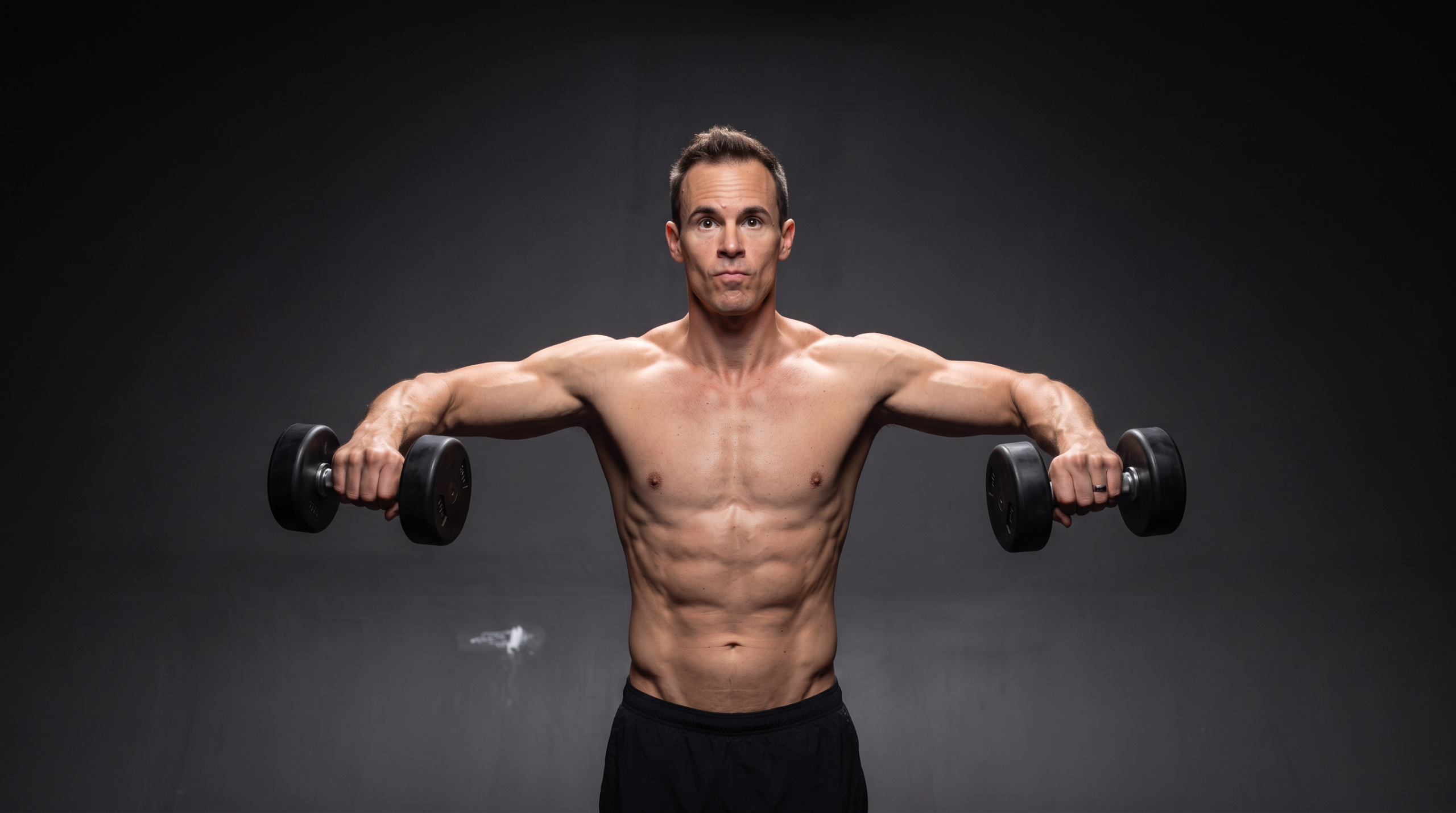
The execution requires holding one dumbbell in a static, locked position—either extended at the top or held in a deep stretch at the bottom—while the opposing arm performs dynamic repetitions. This setup demands substantial core stability, as the asymmetrical load naturally attempts to twist the lifter off the bench. The primary objective is to identify and correct strength disparities between the left and right sides of the body. Holding the static dumbbell at the bottom position of the press presents an even greater challenge, as the chest is forced to generate force from a stretched position under constant tension.
Tip 6: Three Dumbbell Chest Exercises Worth Revisiting
Beyond traditional bench pressing variations, Cavaliere highlights three specific dumbbell movements that frequently suffer from improper execution but yield exceptional results when performed with correct anatomical focus.
The chest-driven pullover is widely misunderstood in commercial gyms, with most trainees treating it as a lat-dominant back exercise by flaring their elbows wide and pulling with their upper back. Cavaliere emphasizes that shifting the focus requires drawing the elbows closer together and intentionally driving the movement through the upper chest via internal adduction, turning the hands slightly down and in while the weight remains secure. Though it features a distinct learning curve, mastering this cue transforms the pullover into an effective chest builder.
Similarly, the UCV raise utilizes a low-to-high, across-the-body trajectory while the lifter leans slightly against a supportive structure, mirroring the fiber-alignment logic of the underhand press. Cavaliere stresses that load must remain strictly secondary to form here, as quality of contraction vastly outweighs ego lifting.
Finally, the heavy floor fly reintroduces an isolation movement that many lifters abandon due to shoulder vulnerability. By performing flyes on the floor rather than a bench, the ground acts as an engineered safety net, halting the range of motion before the arms drop into a dangerously compromised position at the sides. This allows lifters to safely load heavier weights and emphasize the eccentric phase of the movement. When physical failure is reached on the floor fly, the lifter can simply tuck their elbows into their sides and press the weights upward to continue the set, embodying the core philosophy that small, intelligent adjustments to traditional movements are the true drivers of sustainable muscle development.