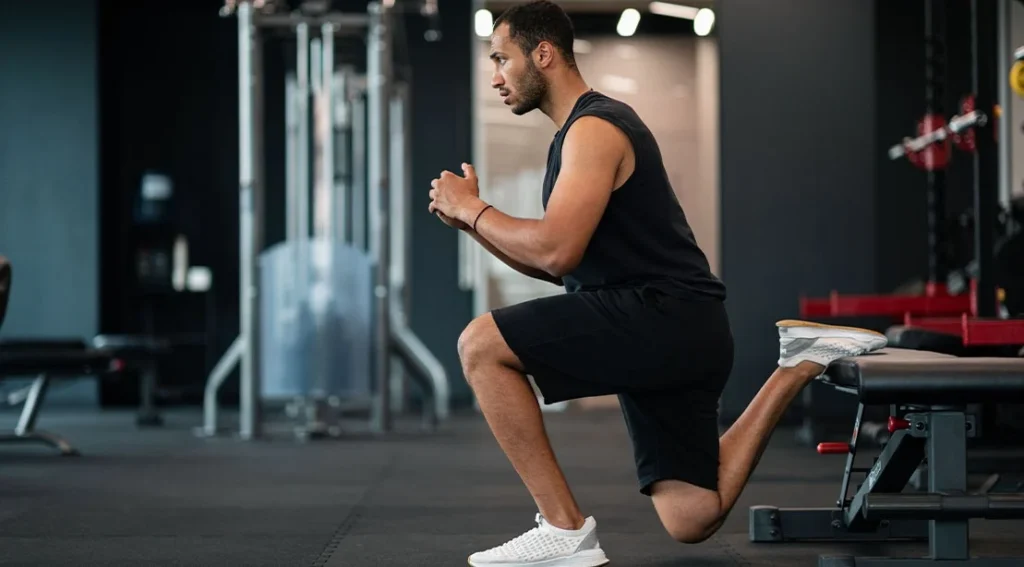

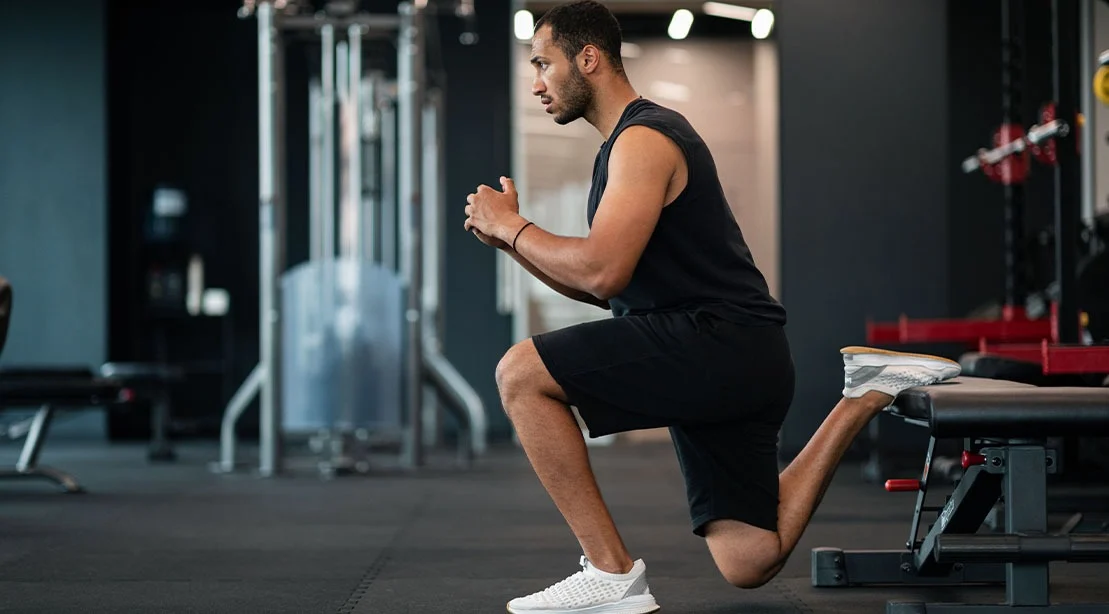
The Bulgarian split squat occupies a unique and humbling space in the modern strength and conditioning landscape. Revered for its capacity to build formidable quad and glute hypertrophy while simultaneously ironing out bilateral strength imbalances that sabotage heavy back squats, the movement is universally acknowledged as a premier lower-body developer. Yet, it also commands a distinct reputation for humbling even the most seasoned lifters.
Beyond brute strength, the Bulgarian split squat places steep demands on an athlete’s physical architecture. Success in the movement requires a sophisticated synthesis of hip mobility, ankle dorsiflexion, precise pelvic control, and unwavering single-leg stability. When even one of these components falters, the breakdown in form becomes immediately apparent, turning a promising set into a struggle for balance and execution.
Addressing these performance bottlenecks requires more than mere determination. Understanding the mechanics of the movement and identifying the specific limitations holding back physical progress can transform the exercise from a dreaded gym punishment into an indispensable tool for athletic development.
Evaluating the Bottom Position
Before condemning the Bulgarian split squat for every lower-body ache or balance failure, it is essential to determine whether the root cause is a mobility restriction or a fundamental setup error. The primary objective during an evaluation is not necessarily achieving an aesthetically flawless repetition, but rather uncovering the hidden performance limitations that restrict overall mechanical efficiency and limit muscular gains.
Many lifters immediately attribute their struggles to tight musculature and instinctively reach for a foam roller, overlooking simple adjustments that can instantly stabilize their performance. Minor tweaks to foot placement, torso angle, and bench height can often resolve glaring stability issues without the immediate need for extensive corrective intervention.
A properly executed Bulgarian split squat demands adequate mobility to access the deepest ranges of motion combined with the localized strength and stability required to command that position under load. Mobility provides the access, but strength and stability deliver the execution.
Targeted Mobility Strategies for Deep-Range Control
When basic setup adjustments prove insufficient to correct performance flaws, targeted mobility work becomes necessary to bridge the gap between structural restriction and mechanical competence. Several specific movements address the precise joints and tissues most frequently implicated in Bulgarian split squat breakdowns.
The lateral lunge to box serves as a crucial corrective intervention for lateral stability. Although the Bulgarian split squat operates primarily in the sagittal plane as an up-and-down movement, the supporting hips must constantly exert control over transverse and frontal plane forces to maintain optimal pelvic and knee alignment. This movement enhances adductor mobility while simultaneously cultivating the hip strength and control necessary to navigate the bottom position smoothly. Lifters frequently encounter issues when their adductors lack the capacity to lengthen under load, leading to excessive lateral shifting and compromised knee tracking. Integrating this movement into a routine helps condition the adductor complex through a lengthened position while reinforcing the hip mechanics required to resist unwanted deviations.
Another primary restriction often originates in the rear leg, specifically within the hip flexors and quadriceps. The rectus femoris muscle holds a unique anatomical distinction among the quadriceps group because it crosses both the hip and the knee joints. When this muscle is excessively restricted, lifters often experience an intense pulling sensation across the front of the thigh, which frequently triggers compensatory movement patterns such as an excessive arching of the lower back or a truncated range of motion to avoid discomfort. The couch stretch directly targets these restricted tissues, systematically restoring length to the rectus femoris and surrounding quadriceps to allow for a more upright torso and a more vertical rear leg descent.
Ankle mobility represents another frequent stumbling block during single-leg training. When an athlete lacks sufficient ankle dorsiflexion, the front knee struggles to travel forward over the toes. This restriction forces the heel to lift prematurely, undermining overall balance and preventing optimal pressure distribution across the foot throughout the descent. The weighted ankle rocker allows lifters to systematically reclaim this missing range of motion, ensuring that the front ankle can transition smoothly into dorsiflexion as the body lowers into the movement.
To build absolute confidence and physical capacity at the deepest points of the range of motion, the front-foot-elevated split squat with a pause offers a powerful stimulus. Lifters frequently encounter a wall at the bottom of the movement because they lack the muscular strength to reverse the load from a dead stop, often leading them to rush the eccentric phase or lean excessively on the trailing leg. Elevating the front foot permits a deeper descent, while incorporating a deliberate isometric pause at the bottom challenges the targeted musculature to develop strength and stability precisely where it is most needed.
Finally, addressing the deeper hip flexors, specifically the iliopsoas, is critical for achieving optimal trailing hip extension. When the trailing hip lacks full extension due to tightened hip flexors, the body frequently compensates by tipping the pelvis forward or hyperextending the lumbar spine during the descent. Utilizing a half-kneeling hip flexor mobilization enhanced with an overhead reach and lateral bend effectively restores iliopsoas length while reinforcing pelvic stability and training the hip to maintain an extended position under tension.
Integrating Mobility and Strength for Optimal Results
Unlocking the full potential of the Bulgarian split squat requires bridging the gap between passive flexibility and active control. Mobility work provides the physical clearance to navigate the joints through their required ranges, but it is strength and stability that allow an athlete to command the bottom position of the lift.
True physiological gains occur in the deepest portion of the movement, where the target muscles are subjected to a high-threshold loaded stretch. By systematically addressing setup flaws, correcting joint restrictions, and reinforcing single-leg stability through targeted accessory work, the exercise transitions from an unstable, frustrating challenge into one of the most reliable and effective methods for developing unilateral lower-body power, size, and resilience.