


As elite European football gets underway each autumn, clubs from across the continent prepare for the familiar grueling demands of continental competition. Yet, for Ukrainian powerhouse FC Shakhtar Donetsk, the journey to the UEFA Champions League represents something far beyond standard sporting ambition. It is a testament to survival, national pride, and an unyielding refusal to yield to extraordinary circumstances.
Competing against some of the biggest names in European football, Shakhtar is currently navigating a Champions League campaign under conditions entirely unprecedented in the history of the sport. While players and executives alike celebrate historic victories on foreign soil, they do so bearing the psychological and operational weight of a devastating, ongoing war at home.
The Stark Reality of Competing from the Frontline
For Shakhtar CEO Serhii Palkin, the contrast between the pristine, high-pressure environments of elite European stadiums and the grim daily reality of wartime Ukraine could not be more jarring. This season, the club has faced formidable opponents, highlighted by a historic 3-1 victory over AEK Athens at Stamford Bridge. That landmark result marked the first time in history that a Ukrainian club secured a competitive victory on English soil. Further daunting fixtures against Sporting CP and Fenerbahçe in London loom large, alongside a high-profile showdown with Real Madrid scheduled for January.
Yet, these triumphs are achieved by what is currently the youngest squad in the entire Champions League, operating under pressures that no other sporting organization in the competition has ever had to endure. Palkin recalls the precarious nature of their domestic commitments just days before stepping out onto pristine English turf. The night prior to their departure for London, a domestic league fixture in the Ukrainian city of Rivne was abruptly halted by screaming air raid sirens, forcing the players to abandon the pitch and seek immediate shelter in the stadium bunker. Days later, those same athletes walked out under the bright lights of Stamford Bridge to compete on European football’s grandest stage.
Beneath the physical and tactical challenges of the game lies a profound sense of purpose. The players are acutely aware that they are carrying the hopes of a nation. For millions of Ukrainians across the country, a typical evening involves finishing a grueling day of work, switching on the television, and finding a brief, invaluable window of escapism. For a couple of hours during a match, they are able to think about something other than the sirens, the destruction, and the relentless uncertainty of war.
A Fifth Winter Under Siege
However, that vital ritual of tuning into a football match is itself fraught with immense difficulty. This winter marks the fifth consecutive year in which Russia has deliberately and systematically targeted Ukraine’s critical energy infrastructure. Power stations, regional substations, and complex electrical grids are struck repeatedly, plunging homes, hospitals, and schools into darkness and freezing conditions. For countless families across Ukraine, the simple ability to watch Shakhtar Donetsk play depends entirely on whether local electricity and heating systems manage to hold together through the evening.
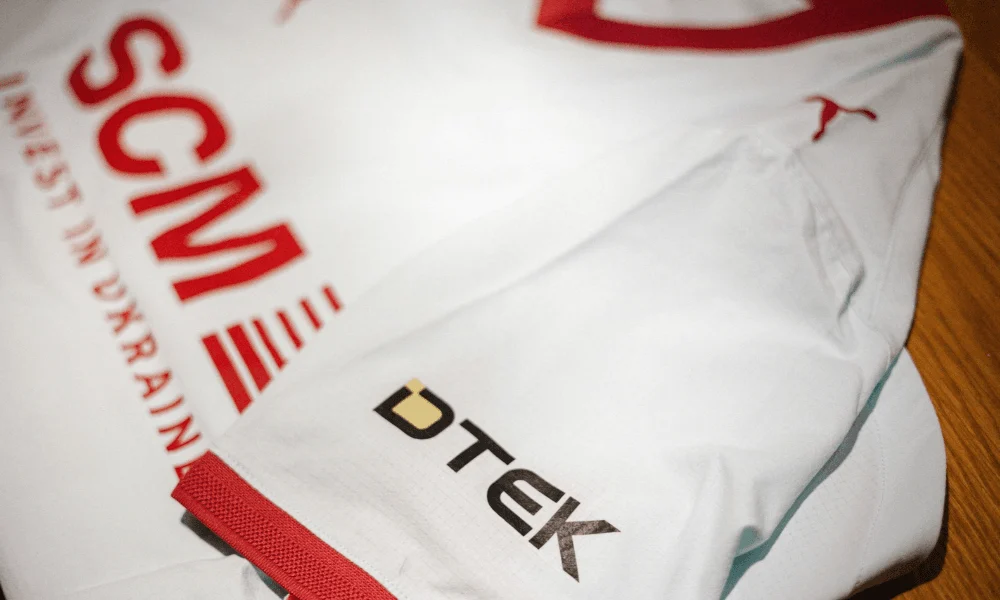
This is where the intersection of sport, corporate solidarity, and national survival comes into sharp focus through the club’s partnership with DTEK, Ukraine’s largest private energy investor. Like Shakhtar, DTEK belongs to the SCM business family, founded by Rinat Akhmetov. While both entities operate in vastly different sectors, each supports Ukraine in its own vital way. While Shakhtar takes to the pitch to project national resilience and bring pride to fans back home, DTEK’s frontline crews rush back out into the cold and danger immediately following missile and drone strikes to repair damaged lines and restore power.
Leadership and players alike at Shakhtar have repeatedly expressed their profound gratitude to these energy workers. The sacrifices made by DTEK’s crews do not go unnoticed by the club. In a country enduring total war, societal fortunes are inextricably bound together, and the football club has consistently emphasized its immense pride in standing shoulder-to-shoulder with the energy workers who keep the country functioning.
Roots in the Donbas: A Shared Heritage of the Mines and Power Plants
The bond between the football club and the energy provider runs deeper than corporate affiliation; it is rooted in a shared geographic and cultural history. Ivan Geliukh, head of strategy at DTEK and chairman of DTEK Grids, notes that the mutual admiration between the two organizations flows both ways.
Just like Shakhtar Donetsk, DTEK traces its foundational roots back to the Donbas region in eastern Ukraine. In fact, the very name "Shakhtar" translates directly to "miner," honoring the heavy industrial heritage of the region. For generations of DTEK colleagues and their families—many of whom worked in the dangerous coal mines and sprawling power plants of the Donbas—following Shakhtar has been a lifelong tradition passed down from parents to children. When fans and players see the DTEK logo emblazoned on the club’s sleeve during high-profile matches at venues like Stamford Bridge, it carries a deeply personal and emotional resonance.
Geliukh has witnessed firsthand the extraordinary, often unimaginable commitment demonstrated by energy personnel who keep the electricity flowing despite constant, targeted attacks. The scale of the assault on civilian infrastructure is staggering. Last year alone, Russia carried out approximately 4,500 targeted attacks on Ukraine’s energy system. Over the course of four brutal winters, the company’s thermal power plants have been struck time and time again. The human cost has been devastating, with 484 DTEK colleagues losing their lives, either while performing their hazardous duties on the job or while defending their country on the military frontline.
Despite these tragic losses, DTEK crews continue to show up day after day, often forced to return to the exact same facilities to repair them repeatedly after successive strikes. Since the full-scale invasion escalated in 2022, these dedicated repair crews have successfully restored power to Ukrainian homes more than 56 million times. They frequently do so with the sobering knowledge that a subsequent missile strike could hit the grid before the current repair work is even completed.
Innovating Under Fire: The Future of Ukraine’s Energy Grid
The relentless adversity faced by energy workers has fundamentally transformed how the organization approaches the future design and engineering of Ukraine’s energy infrastructure. One of the most critical lessons extracted from years of conflict is a sobering reality: no physical energy infrastructure can ever be made completely invulnerable to targeted military attacks.
While robust physical protection remains an essential first line of defense, leadership recognizes that structural resilience requires much more than hardened concrete walls. It requires building an energy architecture specifically engineered to withstand severe damage and recover rapidly when strikes do occur.
Consequently, DTEK is actively steering its strategic vision toward a more decentralized energy system. By distributing multiple smaller power generation sources across various regions of the country, the grid becomes vastly more resilient and exponentially harder for an adversary to entirely knock out. Furthermore, advanced automation and the integration of smart grids play an indispensable role in modernizing the network. These technological upgrades help automatically isolate localized damage, allowing engineers to reroute power and quickly restore electricity to unaffected customers and critical facilities.
Remarkably, these long-term strategic changes are not being postponed until after the conflict concludes; they are being implemented right now, in the midst of active hostilities. Even as the war rages on, the company has successfully constructed Eastern Europe’s largest wind farm and established Ukraine’s largest battery storage systems. Company leadership believes that the hard-won operational insights gained through these unprecedented wartime conditions will ultimately offer valuable, instructive lessons for the rest of Europe as the continent looks toward a more secure and resilient energy future.
Ukraine has inevitably gained a level of crisis management and grid resilience experience that no nation would ever wish to acquire, yet it is knowledge that carries immense global value. This unique parallel reinforces why the partnership between DTEK and Shakhtar Donetsk carries such profound symbolic weight. The football club has spent more than a decade operating in exile, forced away from its home stadium in Donetsk since 2014, yet it has continued to proudly represent Ukraine on the elite European stage year after year. The players carry the hopes of millions of citizens on their shoulders, including many of the exact individuals who spend their days and nights working underground and outdoors to keep the national power system running.
Though football and heavy energy infrastructure might initially appear to occupy entirely different worlds, the underlying ethos is identical. Both organizations display a fierce determination to keep functioning and competing against insurmountable daily challenges because they know that millions of citizens are counting on them to succeed.
As the cold winter months settle across Ukraine, FC Shakhtar Donetsk provides citizens with a much-needed reason to switch on their televisions and find moments of communal joy and sporting passion. Meanwhile, the dedicated crews at DTEK work tirelessly behind the scenes to ensure that when those lights finally turn on across the country, the power is reliably there.