
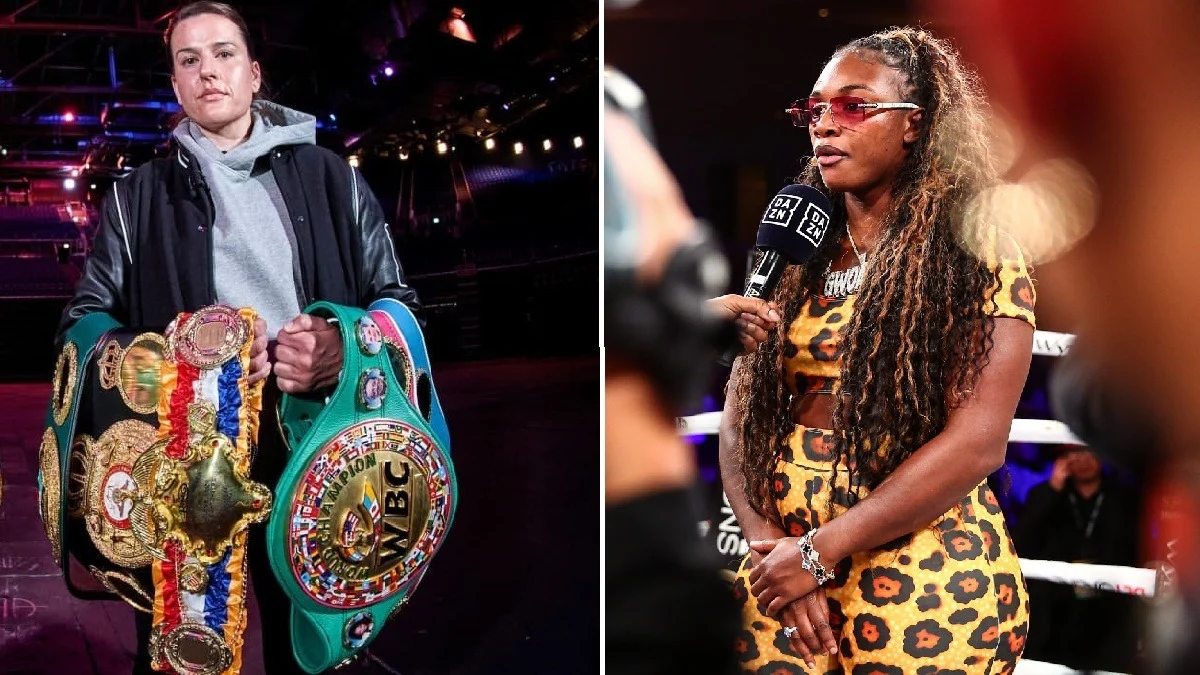
The boxing world has witnessed no shortage of bizarre contract clauses, promotional standoffs, and public social media wars over the years. However, the breakdown of negotiations for a blockbuster showdown between undisputed heavyweight queen Claressa Shields and elite British star Chantelle Cameron has reached a new level of acrimony. Behind closed doors and across public platforms, the war of words has escalated dramatically, highlighted by a staggering revelation from Shields’ promotional team regarding what they characterize as an unprecedented attack on free speech.
Dmitriy Salita, the veteran promoter representing Claressa Shields under the banner of Salita Promotions, has stepped forward with explosive allegations against Jake Paul’s promotional vehicle, Most Valuable Promotions (MVP). According to Salita, MVP officials attempted to impose a rigid and punitive financial penalty structure that would fine the undefeated multi-division world champion $25,000 every single time she made a public statement perceived as negative toward Jake Paul himself or the MVP corporate entity.
The stunning allegation came to light as the high-stakes dispute over the proposed Shields-Cameron matchup completely unraveled. Both promotional camps have spent recent days publicly pointing fingers and trading blame for the disastrous collapse of what many boxing purists considered one of the most compelling matchups that could possibly be made in women’s professional boxing today.
“MVP insisted on a $25,000 liquidated-damages payment each time Claressa made a statement they viewed as negative toward Jake Paul or MVP,” Salita stated publicly on social media, while simultaneously providing his comprehensive comments directly to World Boxing News.
Salita made it abundantly clear that his side drew a hard line in the sand when confronted with the unusual clause, refusing to compromise on core principles of fighter expression and autonomy.
“We would not agree to terms that put a price on a fighter’s speech,” Salita continued. “We did agree to a standard, mutual non-disparagement clause, which is customary in high-level professional boxing contracts, but a per-word price tag on personal opinion is completely unacceptable.”
Shields vs. Cameron Negotiations Collapse Into a Public War of Words
The latest chapter in this escalating promotional saga erupted following a flurry of public statements from Chantelle Cameron, Claressa Shields, and MVP co-founder Nakisa Bidarian. The trio of key figures took to various media outlets and social channels to air their grievances, offering conflicting narratives regarding how and why the championship matchup ultimately fell apart.
Chantelle Cameron initially fueled the public discourse by expressing her clear and unwavering desire to secure the fight for her own boxing legacy. However, the British star acknowledged with visible frustration that negotiations had hit a brick wall, leaving her future schedule up in the air.
Shortly after Cameron’s comments, Claressa Shields offered her own detailed perspective on the financial discussions. Shields revealed that her promotional side had initially put forward a guaranteed opening offer of $1.1 million for Cameron, only for MVP to return to the negotiating table with a significantly inflated demand of $1.5 million.
The response from Most Valuable Promotions was swift and defensive. Nakisa Bidarian, the co-founder and driving executive behind MVP, strongly disputed any notion that his company bore responsibility for the fight collapsing. Bidarian insisted that MVP had gone above and beyond to facilitate the bout, maintaining that his company had formally agreed to a guaranteed financial package for Cameron despite having no direct promotional involvement or stake in the actual staging of the event itself.
However, Bidarian’s version of events painted a picture of a deal eroding from the inside due to broken promises and contentious budgeting disagreements.
“That guaranteed pay for our fighter was then reneged on by them and reduced by 27%,” Bidarian alleged, pointing a direct finger at Salita Promotions and the Shields camp for altering the economic framework of the agreement mid-stream.
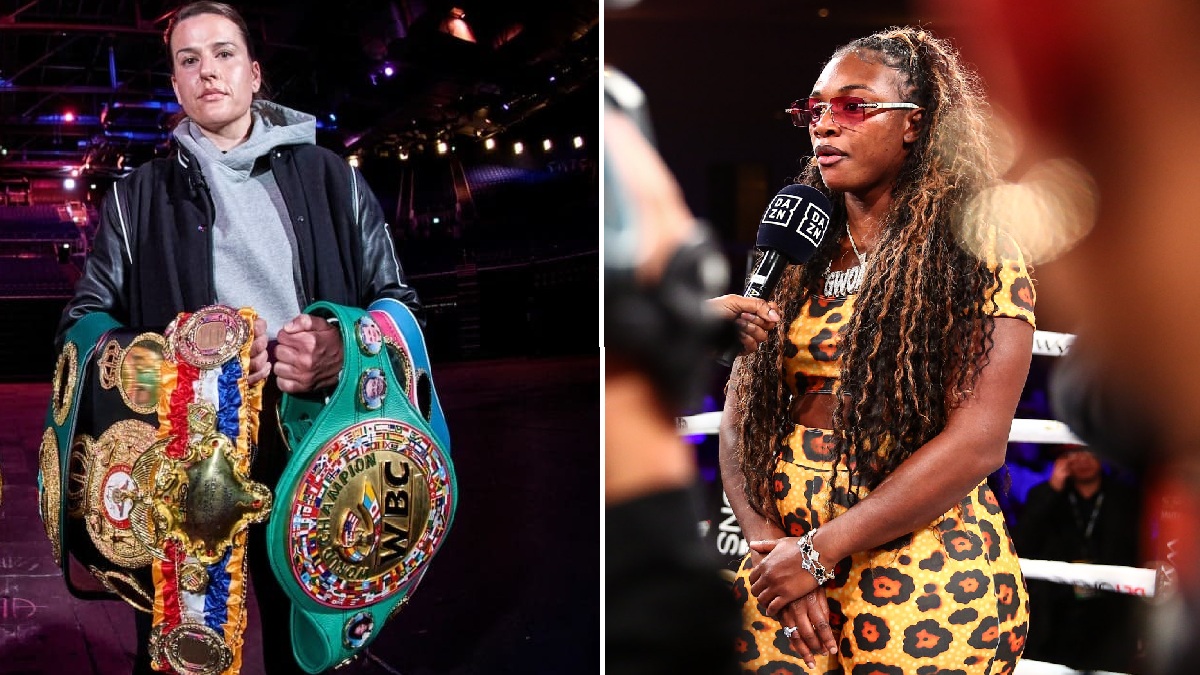
Bidarian further elaborated that secondary operational disagreements had poisoned the well, specifically citing disputes over day-to-day event expenses, including customized per diems and specialized security arrangements. According to the MVP executive, these provisions are essential for safeguarding the welfare and comfort of their fighters on fight week.
“It felt like we were agreeing to a low-budget production, which is not how we present our athletes,” Bidarian said, emphasizing that MVP maintains strict operational standards for its roster.
Bidarian maintained that the guaranteed compensation package proposed for Cameron was entirely consistent with what she had earned for previous major world championship fights of a similar magnitude. He noted that MVP had ultimately given Salita’s team a definitive, final opportunity to return to the original financial framework before officially walking away from the table.
Salita Reveals $1.1M Offer and Dismisses Budget Claims
Dmitriy Salita was quick to fire back, fiercely rejecting Bidarian’s characterization of the negotiations and accusing MVP of deliberately sabotaging the bout by leaking confidential details to the public sphere rather than negotiating in good faith behind closed doors.
“By taking these negotiations public, you showed that you were looking for a way to say no, not a way to make this fight,” Salita asserted, criticizing the transparency tactics employed by the opposition.
To set the record straight regarding the financial mechanics of the proposed promotion, Salita confirmed the exact parameters of his team’s offer. He verified that Salita Promotions had presented a guaranteed base of $1.1 million for Cameron, coupled with an aggressive, escalating percentage of live ticket sales derived straight from the first dollar generated at the gate.
Salita argued passionately that Shields’ proven, historically massive drawing power—highlighted by a track record of generating lucrative seven-figure live gates throughout her illustrious career—meant that the back-end ticket revenue share had a legitimate mathematical potential to push Cameron’s total take-home pay far beyond the initial guarantees floated by either side.
Furthermore, Salita poured cold water on MVP’s claims that minor disputes over daily per diems and security costs were enough to kill a multi-million-dollar championship fight between two of the pound-for-pound best fighters in the sport. To Salita, blaming operational line items for the death of the bout was nothing more than a convenient smoke screen.
“In more than 30 years as a fighter and promoter, I’ve never seen a million-dollar fight defined by a per diem disagreement,” Salita stated incredulously, highlighting the absurdity of letting routine administrative details derail an elite-level sporting spectacle.
Summarizing the complex and often frustrating nature of high-stakes combat sports matchmaking, Salita added a classic boxing adage to underscore his perspective on the situation: “As we say in boxing, there are a million ways to say no and one way to say yes.”
Despite the deeply personal barbs, the public posturing, and the bitter financial disputes that have dominated headlines over the past week, Salita maintained a sliver of optimism. He insisted that his promotional banner remains open for business and fundamentally willing to re-engage in serious, professional talks if the opposing side is genuinely interested in resurrecting the matchup.
“We have always wanted Claressa vs. Chantelle, and we remain ready to work with MVP to make it happen,” Salita concluded.
As it stands, the highly anticipated championship clash remains unsigned and entirely shelved. Both promotional camps continue to lock horns in the court of public opinion, leaving fight fans to wonder if boxing politics and corporate clashes will permanently rob the sport of one of its most compelling and competitive elite matchups.