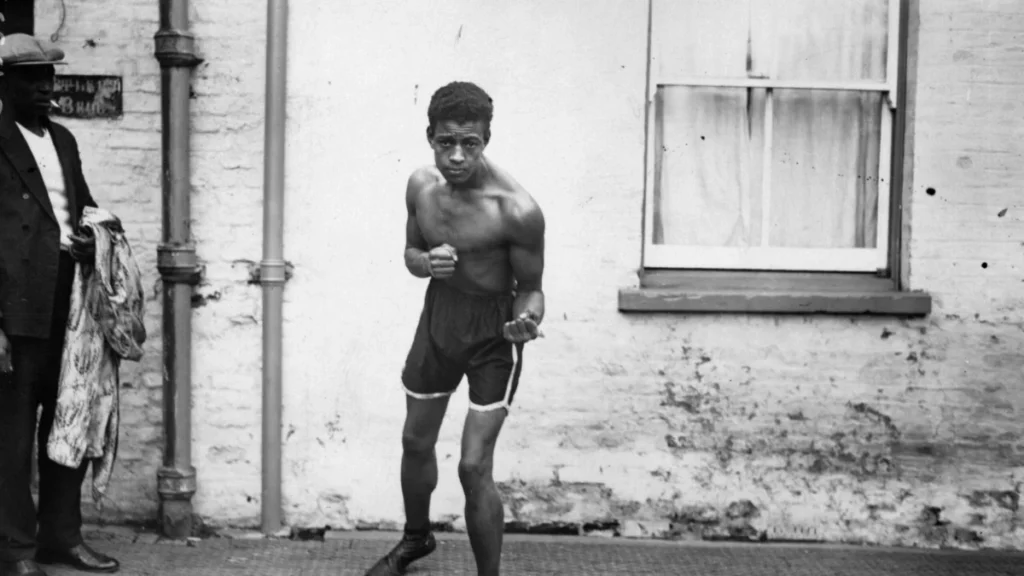


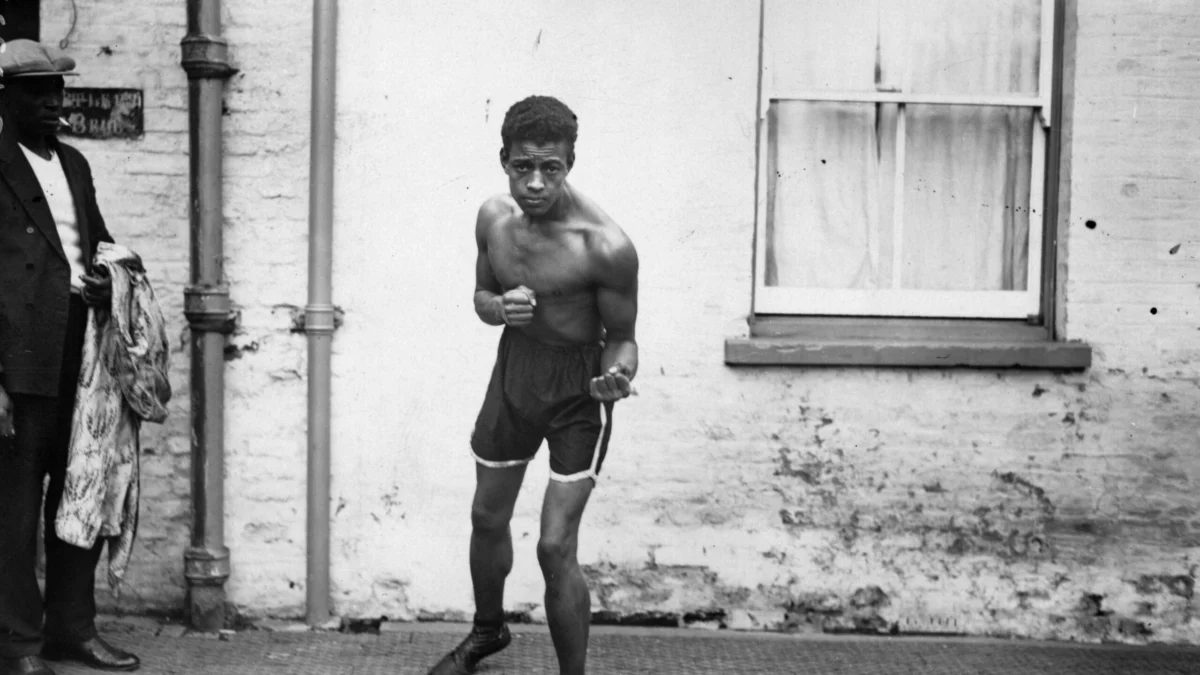
More than half a century after his death, the extraordinary life and legacy of Len Johnson—a trailblazing British boxer who was barred from claiming championship titles due to the colour of his skin—is finally receiving a historic form of official recognition in his home city. Manchester City Council has confirmed that a permanent memorial statue of Johnson will be erected opposite Manchester Victoria Station, marking a momentous milestone as he becomes the first Black person to be honoured with a statue in the city.
Born in Clayton, Manchester, on October 22, 1902, Leonard Benker Johnson emerged as one of the finest and most formidable fighters of his generation. The eldest of four siblings, he was born to a father from Sierra Leone and a mother from Ireland. Despite his immense talent and a stellar professional career that yielded more than 90 victories, institutional racism within the sport denied him the championship accolades his skills thoroughly warranted.
Johnson’s entry into the world of boxing was entirely unconventional. With virtually no prior knowledge, training, or formal introduction to the sport, his path crossed with boxing quite by accident. Following a physical altercation at his workplace, his father—a former boxer himself—decided to introduce him to the local scene. Just weeks later, having trained by skipping with an old piece of washing line, a teenage Johnson stepped into the ring for his very first bout at the Alhambra Theatre in Openshaw. He announced his arrival with authority, securing a third-round knockout victory over fellow teenager Jerry Hogan. That initial triumph set the wheels in motion for a remarkable athletic career defined by dominance inside the ropes and resilience outside of them.

The defining breakthrough of Johnson’s boxing career arrived in 1925, when he achieved the remarkable feat of defeating the reigning British middleweight champion, Roland Todd, twice within the span of seven months. To cement his elite status that same year, he also triumphed over Ted ‘Kid’ Lewis—a legendary fighter whom heavyweight great Mike Tyson would later describe as "probably the greatest fighter to come out of Britain."
Yet, as Johnson’s reputation soared, so did the systemic barriers placed in his path. Despite repeatedly defeating the finest fighters the country had to offer, he was entirely barred from competing for the official British title. The roadblock came courtesy of Rule 24 of the British Boxing Board of Control, an explicitly discriminatory regulation that restricted elite title contests strictly to boxers "born of white parents."
Seeking opportunities denied to him at home, Johnson traveled to Australia in 1926, where he captured the Empire middleweight title. However, upon returning, he was informed that his monumental achievement would not be recognized or celebrated in England.

Reflecting on the stifling prejudice that derailed his athletic ambitions, Johnson said in a 1930 interview: "I’m barred from the Albert Hall and the National Sporting Club. In fact, whenever there is big money, I’m kept out of it. The prejudice against colour has prevented me from getting a championship fight. I feel now that there is no use whatever going on with the business." He ultimately retired from competitive fighting after his final bout in 1933.
From the Ring to the Frontline of Civil Rights
Rather than fading into obscurity, Johnson redirected the fierce fighting spirit that defined his boxing career into a lifelong campaign against racial injustice and societal inequality. Following the conclusion of the Second World War, he joined the Communist Party and established himself as an influential, respected community leader in Moss Side, Manchester.
His political and social activism extended far beyond the local neighbourhood. In 1945, Johnson acted as a local representative at the historic Pan-African Congress held at Chorlton-upon-Medlock Town Hall—a pivotal gathering that played a vital foundational role in the subsequent liberation of many African nations from colonial rule.

Johnson’s grassroots campaigning against racial discrimination remained relentless. In 1953, he confronted institutional racism closer to home when he was barred from entering the Old Abbey Taphouse, located just south of Manchester city centre. The establishment operated under the infamous "colour bar," an unwritten yet widely practiced social restriction that permitted pubs, clubs, and businesses to refuse service to patrons based strictly on their race.
Refusing to accept the blatant bigotry, Johnson teamed up with his friend Wilf Charles to launch a direct challenge against the policy. The pair escalated the matter directly to the city’s mayor before returning to the pub accompanied by approximately 200 vocal supporters and members of the press. Faced with public solidarity and media scrutiny, the landlady ultimately served Johnson at the Old Abbey Taphouse, despite him not being a regular drinker.
This courageous stand proved to be a watershed moment, helping to shatter the entrenched "colour bar" across pubs in Manchester and serving as a vital catalyst in the city’s broader struggle against racial discrimination. It would take another twelve years before such discriminatory practices in British pubs were finally outlawed nationwide under the Race Relations Act of 1965. Johnson passed away in 1974 at the age of 71, leaving behind a profound legacy of activism and social reform.

A Long-Awaited Memorial Campaign
For years, dedicated campaigners have tirelessly pursued the goal of securing a permanent, visible memorial to Johnson in the city where he was born and spent his entire life fighting for a fairer society. Led by Deej Malik-Johnson, the Len Johnson Campaign successfully raised the necessary funds through various creative initiatives, including an annual celebrity football match featuring internet personality Angry Ginge. The grassroots effort gained significant public backing, receiving endorsement from darts sensation Luke Littler and prominent professional boxer Tony Bellew.
The hard work of the campaign culminated when Manchester City Council officially confirmed that Johnson’s statue would be installed opposite Manchester Victoria Station.
"Today’s news is another milestone towards properly acknowledging the historic contributions of a working-class, mixed-race Mancunian whose brave actions in the past developed the foundations of a better future," Deej Malik-Johnson stated following the council’s announcement. "In a sport and a society rigged against him because of his skin colour, Len made himself a champion for people outside the boxing ring. At home and abroad, as an athlete, a worker, an organiser, a politician and a family man, he exemplifies the best of us."

Manchester City Council deputy leader Tracey Rawlins echoed these sentiments, praising Johnson’s enduring impact on the local community and the wider cultural fabric of the region.
"Len Johnson was not only one of the best boxers of his era, he was also a model of a Mancunian—a community champion who contributed much to the city during his lifetime," Rawlins said. "His life and his remarkable achievements are part of Manchester’s history and deserve to be told. The planned statue will provide both a springboard for people to learn more about Len and a focal point for the city to remember and honour him."
The erection of the commemorative monument remains subject to the final approval of planning permission.