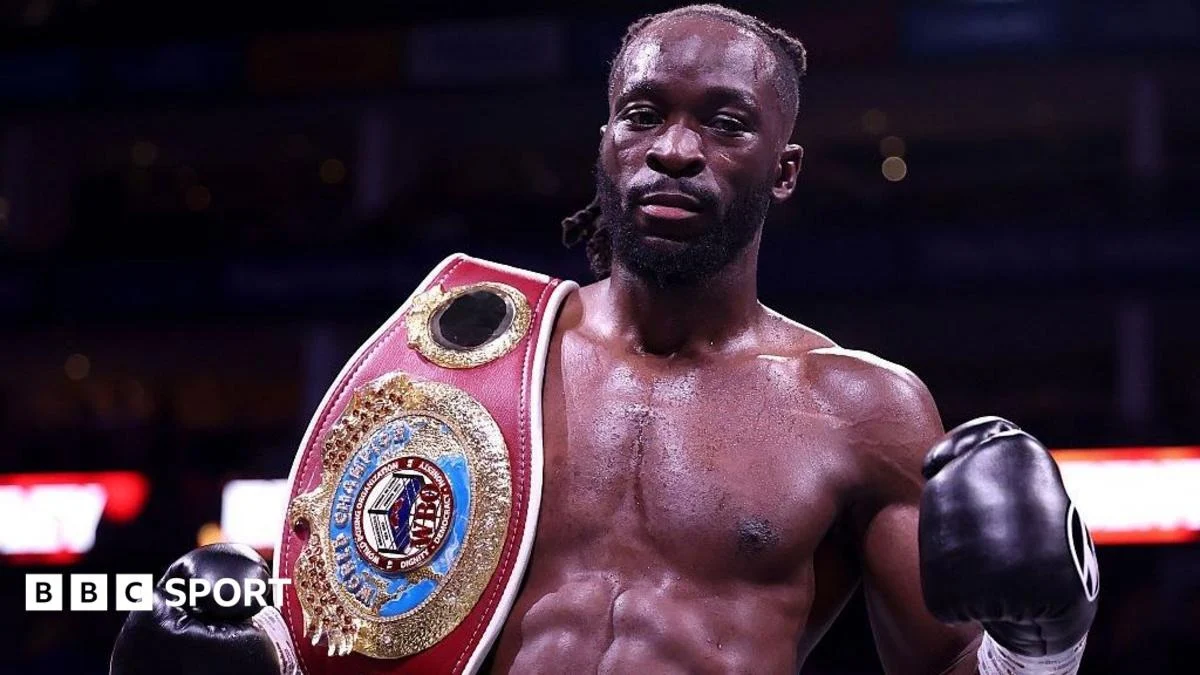
For any professional athlete, reaching the summit of their sport is supposed to bring financial security, elite opportunities, and career stability. Yet for British middleweight boxer Denzel Bentley, the reality of top-level boxing proved to be far more unpredictable. Just as he appeared to be closing in on the ultimate prize of a world championship contest, the 31-year-old Londoner found himself hovering on the brink of financial exhaustion, contemplating zero-hour gig work to keep his life afloat.
Bentley had capped off 2024 in resounding fashion, consolidating his position as one of the premier middleweights in Europe. By reclaiming the British middleweight title for a third time and adding the prestigious European crown to his résumé, he had compiled every credential necessary to justify a shot at a world title. He entered promotional discussions with high expectations, receiving assurances from Queensberry that the biggest fight of his life was on the horizon. However, as upcoming fight cards were gradually announced without his name attached, those promises melted away, leaving Bentley marooned in an excruciating prolonged stretch of career inactivity.
During a 16-month absence from the ring, the stark realities of professional boxing set in. Without fight purses to count on, Bentley watched his bank account balance steadily erode. While he had always taken pride in his financial discipline, managing his earnings carefully during the active periods of his career, the extended exile began to take a severe toll. A professional fighter’s livelihood depends entirely on active competition, and as the months ticked by without a scheduled bout, the pressure to find alternative sources of income became unavoidable.
It was during this period of uncertainty that a casual conversation with his cousin nearly transformed the trajectory of his life. Facing the reality of an empty calendar and mounting expenses, Bentley began looking into immediate options for earning cash. His cousin suggested turning to flexible gig work and pointed him toward a popular delivery platform.
The idea was straightforward: download the Amazon application, register for zero-hour contract work, and pick up local delivery shifts whenever they became available. For a fighter accustomed to training under the elite demands of professional sport, the prospect of driving around local neighborhoods dropping off packages was a jarring shift, but necessity left little room for pride.
Bentley downloaded the app, completed his sign-in, and began monitoring the platform for available shifts. He regularly opened the app, constantly refreshing the screen in search of delivery openings in his immediate area. Yet, in a twist of fate that preserved his focus on combat sports, no delivery shifts were available in his vicinity. Day after day, Bentley checked for updates, only to find the local schedule entirely empty. As he later reflected, the absence of open shifts in his area was the sole reason he did not transition into a delivery driver during his time away from the ring.
That forced patience eventually gave way to opportunity. Bentley finally made his long-awaited return to action in April 2026, ending his 16-month lay-off by stepping into the ring against Endry Saavedra. Bentley captured the WBO interim middleweight championship, proving that despite his prolonged absence, his capabilities at the elite level remained intact.
Just three months after that victory, Bentley’s standing shifted once more. When reigning full champion Janibek Alimkhanuly formally decided to move up to the super-middleweight division, the WBO elevated Bentley from interim status to full world champion. At long last, the 31-year-old had achieved his ultimate career goal, officially placing his name alongside the sport’s world titleholders.
However, his reign at the top of the middleweight division proved to be surprisingly brief. Bentley held the full world championship status for just 102 days—a period in which he did not make a single title defense. Rather than making a mandatory defense of his belt, Bentley agreed to take on American contender Shane Mosley Jr. Under sanctioning body rules, taking an unapproved non-mandatory bout meant relinquishing his world championship status.
Despite the frustration of losing his championship title on paper after working so long to attain it, Bentley remains confident in his chosen path forward. Now fighting under the promotional banner of Zuffa Boxing, Bentley is scheduled to face Mosley Jr. on Saturday at London’s Copper Box Arena. The move to Zuffa Boxing generated considerable discussion within combat sports circles, with many observers speculating that the switch was motivated strictly by financial considerations.
Bentley has been candid about those perceptions, acknowledging that financial compensation is an essential factor for anyone risking their physical health in such a grueling sport. He has emphasized that in a demanding profession where athletes take substantial physical punishment, desiring proper financial reward is entirely reasonable. At the same time, he insists that financial incentive and athletic ambition are not mutually exclusive. His primary objective remains unchanged: he wants to capture a world championship once again. When he made the move to Zuffa, he explicitly requested that the promotion put him back in position to compete for world honors—a request they readily agreed to fulfill.
The journey that brought Bentley to this point is as unconventional as his recent career turns. Long before he was fighting in front of arena crowds or negotiating promotional contracts, his initial introduction to boxing took place on his local housing estate, through an informal fight club organized by his brother. Armed with nothing more than a headguard, a pair of gloves, and a willing friend, Bentley got his very first taste of trading punches.
It was only after starting college that Bentley realized just how vast the gap was between informal estate fights and structured boxing. Upon meeting a college friend who formally trained in the sport, Bentley confidently claimed that he knew how to box based on his experiences on the street with his brother. But his first trip to an actual boxing gym quickly dispelled those illusions.
Bentley quickly discovered that street fighting had taught him little about proper boxing mechanics. During his early sessions, he struggled with basic terminology, referring to fundamental combinations as a "left jab, right jab" rather than the correct designation of a jab followed by a right hand or cross. His heavy bag work suffered from improper form, and when he stepped into the ring for formal sparring, he was thoroughly outclassed and battered. Rather than discouraging him, the humbling experience ignited a desire to master the sport properly.
Even after committing himself to formal training, financial constraints continued to pose logistical hurdles. Struggling for money, Bentley had been forced to sell his car and was reluctant to spend his limited funds on public bus fares. To solve the problem of getting to and from his workouts, he devised a highly frugal transport strategy using London’s Santander cycle rental scheme.
Living in Battersea while training at a gym located in Bermondsey, Bentley faced a substantial commute. Before discovering the rental bikes, he simply put in his headphones and walked the long distance between Battersea and Bermondsey on foot, shrugging off questions from onlookers who assumed he walked purely for conditioning. In truth, walking was his only affordable option.
When he discovered the Santander bike system, it transformed his daily routine. By paying a £2 rental fee, Bentley could use the bicycles without incurring extra charges, provided each individual ride stayed under 30 minutes. To avoid being charged additional fees, Bentley would set off down the road at a rapid pace, pedaling furiously to ensure he docked the bicycle at a station before his half-hour window expired, repeating the process for his return home.
From walking miles across London with music in his ears and pacing down roads on rented bicycles to dodge extra fees, to refreshing a delivery app in search of gig work, Bentley’s career has been defined by resourcefulness in the face of hardship. Boasting a professional record of 22 wins, three losses, and one draw, Bentley now steps into the Copper Box Arena against Shane Mosley Jr. on Saturday night, driven by the same determination that kept him going through his extended exile from the ring.