
Published: November 4, 2026
Faced with the spatial constraints of a typical indoor training facility, strength and conditioning coach Adrian Guyer found himself confronting a common dilemma last summer: how to properly train top-end speed without the luxury of a standard running track or even a fifty-yard straightaway. For many private performance facilities and commercial gyms, indoor square footage is at a premium, making it nearly impossible to accommodate the traditional distance required for athletes to safely accelerate and reach maximum velocity.
Like many of his peers, Guyer realized that his athletes were typically hitting their peak speed right around the twenty to twenty-five-yard mark—precisely the moment when they would be in imminent danger of colliding with an artificial turf wall or a set of heavy equipment. Recognizing that this limitation was hindering their ability to develop proper tissue resilience and genuine sprinting speed, Guyer decided to take a creative approach. He moved a crucial portion of the training regimen outdoors to an eighty-yard stretch of the facility’s shared parking lot.
The adjustment immediately transformed the training dynamic for the athletes under his care. By incorporating short, highly intentional bursts of upright sprinting into their daily preparation, Guyer’s modification yielded noticeable improvements in technique, coordination, fluidity, elasticity, and overall speed. More importantly, it solved a persistent training gap without requiring a massive overhaul of the facility’s physical footprint.
The Slow-Cooker Philosophy of Athletic Development
Reflecting on the philosophy behind the shift, Guyer points to a broader industry trend toward instant gratification and quick fixes. In the fast-paced world of modern athletics, coaches and athletes alike often fall into the trap of seeking immediate results, sometimes losing sight of the patience required for genuine physiological adaptation. True athletic development, Guyer argues, resembles a slow-cooking process rather than a high-heat frying pan.

When viewed through this lens, training can be likened to a potent substance: highly toxic and potentially devastating when administered in massive, uncalculated doses. Yet, when broken down into small, repeated applications over extended periods, that same stressor acts as a powerful catalyst for growth, tissue resilience, and enhanced performance. Conversely, overwhelming an athlete’s central nervous system, muscles, tendons, and ligaments with excessive, uncalculated stimuli all at once risks burning them out completely, diminishing both their physical capabilities and their long-term motivation. Achieving true athletic excellence, Guyer emphasizes, simply takes time.
This philosophy is mirrored in a guiding principle printed directly on the door of his facility: how you do anything is how you do everything. By instilling this mindset from the moment an athlete steps inside until the final moments of recovery, coaches can foster a culture of accountability. Because the warm-up is a daily constant, it presents a prime opportunity to drive performance gains when approached with deliberate intent and focus, rather than treated merely as a box to check before the real workout begins.
Expanding the Protocol Outdoors
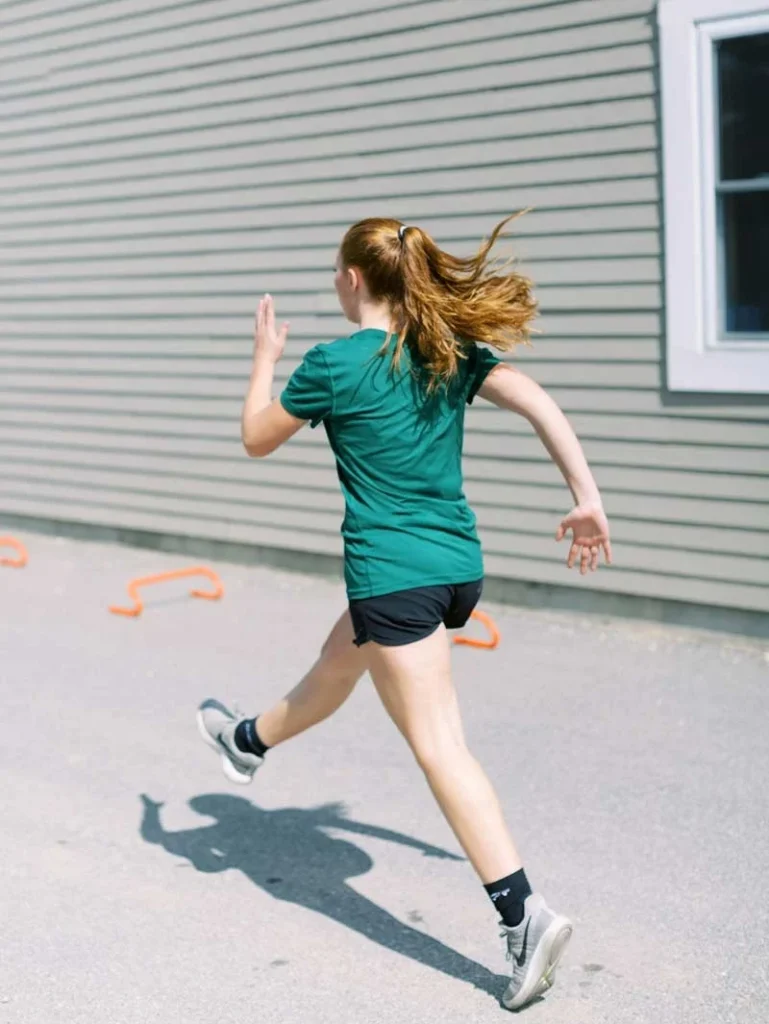
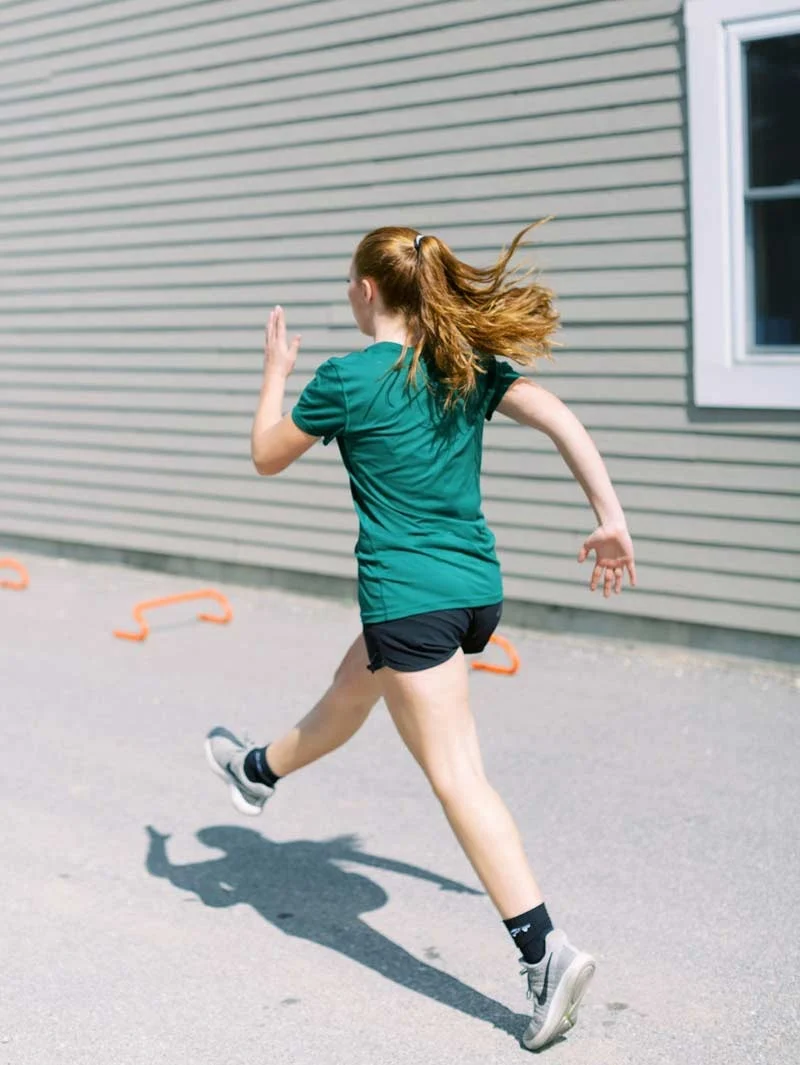
The primary catalyst for change this past summer was the simple decision to step outside. Confined indoors, Guyer’s athletes had previously spent zero time working on maximum velocity mechanics during their regular sessions. To bridge this gap, the coaching staff carved out a safe, designated lane in the asphalt parking lot, utilizing a brief window during the session for high-speed mechanics.
The protocol was designed to be concise to prevent excessive ground-contact volume on the harder asphalt surface, which required careful monitoring, especially for younger participants. Depending on the age and training age of the group, certain athletes integrated the outdoor work three times a week. Throughout the implementation phase, maintaining open communication channels was critical. Coaches closely monitored weekly feedback, carefully evaluating how athletes felt during and after each outdoor session to calibrate the volume appropriately.
The outdoor sequence typically followed an indoor foundation of dynamic flexibility, joint range of motion, and tissue preparation. Once outside, athletes engaged in targeted movements designed to elevate their running mechanics. One staple of the routine involved straight-leg runs followed by an acceleration phase focused on what Guyer defines as "technical speed"—the maximum velocity an athlete can achieve while maintaining flawless mechanics, absolute concentration, and clear intention.

These straight-leg runs emphasized elasticity within the posterior chain, allowing athletes to actively feel their feet striking the ground with each stride. At the same time, the high-speed execution delivered essential mechanical stress to the hamstrings and posterior tendon junctions. Guyer notes that applying regular, high-velocity stress to these structures is vital for reducing soft-tissue injuries and preparing athletes for the physical demands of competitive play.
Utilizing Wickets for Improved Mechanics
To further refine movement patterns, the coaching staff integrated wicket drills into the parking lot routine. By setting up low hurdles at calculated intervals, coaches could visually assess running rhythm and spatial awareness. For younger high school athletes, the setup typically started with six-inch hurdles spaced roughly four feet and nine inches apart for the first three obstacles, expanding slightly through the sequence, while older high school and collegiate groups required minor adjustments based on leg length and running experience.
Guyer stresses that wicket spacing is never one-size-fits-all. Leg length, running background, and real-time movement fluidity all dictate whether adjustments are necessary. If an athlete struggles to maintain a natural flow or forces their mechanics to clear the obstacles, coaches must be willing to alter the setup immediately. To assist with this learning curve, the coaching staff frequently relied on slow-motion video analysis. Reviewing footage allowed both coaches and athletes to visualize posture, footstrike, and mechanics, helping eliminate awkward movement patterns or excessive lower-leg reaching.
As the summer progressed, the qualitative feedback from the athletes was striking. Rather than feeling strained or rigid, many reported a sensation of effortless floating—a subjective feeling of speed often attributed to more efficient force application relative to the athlete’s center of mass, coupled with a stronger, more reactive posterior chain. Parents also noticed the transformation by the time the fall sports season arrived, observing their children moving with noticeably greater fluidity and confidence on the field.
Quantifying the Volume and Performance Indicators
While the setup lacked the sophisticated timing gates common in elite training centers due to the shared parking lot environment, the cumulative volume metrics were substantial. Athletes utilizing the outdoor warm-up accumulated approximately 250 yards of high-speed upright running per session. For collegiate athletes training consistently over the summer, this protocol added roughly 9,000 yards of upright sprinting capacity that would have otherwise been missed under previous indoor-only routines. Younger high school participants approached nearly 5,000 yards of additional high-speed volume over the same period.

This gradual, controlled accumulation of sprint volume played a pivotal role in general conditioning and energy system development, while simultaneously serving as a buffer against soft-tissue injuries as athletes transitioned into their competitive seasons. Key performance indicators noted by the staff included a shift away from rigid, muscle-driven running strategies toward more elastic, tendon-utilizing mechanics. Guyer notes that excessive time spent lifting weights without adequate field transfer can sometimes lead to overly stiff movement patterns in multi-joint skills like sprinting, making dedicated sprint mechanics work an essential counterbalance.
Furthermore, post-summer testing revealed improvements in ten-yard acceleration times across the roster. While these acceleration metrics cannot be attributed solely to the upright running warm-up, the coaching staff observed tangible improvements in force application, specifically noting a reduction in foot and ankle collapse during ground strike in the early acceleration phase. This enhanced structural stiffness, verified through video review, likely contributed to the positive testing outcomes.
By stepping beyond the four walls of the indoor facility, Guyer and his coaching staff demonstrated that meaningful athletic development does not always require expensive technology or expansive infrastructure. With a modest collection of short hurdles, a few cones, and an open strip of pavement, programs can successfully integrate high-velocity training into daily preparations, unlocking new levels of speed and confidence for athletes at every level of competition.