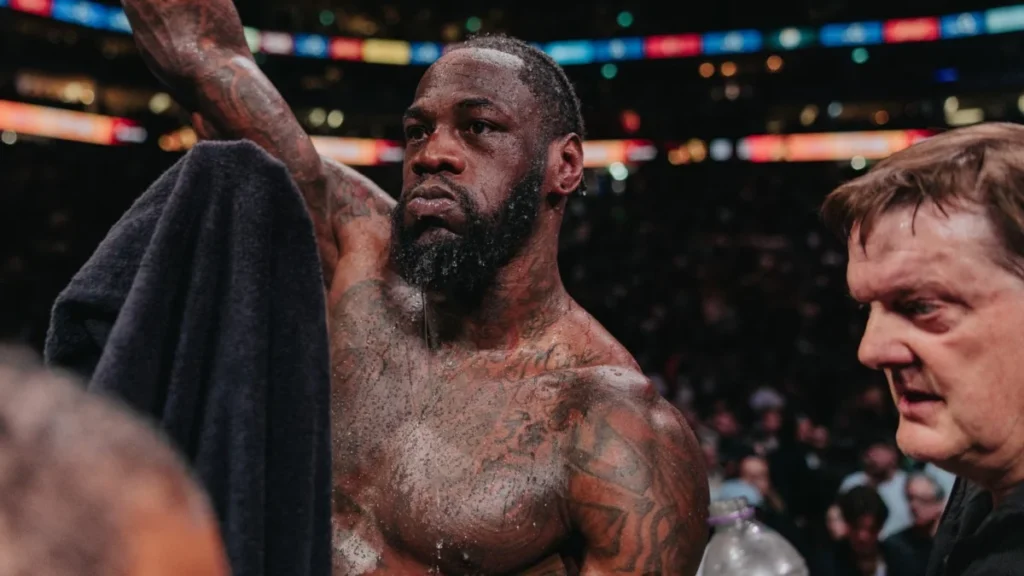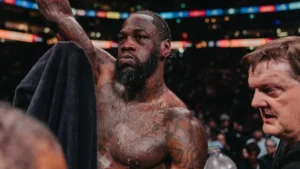

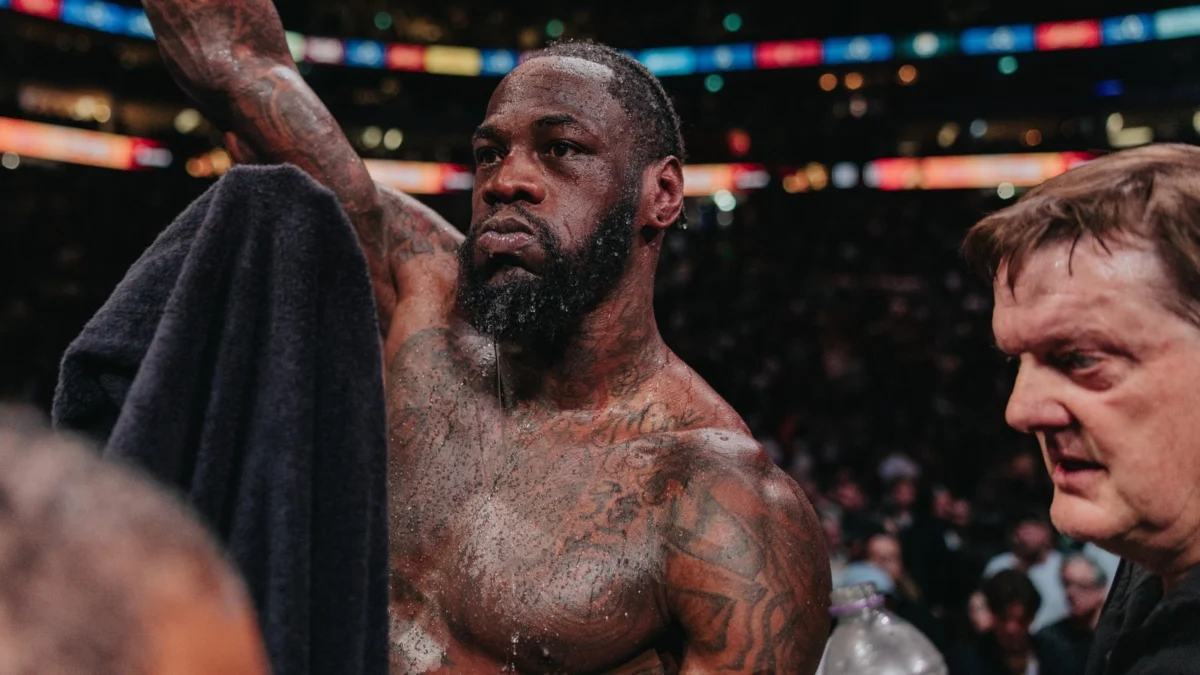
The landscape of modern heavyweight boxing has delivered few reversals of fortune as striking as the current trajectory of Deontay Wilder. Once regarded as the most feared puncher on the planet, the former long-reigning WBC heavyweight champion now finds himself in the astonishing position of being framed as a major betting underdog against a fighter stepping up from the cruiserweight division.
Negotiations have placed Wilder on a collision course with undefeated Australian sensation Jai Opetaia, with the high-stakes matchup targeted for the undercard of the colossal Tyson Fury vs. Anthony Joshua event on December 11. Yet, rather than entering the ring as the terrifying heavyweight bully who ruled the division with iron-fisted authority, Wilder approaches this potential showdown with his reputation hanging in the balance, facing a younger, faster, and supreme operator operating at the absolute peak of his powers.
The contrast in form between the two men could hardly be more pronounced. While Opetaia continues an unstoppable momentum shift reminiscent of elite lower-weight conquerors, Wilder’s recent career path reflects a protracted and severe decline. For a fighter who once struck absolute terror into the hearts of division rivals during a legendary title reign, his slide down the heavyweight hierarchy has transformed a potential matchup against a 200-pound champion into a deeply precarious endeavor.
The Decline of Heavyweight Boxing’s Most Feared Puncher
To understand how Wilder arrived at a point where he is expected to struggle against a ascending cruiserweight, one must examine the drastic downturn in his recent record. The brutal right hand that once erased minor errors and salvaged trailing scorecards has noticeably lost its timing and explosive triggers. Wilder’s recent run of form leaves immense room for skepticism, marking a dramatic departure from the era when his world title defenses ended in swift, violent fashion.
Over the past seven years, high points have been exceptionally rare for the Alabama native. In fact, a swift first-round knockout victory over Robert Helenius stands alone as his sole emphatic triumph in recent memory—a highlight that occurred four years ago. Outside of that fleeting reminder of his prime power, Wilder’s outings have been fraught with difficulty, tactical passivity, and physical deterioration.
Consecutive and decisive defeats to Joseph Parker and Zhilei Zhang severely damaged Wilder’s standing in the elite tier of the division. Against Parker, Wilder appeared hesitant and unable to pull the trigger, allowing the crafty New Zealander to outmaneuver him over twelve tactical rounds. The subsequent knockout loss to Zhang further exposed his compromised defenses and slowed reflexes, confirming that the lightning-fast attacks that once defined his championship reign had cooled dramatically.
Even when returning to the win column, Wilder failed to reignite the intimidation factor that once insulated his career. A sluggish, unconvincing split-decision victory over veteran Derek Chisora did little to convince observers that the former champion had recaptured his old form. Rather than reassuring the boxing world of his enduring threat, the laboring performance against Chisora merely underscored how far his physical output and ring generalship had dropped. Facing an opponent whose attacks have visibly slowed, oddsmakers and analysts now view Wilder as a vulnerable target for elite, highly mobile operators.
Wilder vs Opetaia
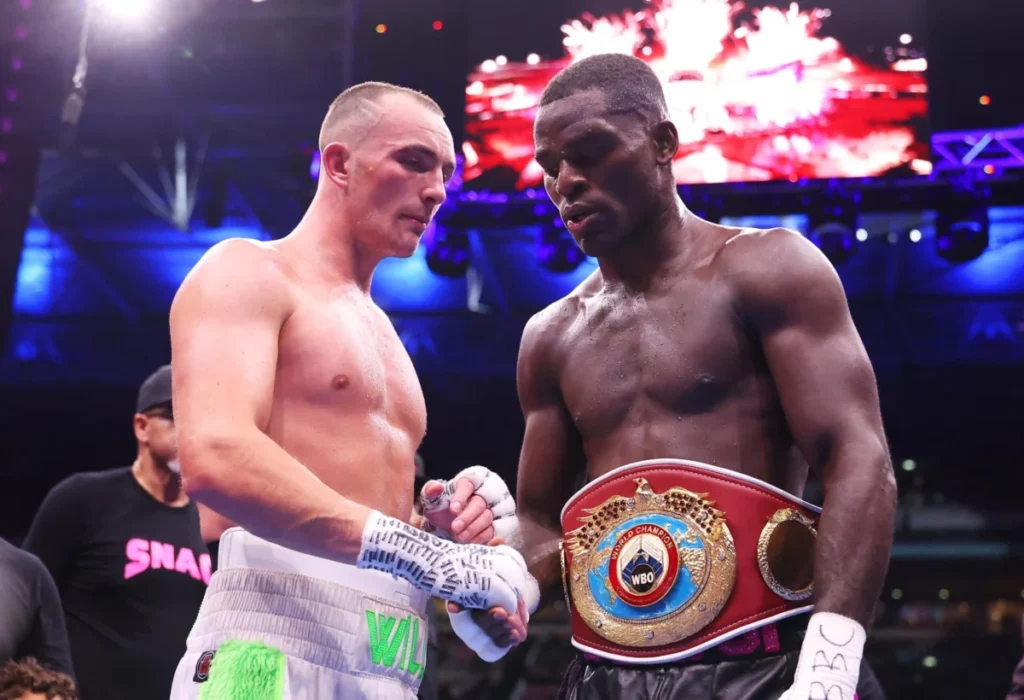
In sharp contrast to Wilder’s cold streak, Jai Opetaia enters this proposed showdown riding a wave of red-hot momentum. The undefeated Australian, a former IBF cruiserweight champion, has established himself as one of the most dangerous and dominant combatants in combat sports at 200 pounds. Opetaia has systematically dispatched every challenger placed before him, displaying a combination of sharp southpaw skills, relentless work rate, and devastating power.
Opetaia’s ambition to test his skills against the heavyweight division’s biggest hitters reflects a natural evolution, drawing obvious parallels to Oleksandr Usyk’s historic campaign from unified cruiserweight king to undisputed heavyweight ruler. Having established supreme command over his natural weight class, Opetaia fancies his chances against an aging heavyweight elite—and bookmakers agree. The tough Australian’s sharp footwork, speed, and defensive acumen make him a heavy favorite to comfortably evade Wilder’s diminished output, with many expecting Opetaia to secure a dominant points victory or even hand the former champion a brutal stoppage.
The mechanics of bringing this fascinating cross-division bout to fruition have moved rapidly behind the scenes. The proposed contest has been targeted as a marquee attraction for the blockbuster December 11 card headlined by Fury and Joshua. Wilder’s longtime manager, Shelly Finkel, confirmed that an offer for the contest had been formally accepted by their side. While both camps have reportedly agreed to the parameters of the fight, official contracts remain unsigned as logistical details are finalized.
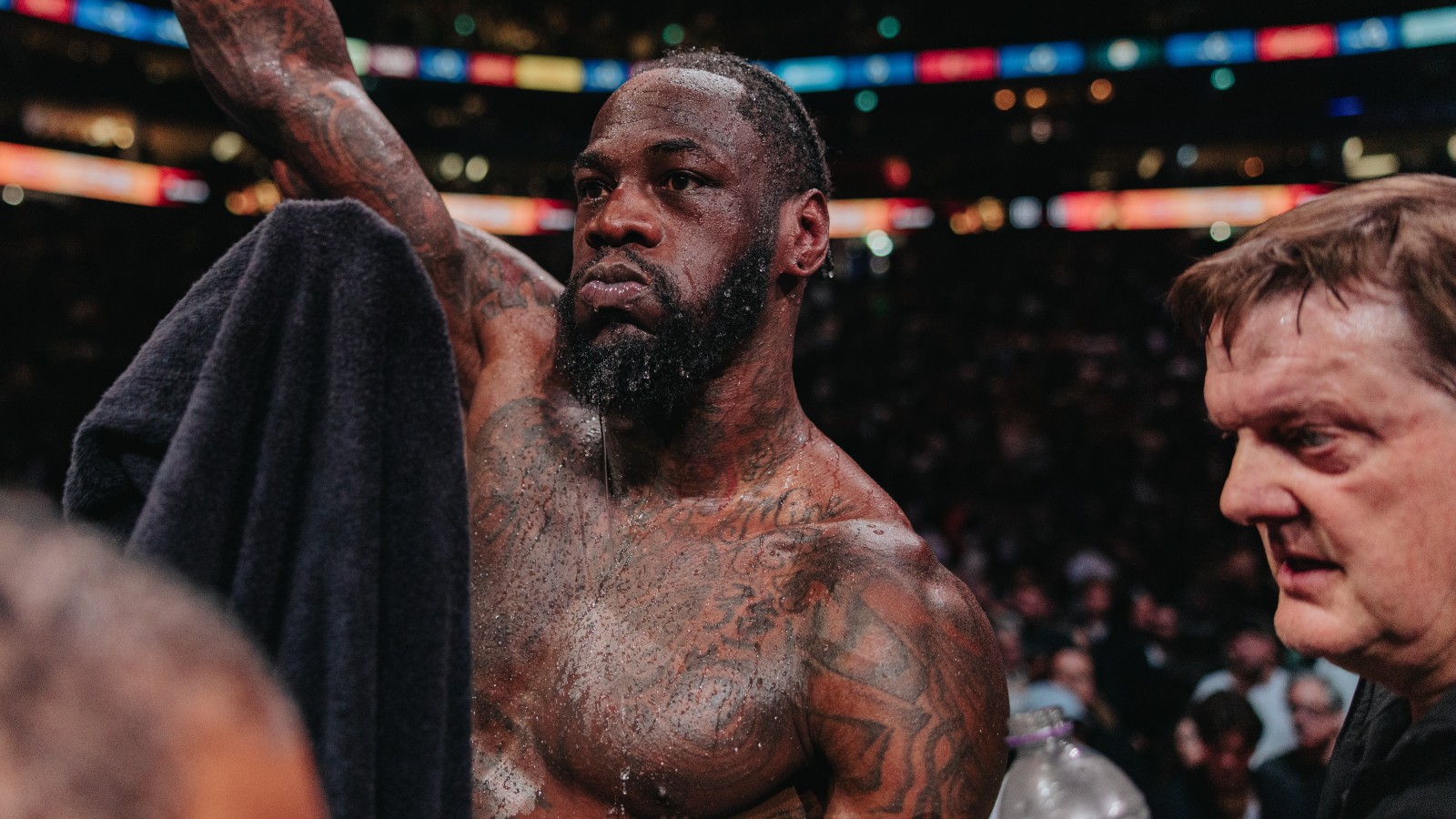
Adding further weight to the enterprise, Dana White has publicly acknowledged ongoing discussions surrounding the fight. The contest would mark Opetaia’s formal entry into the heavyweight ranks after establishing himself as the primary force at 200 pounds.
Interestingly, the physical dynamic between the two fighters presents a unique talking point. Wilder has never been a massive heavyweight in terms of sheer mass, frequently stepping onto the scales significantly lighter than his heavy-set rivals throughout his title reign. His relatively lean frame was a key characteristic of his peak years, prompting Wilder to speak openly in 2018 about the possibility of dropping down to cruiserweight himself. At the time, Wilder envisioned making the 200-pound limit to conquer a second weight class while simultaneously holding his heavyweight crown. Should Wilder dedicate several months to a structured weight cut, it remains entirely conceivable that he could shrink down to the cruiserweight limit himself, making a clash with Opetaia a battle of surprisingly comparable physical dimensions.
The Usyk Opportunity
The reality of Wilder accepting a fight against Opetaia raises intriguing questions regarding his overall career management and strategic matchmaking. If this matchup indeed anchors the co-main event slot of the Fury vs. Joshua broadcast, observers wonder why Wilder did not pursue a high-profile showdown against Oleksandr Usyk instead, which would have offered him one final, glorious opportunity at ultimate redemption.
A clash with Usyk would have provided Wilder with the chance to challenge the very man who captured the heavyweight division after completely conquering the cruiserweight ranks. Taking on Usyk would have carried massive global stakes, offering Wilder the highest possible legacy reward if he managed to land his signature right hand.
Instead, by taking on Opetaia, Wilder accepts a remarkably similar style of threat—an undefeated, highly technical 200-pound power player—without the equivalent rewards attached. The strategic risk-to-reward ratio appears heavily skewed against the American icon.
Should Wilder manage to pull off a victory by landing a fight-ending bomb on Opetaia—an outcome that many would now view as requiring something akin to divine intervention given his recent performances—he stands to gain minimal praise from the boxing public. Overcoming a natural cruiserweight moving up in weight will yield very little kudos for a veteran who once ruled the blue-ribbon division. Conversely, a convincing defeat would inflict catastrophic damage on his standing. This dilemma illustrates the bizarre predicament Wilder now inhabits: once the most feared champion of his era, even a dramatic knockout victory may no longer suffice to fully restore his damaged reputation.
The Fury-Joshua Long Game
Despite the obvious dangers and limited immediate acclaim associated with facing Opetaia, Wilder’s decision to accept the challenge is rooted in a clear long-term objective. Positioning himself prominently on the undercard of Fury vs. Joshua allows the American to play a high-stakes long game, placing him directly in the center of the heavyweight narrative on the biggest fight night of the year.
By competing on the same platform as Fury and Joshua, a victorious Wilder would immediately insert himself back into the conversation to face the winner of the main event. Wilder shares a rich, complex history with the headliners. He has already shared the ring with Tyson Fury in a legendary trilogy that defined a generation of heavyweight boxing, while a showdown with Anthony Joshua has been discussed, negotiated, and anticipated by fans for nearly a decade without ever coming to fruition.
Securing an eye-catching victory over an undefeated champion like Opetaia on December 11 would immediately rejuvenate Wilder’s marketability, placing him in prime position to demand one final, extraordinarily lucrative heavyweight blockbuster against either Fury or Joshua.
This calculated ambition explains why the veteran warrior is willing to take on the immense risk posed by a younger, faster, and red-hot opponent from the division below. Wilder is betting on his ability to deliver one more thunderous moment on a global stage to unlock the ultimate career finale. However, the margins for error could not be thinner. If Wilder suffers a heavy defeat at the hands of a fighter climbing up from cruiserweight, any remaining hope of securing another major heavyweight opportunity will likely vanish permanently.