
Dave Bautista has hit a major milestone in his high-stakes physical transformation to portray the iconic Spartan demigod Kratos for Amazon Prime Video’s highly anticipated God of War television adaptation.
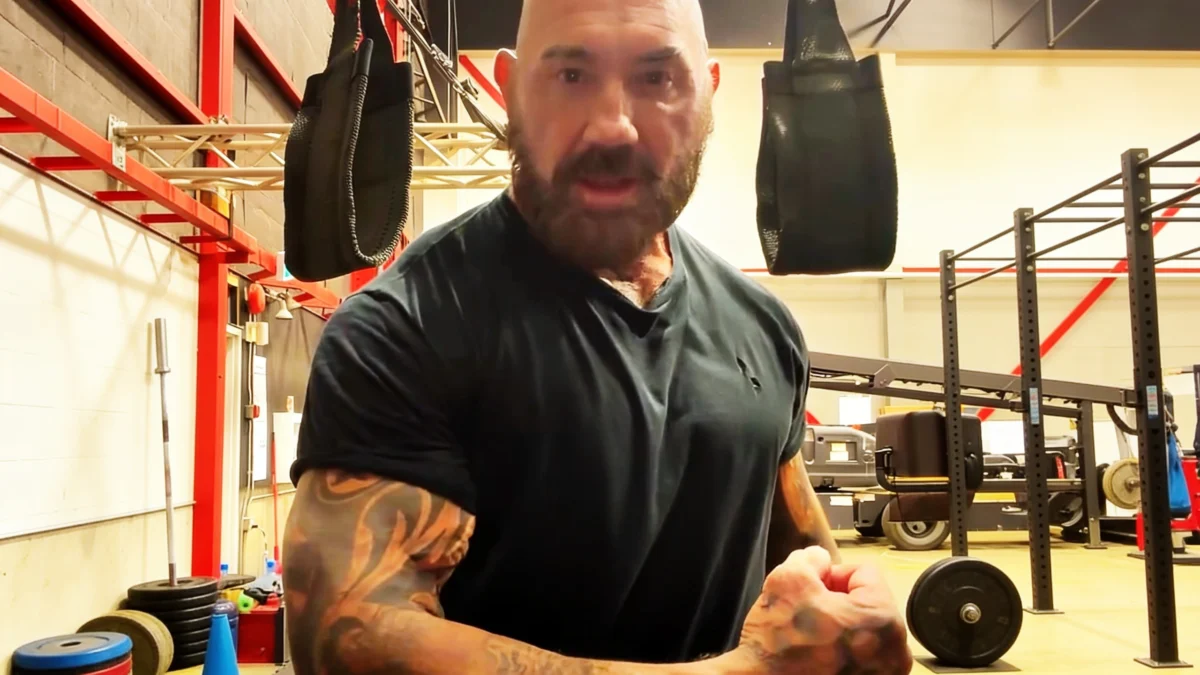
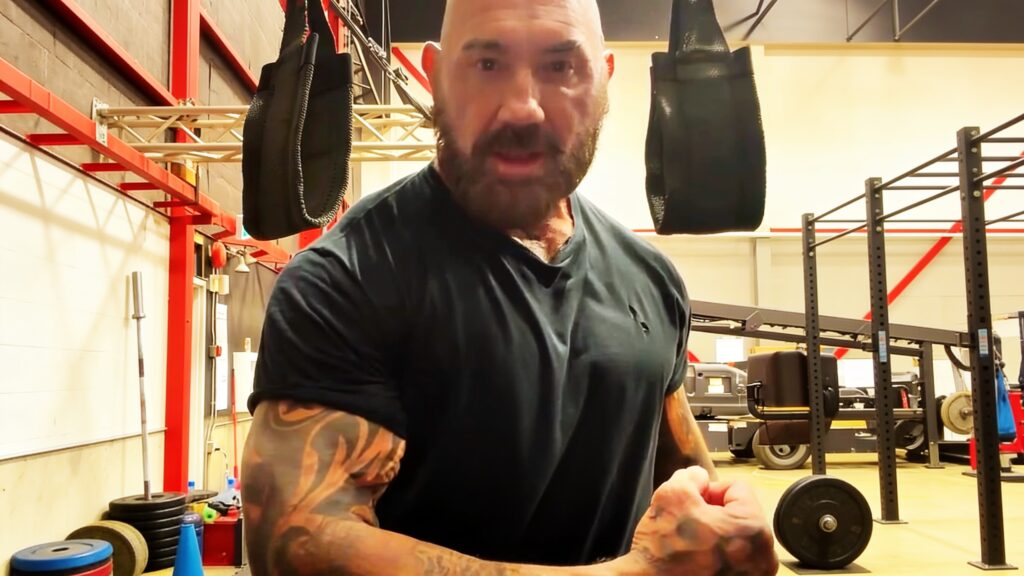
The former WWE champion turned acclaimed Hollywood actor revealed via an Instagram Story update on November 1, 2026, that his current weight has climbed to 250 pounds. This marks a direct gain of 20 pounds of pure muscle specifically packed on to meet the demanding physical requirements of stepping into the shoes of the legendary video game protagonist.
What makes this swift transformation particularly remarkable is the tight timeline in which it was accomplished. Bautista managed to bulk up significantly over the course of roughly two months, achieving the milestone at 55 years old. The video shared with his followers showed him flexing inside a gym, wearing a God of War T-shirt emblazoned with the series’ unmistakable red omega logo, all set to the instrumental track of Wu-Tang Clan’s "Triumph."
From Slimmed-Down Actor to Spartan Demigod
Bautista’s current bulk represents a dramatic and sudden reversal of his post-wrestling lifestyle choices. During his decorated WWE career as "Batista — The Animal," he regularly competed at approximately 290 pounds, utilizing sheer size and power to dominate the squared circle.
However, after officially retiring from professional wrestling and successfully transitioning into a respected Hollywood acting career—most notably breathing life into Drax the Destroyer in Marvel’s Guardians of the Galaxy franchise—he made a conscious decision to intentionally shed a significant amount of mass. By 2024, Bautista had successfully slimmed down to an estimated 230 to 240 pounds through a dedicated regimen of jiu-jitsu, consistent cardio, and a carefully balanced diet. At the time, he publicly stated that he had no intention whatsoever of returning to his former heavyweight size.
Yet, the sudden demands of playing Kratos changed everything, forcing the actor to reevaluate his physique and step back into a heavy bulking phase.
The Unexpected Path to Kratos
Bautista was not the original choice to lead the upcoming series as the brooding Spartan warrior. That distinction initially belonged to actor Ryan Hurst, who had already been filming the physically punishing role for approximately four months when disaster struck the production in June 2026.
During a complex stunt sequence on set, Hurst suffered a severe bicep tear that necessitated immediate surgical intervention. The injury and subsequent recovery timeline would have pushed active production deep into 2027, creating massive scheduling conflicts, logistical hurdles, and mounting financial costs for the studio. Facing these severe delays, Amazon Prime Video made the difficult and costly decision to halt production temporarily and recast the lead role.
Bautista officially closed his deal to helm the series as Kratos on August 20, 2026. Because of the mid-production shift, at least four full episodes featuring Hurst in the title role would need to be completely reshot from scratch. This massive undertaking speaks volumes about both the immense financial stakes and the massive budget behind Amazon’s adaptation of the beloved PlayStation franchise.
The Two-Month Timeline
Following the announcement of his casting, Bautista wasted no time preparing his body for the immense physical demands of the role. Between September 1 and September 3, 2026, he posted a shirtless training video that laid out a clear declaration of intent to his fans and the production team, noting that he was just three weeks back into heavy weight training and had given himself two more months to reach the necessary size for the character.
That ambitious timeline proved remarkably accurate. His November 1 Instagram Story, posted precisely two months later, confirmed that he had successfully hit his 250-pound target weight right on schedule. This milestone suggests that filming is set to resume imminently, likely kicking off in November 2026, which would keep the ambitious back-to-back two-season production schedule largely on track.
What Gaining 20 Pounds in Two Months Actually Requires
Packing on 20 pounds of muscle in roughly eight weeks is an extraordinary feat of physical conditioning, particularly for an actor in their mid-fifties. At Bautista’s age, natural testosterone production naturally declines, muscle recovery takes significantly longer, and the body’s anabolic response to heavy resistance training diminishes compared to younger years. This makes rapid muscle hypertrophy substantially more difficult to achieve.
Such a rapid physical transformation typically demands a meticulously structured surplus of calories, precise macronutrient tracking with a heavy emphasis on protein, relentless weight training, and optimized rest. Realistically, a portion of a rapid 20-pound gain can also include temporary water retention and glycogen storage alongside newly built muscle tissue. Pure muscle gain at this accelerated rate and age is physiologically challenging and underscores the intense dedication required for major Hollywood physical transformations.
Is 250 Pounds Enough?
Despite successfully reaching his stated goal, speculation continues to swirl within fan communities regarding whether Bautista will need to bulk up even further before production wraps.
Reports indicated that Ryan Hurst had built significant mass for the role, with some estimates suggesting the previous actor approached 280 pounds during filming. In the source material—specifically 2018’s acclaimed God of War and its 2022 sequel God of War Ragnarök—Kratos is portrayed as an overwhelmingly hulking, muscular presence, a Spartan demigod capable of wrestling monsters and battling the gods of the Norse pantheon while simultaneously raising his young son, Atreus.
The character inherently demands an imposing, almost superhuman physicality on screen. Standing at 6-foot-4 and weighing 250 pounds, Bautista is undeniably massive, but whether that translates precisely to the exact visual presence required under studio lights remains a subject of ongoing discussion among fans of the games. While no official target weight has been publicly confirmed by the production team, Bautista’s extensive background in professional wrestling means he understands better than almost anyone how to carry extreme mass while maintaining the functional mobility needed for punishing stunt work.
The Stakes of a Mid-Production Recast
Recasting a lead actor four months into active filming is an exceptionally rare, disruptive, and expensive occurrence in modern television production.
The definitive choice by Amazon Prime Video to reshoot multiple entire episodes rather than simply write around the injury or recast a minor supporting role signals just how deeply committed the studio is to doing the adaptation justice. The God of War franchise stands as one of PlayStation’s most cherished intellectual properties, boasting critical acclaim and immense commercial success worldwide.
When Prime Video originally greenlit the series, they took the bold step of ordering two seasons to shoot back-to-back in Vancouver, with cameras officially rolling in February 2026. This rare level of commitment, paired with the studio’s clear willingness to absorb the substantial costs of massive reshoots, indicates that Amazon views God of War as a definitive tentpole franchise comparable to their massive investments in properties like The Lord of the Rings: The Rings of Power and Fallout.
Bautista’s Hollywood Trajectory
The demanding role of Kratos represents a fascinating full-circle moment for Bautista, who has spent recent years deliberately distancing himself from the purely muscle-bound characters that defined the earliest chapters of his cinematic career.
He has consistently sought out more nuanced, diverse roles, earning praise for dramatic turns in acclaimed films like Blade Runner 2049 and Glass Onion: A Knives Out Mystery. His prior decision to lose weight was a conscious part of that professional rebranding, serving as a clear statement that he was far more than just "the big guy" of an action movie ensemble.
Yet, taking on Kratos offers a unique middle ground: a complex character with genuine emotional depth wrapped in a terrifyingly intimidating physical package. The original video games are celebrated for balancing brutal, visceral action with a surprisingly tender, grounded father-son narrative, providing Bautista with an ideal vehicle to flex both his imposing physical presence and his rapidly growing dramatic acting chops. It is a rare role that allows him to authentically embrace both sides of his career.
The Physical Reality of Playing Kratos
Beyond merely achieving the necessary size, portraying Kratos requires a sustained level of physical intensity and stamina that must be maintained throughout grueling, protracted shooting days.
The character is almost constantly in motion—fighting mythical beasts, scaling sheer cliffs, and furiously wielding his signature Leviathan Axe and Blades of Chaos. Maintaining upwards of 250 pounds of dense mass while executing these high-octane physical actions for months on end demands extraordinary cardiovascular conditioning and rigorous recovery protocols.
Bautista’s unique background gives him distinct advantages in this arena. His years in the WWE prepared him well for the demanding combination of size, raw strength, and stamina required for cinematic action, while his subsequent jiu-jitsu training helped him maintain high functional fitness during his leaner years. Still, at 55 years of age, the physical toll cannot be understated, as the risk of injury naturally increases with age, body mass, and stunt intensity—ironically, the exact combination of factors that ultimately sidelined Ryan Hurst.
What’s Next for the Production
With Bautista successfully hitting his target weight right on schedule, the massive production appears fully primed to resume active filming.
The upcoming series will closely follow the emotional and narrative storyline established in the recent video games, centering primarily on Kratos as he attempts to raise his young son Atreus—portrayed in the adaptation by young actor Callum Vinson—while navigating and battling the powerful gods of the Norse pantheon. Finding the right tonal balance between mythological action spectacle and intimate, character-driven drama will be crucial to capturing the elements that made the source material resonate so deeply with millions of players worldwide.
While no official premiere date has yet been announced by Amazon Prime Video, the fact that two seasons are shooting back-to-back, combined with the extensive reshoots necessitated by the mid-production recast, makes a late 2027 or 2028 debut the most likely window for the series to finally hit the streaming platform.
The Broader Context of Extreme Transformations
Bautista’s dramatic bulk-up is simply the latest chapter in a long-standing Hollywood tradition of extreme actor transformations undertaken specifically for major franchise roles.
From Christian Bale’s infamous, repeated weight fluctuations to Chris Hemsworth’s sustained muscular mass as Thor, and Kumail Nanjiani’s shocking physical overhaul for Marvel’s Eternals, the physical demands placed on actors working within the action and superhero genres have escalated dramatically over the years. These intense transformations routinely generate massive headlines and widespread social media buzz, but they also regularly spark important conversations regarding long-term health, physical sustainability, and the realities of body conditioning.
What notably separates Bautista from many of his industry peers is his candid, straightforward acknowledgment of both the grueling physical challenges involved and his own evolving personal relationship with his body size. He has previously been entirely open about his reluctance to return to his maximum wrestling weight, which frames this current transformation not merely as an exercise in ego, but as a dedicated professional commitment to authentically embodying an iconic piece of video game history.
Why This Matters Beyond Hollywood
For fitness enthusiasts, everyday gym-goers, and fans closely tracking Bautista’s career trajectory, the physical transformation offers both a high-profile point of inspiration and a necessary dose of real-world context.
Dramatic physical changes are indeed possible later in life, but they require resources, dedicated support systems, and professional guidance that the average person simply does not have at their disposal. Actor transformations consistently take place under tightly controlled, professional conditions backed by specialized teams of trainers, nutritionists, private chefs, physical therapists, and comprehensive medical oversight.
The compressed two-month timeline is also worth noting, though it comes on the heels of decades of specialized training experience, deep muscle memory retained from his years as a professional athlete, and a lifestyle that allows for a singular, full-time focus on the physical goal. For the average individual trying to build muscle while balancing a career, family responsibilities, and everyday life, natural physical progress will inherently happen at a much slower pace—and that reality remains entirely normal, healthy, and expected.
Dave Bautista’s journey to becoming Kratos ultimately showcases both what is possible through intense personal dedication and what is fundamentally required behind the scenes to achieve a larger-than-life physical presence. As production officially resumes and Amazon’s God of War series moves steadily closer to its eventual release, audiences will soon discover whether this remarkable physical transformation translates into the definitive on-screen presence that the legendary video game character demands.