

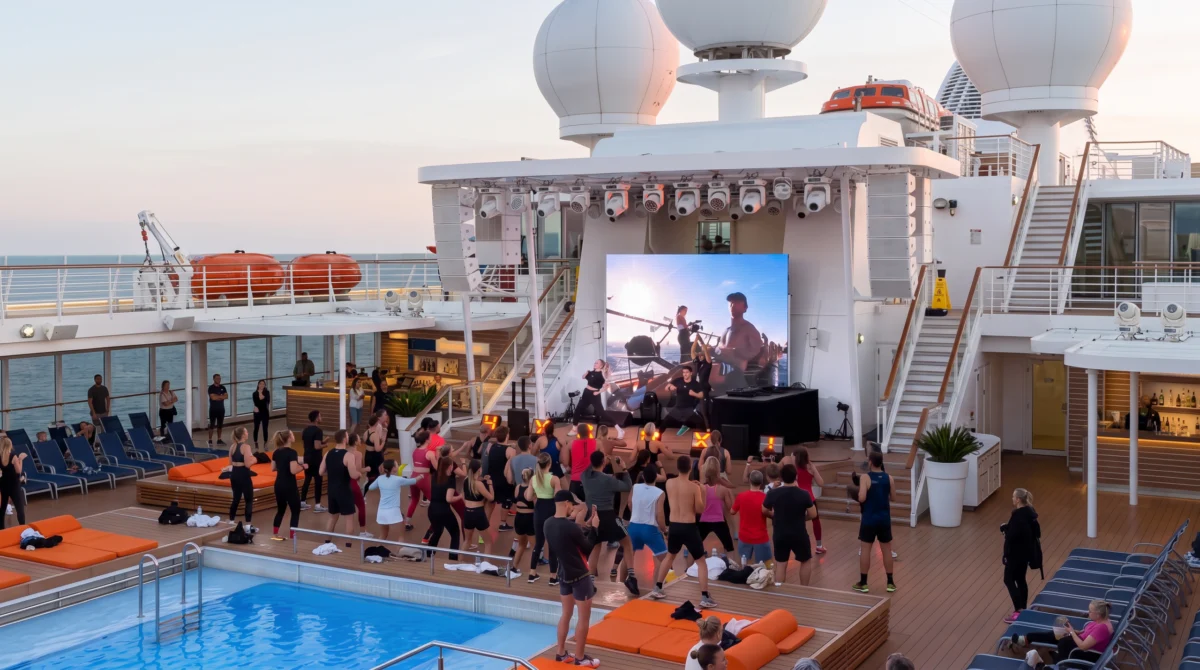
Most cruise passengers dream of lounging by the pool with a cocktail in hand, but one group of fitness enthusiasts signed up for something completely different. HYROX—the increasingly popular fitness competition combining running with intense workout stations—has taken its event to the high seas, creating what some are calling the ultimate fitness vacation and others are branding an absolute nightmare.
Videos circulating online show passengers pounding the deck at 6:00 AM, tackling brutal workouts while most traditional cruise-goers are still fast asleep. The divide between fitness fanatics and everyone else has arguably never been clearer in the modern travel landscape.
The concept represents a major departure from traditional leisure travel, shifting the focus from passive relaxation to high-intensity athletic performance in a maritime setting.
What Actually Happens on a HYROX Cruise
For those unfamiliar with the discipline, a standard HYROX competition consists of an 8-kilometer run broken into eight distinct segments. After each 1-kilometer run, competitors must complete a rigorous workout station before continuing the course.
While the event is typically held indoors inside large exhibition centers or arenas, the organization decided to take the concept offshore for an experimental four-day voyage.
The cruise officially departed from Palma de Mallorca, making strategic stops at Marseille and Barcelona before returning four days later. But unlike traditional Mediterranean cruises focused heavily on shore excursions, evening entertainment, and relaxation, this ship’s itinerary was tightly packed with exercise sessions running continuously from 6:00 AM through 8:00 PM. Passengers on board weren’t simply there to sunbathe between port visits; they were there to work out at a relentless pace.
The Controversial 6 AM Start Time
Nothing has sparked more intense debate online than the cruise’s early morning schedule. Videos showing participants running grueling laps around the ship’s deck at the break of dawn have sharply divided public opinion across various social media platforms.
Critics argue that starting demanding physical exercise sessions at 6:00 AM completely defeats the entire purpose of taking a cruise vacation. Many commentators pointed out that commercial cruises are universally understood to be relaxing holidays, rather than intensive boot camps stationed on the water.
One prominent commenter captured the sentiment of casual travelers perfectly, stating they would only be interested in such a trip if they were guaranteed a proper lie-in first. Others went significantly further, labeling the entire concept a waking nightmare and making it abundantly clear they would never willingly set foot on such a vessel.
The Online Reaction Has Been Polarizing
The social media response to the maiden voyage reveals a fascinating cultural divide within contemporary fitness communities and the wider public. On one side, dedicated HYROX enthusiasts were genuinely thrilled by the concept, flooding comment sections to ask when the next fitness cruise would be scheduled and expressing immense excitement about combining their favorite athletic passion with international travel.
On the other side, skeptics offered sharp critiques, occasionally making not-so-subtle references to recent competitive controversies, including an unfortunate incident involving a competitor who experienced a bathroom emergency mid-race yet chose to keep going—an event that subsequently prompted HYROX leadership to update their official competition rules.
Some online critics suggested that enduring the strenuous workouts themselves might not even be the most challenging part of the trip. Several people joked that they simply could not stand the thought of listening to fellow passengers drone on about their training splits and race times for the entire duration of a multi-day voyage. Another pointed comment suggested wryly that they were genuinely surprised the cruise ship was able to stay afloat given the collective size of the passengers’ egos.
This commentary speaks directly to a broader cultural phenomenon surrounding modern boutique fitness competitions. While these events successfully foster tight-knit communities of deeply dedicated participants, they can occasionally project an air of exclusivity that feels off-putting to outsiders.
What the Schedule Actually Included
Beyond the controversial early morning runs, the floating event offered a comprehensive and demanding fitness schedule throughout each day of the itinerary. The programming was deliberately intensive, engineered specifically for individuals who genuinely love this particular style of functional training and wanted to immerse themselves in it completely without interruption.
Observers noted that this was never meant to be interpreted as a standard cruise ship featuring a well-equipped gym. Instead, it functioned entirely as a floating HYROX event that coincidentally happened to visit several prominent Mediterranean ports along its route.
Videos Show Participants Actually Enjoyed It
Despite fierce online criticism originating primarily from individuals who would never consider attending such an event, videos shared by the actual passengers on board painted a dramatically different picture. Footage captured during the four days showed participants having a genuinely good time, laughing, encouraging one another, and fully embracing the rigorous environment.
The passengers were thoroughly aware of what they had signed up for before stepping onto the gangway, and they appeared thrilled to be part of the pioneering voyage. Nobody on board seemed surprised or disgruntled by the crack-of-dawn start times or the relentless daily workout schedule, as that was literally the entire premise of the ticket purchase.
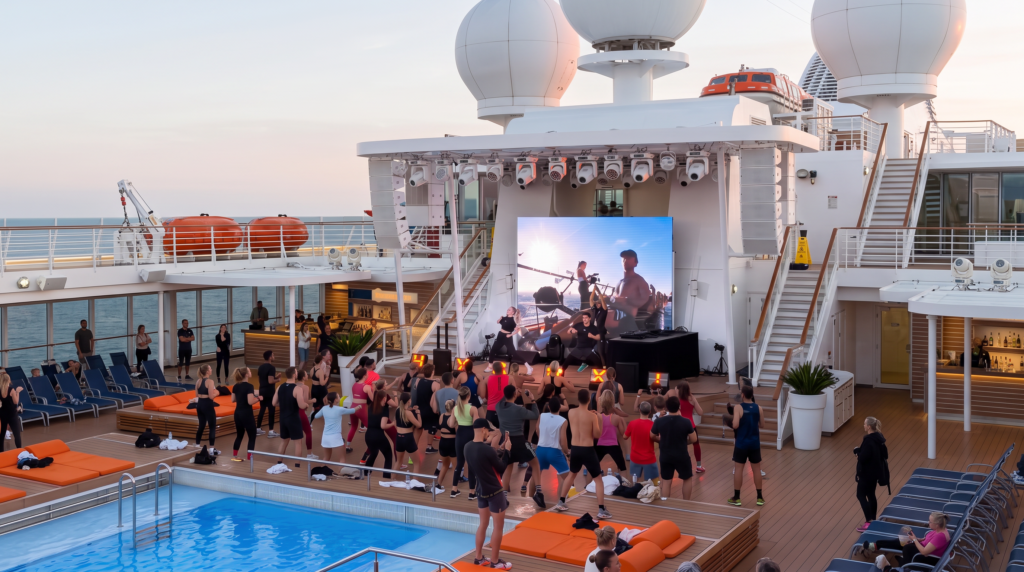
This sharp disconnect between the actual participants’ lived experience and the harsh criticism from outside observers highlights an essential truth about modern leisure: niche fitness experiences are never designed to appeal to the general public.
Is This the Future of Fitness Travel?
HYROX leadership has declared that they have successfully unlocked the next evolution of fitness travel with this inaugural cruise concept. While such a statement might initially sound like corporate hyperbole, it taps directly into a rapidly expanding consumer trend. Boutique fitness experiences have exploded in popularity over the past decade, cultivating passionate communities of practitioners who routinely build their social lives, disposable income spending, and international travel plans entirely around their chosen athletic discipline.
Marathon tourism already brings tens of thousands of dedicated runners to major metropolitan cities worldwide every year. Yoga retreats routinely book out their accommodations months in advance, and massive functional fitness competitions consistently draw roaring crowds. Translating this proven travel model onto a cruise ship is a logical, if ambitious, extension of the wellness tourism industry.
Who This Experience Is Actually For
Industry analysts note that the ideal passenger for a specialized fitness cruise is someone who views high-intensity training as their primary recreational outlet, thrives within a structured group athletic environment, and prefers active challenges over passive downtime while on holiday.
For travelers who do not fit that specific profile, a dedicated training cruise is certainly not the right choice—and industry experts emphasize that such a reality is entirely acceptable. As one observer aptly summarized the situation, the trip may not be everyone’s cup of tea, but nobody is forcing anyone to drink it.
The Accidental Passenger Nightmare Scenario
One of the more amusing elements of the widespread online discussion involved lighthearted speculation about what might happen if a regular, unsuspecting tourist accidentally booked the trip under the assumption that it was a traditional, leisurely Mediterranean vacation.
The comedic imagery of selling one’s possessions to retire on what was believed to be a relaxing cruise, only to discover that fellow passengers are aggressively performing burpees on the deck at dawn while one desperately searches for the karaoke bar, resonated widely online.
Fortunately, reality was far more transparent. HYROX made the exact nature, intensity, and schedule of the cruise abundantly clear in all of its promotional marketing materials. Every single passenger boarding the vessel did so with their eyes wide open, knowing precisely what physical challenges awaited them on the open water.
The Broader Wellness Travel Trend
The high-seas fitness experiment sits comfortably within a much larger wellness travel sector that has demonstrated consistent year-over-year growth. Modern travelers are increasingly seeking active vacations that actively align with their personal health and fitness goals, rather than traditional, sedentary trips focused strictly on overindulgence and relaxation.
This shift represents a fundamental change in how specific consumer demographics prefer to utilize their hard-earned leisure time. For these active travelers, pushing their physical limits in a scenic coastal environment sounds infinitely more rewarding than lounging by a resort pool for a week straight.
What Makes HYROX Different From Regular Fitness
A major factor enabling this type of specialized travel is the unique structural nature of the sport itself. HYROX has successfully built a standardized global competition format where the course layout, distances, and equipment requirements remain identical everywhere in the world.
Unlike traditional marathons or triathlons, where terrain, elevation, and course layouts vary dramatically from one city to another, every official HYROX event features the exact same sequence of movements. The eight standardized workout stations—encompassing the SkiErg, sled push, sled pull, burpee broad jumps, rowing machine, farmers carry, sandbag lunges, and wall balls—are intimately known by every practitioner.
This strict standardization creates a unified global community with a shared athletic vocabulary and training methodology, which in turn makes experimental concepts like a floating race viable.
The Bottom Line on Fitness Cruises
The intense public reaction to the recent maritime fitness experiment illustrates just how specialized and diverse modern fitness culture has become. What sounds like pure torture to one person represents the absolute ideal vacation for another, and neither perspective is inherently incorrect. They simply serve entirely different consumer audiences with contrasting values and personal priorities.
For the dedicated training enthusiasts who made the journey, combining rigorous physical preparation with Mediterranean travel and community camaraderie created substantial value. For everyone else, thousands of traditional cruise liners continue to sail the seas, offering unlimited buffets, quiet lounges, and uninterrupted poolside relaxation.
The underlying reality of modern niche tourism is that participation remains entirely voluntary. If waking up at 6:00 AM on a ship to run eight kilometers and complete demanding functional stations sounds like an appealing getaway, specialized operators have proven they are ready to provide it. If that description sounds like an individual version of hell, an abundance of alternative vacation options remains readily available.
The broader question facing the travel industry is no longer whether such extreme concepts are unusual, but rather whether the enthusiast market is large enough to support ongoing fitness cruises in the future. Based on the enthusiastic participation on board and the persistent growth of the wellness travel sector, athletic brands may well have tapped into a lasting movement.
Just do not expect to sleep in.