
The last mile of an Ironman is a terrible place to discover that your body has filed for bankruptcy. After swimming 2.4 miles in open ocean swells, pushing a bicycle for 112 grueling miles over volcanic terrain, and running far enough to qualify as a perfectly respectable standalone marathon, athletes arrive at what should be a moment of triumph. All that remains is a narrow strip of asphalt leading to a roaring finish line. Unfortunately, at that absolute limit of human endurance, your legs do not care about your training plans, your corporate sponsors, or the fact that a global audience is watching your every step.
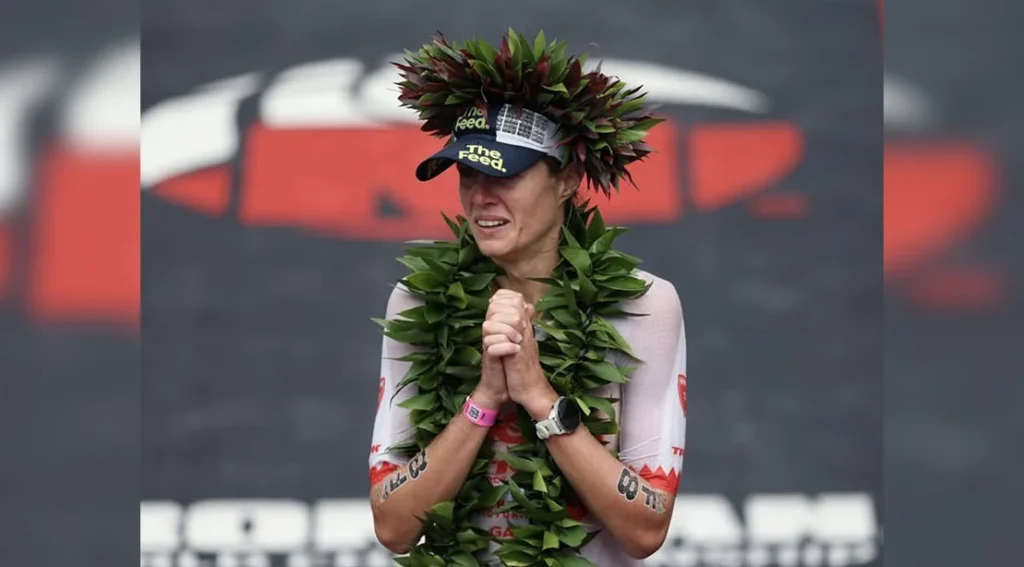
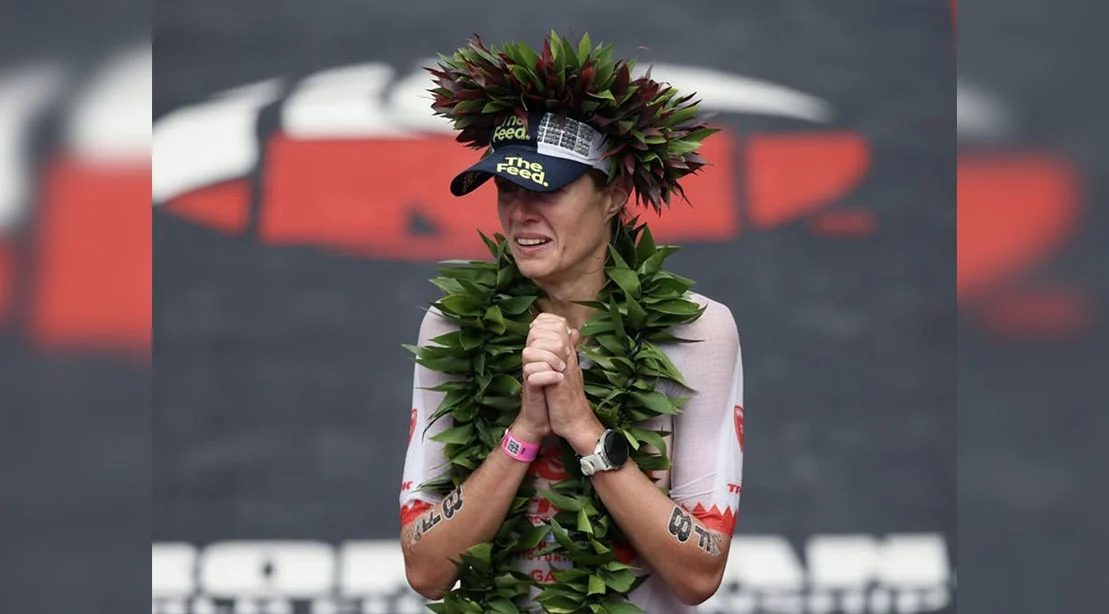
On October 10, the Ironman World Championship in Kona, Hawaii, produced a theatrical finale that made Hollywood sports scripts look thoroughly underwritten. American triathlete Taylor Knibb claimed victory in the women’s elite race, stopping the clock at 8:36:29 after a masterclass in pacing and resilience. However, the story of the race was written in the agonizing final miles. Defending champion Solveig Løvseth, who had surged past Knibb with approximately five miles remaining to seize control of the race, suddenly began to stagger as she entered the final mile. She faltered, came to a complete halt, and collapsed onto the pavement.
As Løvseth struggled on the ground, Knibb swept past to reclaim the lead and secure the world title. Displaying staggering mental fortitude, Løvseth eventually picked herself up, willed her exhausted body forward, and managed to cross the finish line in eighth place. Behind the dramatic shifting of the podium, Germany’s Laura Philipp crossed the line to take second place, while Switzerland’s Julie Derron secured the third step on the podium.
One Year Later, the Heartbreak Changed Hands
The most extraordinary element of the unfolding drama in Kona was the uncanny echo of history. Just twelve months earlier, at the previous edition of the world championship, the exact same two elite women found themselves locked in a similar duel—only the roles were completely reversed.
During that previous race, Knibb had been leading deep into the marathon segment when her body broke down under the immense Hawaiian heat and cumulative fatigue. Løvseth capitalized on that late-race collapse, passing Knibb to claim the victory while Knibb ultimately failed to finish the course.
To have the script flip entirely a year later—with the athlete who suffered heartbreak previously emerging as the champion, and the former beneficiary experiencing the crushing blow of a late-race physical failure—felt almost too scripted for reality. If a screenwriter were to pitch such a symmetrical narrative arc to a film producer, they would likely be told that the coincidence was far too obvious to be believable.
Yet, despite the dramatic symmetry, sports analysts and observers are quick to warn against reducing the contest to a simplistic motivational poster about never giving up. Neither athlete lacked determination or grit. Knibb entered the race already holding the prestigious title of the 2026 Ironman 70.3 World Championship—a grueling half-distance event that requires hours of intense physical punishment in its own right. Meanwhile, Løvseth was defending the single biggest crown in long-distance triathlon. Both competitors were operating at the absolute peak of their abilities and were entirely capable of taking the win.
Ultimately, the deciding factor in Kona was not a matter of who wanted the victory more. It was a stark physiological reality: who could still command their physical faculties to function after the clock had been ticking continuously for more than eight and a half hours.
In the immediate aftermath of the race, social media channels and online forums quickly filled with self-appointed experts offering instant medical diagnoses regarding Løvseth’s sudden collapse. However, officials and sports medicine professionals emphasize that no confirmed medical diagnosis has been established to pinpoint the exact cause of her physical failure. While environmental factors such as extreme heat, high humidity, hydration status, fueling strategies, and accumulated physical exertion are standard variables examined in any endurance event like Kona, attempting to diagnose an acute electrolyte deficiency or heat exhaustion from a television screen is a far cry from actual sports medicine.
Severe physical collapse during extreme endurance exertion can signal a serious medical emergency and invariably warrants professional medical evaluation. While human determination is an admirable trait, attempting to spin a potentially dangerous medical incident into a casual motivational slogan overlooks the very real physical risks involved in elite sport.
Vincent Luis Makes His Kona Debut a Winning One
While the women’s race provided a dramatic study in historical symmetry and late-race heartbreak, the men’s competition offered its own brand of athletic lunacy and historic achievement. France’s Vincent Luis, competing at the veteran age of 37 and making his career debut at the Kona World Championship, stunned the field by winning the men’s race in a blistering time of 7:47:27.
Luis was far from an anonymous age-group competitor stumbling out of a local cycling club. He arrived in Hawaii with an extensive pedigree, having previously competed at the highest levels of the Olympic Games and captured multiple world titles at shorter, punchy triathlon distances. Having openly discussed the prospect of retirement in recent years, Luis instead chose to test his limits on triathlon’s grandest and most unforgiving stage.
During the marathon portion of the race, Luis steadily worked his way forward, overtaking Denmark’s Magnus Ditlev and holding off a hard-charging field to cross the finish line roughly a minute and a half ahead of former champion Gustav Iden. American triathlete Matthew Marquardt rounded out the podium by claiming third place.
For the first time since 2019, the men’s and women’s professional world championships were held together in the iconic setting of Kona. The fact that both races were decided by dramatic late-race reversals serves as a powerful reminder of the fundamental chasm between being the strongest athlete on paper and being the strongest athlete at the final timing mat.
Triathlon competitors invest countless hours training for the punishing distance, meticulously practicing their nutritional intake, dialing in their equipment aerodynamics, and acclimating to the punishing Hawaiian heat. Such preparation is essential, and no elite athlete arrives at the starting line without it. Yet, the grueling nature of the sport proves that there is no training program, coaching philosophy, or scientific protocol on earth that can guarantee a human body will fully cooperate and withstand the rigors of 140.6 grueling miles.
Participation in an Ironman event is certainly not a requirement for everyone, and many observers can readily imagine far more comfortable ways to spend a weekend. However, anyone who has ever dedicated themselves to serious endurance training instantly recognizes the underlying lesson of the day. A race is never truly over simply because an athlete has built up a comfortable lead, nor is it lost merely because someone has fallen behind.
On rare occasions, the most significant victory is not crossing the timing mat in first place, but rather possessing the self-awareness to recognize when the course has taken everything out of you. The final mile of an Ironman holds zero respect for past reputations, world titles, or pre-race favoritism, and it certainly does not care who was leading the race at mile 139.