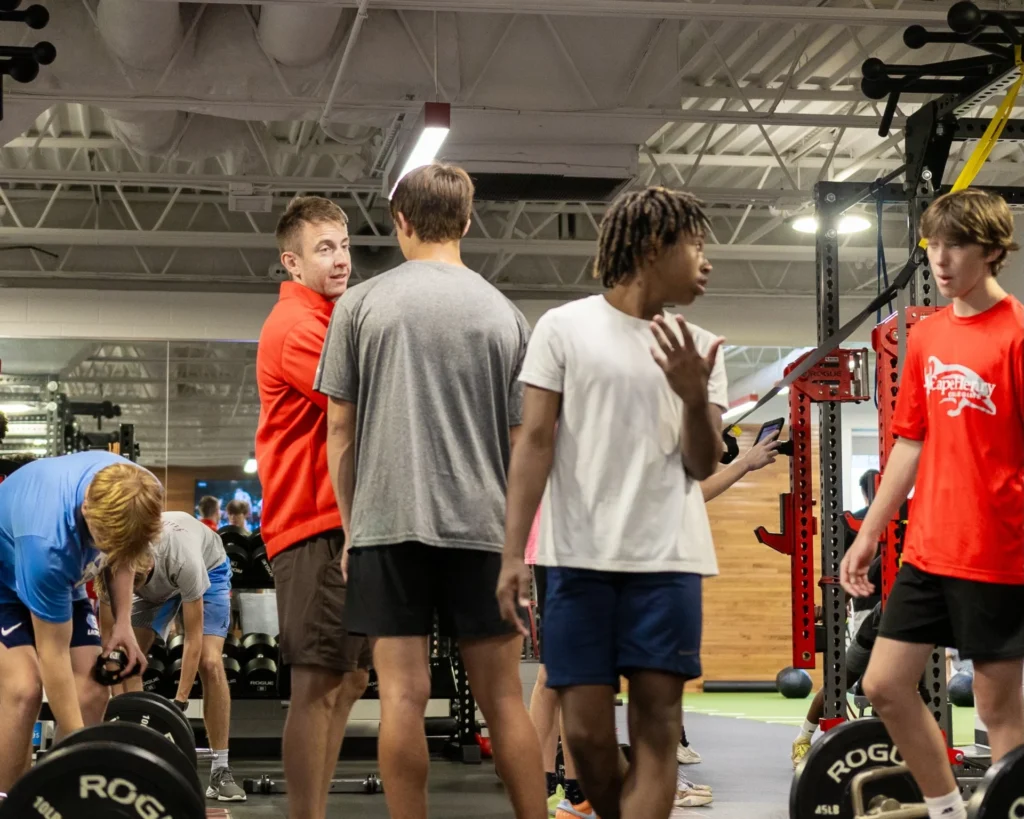

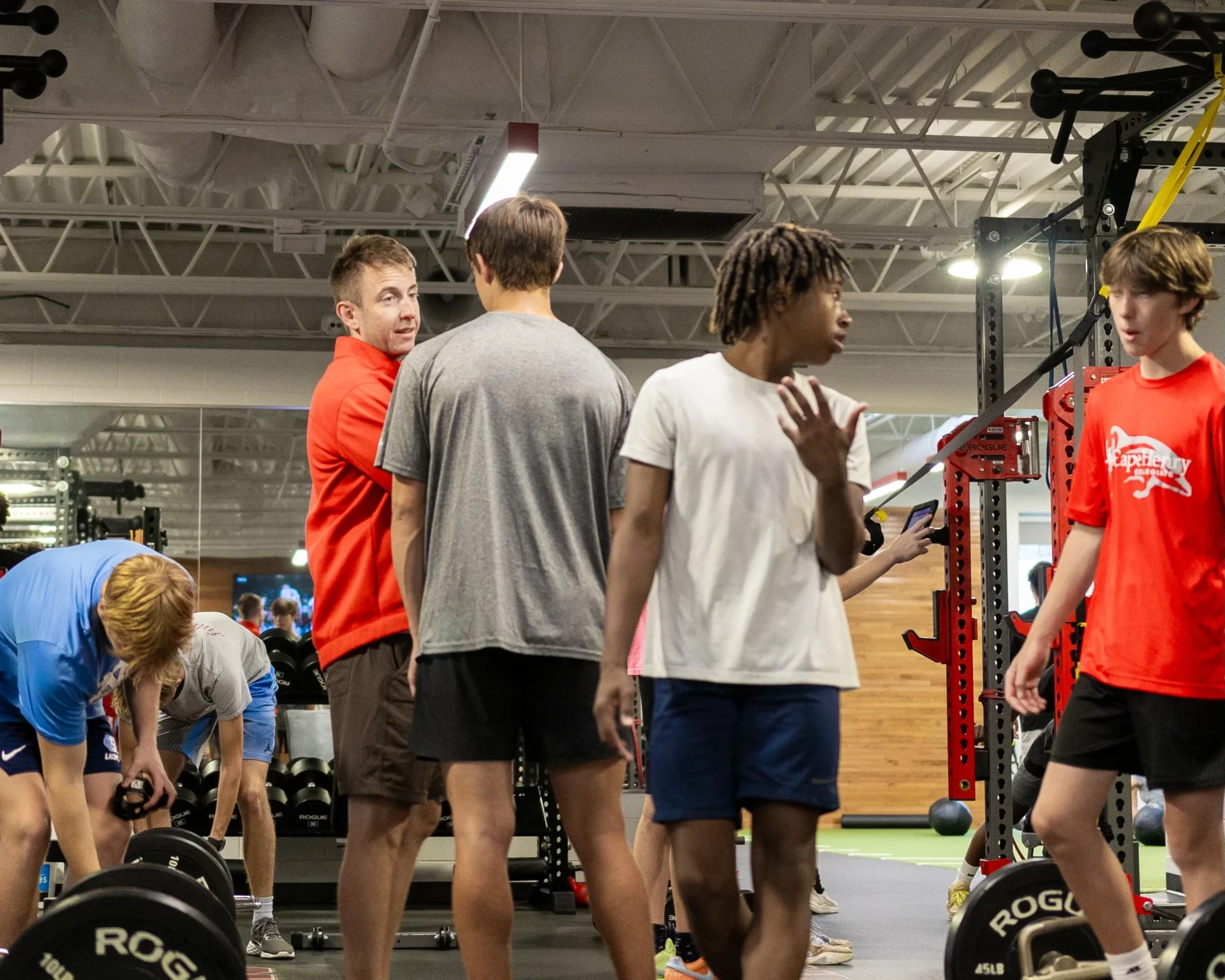
In the landscape of modern sports performance, the path of a developing athlete is rarely straightforward. Drawing from extensive coaching experience across NCAA Division I collegiate athletics, the NBA, international competition, and youth development programs, a singular truth consistently emerges: the athletes who achieve the most sustainable long-term development are those who adhere to simple systems, maintain unwavering consistency, and approach their training with a high level of dedication.
Yet, young athletes today frequently face the exact opposite environment. A typical youth athlete often trains under a high school coach, a club coach, and competes across multiple sports simultaneously, sometimes during overlapping seasons. These coaches rarely coordinate with one another or even acknowledge each other’s existence, compounding the complexity of the modern athletic ecosystem. Both sport and performance coaches frequently default to pursuing sheer fatigue under the banner of "speed and agility," leaving young competitors dealing with chronic soreness, paying for haphazard workouts from unverified sources, and chasing fleeting social media trends.
This chaotic reality requires a focused response from performance coaches who must build systems that genuinely serve long-term athletic maturation. A streamlined philosophy centers on three core pillars: full-body training distributed throughout the week with varying daily emphases, maximum and repeated effort repetition schemes, and the integration of Velocity-Based Training (VBT) as a primary tool for cultivating intent, coordination, and strength.
Rather than serving merely as a collection of metrics, VBT provides immediate feedback that teaches athletes how to move with purpose. Youth athletes are in a constant state of adaptation, navigating rapid changes in growth, coordination, and spatial awareness, making the training of the nervous system just as vital as building brute strength. By bypassing rigid, fixed percentage models, VBT allows coaches to calibrate workouts according to daily readiness, regulate accumulated fatigue, and keep training engaging.

Why Full-Body Training Outperforms Split Routines for Youth
One of the most persistent missteps in youth performance training is the imposition of unrealistic scheduling demands. Young athletes must continuously balance year-round sport practices, competitive fixtures, travel, academic pressures, erratic sleep habits, and inconsistent nutrition, alongside medical appointments, family vacations, and daily life disruptions.
When evaluating these variables, the foundational coaching maxim holds true: the best training program is the one an athlete can actually maintain. Prescribing a traditional four-day upper/lower split virtually guarantees that a youth athlete will miss one or two sessions every month, reducing total volume and blunting long-term progress. The problem intensifies with single-body-part "bro splits," where missing a designated chest day means a full seven-day delay before that muscle group is stimulated again. Such rigid structures fail to accommodate the volatile schedules typical of youth sports.
Conversely, a three-day, full-body training framework addresses every fundamental movement pattern and muscle group during each session. If an unforeseen scheduling conflict forces a missed workout, the overall volume remains largely intact. A three-day structure provides maximum flexibility, giving the athlete a full seven-week window to complete three sessions—a remarkably viable standard even for the busiest scholastic competitors.
Beyond logistical practicality, the most impactful yet underappreciated benefit of full-body training is its motor learning effect. Strength training is fundamentally a motor skill, functioning much like developing a jump shot or a golf swing. Athletes refine movement patterns through repeated exposure and practice. The more frequently a young competitor squats, hinges, pushes, pulls, sprints, jumps, and stabilizes under control, the more technically efficient they become.

This motor learning effect is particularly pronounced during the peak height velocity (PHV) phase of maturation. During this developmental window, an adolescent’s limbs lengthen at an accelerated rate while the central nervous system struggles to keep pace. These rapid, often unpredictable shifts in body proportions disrupt self-organization, creating the temporary awkwardness commonly termed "adolescent clumsiness." Research indicates that athletes navigating this developmental stage derive significant benefits from relatively high volumes utilizing submaximal loads. Each repetition reinforces neural pathways, helping the youth athlete organize their movements within a controlled environment.
While full-body training provides frequent exposure to multi-joint patterns, it operates alongside the reality of adolescent recovery. Youth athletes frequently utilize their supposed "free time" to participate in additional sports practices, complete advanced coursework, maintain part-time jobs, or engage in extracurricular activities. Consequently, their lifestyle rarely equates to passive recovery. Because young competitors demonstrate a surprising capacity to manage physical demands, full-body training optimizes their limited time without imposing excessive cumulative fatigue, provided that appropriate exercise selection, full range of motion, and nutritional education are prioritized.
Implementing the 8/5/3 Method for Strength and Power
Integrating sets and reps into a full-body program requires balancing maximum effort, repeated effort, and dynamic effort paradigms. For maximum effort work, the 8/5/3 method serves as a structured synthesis of several established coaching influences, designed specifically to foster muscular development, strength, and power without overwhelming developing athletes.
The system’s evolution stems from years of elite-level coaching adapted to meet the realities of youth athletics, drawing inspiration from Jim Wendler’s 5/3/1, Dr. Bryan Mann’s APRE protocols, Jeff Connors’ three-week microcycles, and practical experience managing large groups with diverse maturity and training ages. While the original 5/3/1 framework proved successful with collegiate athletes, initial application with middle and high school students revealed that the original rep ranges lacked sufficient exposure time for younger populations to adapt and progress. Week one often served purely as an orientation period, meaning athletes only truly pushed themselves by week three before the cycle reset.

To resolve this, the program expands the three-week microcycle concept by incorporating adjusted APRE principles, utilizing three-week blocks of 8-rep sets, followed by three-week blocks of 5-rep sets, and finally three-week blocks of 3-rep sets. This structure ensures that moderate-to-high repetitions are maintained for the majority of the year, yielding superior strength gains in younger populations.
A major advantage of the 8/5/3 method is that it does not require a pre-determined one-repetition maximum (1RM) to initiate a productive training block, nor does entry timing restrict an athlete’s progress. Beginning with the 8-rep phase is ideal, but the inclusion of as-many-reps-as-possible (AMAP) sets allows an athlete to integrate into the program at any point.
For a novice participant with a training age of zero, the initial set may simply utilize an empty lightweight training bar. Weight is then progressively added toward the AMAP set. Through systematic warm-ups, coaches identify a load that restricts the athlete to approximately 10 challenging repetitions on the final working set. The following week utilizes an estimated 1RM calculated strictly from prior performance, eliminating guesswork and encouraging accurate self-regulation.
The 8/5/3 structure primarily governs core maximum effort movements—typically squats, benches, and deadlifts—alongside auxiliary compound patterns like chin-ups, split squats, push-ups, and overhead presses. Typically, one to two primary lifts follow the 8/5/3 format per session, supported by three to four accessory exercises utilizing repeated or dynamic effort schemes.

The Role of Velocity-Based Training
Within this developmental model, velocity-based training and dynamic effort work are treated as synonymous categories, defined as the displacement of submaximal loads at maximal velocities. Recognizing that Force equals Mass multiplied by Acceleration highlights the limitation of focusing solely on the mass variable while ignoring acceleration. Moving submaximal loads as fast as possible guides weight selection, helps manage fatigue, evaluates daily readiness, and improves neuromuscular intent.
The primary advantage of VBT lies in the immediate objective feedback it provides to the athlete. Many youth competitors struggle with autogenic inhibition—a protective neural mechanism associated with Golgi tendon organs that dampens muscular force production before a physical limit is reached. In practical terms, the brain "steps on the brakes" before the muscle truly requires it, restricting force output even when the physical tissue is capable of more.
VBT helps athletes remove those mental brakes. By providing real-time velocity feedback on every repetition, the technology incentivizes individuals to push past hesitation, training the nervous system alongside the muscular system. For developing bodies, bridging this gap between the mind and physical execution is vital for transferring gym performance onto the field or court.
Furthermore, VBT replaces rigid percentage-based training assumptions with responsive load adjustments. Traditional percentage models assume uniform daily readiness, ignoring the myriad life stressors that cause an athlete’s physical output to fluctuate significantly from session to session. Research focusing specifically on adolescent populations demonstrates that real-time velocity feedback reduces the natural decline in bar speed across a set while enhancing motivation and competitiveness compared to training without feedback.

Integrating VBT and the 8/5/3 Framework
Combining VBT with the 8/5/3 method creates a mutually reinforcing training stimulus. Rather than simply increasing bar weight across a microcycle, volume is systematically adjusted while specific velocity targets guide the progression. Load selection is dictated by velocity rather than a rigid percentage table.
Workouts begin with a weight close to the previous successful session, which is then adjusted in small increments based on the velocity reading of the very first working repetition until the movement falls squarely within the target velocity zone. If an athlete’s bar speed falls below the target range—indicating excessive fatigue or a suboptimal readiness state—the load is reduced by a small margin. Conversely, if movement velocity exceeds the target without signs of breakdown, the load is moderately increased. Persistent velocity drops within a set signal an immediate cue to reduce the load, drop a repetition, or terminate the set early.
This autoregulatory mechanism ensures that the weight on the bar responds directly to the athlete’s actual performance on that specific day. While these velocity ranges apply most reliably to bilateral, highly loadable compound movements such as trap bar jumps, squat variations, and bench presses, less standardized or unilateral exercises rely more on tracking long-term performance trends than pursuing a single fixed number.
Across a complete nine-week block, the athlete moves dynamically along the force-velocity curve, systematically developing strength-speed, speed-strength, and high-velocity characteristics rather than forcing all qualities to adapt simultaneously year-round. This velocity progression also allows coaches to harness post-activation potentiation, where final microcycles pair maximum effort work around 90% intensity with dynamic effort back-off sets executed at high movement speeds, effectively priming athletes for peak explosiveness ahead of competitive phases.

By maintaining a consistent full-body training schedule, coaches gather continuous data points and ensure stable movement mechanics. VBT focuses are alternated across the training week to maintain systemic balance, pairing lower-body maximum effort work with upper-body dynamic velocity work, and vice versa.
To maintain this level of precision, objective tracking systems are essential. Linear encoders, such as Vitruve units, provide real-time feedback regarding bar speed and power output during training sessions. Beyond simply instructing an athlete to "move faster"—an abstract concept for developing lifters accustomed to grinding heavy weights—attaching the encoder provides immediate, objective validation that sparks neural adaptation and competitive drive.
Weekly data logging captures load, repetition counts, and mean concentric velocity for every working set of maximum effort lifts, alongside targeted velocity zones for VBT exercises. Reviewing these metrics prior to subsequent sessions informs short-term planning. If an athlete’s velocity at a given load demonstrates a consistent upward trend over multiple sessions, the load is progressed ahead of schedule. Conversely, declining velocities indicate an impending fatigue wall, prompting proactive volume reductions well before soreness or missed sessions occur.
Platforms like TeamBuildr support this infrastructure by organizing training sessions, structuring program templates, and tracking long-term longitudinal data across large teams without sacrificing individualization. By recording both traditional strength metrics from the 8/5/3 method and velocity metrics from encoder technology, coaches monitor every variable of the foundational equation of force.

Ultimately, effective youth athletic development relies on returning to core principles. Young competitors do not require overly complex systems, premature specialization, or short-term burnout programs; they thrive within structured environments that prioritize movement quality, coordination, strength, and consistency over time. By meeting athletes where they are physically and mentally, coaches can build resilient, confident competitors capable of long-term athletic success.