
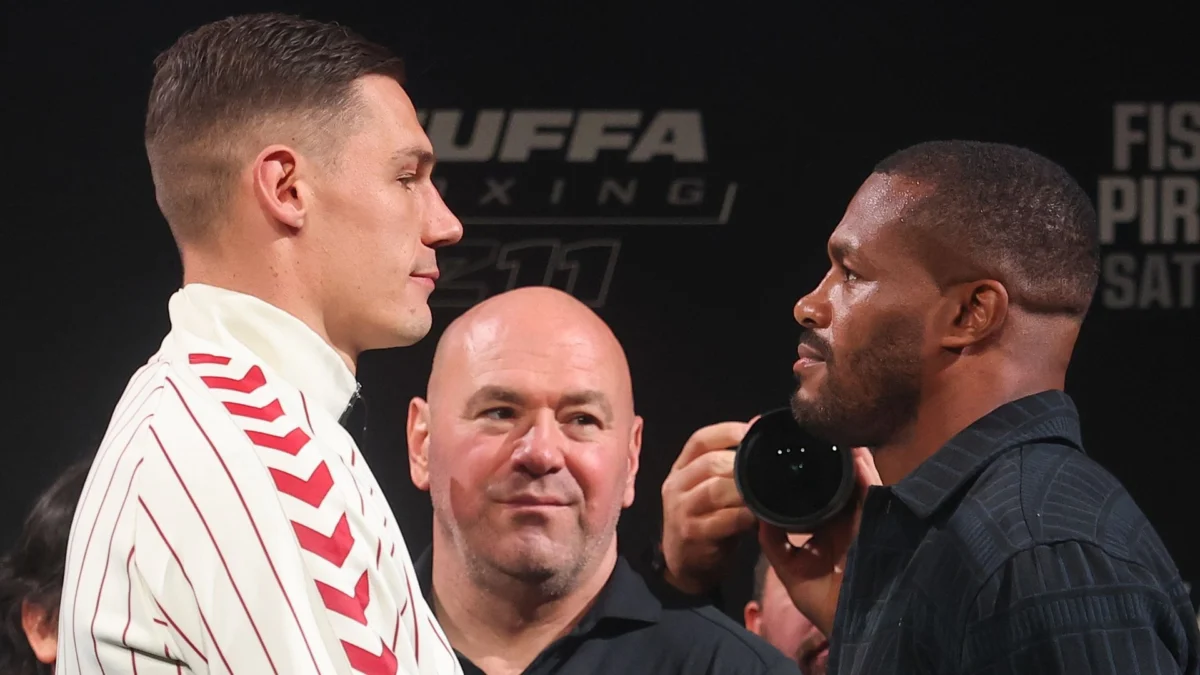
An intriguing chapter in modern British cruiserweight boxing is set to be written when Cheavon Clarke and Chris Billam-Smith reignite a rivalry that first took root in the amateur ranks nearly a decade ago. The two formidable fighters are scheduled to clash in the headline event of Zuffa Boxing 12 at London’s Copper Box Arena on November 7, with the high-stakes main event broadcast live across the country on Sky Sports. While the impending contest represents a major step forward in the professional journeys of both men, the underlying narrative is heavily steeped in an unsettled past that has left a lasting impression on one fighter while remaining virtually irrelevant to the other.
The origin of their shared history dates back to 2016, when a young Clarke and Billam-Smith met in the final of the national elite amateur championships. That crucial encounter ended in victory for Clarke, marking a pivotal crossroad in the trajectories of both boxers. To add further weight to their history, Clarke also secured a second victory over the Bournemouth fighter during an English title belt series. For Billam-Smith, the defeat in the 2016 national final was not merely a loss on his record; it was a decision that he firmly believes altered the course of his early career by denying him a prized spot on the elite Team GB boxing squad.
Despite the deep-seated history between them, Clarke remains completely unbothered by the outcomes of those previous meetings. Speaking on the matter, the 36-year-old made it clear that he harbors no emotional investment in what transpired during their amateur days, choosing instead to evaluate their upcoming bout strictly through the lens of their current professional standings. Clarke emphasized that while he achieved two victories over Billam-Smith in the unpaid ranks, those results belong to a completely different phase of their lives and hold no bearing on what will happen when they step into the ring at the Copper Box Arena.
Addressing the long-standing debate surrounding their previous fights, Clarke stated that he has zero hang-ups about the past, suggesting that any lingering obsession with those results rests entirely on his opponent’s shoulders. From Clarke’s vantage point, both men have evolved substantially since their initial meetings, rendering past victories and defeats contextually obsolete. He reiterated that they are now operating in the professional domain, describing the current landscape as a completely new era in which previous amateur records offer no tactical advantage or psychological guarantee.
For Billam-Smith, however, the memory of that 2016 championship loss has proven much harder to shake. The former WBO world cruiserweight champion candidly admitted that watching footage of the fight remains a difficult experience, even after achieving the highest honors in professional boxing. The defeat effectively brought an end to his aspirations within the national amateur setup, as Team GB selectors ultimately chose to bring Clarke into the squad following the post-fight assessments, leaving Billam-Smith to chart his own alternative course toward professional success.
Reflecting on the contest that altered his trajectory, Billam-Smith admitted that at the time of the final bell, he genuinely believed he had performed well enough to earn the decision from the judges. However, upon reviewing the fight with the benefit of hindsight and years of professional maturity, he acknowledged that Clarke was the clear aggressor throughout the bout and landed the cleaner, more impactful shots. The Bournemouth fighter noted that analyzing his performance from eight years ago highlights just how much his style, posture, and technical approach have changed over time.
Examining his younger self on tape, Billam-Smith observed a fighter who appeared frail and upright in his stance—a stark contrast to the robust, pressure-oriented world champion he would eventually become. While acknowledging that the defeat was a tough pill to swallow, he recognized it as a fundamental learning curve that helped shape his professional identity. He described that loss as very much the beginning of the end of his amateur career, recalling how the subsequent GB assessments resulted in Clarke being selected for the national team over him. Yet, far from breaking his spirit, Billam-Smith explained that the lingering sting of that rejection continues to provide him with a burning motivation and a fire in his belly as he prepares to seek redemption on November 7.
The divergent paths the two fighters took following that fateful 2016 final illustrate the different routes available to elite boxing talent. Clarke capitalized on his inclusion in the Team GB setup, embarking on a prestigious international amateur career that culminated in representing Great Britain at the Tokyo Olympics. That extensive background on the world amateur stage provided Clarke with an elite technical foundation, which he subsequently brought into the professional ranks.
Billam-Smith, meanwhile, carved out a remarkably successful path through the professional game without the backing of an Olympic pedigree. His persistence and steady development reached a crescendo when he captured the WBO world cruiserweight championship, fulfilling his ultimate career ambition and proving that missing out on the Olympic program was merely a temporary setback rather than a career-defining barrier. Having reached the pinnacle of the division as a world titleholder, Billam-Smith enters the Copper Box Arena with a wealth of championship experience to complement his deep-rooted desire to settle an old score.
Clarke, for his part, enters the November showdown buoyed by a thrilling victory in his most recent outing. In June, Clarke produced a memorable performance against Jack Massey in Bournemouth, surviving severe adversity in a fight that quickly earned acclaim as a cruiserweight classic. During that dramatic encounter, Clarke was forced to display immense heart after being knocked down twice in the fourth round. Demonstrating remarkable composure and physical durability, he weathered the storm, reassessed his strategy, and systematically broke down Massey before securing a dramatic seventh-round stoppage victory.
Reflecting on that grueling battle, Clarke insisted that surviving the crisis in Bournemouth did not reveal anything new to him about his own character or determination. He explained that he has always possessed an unshakeable belief in his ability to push through severe ring adversity, maintaining that any opponent hoping to defeat him must physically immobilize him completely. Clarke noted that once he enters the ring, his mindset is resolute: if an opponent manages to knock him down, they must ensure he stays down, because he will inevitably rise and continue fighting until the contest reaches its definitive conclusion.
Looking ahead to his matchup with Billam-Smith, Clarke acknowledged his rival’s well-earned reputation for physical toughness and resilience in high-profile fights. However, Clarke was quick to offer a tactical perspective on what truly matters at the highest level of professional boxing. While respecting Billam-Smith’s durability, Clarke argued that sheer toughness alone is rarely enough to win elite fights. He asserted that boxing is fundamentally a sport dictated by mental acuity, strategy, and ring intelligence rather than raw physical endurance, emphasizing that the candidate who boxed smarter would ultimately prevail when the two meet in London.
As the fight date approaches, the dynamic between the two British contenders presents a compelling narrative contrast. On one side stands Billam-Smith, driven by a decade-long desire to rectify a pivotal defeat that reshaped his career path, using old footage and past disappointment as psychological fuel. On the other side stands Clarke, completely detached from the past, relying on his proven resilience, Olympic pedigree, and belief in his tactical superiority to duplicate his prior successes over his rival.
With the main event set for November 7 at London’s Copper Box Arena, live on Sky Sports, Zuffa Boxing 12 will provide the definitive stage to resolve a rivalry eight years in the making. Whether Billam-Smith can channel his long-standing frustration into professional redemption, or whether Clarke’s strategic mind and unyielding resolve will once again triumph, remains the central question facing the British cruiserweight scene.