


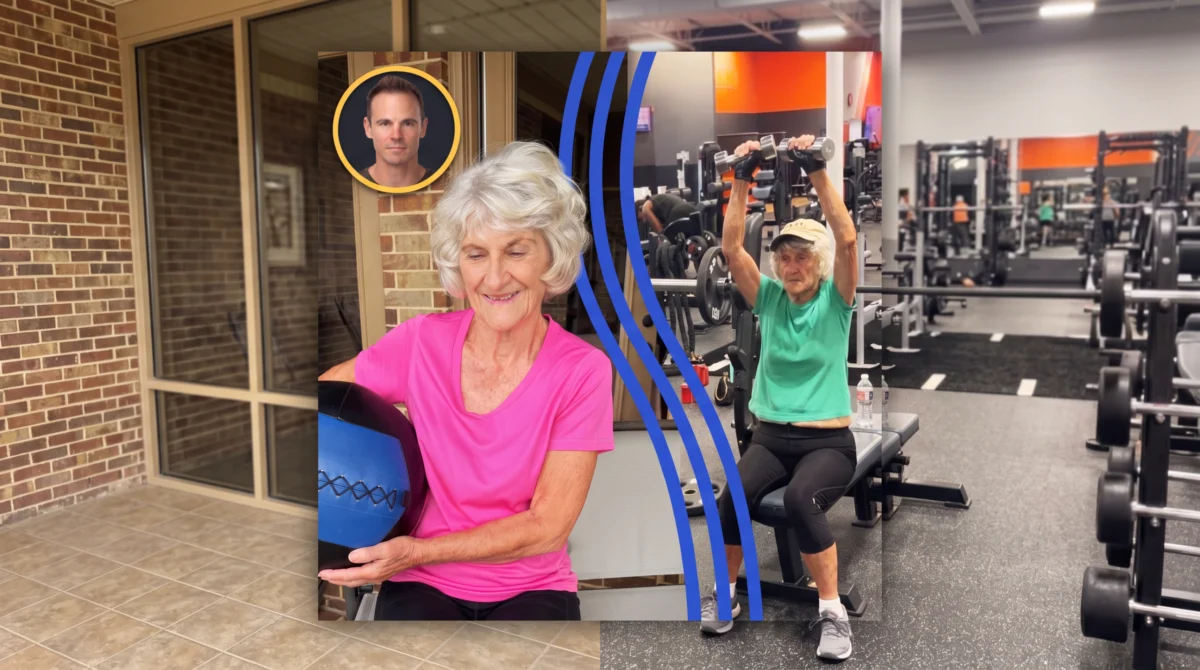
Margie Hennesy was 90 years old when she began lifting weights with serious, structured intent. Just a few months into her journey, the nonagenarian is not merely maintaining basic functional independence—she is actively preparing to step onto the competition floor for her first Hyrox fitness event.
Hyrox, an internationally popular indoor fitness competition, is notoriously demanding. The race format alternates rigorous running intervals with intense functional workout stations that challenge cardiovascular endurance, muscular stamina, and raw power. While the event typically draws seasoned endurance athletes, CrossFitters, and fitness enthusiasts in their twenties, thirties, and forties, Hennesy is proving that physical adaptation, muscular hypertrophy, and athletic ambition carry no expiration date.
Her transformation over the course of just four months offers a striking demonstration of human resilience, dismantling longstanding cultural assumptions regarding aging and physical capability. Through a blend of disciplined resistance training, intentional nutrition, and intergenerational family camaraderie, Hennesy has unlocked levels of strength she had never anticipated, offering a living blueprint for anyone who fears that their prime window for athletic development has passed.
Losing Her Husband Led to an Unexpected Physical Awakening
The path that brought Hennesy to heavy barbells and weighted sleds began in the shadow of profound personal grief. At the age of 83, she faced one of the most devastating turning points of her life when her husband of 62 years passed away. The sudden void left by the loss of a lifelong partner can easily lead to social withdrawal, sedentary habits, and physical decline. Hennesy, however, resolved to confront the reality of her new life with practical action.
Rather than succumbing to the inertia of grief, she made a deliberate choice to assume the demanding household responsibilities her late husband had managed for decades. She took full ownership of the outdoor maintenance, tending to the lawn, raking, weeding, and handling heavy yard materials.
"I could give in to the enormous loss and let it swallow me, or I could move forward and take on some of his responsibilities," Hennesy recalled.
For the majority of her adult life, Hennesy had maintained a baseline of recreational activity, walking several miles daily. Yet the physical reality of hauling substantial bags of mulch, operating lawn mowers, and performing manual outdoor labor at 83 years old was an entirely different challenge. Well-meaning friends, relatives, and neighbors frequently cautioned her against doing such strenuous work, repeatedly suggesting that she hire external help to avoid the risk of severe injury. Hennesy respectfully declined their advice.
"The truth was, I enjoyed it," she explained. "I felt strong and capable, and it was empowering to know that I could still take care of business."
By continuing to tackle these labor-intensive chores herself, Hennesy was inadvertently building a functional physical base. The manual labor fostered core stability, grip strength, and cardiovascular conditioning. More importantly, it solidified a psychological belief in her own physical self-reliance that would quietly lay the foundation for what lay ahead.
A Challenge She Never Saw Coming: Training for Hyrox at 90
The transition from ambitious yard work to competitive athletic conditioning happened almost by accident shortly after Hennesy celebrated her 90th birthday. While spending time with family, she casually hoisted a 40-pound bag of mulch without hesitation.
Watching nearby was her daughter-in-law, a dedicated athlete who had traveled and competed internationally in multiple Hyrox competitions. Recognizing the raw functional strength, balance, and unhesitating confidence required for a 90-year-old to lift an awkward 40-pound load, her daughter-in-law saw untapped athletic potential. Right then, she proposed a proposition that would drastically redirect Hennesy’s day-to-day routine: teaming up to compete together in an upcoming Hyrox race.
At the time, Hennesy had never heard of Hyrox, nor was she familiar with the sport’s grueling combination of running interspersed with demanding movement stations such as sled pushes, wall ball shots, ski ergs, and burpees. However, she possessed an innate competitive spirit that immediately surfaced. Rather than turning the proposal down as impractical, she agreed to take on the challenge.
The duo officially registered for an upcoming event in Dallas, arranging to compete together as a relay team so they could share the athletic stations across the course. Within days of making the commitment, Hennesy entered the gym to launch a focused, rigorous training cycle. While she had dabbled briefly in weight training during her thirties and forties, modern functional training was largely unfamiliar territory. Nevertheless, she entered the weight room ready to learn.
Her Training Program: Full-Body Strength and Cardio Three Days a Week
To prepare Hennesy’s body for the multidisciplinary demands of a functional fitness competition, her daughter-in-law stepped into the dual role of training partner and coach. Together, they established a structured regimen comprising three gym sessions per week, with each workout lasting between 60 and 90 minutes.
Every training session begins systematically with a 15-minute warmup on the treadmill to raise core body temperature, lubricate joint structures, and prepare the cardiovascular system for higher-intensity intervals. Following the warmup, Hennesy moves directly into exercise stations meticulously tailored to mirror the movements she will encounter during the Dallas competition.
What a Typical Training Session Looks Like
Hennesy’s in-gym programming focuses on the functional mechanics and specific apparatus used in Hyrox, emphasizing compound movements that recruit multiple major muscle groups simultaneously. Her weekly gym rotation focuses on several key competitive disciplines:
- Sled Pushes: Driving weighted sleds across turf to develop lower-body drive, hip extension, and cardiovascular output under heavy loads.
- Wall Balls: Performing deep functional squats before launching a weighted medicine ball upward toward a targeted height overhead.
- Ski Ergometer: Utilizing an upright double-poling motion to build upper-body pulling power, core stability, and sustained aerobic stamina.
- Burpees and Agility Work: Navigating ground-to-standing transitions and dynamic balance exercises designed to build full-body endurance and agility.
During any given session, Hennesy concentrates on three or four core movements, varying her rep ranges, load volume, and set structures from workout to workout to ensure steady progression without inducing excessive fatigue.
Her conditioning does not halt when she steps outside the gym doors. On her non-lifting days, Hennesy stays active by walking between four and eight miles three days a week, regularly inserting short bursts of jogging to elevate her heart rate and maintain tissue tolerance for impact.
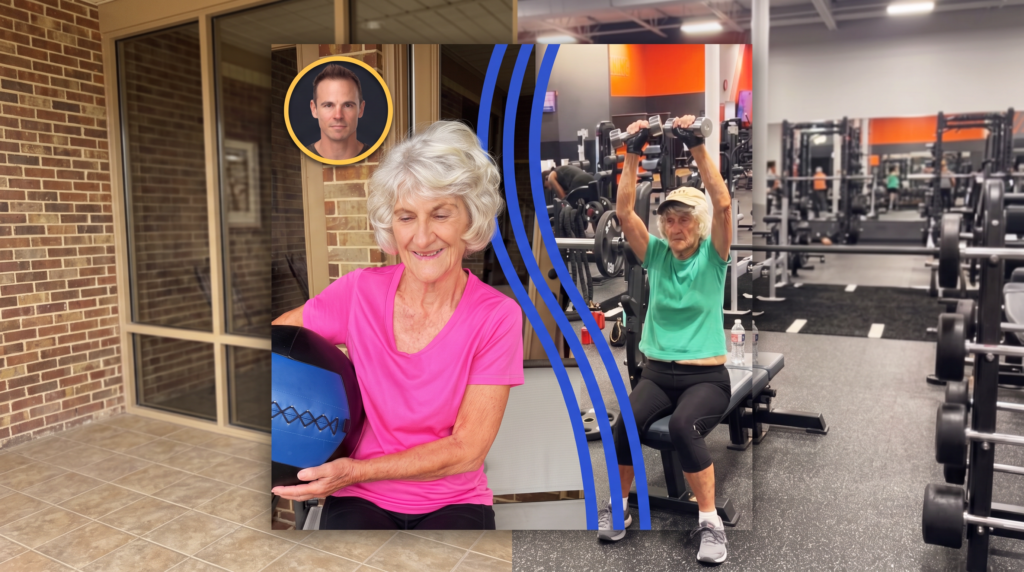
Additionally, she integrates 15- to 20-minute supplementary strength routines at home. Armed with a set of 10-pound dumbbells, she executes controlled overhead presses and bicep curls. These brief domestic sessions help reinforce neuromuscular pathways, maintain upper-body posture, and promote functional tendon resilience without running the risk of overtraining or physical exhaustion.
The Results Speak for Themselves
The physical adaptations produced by this four-month commitment have been swift and pronounced. Hennesy has developed visible, full-body muscular definition, while reporting noticeable surges in daily stamina and ease of movement during everyday tasks.
Her performance metrics illustrate an extraordinary rate of adaptation. When she first touched the training sled, she could manage a 60-pound push. In four months, she scaled that number upward exponentially.
"I’ve made a point of increasing the weight at least once a week, and I can now push 200 lbs, which I’m extremely proud of," she said.
Her progress is equally evident at the wall ball station. In the beginning, the movement pattern felt unnatural and physically daunting; tossing a weighted implement above her head while managing the fatigue of a squat proved to be an immense technical hurdle. Today, wall balls have transformed into one of her favorite training exercises, and she routinely completes 10 consecutive repetitions using a 10-pound ball.
The discipline that presents her greatest ongoing challenge is the burpee broad jump. While dropping to the floor and pushing back up into a burpee proved manageable, executing an explosive horizontal jump was a movement pattern she had not performed in decades.
Rather than skipping the movement, she systematically broke it down into achievable progressions. To establish the confidence and reactive power required for jumping, she practices small, calculated, low-impact jumps, while reinforcing her lower-body strength and unilateral power through weighted step-ups.
Nutrition: More Protein, More Whole Foods
To match the energy output of her demanding training schedule and ensure sufficient tissue repair between sessions, Hennesy recognized the need to optimize what was on her plate. Rather than adopting an intensely restrictive meal plan or obsessing over meticulous macronutrient tracking, she made sustainable, health-conscious adjustments centered on nutrition quality.
Her primary focus has been ensuring a high intake of dietary protein, an essential factor in staving off age-related muscle breakdown and facilitating muscular repair. Lean proteins such as chicken and fish, complemented by protein shakes, have become regular elements of her daily intake.
Alongside increased protein, Hennesy has deliberately centered her diet around nutrient-dense whole foods. She prioritizes fresh fruits, vegetables, nuts, and seeds, which she credits with maintaining steady, even energy levels throughout heavy training days.
Importantly, Hennesy maintains a healthy, flexible relationship with food that excludes rigid deprivation. She continues to enjoy sweets and desserts as regular parts of her life, choosing to consume them mindfully and without guilt while keeping her broader focus on athletic performance and overall well-being.
Three Keys to Margie’s Strength Transformation Success
Reflecting on her progress and her impending race, Hennesy identifies three core principles that have anchored her athletic transformation.
1. She Relies on Determination, Not Motivation
Hennesy is candid about the reality of intense training: the feeling of inspiration is not always present, especially on mornings when her body is stiff or tired from previous workouts. Instead of waiting for fleeting emotional enthusiasm, she anchors her habits in personal discipline and consistency.
"Motivation comes and goes, but determination is what keeps me showing up and striving to become better," she emphasized.
By treating her training as a non-negotiable personal commitment, she removes the internal debate about whether or not to exercise. She regularly notes that once the dynamic warmup begins, physical sluggishness usually dissipates, leaving her fulfilled and invigorated by the end of the session.
2. She Finds Joy in Her Support System
Hennesy’s training is deeply linked to her family ties. The partnership with her daughter-in-law has turned what might otherwise be an isolating fitness program into a shared family experience. Her daughter-in-law not only recognized her physical capability before Hennesy did, but also continues to provide steady technical coaching, safety oversight, and consistent encouragement.
The training circle has expanded to include multiple generations, with Hennesy’s granddaughter frequently joining them for workouts.
"We laugh, encourage each other, celebrate the small victories, and push one another when things get hard," Hennesy shared.
The knowledge that family members are waiting for her at the gym creates positive accountability and infuses high-intensity training with emotional connection.
3. She Doesn’t Let Age Hold Her Back
A hallmark of Hennesy’s approach to life is an absolute refusal to let chronological age govern her physical ambitions. When she turned 90, she did not interpret the milestone as an invitation to slow down or adopt a passive lifestyle; rather, it piqued her curiosity about what her body might still be capable of achieving.
"I’ve never believed getting older should mean putting limits on yourself," she remarked.
By deliberately leaning into challenges—whether handling 200 pounds on the turf or learning how to jump again after decades of keeping her feet planted—Hennesy continually challenges the self-imposed boundaries that often restrict older adults.
What the Science Says About Strength Training and Aging
While Hennesy’s achievements are deeply personal, her athletic results reflect a growing consensus within sports science and geriatric medicine: the human musculoskeletal system remains remarkably responsive to resistance exercise deep into late life.
For decades, conventional medicine often cautioned seniors to limit their activity to light, non-strenuous movement for fear of cardiovascular events or orthopedic injury. Today, contemporary research indicates that the opposite approach—progressive resistance exercise—is vital for preserving health, cognitive function, and metabolic independence.
A pivotal 2019 review published in Sports Medicine revealed that older adults who participate in structured resistance training can achieve muscle hypertrophy rates comparable to those observed in younger athletes, provided the stimulus features adequate mechanical loading and is paired with sufficient dietary protein. This confirms that age-related muscle loss, known clinically as sarcopenia, is not an entirely irreversible decline, but rather a condition that can be mitigated or partially reversed through targeted training.
Additionally, clinical investigations published in the Journal of the American Geriatrics Society have consistently demonstrated that resistance training plays a decisive role in reducing fall frequency and improving balance among older adults. By fortifying connective tissues, boosting bone mineral density, and strengthening the fast-twitch muscle fibers required for reactive balance, strength training serves as an essential safeguard against functional decline.
Hennesy’s rapid progress from a 60-pound sled push to 200 pounds illustrates how quickly the nervous system and musculature can adapt to progressive overload, even when introduced in the tenth decade of life.
Looking Ahead: Race Day and Beyond
With months of preparation behind her, Hennesy’s attention is locked on the upcoming competition date in Dallas this November. Stepping out under the bright arena lights of a Hyrox event alongside her daughter-in-law, she will put her months of treadmill intervals, dumbbell work, and heavy sled pushes directly to the test.
For Hennesy, the event represents more than just crossing a finish line. It serves as a personal validation of what is possible when consistency, family support, and an open mindset intersect.
"If there’s one thing this experience has proved so far, it’s that you’re never too old to get stronger or discover what you’re capable of," she noted.
As she finalizes her preparation for Dallas, Hennesy stands as living proof that physical vitality, athletic development, and new ambitions can flourish at any point in life.