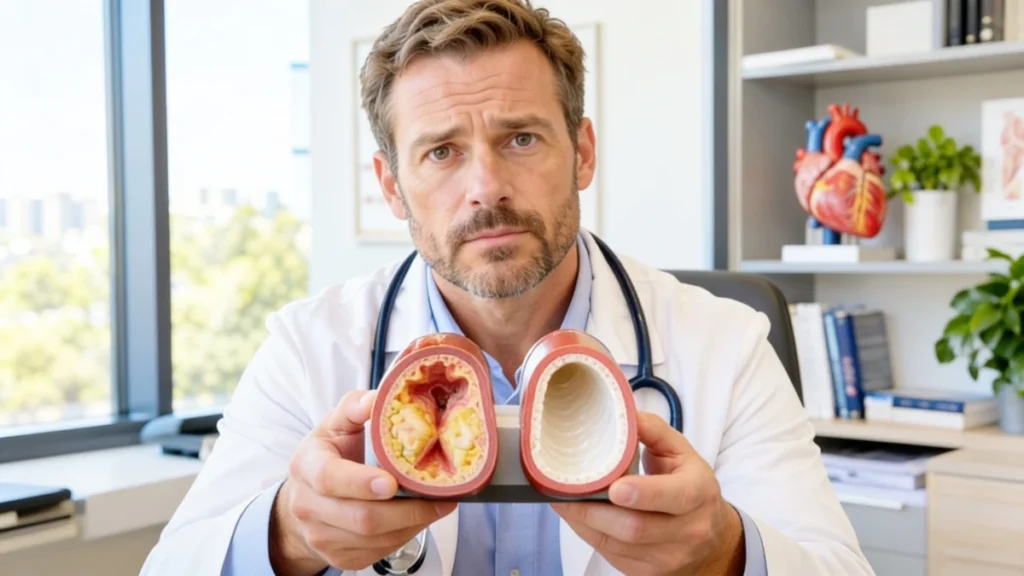


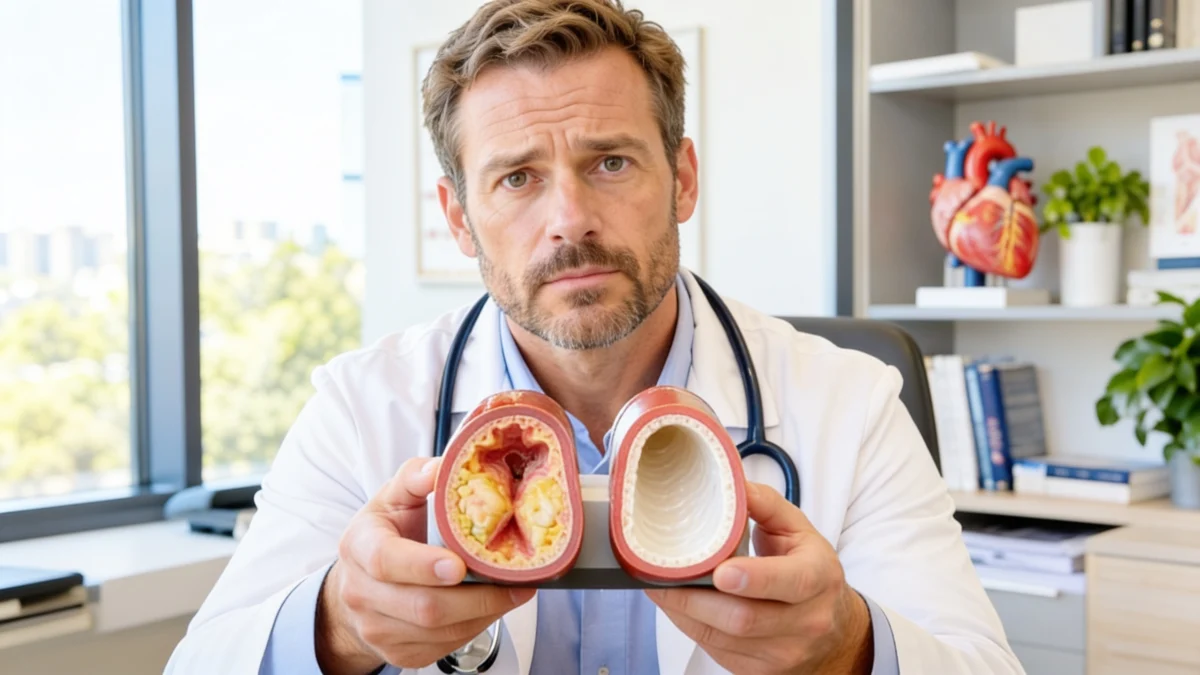
A viral wellness post currently circulating across social media makes a compelling, if medically misleading, promise: that three simple daily habits can actively clear arterial plaque and heal the underlying blood vessel damage that leads to cardiovascular disease. Attributed broadly to unnamed cardiologists, the claims have captured the attention of millions looking for straightforward health fixes. However, while the habits themselves are grounded in legitimate medical science, vascular experts point out that the framing misrepresents both the biological reality of atherosclerosis and what lifestyle modifications can realistically achieve.
The habits highlighted in the viral content—regular sauna sessions, high-dose soluble fiber consumption, and active stress management—are certainly not works of fiction. Each individual practice boasts a substantial body of cardiovascular research supporting its overall health benefits. Yet, the assertion that they directly work on established plaque like a maintenance crew patching a torn pipe fundamentally misconstrues how cardiovascular disease progresses over decades and what happens inside the human circulatory system.
What Arterial Plaque Actually Is
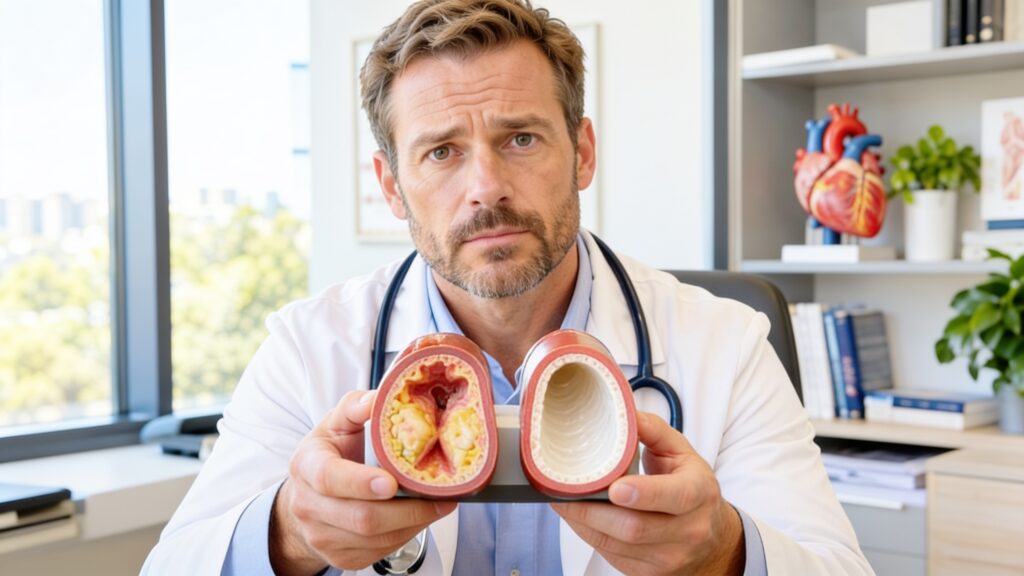
To understand why the viral claims fall short, it is necessary to examine the true nature of atherosclerotic plaque. Contrary to the popular mental image of rust coating the inner surface of a metal pipe, plaque does not simply sit on top of healthy artery walls. Instead, it develops inside the arterial wall itself, forming a complex and chronic inflammatory accumulation comprised of cholesterol, infiltrating immune cells, calcified deposits, and fibrous scar tissue.
The viral post does capture a kernel of truth in its analogy of a patch over a tear, as endothelial injury serves as a primary trigger for the entire cascade. A healthy endothelium—the delicate single layer of cells lining the blood vessels—produces nitric oxide, which keeps vessels relaxed and prevents unwanted cellular adhesion. When this protective barrier is damaged by chronic high blood pressure, oxidized low-density lipoprotein (LDL) cholesterol, cigarette smoke, or systemic inflammation, it loses its protective capacity. It becomes sticky, permitting circulating LDL particles and immune cells to infiltrate the vessel wall.
Over time, these trapped particles transform into foam cells, clustering together to form fatty streaks that eventually harden into calcified deposits. Major health institutions, including Harvard Health Publishing and Healthline, emphasize that established arterial plaque, particularly heavily calcified deposits, cannot be fully reversed by lifestyle measures alone. What diet, exercise, and other lifestyle interventions can accomplish is stabilizing existing plaque to make it far less vulnerable to dangerous ruptures, slowing the rate of new buildup, and, in specific cases, achieving modest regression of soft, lipid-rich deposits. Accomplishing even these goals, however, typically requires a comprehensive medical strategy combining prescription medications like statins with rigorous lifestyle adjustments, rather than relying on isolated wellness hacks.
Heat Therapy: Real Benefits, Overstated Claims
Among the habits promoted in the viral content is heat therapy, specifically through sauna use and hot baths. This practice has been studied extensively, particularly within Finnish and Japanese populations where regular heat exposure is a deeply embedded cultural tradition. Observational studies conducted in these regions frequently link routine sauna bathing with reduced overall cardiovascular mortality and improved endothelial function, a benefit partly attributed to enhanced nitric oxide release, which helps keep blood vessels flexible and healthy.
However, researchers emphasize that these studies are observational, meaning they demonstrate associations rather than direct causation. Individuals who incorporate regular sauna sessions into their routines often share other healthy lifestyle traits, such as higher levels of physical activity, balanced diets, and lower baseline stress levels—all of which independently protect the heart and circulatory system.
To date, no controlled clinical trial has proven that sauna sessions can directly clean the arteries or dissolve existing plaque deposits. The cardiovascular benefits provided by heat therapy are genuinely protective and preventive, rather than restorative in the direct manner implied by social media influencers.
Soluble Fiber: Mechanism Matters
Another pillar of the viral wellness post is the recommendation to consume 30 grams of soluble fiber daily from sources like oats and chia seeds, with the claim that the fiber acts like a net that traps oxidized cholesterol before it reaches the bloodstream. While high fiber intake is undeniably beneficial, this explanation misrepresents the physiological mechanisms of digestion and lipid metabolism.
Soluble fiber does lower circulating LDL cholesterol, but the process takes place entirely within the gastrointestinal tract rather than the bloodstream. Soluble fiber binds to bile acids—which are digestive fluids synthesized by the liver from cholesterol—and escorts them out of the body through waste excretion before they can be reabsorbed in the gut. To replace the lost bile acids, the liver must pull cholesterol from the bloodstream, thereby gradually reducing circulating LDL levels over time. It does not act as a floating net intercepting oxidized LDL particles mid-circulation.
Furthermore, the target of 30 grams of soluble fiber daily is significantly higher than standard dietary guidelines. Health agencies like the FDA generally recommend at least 25 grams of total dietary fiber per day for an average adult, with soluble fiber representing only a fraction of that total amount. Framing high soluble fiber intake as a direct plaque-trapping mechanism provides a false sense of precision and timing, leading readers to believe that consuming a bowl of oatmeal immediately before a high-cholesterol meal provides an instant biological shield.
Chronic Stress and Blood Pressure: The Mechanical Link
The connection between chronic stress, blood pressure, and cardiovascular health represents the most scientifically straightforward claim in the viral material, as well as the most solidly backed by clinical research. Sustained psychological stress stimulates the chronic release of stress hormones such as cortisol and adrenaline, which over time drive up blood pressure.
Sustained hypertension creates constant mechanical shear stress on endothelial cells, weakening the inner lining of blood vessels and rendering them far more vulnerable to LDL infiltration and plaque initiation. Consequently, managing stress through mindfulness, regular exercise, therapy, or improved work-life balance is an effective strategy for protecting long-term cardiovascular health.
Once again, however, this mechanism functions through prevention and risk reduction rather than active plaque reversal. Lowering blood pressure successfully stabilizes artery walls and slows the progression of vascular disease, but it does not dissolve calcified mineral deposits that are already embedded within the arterial walls.
What Actually Works to Stabilize or Regress Plaque
Medical science has established a clear framework of interventions proven to stabilize or modestly regress arterial plaque, relying heavily on a combination of pharmacological treatment and sustained lifestyle changes.
Statins remain the cornerstone of modern cardiovascular medicine. They lower circulating LDL cholesterol aggressively and possess potent anti-inflammatory properties that help stabilize vulnerable plaques, preventing them from rupturing and causing heart attacks or strokes. In specialized clinical studies, intensive statin therapy has successfully achieved small, measurable reductions in overall plaque volume over extended periods ranging from months to years.
Concurrently, a Mediterranean-style dietary pattern rich in fresh vegetables, whole grains, legumes, fish, and extra virgin olive oil has been demonstrated in robust randomized trials to reduce the risk of major cardiovascular events by approximately 30 percent. Regular aerobic exercise complements these measures by improving endothelial function, raising protective HDL cholesterol, and lowering systemic inflammation.
Even with all of these evidence-based interventions combined, complete medical reversal of calcified arterial plaque remains largely unachievable through non-surgical means. Discussions among medical professionals and researchers frequently highlight that heavily calcified plaque represents a structural challenge that the human body cannot easily dismantle, confirming that full anatomical reversal is not possible through diet and exercise alone.
The Authority Problem
A recurring element in health-related misinformation is the invocation of vague authority to lend credibility to simplified claims. The viral post in question attributes its recommendations broadly to unnamed cardiologists, utilizing phrasing such as "cardiologists have proven," yet fails to cite specific medical professionals, research institutions, or peer-reviewed studies. The social media account publishing the content functions as a general wellness page rather than an identified or credentialed medical practice.
Medical professionals reviewing these types of claims typically validate the individual habits as heart-healthy and beneficial, but they consistently object to the misleading narrative that these practices can directly clean or scrub plaque from the arteries. Within clinical medicine, the distinction between risk reduction and plaque reversal is critical for managing patient expectations and safety.
What You Can Control
For individuals concerned about their long-term arterial health, adopting habits like heat therapy, increasing dietary fiber intake, and managing daily stress remains a worthwhile endeavor. While these lifestyle choices will not erase decades of accumulated vascular damage or scrub the arteries clean, they offer substantial benefits in stabilizing existing plaque, slowing disease progression, and lowering the overall risk of acute cardiovascular events. While such measures may lack the viral appeal of a quick-fix promise to clean the arteries, they represent the reality of what medical science actually supports.