
Stephen Lang has quietly built one of the most remarkable physiques in modern Hollywood for a man in his seventies, achieving this feat not by doubling down on the punishing routines of his youth, but by completely rethinking his approach to physical culture.
The acclaimed actor, best known for his imposing physical presence as the relentless Colonel Miles Quaritch in James Cameron’s Avatar franchise, looks decades younger than his 74 years. Yet his youthful vitality is not the result of clinging to the heavy lifting that once allowed him to pack an extra 15 kilograms of muscle onto his frame. Instead, Lang has sustained his career and his health by embracing flexibility, physical variation, and a smarter, more sustainable philosophy of training. His journey offers a compelling blueprint for anyone seeking to preserve strength, mobility, and boundless energy well into their later years.
Lang’s lifelong relationship with physical fitness began more than half a century ago when he picked up his first barbell in 1969. In the decades since, he has rarely stopped moving. He continues to train at least four times a week, frequently exceeding that baseline by blending traditional weight training with rigorous disciplines such as yoga, karate, parkour, and kickboxing. For Lang, physical training has never been about achieving an abstract standard of perfection; rather, it is anchored in the simple, powerful act of showing up.
Reflecting on his lifelong dedication, Lang describes the pursuit as deeply therapeutic. It serves as its own kind of meditation, a personal and interior endeavor that anchors his day. At the same time, he acknowledges both the personal satisfaction and the professional imperative behind his regimen. He needs to maintain a high level of physical conditioning for his demanding acting career, noting that the importance of vitality only increases with age. That unwavering consistency has compounded over the decades, creating a resilient body and a sharp, focused mind that treats movement not as a daily chore, but as an essential ritual of identity.
That commitment to longevity, however, was born out of a stark wake-up call regarding the limits of his body. When Lang underwent a massive physical transformation to portray Colonel Miles Quaritch for the first Avatar film, the demands of the role required him to push his limits on the bench press past 110 kilograms, sending his body weight soaring 15 kilograms above his current baseline. While the results on screen were undeniably striking, the physical cost was severe.
When production wrapped, Lang realized that while he possessed the outward appearance of a large and powerful man, his physical architecture had become entirely brittle. The immense strain had taken a heavy toll on his joints, culminating in a significant shoulder breakdown. That injury served as the catalyst that forced him to reevaluate his training methods and introduce yoga into his daily life. He specifically gravitated toward Bikram’s challenging 26-and-2 method, a discipline he credits with essentially rebuilding his physical foundation from the inside out.
Lang speaks of the practice with profound gratitude, asserting that yoga quite literally saved his career and his physical well-being. He appreciates the rigorous, technical nature of the 26-and-2 sequence, often describing it as mechanical engineering for the human body. Although the practice is not overly spiritual in its presentation, Lang notes that when an individual moves deeply into the flow state during a session, it naturally transforms into a profound spiritual practice. Today, he rarely skips a session, relying on yoga to maintain the mobility, pain-free movement, and mental centeredness that have become far more valuable to him than sheer muscular size.
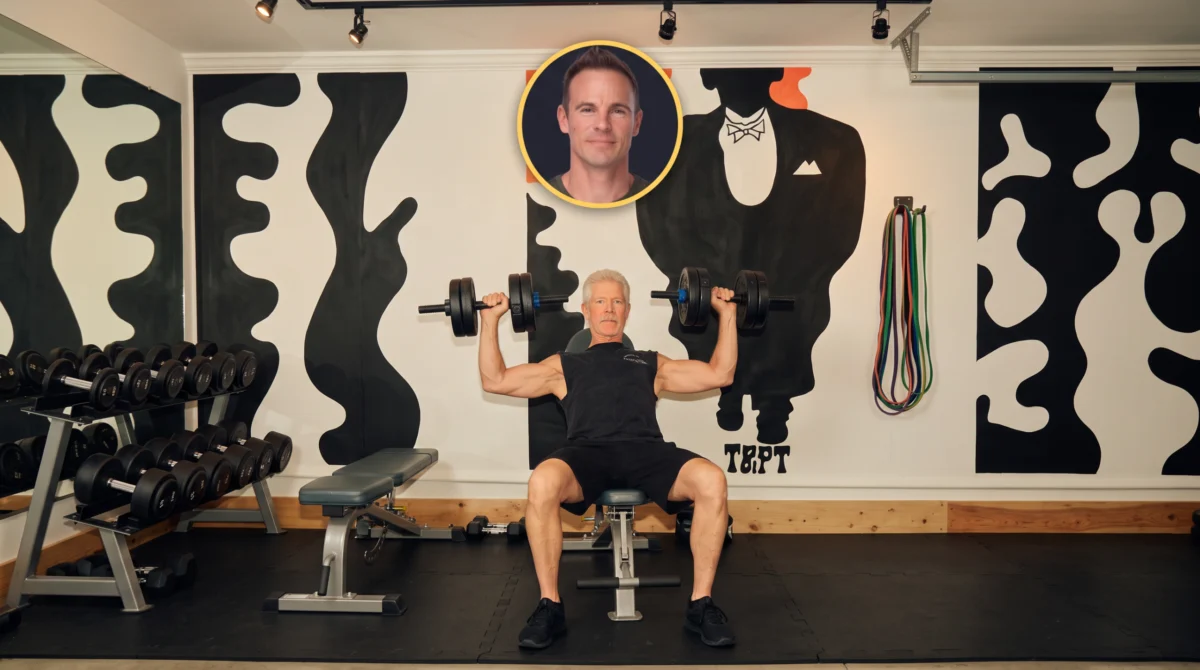
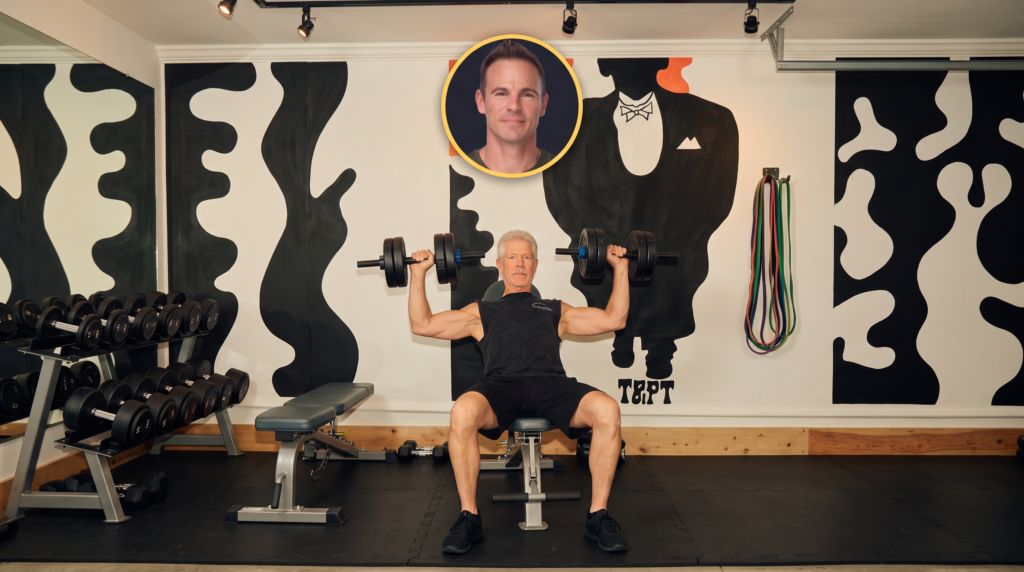
This philosophical evolution directly influenced his approach to resistance training. Abandoning the heavy compound lifts that once threatened his connective tissue, Lang has dramatically shifted his lifting habits in favor of lighter loads and significantly higher repetitions. Instead of grinding through heavy sets that place undue stress on his joints, he deliberately chooses weights that allow for extended endurance work.
Illustrating this shift, Lang notes a preference for performing 150 quick bicep curls using modest 12-kilogram dumbbells rather than attempting to hoist heavier weights in each hand. His primary focus has decisively moved away from ego and toward precise execution, concentrating intensely on feeling the working muscle and squeezing every drop of effort from each repetition. As he often points out to those questioning the efficacy of lighter loads, if an individual performs enough repetitions, even a lighter weight will eventually feel exceptionally heavy.
This modern training philosophy aligns closely with contemporary exercise science, which demonstrates that training close to muscular failure can effectively stimulate hypertrophy regardless of the load, provided the overall training volume is sufficient. For older adults and lifelong lifters, this method drastically reduces the risk of acute injury while successfully preserving muscle mass and functional strength.
Beyond the weight room and the yoga studio, Lang’s physical regimen is characterized by an extraordinary degree of variety. In preparation for his return in the subsequent sequels Avatar: The Way of Water and Avatar: Fire and Ash, Lang expanded his physical repertoire to include archery, vaulting, kickboxing, and even extreme breath-hold training. During the demanding underwater sequences required for the films, he achieved a remarkable static breath hold of over four and a half minutes.
His training schedule reads like a masterclass in cross-disciplinary athleticism. He incorporates parkour routines focused on vaulting and maintaining momentum over obstacles, alongside regular kickboxing sessions shared with director James Cameron. Furthermore, he practices karate not as a combat discipline, but as a method to ensure continuous spinal and joint rotation, which he finds immensely beneficial for daily mobility.
This commitment to diverse movement patterns is strongly supported by health research. Long-term studies examining physical activity patterns have consistently found that individuals who engage in a wide variety of physical pursuits experience significantly lower risks of premature mortality compared to those who confine themselves to a single mode of exercise. Moreover, the cognitive demand of learning and mastering complex new physical skills helps forge new neural pathways, protecting the brain against cognitive decline.
Lang compares the extensive preparation for the massive science-fiction productions to attending a university campus. Working at the studio facilities in Manhattan Beach, the cast was immersed in specialized instruction, transitioning seamlessly from archery experts to equine specialists, water safety professionals, parkour coaches, and dance instructors.
Underpinning all of these choices is a deliberate philosophical pivot that Lang dates back to 2010, the moment he made a conscious, lifelong commitment to prioritize long-term health and functional capacity over short-term physical gains. Recognizing the inevitable progression of aging, Lang realized that the objective is not to foolishly attempt to stave off the passage of time, which remains an impossible endeavor, but rather to extract the absolute maximum quality of life from the body one currently inhabits.
Consequently, his foundational priorities underwent a permanent transformation. While his youth was defined by the pursuit of raw strength, his later decades are anchored in the cultivation of flexibility, stamina, and personal physical comfort. This mindset shift is essential for sustainable fitness, reminding practitioners that the aggressive metrics that serve an athlete well in their twenties often require thoughtful adaptation as the body matures.
Even amidst demanding shooting schedules where full, uninterrupted workouts are impossible, Lang finds ways to maintain his momentum through micro-workouts. Between camera setups on the expansive Avatar sets, he would routinely drop to the floor for sets of push-ups, frequently inviting and encouraging the surrounding film crew to join him. These impromptu training blocks ranged from standard variations to advanced three-finger and even single-finger push-ups. Lang notes that this habit was partly a reflection of the disciplined military character he portrayed on screen, serving to keep everyone around him alert, dialed in, and physically primed for action.
When it comes to nutrition, Lang avoids restrictive diets or obsessive macro-tracking, opting instead for a model of mindful moderation. He pays close attention to how various foods affect his physical well-being, using that immediate biofeedback to guide his daily culinary choices. While he does not follow a rigid dietary framework, he maintains certain reliable staples, such as incorporating a daily protein shake enriched with a substantial handful of leafy greens like kale. This flexible approach allows him to avoid the psychological pitfalls of all-or-nothing dieting while successfully supporting his demanding physical lifestyle.
Ultimately, Stephen Lang’s ongoing fitness journey provides a timeless set of lessons applicable to individuals at any stage of life. His experience demonstrates that consistency will always outweigh sporadic intensity, and that mobility and flexibility are quite literally vital to sustaining independence and capability. By embracing a wide variety of physical disciplines and willingly adapting his goals to match his body’s changing needs, Lang has charted a path that proves aging does not require a retreat from physical excellence. Instead, as Lang continues to demonstrate both on and off the screen, staying fit for life is simply a matter of making the absolute most of where you are right now.