

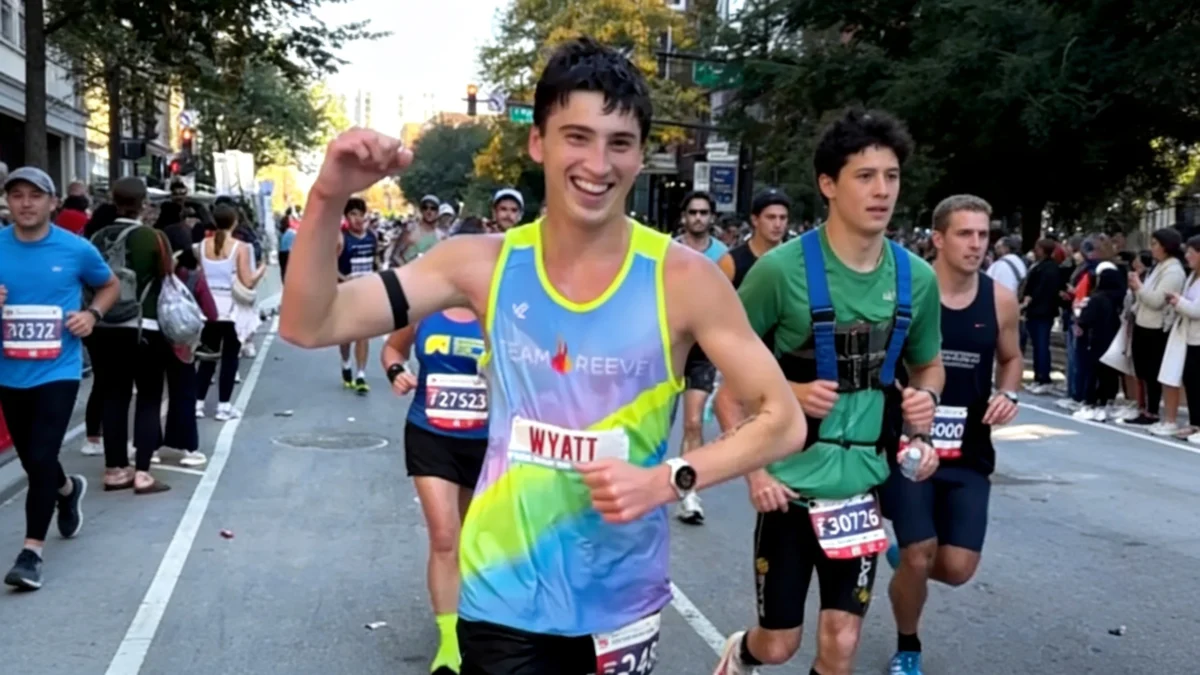
Just seven months after a devastating basketball accident left him completely paralyzed from the neck down, 17-year-old Wyatt Anderson achieved a feat that has left medical professionals and running enthusiasts astounded. Last Sunday, the Louisville, Kentucky native crossed the finish line at the Bank of America Chicago Marathon, clocking an official time of 3 hours, 56 minutes, and 28 seconds.
His journey from a hospital bed where he could not move a single muscle to completing one of the world’s most prestigious 26.2-mile races stands as one of the most remarkable recovery narratives in recent memory. Beyond his personal athletic milestone, Anderson and his older brother, Jack, utilized the platform to raise more than $24,000 for the Christopher and Dana Reeve Foundation, funneling their personal trial into vital research and support for individuals living with spinal cord injuries.
The Injury That Changed Everything
The ordeal began in November 2025 during a routine basketball game with friends at the Jewish Community Center in Louisville. As a healthy and active high school junior, Anderson had no warning of the sudden disaster that awaited him on the court. During the game, he tripped and ran headfirst into a wall. The violent impact fractured his spine and caused immediate, total paralysis from the neck down.
Recalling the terrifying moments immediately following the impact, Anderson noted that he blacked out briefly and awoke to the horrifying realization that he could not move any limb on his body. For a teenager accustomed to athletic activity and complete physical independence, the sudden inability to command his own muscles was profoundly jarring.
Medical teams quickly intervened, performing spinal fusion surgery to stabilize his damaged vertebrae by joining them together. What followed was a grueling, month-long inpatient stay at the Frazier Rehab Institute in Louisville. There, Anderson faced the painstaking and uncertain process of relearning basic motor functions that most individuals perform without a second thought.
The Long Road to Walking Again
After completing his intense month of inpatient rehabilitation, Anderson transitioned to six additional weeks of outpatient physical therapy. Throughout this period, the trajectory of his future remained clouded by uncertainty. He has spoken candidly about the doubts that weighed heavily on him during those weeks—specifically, whether he would ever walk unassisted or return to any semblance of his active pre-injury life.
A turning point arrived during one of his darkest days in therapy. His physical therapist shared an inspiring account about an athlete who had successfully completed 50 marathons across 50 different states in a single year—while navigating the courses in a wheelchair.
That narrative planted a powerful seed in Anderson’s mind. If an individual in a wheelchair could accomplish an athletic endurance feat of that magnitude, he reasoned, what might be possible for him if he successfully regained the ability to walk? That realization catalyzed an audacious ambition: he resolved to cross the finish line of a full marathon within one year of his paralyzing accident.
From Paralyzed to Marathon Ready in Seven Months
Setting a goal was one challenge; executing it was another entirely. Anderson did not merely aim to complete any local race; he targeted the Bank of America Chicago Marathon. As one of the six elite Abbott World Marathon Majors—alongside Boston, London, Berlin, New York City, and Tokyo—the Chicago race routinely draws more than 40oters and thousands of finishers, celebrated internationally for its famously fast and flat course layout.
Entering such a grueling endurance event just months after experiencing complete paralysis seemed nearly impossible. Yet, Anderson integrated a rigorous training regimen into his daily life while simultaneously attending St. Xavier High School as a junior and managing the ongoing requirements of his physical recovery.
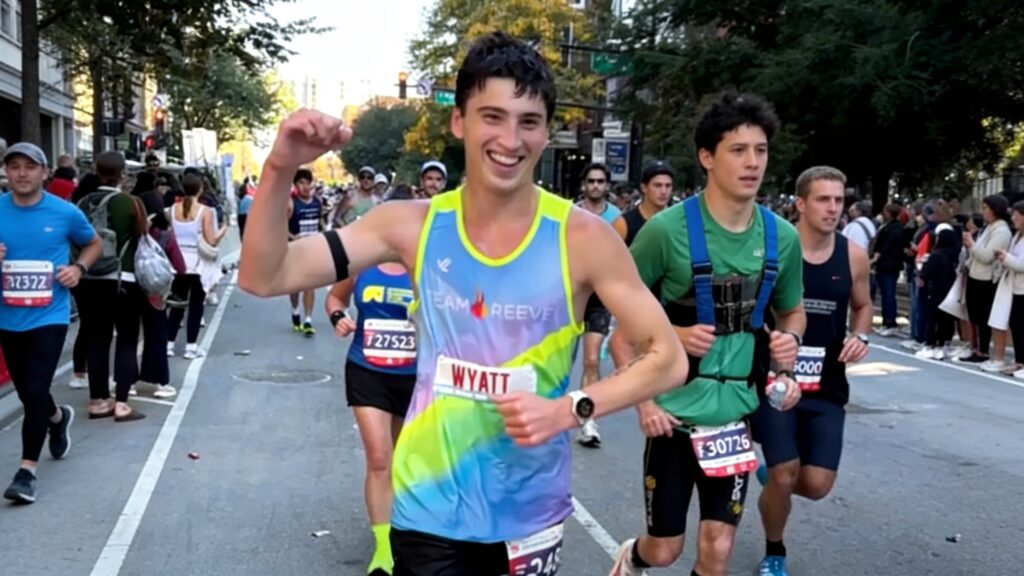
On race day, October 12, 2026, he lined up at the starting gates with his brother, Jack, directly beside him. Jack committed to running every single step of the 26.2-mile course alongside his younger brother, acting as both an essential support partner and a steadfast witness to an extraordinary human achievement.
A Finish Time That Defied All Expectations
When Anderson crossed the finish line in 3 hours, 56 minutes, and 28 seconds, he shattered reasonable expectations for a first-time marathoner with his medical history. Maintaining an average pace of approximately nine minutes per mile over the entire distance resulted in a sub-four-hour finish—a milestone that many healthy, experienced runners spend years striving to attain.
The remarkable turnaround quickly drew national media attention, beginning with reports by ABC News and followed closely by regional and national outlets such as WAVE 3 Louisville, Yahoo Life, and the New York Post.
Beyond the stopwatch, the brothers’ endeavor served a philanthropic purpose. By partnering with the Christopher and Dana Reeve Foundation, they raised over $24,000. Named after the late actor Christopher Reeve, who sustained a paralyzing horse-riding accident in 1995, the foundation serves as a leading entity funding research into treatments and potential cures for spinal cord injuries, while also offering quality-of-life grants and peer support programs for the estimated 300,000 Americans currently living with paralysis.
The Power of Goal-Setting in Medical Recovery
Medical professionals note that spinal cord injuries vary drastically in their severity and long-term prognosis. While some patients recover specific functions over time, others face permanent paralysis, making each case entirely unique. Anderson’s rapid transition from complete paralysis to running a marathon in just seven months represents an exceptional trajectory that medical specialists view as highly unusual.
While spinal fusion surgery successfully stabilizes damaged vertebrae, it does not directly repair injured spinal cord tissue. The extent of Anderson’s functional recovery suggests that his spinal cord sustained less permanent structural damage than initially feared during the acute phase of his accident.
Nevertheless, his recovery underscores a principle long recognized by neurological rehabilitation specialists: the profound impact of meaningful, concrete goal-setting on medical outcomes. Rather than pursuing vague objectives like walking again or increasing general strength, Anderson established a specific, measurable, and time-bound target. That clear finish line provided the psychological endurance needed to navigate the painful and frustrating moments of rehabilitation.
A Message of Hope for Others Facing Paralysis
Anderson’s achievement has resonated deeply across the broader community, offering tangible hope to individuals and families facing the life-altering reality of spinal cord injuries. While medical experts emphasize that Anderson’s extraordinary outcome is not guaranteed for every patient, his journey illustrates the powerful intersection of modern medical intervention, dedicated rehabilitation, and relentless personal resolve.
Now back at St. Xavier High School to continue his senior year, Anderson carries a renewed perspective on resilience and determination. His finish time is permanently recorded in the annals of the Chicago Marathon, but the broader impact of his story continues to reverberate through rehabilitation centers and households where recovery once felt entirely out of reach.