


Popular fitness content creator Will Tennyson has recently shared a comprehensive and deeply transparent look at his experience attempting the viral "75 Hard" challenge. Described by its creator as the ultimate test of mental fortitude, Tennyson characterized the rigorous program as "the toughest mental strength challenge on the planet" and likened the psychological toll to "the equivalent of running an Iron Man for your brain."
The challenge sets a strict, uncompromising framework designed to test unwavering discipline over 75 consecutive days. Participants must complete two 45-minute workouts every single day, with the mandate that at least one session must take place outdoors. In addition to the heavy physical training regimen, participants are required to drink an entire gallon of water, read 10 pages of non-fiction literature, strictly adhere to a chosen diet with zero cheat meals or alcohol consumption, and capture daily progress photographs. The penalty for missing even a single task is absolute: participants must reset their progress back to day one.
Through his documented journey, Tennyson’s experience highlights both the profound transformative power and the brutal realities associated with extreme fitness protocols. His narrative offers a critical look at the complex relationship between physical transformation, mental health, sustainability, and what it genuinely takes to achieve lasting behavioral change.
The Challenge Begins: Early Wins and Harsh Realities
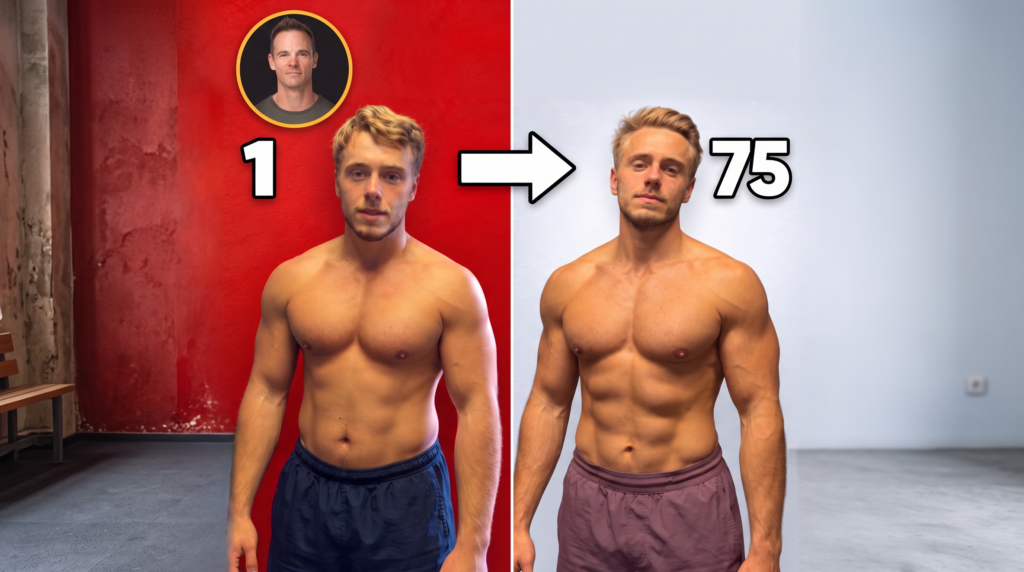
Tennyson kicked off the challenge weighing in at 89.4 kilograms (197 pounds), which was slightly heavier than he had anticipated. His body fat was measured at approximately 11%, though he voiced some initial skepticism regarding the precision of the measurement tool. Entering the cut with high ambitions, he noted his primary goal of achieving a remarkably lean physique by the conclusion.
The opening days yielded rapid changes on the scale, with Tennyson dropping down to 86.6 kilograms within the first week alone. However, the YouTuber immediately recognized that these swift drops did not represent pure fat loss. Drawing from his prior experiences with aggressive dieting, he understood that initial weight fluctuations are typically driven by a reduction in bodily bloating, glycogen depletion, and the water weight naturally bound to stored carbohydrates. As the body adjusts to a sudden calorie restriction, these early shifts can frequently create a misleading impression of rapid fat reduction.
Nutrient Timing and the Carb Backloading Strategy
To manage his dietary restrictions and control his appetite, Tennyson implemented a strategy known as carb backloading. This approach involved consuming primarily protein-heavy meals throughout the earlier parts of the day and saving all carbohydrate intake for his evening meal. He explained that this method directly targeted his personal tendency to experience intense evening cravings and binge eating tendencies.
While the psychological framework helped him navigate his daily calorie deficit, the physiological science behind carbohydrate timing for fat loss remains a subject of considerable debate within nutritional science. Research consistently demonstrates that total daily energy balance and macronutrient composition over a 24-hour period carry far more weight in body composition changes than the specific timing of when those nutrients are consumed. Studies analyzing metabolic responses to meal timing have repeatedly found no significant metabolic advantage to carb backloading when overall caloric intake is controlled.
Nevertheless, the psychological benefit Tennyson experienced was tangible. By utilizing a structure that mitigated his evening cravings, the strategy served as a practical tool for adherence, even if the metabolic mechanics were less magical than popularly perceived.
The Underrated Power of Daily Movement and NEAT
One of the most profound realizations Tennyson encountered during the challenge centered on the stark contrast between structured gym workouts and unstructured daily movement. He observed that accumulating 12,000 steps daily played a far more vital role in his weight loss success than his dedicated exercise sessions, noting that he expended significantly more energy through basic walking than through intense training routines.
This observation aligns perfectly with established physiological science regarding non-exercise activity thermogenesis, commonly referred to as NEAT. The energy expended through daily activities, fidgeting, and walking often accounts for a massive portion of an individual’s total daily energy expenditure and can vary wildly from person to person. Walking 12,000 steps typically burns hundreds of calories depending on body weight and movement efficiency, frequently eclipsing the energy cost of a standard 45-minute gym workout. Furthermore, low-intensity steady-state walking does not trigger the same hunger hormones or appetite spikes often associated with grueling high-intensity training, making it an exceptionally effective tool for maintaining a sustainable calorie deficit.
The Hydration Debate and the Psychological Weight of Arbitrary Rules
Meeting the requirement of drinking a full gallon, or approximately 3.7 liters, of water every day proved to be an unexpectedly arduous task for the fitness creator. While optimal hydration is undeniably crucial for metabolic efficiency, physical performance, and appetite regulation, health authorities emphasize that there is no scientific basis for a universal one-gallon rule for every individual. Recommended fluid intake varies dramatically depending on an individual’s body size, daily activity levels, climate, and the moisture content of their overall diet. Forcing fluid intake beyond physiological necessity offers no enhanced fat-loss benefits and, in severe cases, can carry risks such as hyponatremia. For Tennyson and many others who undertake the challenge, the water requirement serves less as a nutritional necessity and more as an exercise in sheer discipline.
In a similar vein, Tennyson incorporated cold water immersion and Wim Hof breathwork into his daily routine, reporting that the deliberate exposure to discomfort created a powerful mindfulness ritual. While popular wellness culture frequently highlights cold exposure for its potential to activate brown adipose tissue and slightly elevate calorie burn, scientific studies indicate that the metabolic boost is relatively modest. The true value for Tennyson resided in the psychological realm—building mental resilience, learning to sit with discomfort, and establishing a disciplined daily ritual.
The Vulnerability of Extreme Restriction and Travel Disruptions
Despite strong early momentum, Tennyson encountered a major setback during a week-long trip to Canada. Surrounded by regional delicacies, cinnamon treats, and rich dinners, his adherence to the 75 Hard protocols completely unraveled. Within a single week, he regained the weight he had worked three weeks to lose, climbing right back up to his starting weight of 90 kilograms.
During this travel period, Tennyson acknowledged that he broke multiple core rules of the challenge, failing to capture progress footage, abandoning his dietary discipline, and missing workouts. While a portion of the rapid weight regain was undoubtedly driven by water retention and glycogen replenishment from heavy carbohydrate consumption, the episode exposed a fundamental vulnerability inherent in ultra-restrictive fitness challenges. Programs built on absolute rigidity often fail to equip individuals with the flexible eating skills and psychological adaptability required to navigate normal life events, vacations, and social situations.
Confronting Personal Struggles and Mental Health Realities
Beneath the physical metrics and visible progress, Tennyson was quietly wrestling with significant personal turbulence. During the course of the challenge, he candidly addressed mounting sleep disruptions, noting that he frequently woke up exhausted in the pre-dawn hours and struggled to return to rest. He admitted that he was navigating a difficult chapter in his personal life, using the structure and positivity of the fitness challenge as a psychological anchor.
Following the conclusion of the documentation, Tennyson revealed that he had gone through a breakup after a three-year relationship, a profound personal life event that underscored a sobering reality: physical transformation does not automatically resolve internal emotional pain or deep-seated insecurities. His raw transparency offered a stark contrast to typical fitness media narratives that often promise happiness and inner peace as direct rewards for achieving a leaner physique. Psychological research consistently demonstrates that body dissatisfaction and self-esteem issues frequently persist even after individuals attain significant physical changes, highlighting the necessity of addressing mental health independently of physical goals.
Navigating Energy Drink Dependency and Extreme Volume
The intense physical demands of maintaining an aggressive calorie deficit while adhering to the rigorous output requirements of the challenge also led Tennyson to develop an unhealthy reliance on caffeine and energy drinks. To combat fatigue and suppress hunger throughout his demanding days, his consumption escalated to multiple cans daily, touching peaks that saw him consume up to seven energy drinks in a single day.
While stimulants can temporarily blunt appetite and mask fatigue, excessive intake introduces significant downstream consequences, including disrupted sleep architecture, elevated anxiety, cardiovascular strain, and tolerance buildup. This pattern illustrated how extreme fitness rules can inadvertently foster disordered coping mechanisms disguised as high-level discipline.
In addition to the mandatory workouts, Tennyson undertook an auxiliary goal of completing 16,000 push-ups throughout the duration of the challenge. While he successfully integrated the volume without suffering injuries and maintained elements of the habit long-term, the addition of extreme secondary tasks underscores a common pitfall in fitness culture: the assumption that more volume always equates to superior results, despite the heightened risk of overtraining and compromised recovery during a caloric deficit.
Proving Sustainability Through Flexible Adaptability
Determined to apply the lessons learned from his setbacks in Canada, Tennyson approached a subsequent solo trip to Malta with a modified mindset. Rather than attempting to maintain an impossible standard of perfection, he focused on sustainable integration—maximizing his daily step counts through extensive hiking, making mindful dietary choices, and enjoying regional dining while remaining conscious of his overall energy balance.
Even on evenings where he consumed large, calorie-dense meals that pushed his daily intake significantly higher, his massive energy expenditure from physical exploration kept him within a manageable range. By proving that balance and flexibility could coexist with progress, Tennyson demonstrated that sustainable habits ultimately outperform rigid perfection. Upon returning from Malta, he discovered he had actually achieved further weight loss, reinforcing the concept that long-term success relies on adaptability rather than dogmatic adherence to arbitrary rules.
Evaluating the Legacy of Extreme Challenges
When Tennyson tallied his final body composition metrics, the results reflected tangible success, including significant fat loss and the successful preservation of lean muscle mass over several months of sustained effort. More importantly, the experience forged lasting habits that persisted over a year later, including a preference for daily walking, cold exposure routines, and consistent physical training.
However, the journey also illuminated the stark divide between cultivating genuine mental toughness and pursuing sustainable, lifelong health. While the arbitrary elements of the challenge—such as drinking an exact gallon of water or reading a specific page count—served their purpose as temporary tools for building willpower, they lacked enduring value once the structured period ended.
Ultimately, Tennyson’s experience serves as a nuanced case study in modern fitness culture. It demonstrates that while rigorous challenges can act as powerful catalysts for building confidence and testing personal limits, they are not universal blueprints for health. True, lasting transformation is ultimately forged not through the dogmatic execution of rigid rules, but through the patient discovery of sustainable habits that genuinely enhance an individual’s quality of life.