


For years, rounding your spine under load was considered the ultimate fitness heresy. Across commercial gyms, CrossFit boxes, and athletic training facilities alike, coaches screamed “neutral spine!” from every corner, warning athletes with near-apocalyptic fervor that any degree of spinal flexion under weight would inevitably destroy their backs. This dogma became the cornerstone of modern strength training, deeply ingraining the belief that the spine must remain rigidly straight during any lifting movement.
However, a growing number of athletes, physical therapists, and movement specialists are now challenging that long-held orthodoxy. They are actively embracing forward folding—the deliberate, controlled rounding of the entire spine—as a powerful and necessary tool for building resilient, adaptable bodies. Far from being a reckless invitation to injury, this practice is rooted in centuries-old traditions practiced by yogis and gymnasts, and modern movement science increasingly suggests they have been right all along.
What Forward Folding Actually Is
To understand this paradigm shift, one must first recognize that forward folding differs fundamentally from the traditional hip hinge, the movement pattern taught universally to beginners in the gym. While a conventional hip hinge emphasizes keeping the back flat and rigid while bending primarily at the hips and knees, a forward fold distributes the bend progressively throughout the entire spine, the rib cage, and the hips. It is a comprehensive, full-body movement that requires and builds mobility through every individual spinal segment.
In everyday life, perfection is rarely an option. Think about picking up a toddler who is squirming uncontrollably in your arms, or reaching down in a tight space to grab an object wedged beneath a piece of furniture. Life rarely provides the ideal setup for a textbook, rigidly braced hip hinge. Real-world movement is messy, unpredictable, and frequently demands spinal flexion whether an individual wants it or not.
Why Powerlifters Sometimes Pay the Price
Athletes who train exclusively within rigid spinal parameters often develop impressive, specialized strength in one narrow movement pattern, but they frequently pay a hidden price with vulnerability everywhere else. Many former strength athletes report that while they could safely lift monumental loads with a locked-in, neutral spine, they felt remarkably fragile outside of those controlled gym environments. Simple daily actions—such as sitting directly on the floor, playing a recreational sport, or moving heavy household furniture—often carried the persistent threat of a sudden, painful back spasm.
This phenomenon occurs because when the human body adapts exclusively to one fixed position, tissues that never experience controlled flexion become stiff, brittle, and fundamentally fragile in those unpracticed ranges of motion. The ironic result is that an individual might comfortably deadlift 500 pounds under strict gym conditions, yet throw their back out by simply bending forward to pick up a pencil with a slightly rounded spine.
The Jefferson Curl: Old School Meets New Science
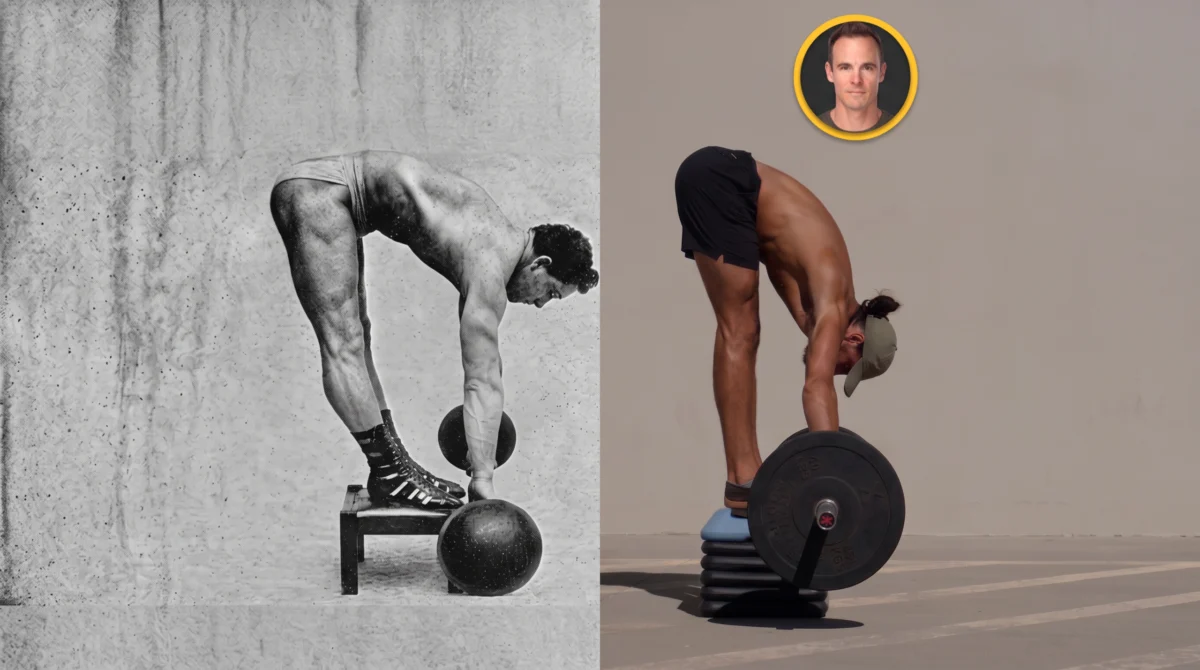
At the forefront of this movement-rehabilitation trend is the Jefferson curl, an exercise that originated in the nineteenth century among old-school strongmen and gymnasts who required mobile, robust backs capable of handling heavy, awkward loads. The movement is deceptively simple in description: holding light weights, an individual slowly curls their spine downward, vertebra by vertebra, starting from the neck and moving down to the hips, before reversing the motion with absolute control.
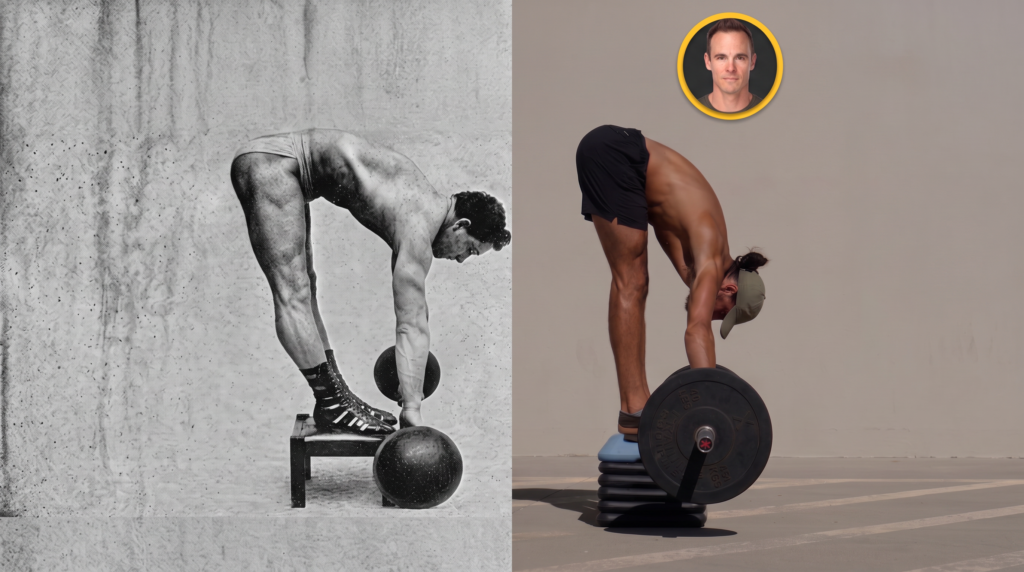
For decades, Olympic weightlifters have quietly incorporated variations of loaded spinal flexion into their routines. They understand an essential physiological truth: even when an athlete intensely intends to lift with a perfectly neutral spine, perfection is biomechanically impossible under maximum loads. Building a physiological buffer zone of strength and mobility in flexion dramatically reduces injury risk for the inevitable moments when form breaks down under fatigue. Modern gymnasts and martial artists continue this traditional wisdom, recognizing that true athletic longevity demands resilience in all physical positions, rather than just the safest ones.
What Actually Happens When You Fold Forward
The physiological benefits of structured forward folding extend far beyond mere hamstring flexibility. The practice serves to release chronic, deep-seated tension in areas that routinely plague both desk-bound professionals and dedicated athletes. These include the tight spaces between the shoulder blades, the lats and pectorals that contract under daily stress, and the mid and lower back regions that suffer endlessly from prolonged sitting in chairs.
During a proper forward fold, the spine and rib cage must open systematically to create the internal space required for the movement. This mechanical demand forces active movement through spinal segments that may have remained locked down and immobilized for years. Introducing even minimal external load initiates a process of tissue remodeling, creating biological structures that are simultaneously stretchable and strong, rather than merely loose or stiff.
Integrating Progression and Breath Work
Transitioning into loaded spinal flexion requires a methodical approach, beginning with bodyweight compression folds to master the foundational pattern, progressing through unweighted movement flows, and eventually incorporating very light external resistance. Practitioners emphasize that the goal of exercises like the Jefferson curl is not traditional progressive overload or setting personal records. Even athletes with a decade of experience often continue using remarkably light loads, finding that the true stimulus comes from controlled, deliberate movement through a full range of motion rather than heavy mechanical resistance.
Furthermore, integrating intentional breathing transforms the practice from a basic stretch into genuine tissue adaptation. Utilizing slow, deep belly breathing throughout each repetition—specifically focusing on expanding the ribs backward during inhalation—creates internal intra-abdominal pressure that supports the spine while enhancing the stretch. This breathing pattern simultaneously recruits the diaphragm and deep core stabilizers.
Building a Real-World Buffer Zone
Ultimately, proponents argue that training exclusively in perfectly safe, rigid movement patterns leaves individuals vulnerable precisely when life demands physical adaptability. By reintroducing controlled spinal flexion through progressive practices like forward folding, individuals can develop a reliable buffer zone of strength and mobility. This physiological resilience ensures that when life gets messy, form breaks down, and unexpected physical demands arise, the body remains protected, confident, and fully prepared to handle the load.