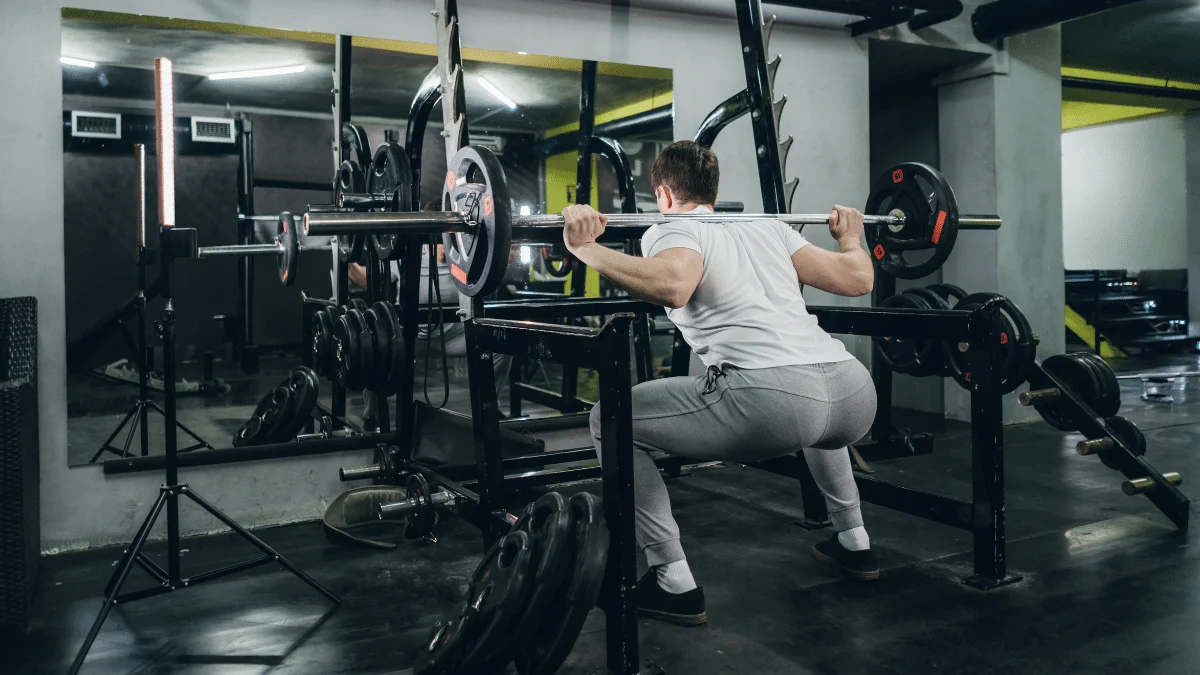
For decades, the concept of accentuated eccentric training has occupied a prominent place in the lifting zeitgeist. The underlying logic appears unassailable: since the concentric phase—the lifting portion of a repetition—is where a lifter typically reaches muscular failure, and because humans are inherently stronger during the lowering or eccentric phase, deliberately overloading the eccentric portion should theoretically unlock superior strength and hypertrophy gains.
This tidy rationale suggests that standard training under-loads the eccentric phase, leaving untapped potential on the table. However, in exercise science, tidy logic is not data. When researchers line up empirical studies to test the practice, the story proves considerably messier than the persuasive sales pitch that has circulated through commercial and strength-training gyms for generations.
A recent study by Yue and colleagues adds fresh data to this ongoing scientific inquiry, offering a nuanced look at how varying degrees of eccentric overload impact muscle tissue.
Before examining the findings, it helps to understand how researchers physically manipulate these variables in a laboratory setting. One of the primary mechanisms used to study accentuated eccentrics is the weight releaser. Weight releasers are detachable hooks that secure extra weight plates onto a barbell during the starting phase of a lift. As the lifter lowers the bar through the eccentric phase, the extra plates are carried down, but at the bottom of the movement, the hooks detach against the floor or specialized stands. This allows the lifter to perform the heavier eccentric descent, then push up a significantly lighter concentric load.
In the study by Yue and coworkers, participants performed four sets of six repetitions on the squat. The researchers divided the subjects into three distinct conditions to compare varying degrees of eccentric overload: one group performed traditional squats with matching eccentric and concentric loads, a second group utilized weight releasers on two out of six repetitions per set, and a third group used weight releasers on all six repetitions.
When the participants used the weight releasers, the eccentric phase was loaded at 120 percent of their one-rep maximum, while the concentric phase was loaded at 75 percent. Interestingly, the researchers chose to measure the cross-sectional area of the rectus femoris—a choice that may not have been ideal given the biarticular nature of the muscle, which crosses both the hip and knee joints. Despite this curious anatomical measurement site, the data indicated that eccentric overload training resulted in greater localized growth.
Yet, this recent positive finding sits against a backdrop of older, robust research that tells a much less convincing story. Two of the strongest longitudinal studies to date paint a more cautionary picture regarding the real-world advantages of the technique.
In a prominent study led by Douglas and colleagues, trained rugby players completed a rigorous 12-week squat intervention. One group performed accentuated eccentrics using a Smith machine with loads roughly 20 percent heavier than their concentric capacity. While the eccentric-overload group demonstrated early, promising gains in dynamic strength and sprint speed, their quadriceps muscle thickness ultimately did not increase by an amount significantly different from the control group.
Other longitudinal research projects tracking hypertrophic outcomes over time have repeatedly supported this same pattern. Set-by-set comparisons between traditional resistance training and accentuated eccentric loading consistently reveal similar overall hypertrophy, challenging the assumption that heavier lowering phases automatically translate to superior muscle growth.

From a physiological standpoint, this outcome makes intuitive sense once researchers look beyond the isolated eccentric phase of a single repetition. Increasing the load during the eccentric portion places a higher metabolic and mechanical toll on the nervous and muscular systems, generating greater cumulative fatigue. Consequently, this localized exhaustion can reduce the total number of repetitions or the overall volume a lifter can successfully perform across an entire training session or set.
When factoring in this trade-off, a rough heuristic emerges: the total mechanical tension accumulated across a working set may end up being comparable enough between traditional and accentuated methods that the final hypertrophic outcomes even out.
Even if accentuated eccentrics could theoretically provide a marginal hypertrophy edge, practitioners face an undeniable practicality problem. Executing these techniques safely during free-weight movements requires specialized hardware, such as weight releasers, and ideally one or two dedicated spotters to carefully reattach the heavy plates between individual repetitions. Managing this workflow is cumbersome enough in a specialized powerlifting or strength-sport facility, but it remains virtually impossible in a crowded commercial gym.
Emerging technology is slowly attempting to bridge this gap. Newer computerized exercise devices are beginning to make eccentric overload more accessible by dynamically adjusting resistance via motorized control, altering the load in real time between the lowering and lifting phases. However, these modern resistance machines remain niche, expensive, and far from widespread adoption. Until such tools become commonplace fixtures in standard fitness facilities, accentuated eccentrics will remain difficult to implement safely and effectively for most free-weight exercises.
When evaluated strictly through a hypertrophy lens, accentuated eccentric loading often looks like a solution in search of a problem. The body of available scientific literature suggests that standard, traditional resistance training already exposes skeletal muscle to a sufficient eccentric stimulus to maximize growth.
Nevertheless, for lifters who remain determined to experiment with accentuated eccentric loading, practical alternatives do exist. Utilizing advanced motorized devices that automatically adjust resistance provides a seamless way to overload the eccentric phase without manual intervention. Alternatively, lifters can employ a modest amount of body assistance during the concentric portion of an exercise after completing a slow, highly deliberate lowering phase.
These methods capture the physiological essence of eccentric overload without requiring cumbersome weight releasers or extra spotters, making them significantly more manageable in conventional gym environments. Furthermore, trainees can overload the eccentric phase on numerous machine-based exercises by performing the lowering phase unilaterally with one limb, and assisting the concentric lift with both limbs.
Ultimately, this ongoing line of scientific research highlights the inherent dangers of embracing a compelling theoretical rationale without rigorously weighing it against empirical evidence. The intuitive premise that greater eccentric force must inherently yield greater muscular growth sounds persuasive in isolation, but when subjected to rigorous scientific testing, it simply fails to consistently hold up. It serves as a timely reminder that elegant theoretical logic does not always equal proven data.