


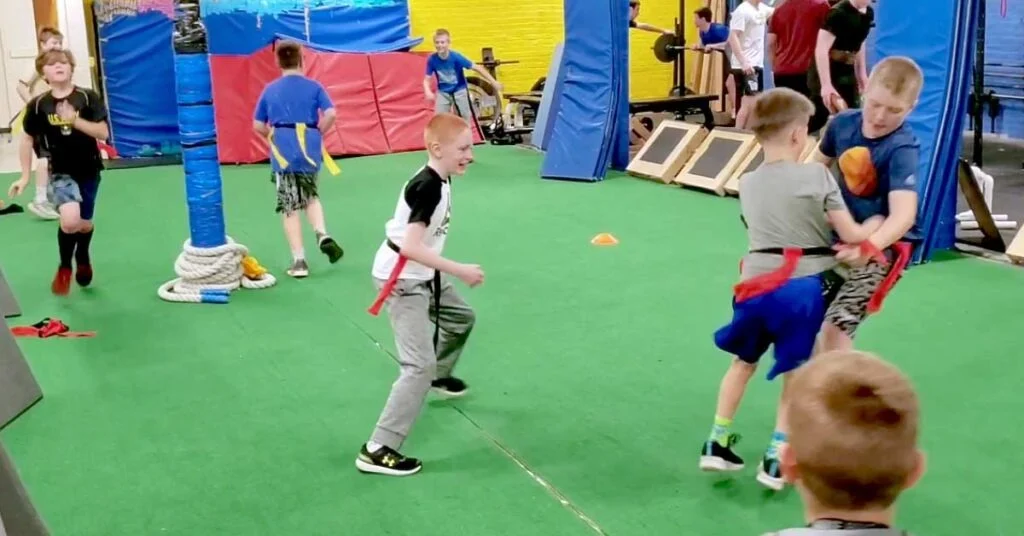
In the modern landscape of youth athletics, the pressure to specialize early and train like professional adults has largely overshadowed the natural, unstructured ways children learn to move. However, experienced youth coach Jeremy Frisch is working to shift that paradigm by championing the power of play. For children, games represent the most natural, familiar, and inherently entertaining activities imaginable. Left to their own devices in a yard or on a playground, children naturally gravitate toward chasing each other, playing tag, or wrestling to the ground. From a coaching perspective, these activities are not just pastimes; they are powerful tools that require virtually no complex instruction, immediately engage young participants, and provide deep motivational value.
Frisch emphasizes that games allow coaches to effortlessly manipulate rules, playing environments, and participant dynamics to achieve specific developmental outcomes. By tweaking these variables, coaches can foster entirely different physical skills and athletic capabilities. For example, expanding the boundaries of a simple game of tag forces players to cover significantly more ground, thereby enhancing the cardiovascular conditioning effect. Conversely, shrinking the playing area places a premium on rapid decision-making, spatial awareness, and explosive directional changes.
Why Play Outperforms Traditional Youth Sports Training
Ultimately, games serve as the primary vehicle for children to practice, refine, and expand their fundamental movement competencies. Long before the era of dedicated training facilities, travel teams, and hyper-scheduled practices, children across generations engaged in unstructured after-school games in backyards and open fields. These impromptu activities, loosely modeled on organized sports with rules and guidelines invented on the fly, offered the ultimate environment for youth to experiment with a vast array of physical tasks.

These sessions were engaging because children played among peers entirely free from adult intervention. There were no coaches standing on the sidelines dictating the exact mechanics of a specific skill; instead, children engineered their own creative solutions to overcome challenges. This self-directed exploration fostered robust problem-solving skills across unpredictable situations, capabilities that young athletes later carried seamlessly into more complex, organized sports environments.
At Frisch’s facility, young athletes practice foundational movement skills such as sprinting, jumping, catching, and throwing. These core competencies form the bedrock of overall athletic ability, making it vital for children to understand how these patterns operate. Complete mastery is never expected from youth athletes; rather, the objective is basic physical competence. Coaches typically introduce these fundamental movements during the warm-up or skill-development phases of a training session, before transitioning them into a more open, chaotic environment. This is where play takes center stage to accelerate movement literacy.
Frisch outlines his favorite games utilized within his training facility, pairing each with the specific athletic objectives they target. While not an exhaustive compendium of all possible games, the selection offers valuable insights for coaches seeking to enhance overall athletic performance. Ranging from simple pursuits to complex tactical challenges, each activity has proven successful and deeply enjoyable for the youth athletes involved.
Flag-Tag
At its core, tag is perhaps the simplest yet most athletically advantageous game in existence. When the goal is cultivating a broad spectrum of physical capabilities, traditional tag remains unrivaled. Children intuitively understand how to play without formal instruction, drawn immediately to the thrill of the chase, while facilities require nothing more than open floor space.
Tag naturally develops a wide array of athletic traits, including decision-making, tracking opponents, evasive maneuvering, tactical awareness, acceleration, deceleration, rapid directional changes, gripping, and postural adjustments. Furthermore, it delivers profound cardiovascular conditioning.
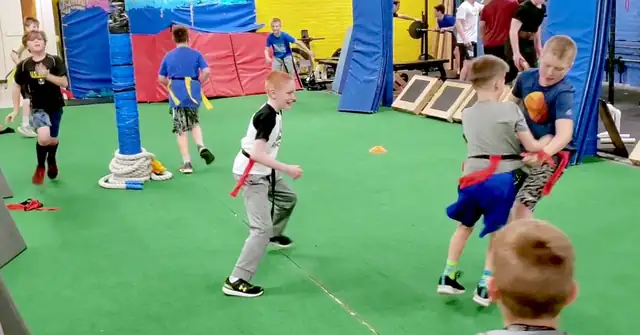
The "Flag-Tag" variation introduces American Football flags into the equation. Instead of designating a single chaser, every participant acts simultaneously as both hunter and hunted in a last-man-standing format. The objective is to strip flags from opponents while protecting one’s own, with the final participant possessing a flag declared the winner. This variation eliminates unnecessary full-body contact, restricting the point of interaction strictly to the hips. Football coaches immediately recognize the value of this concept, as tackling an opposing ball carrier fundamentally relies on tracking and engaging around the hip region.

Team-Relay Tag
Team-relay tag shifts the metric of success to time. Divided into a chasing team and a running team, participants typically compete within a compact ten-by-ten-yard grid, though dimensions can scale based on roster size. Every member of the chasing team takes a turn pursuing a member of the running team.
Caught runners do not eliminated; instead, they remain active until all chasers have completed their turns. Coaches record the duration required for the chasing team to capture all runners, after which roles reverse, and the team with the fastest cumulative trapping time wins. This format develops sharp directional changes, efficient movement in tight quarters, and the capacity to process high volumes of visual stimuli under pressure.
Time introduces a sense of urgency, mirroring the structural reality of most organized sports where clocks dictate outcomes. While sports like baseball and golf operate independently of time, nearly every other team sport utilizes a game clock alongside scoring systems to determine victors. Properly applied, time constraints naturally drive the development of efficient movement mechanics.

Power Ball
Adapted directly from the classic television program American Gladiators, "Power Ball" challenges an attacking player from each team to deposit three distinct balls into a designated bucket within a thirty-second window. Ball-handlers are restricted to holding a single sphere at a time, and any attacking player touched by a defender before scoring renders that specific ball dead for the remainder of the round.
Spatial setup remains critical, maintaining a strict ratio where attackers must navigate one more target bucket than there are defenders. This structural imbalance forces defenders to cooperate intensely to cover every scoring option. Meanwhile, offensive players scan the floor for open scoring lanes, reacting dynamically to the shifting positions of both teammates and opponents.
The game develops evasive penetration, defensive tracking, lateral shuffling, visual perception, and split-second decision-making. Because these capabilities transfer seamlessly across multiple sports, Power Ball provides a highly effective environment for young athletes to hone competitive mechanics.

Move the Mountain
"Move the Mountain" transforms traditional running relays into an intensive physical challenge. Moving far beyond standard out-and-back sprints, the activity integrates running, carrying objects, and navigating obstacle courses. Team races allow coaches to balance rosters effectively, pairing faster runners with developing peers to create competitive parity. Incorporating obstacles and external loads elevates the exercise from a pure speed trial into a multifaceted athletic challenge.
Runners and Gunners (Pickle)
"Runners and Gunners"—widely recognized as "Pickle"—serves as a cornerstone activity at Achieve Performance, frequently utilized to conclude training sessions due to its exceptional cardiovascular benefits. Once the activity commences, participants routinely accumulate hundreds of yards of high-intensity running without realizing they are completing endurance conditioning, entirely absorbed by the competitive engagement.
Asking a young athlete to complete repetitive shuttle runs yields immediate resistance, but competitive games bypass psychological fatigue through engagement. The activity naturally promotes directional changes, acceleration, escape mechanics, evasion, tracking, and throwing, cementing its status as a favorite among young participants.

Kings and Pawns
Merging elements of wrestling and football, "Kings and Pawns" combines blocking, tackling, grounding, and running within a confined space. Two competing teams each feature a designated king positioned behind kneeling pawns. The primary objective requires the king to cross the playing area without being tackled by opposing pawns, while friendly pawns attempt to block defenders and clear a safe corridor.
For athletes exploring contact sports, this activity provides a secure introduction to pushing, pulling, and physical engagement. Contact disciplines require participants to feel comfortable within personal space, maintain baseline equilibrium, and react instantly to opponent movements amid chaos.
Boulder Ball
"Boulder Ball" utilizes stability balls as rolling hazards, engaging younger athletes through two distinct formats focused either on evasion or acceleration. In the evasion variation, coaches gently roll stability balls toward participants positioned centrally within a padded zone, challenging them to duck, dive, and leap to avoid contact. The last unhit player wins, while catching the ball in mid-air resurrects eliminated peers.

The second variation transforms the exercise into a race inspired by cinematic chases, where athletes sprint alongside the rolling stability ball toward a crash mat, attempting to secure safety before the rolling apparatus overtakes them.
Hill Sprints
While running hills may initially sound punishing, Coach Jeremy Frisch approaches hill sprints through the lens of movement coordination. Because coordination develops rapidly between the ages of five and twelve, and high-velocity running requires exceptional neuromuscular control, introducing foundational speed mechanics is vital.
Running uphill naturally forces a forward torso lean, mirroring the optimal mechanics of the acceleration phase of a sprint. Furthermore, the incline inherently prevents poor sprinting posture while delivering strength and cardiovascular adaptations. Structured as brief, competitive races between peers with generous recovery intervals, hill sprints prioritize speed development over conditioning fatigue.

Tug-of-War
Traditional tug-of-war activities represent an essential modality for developing raw, full-body strength among youth athletes. Pulling against resistance demands maximal isometric tension across the hands, arms, shoulders, back, and lower extremities. Whether utilizing heavy ropes, medicine balls, or bodyweight grips, these challenges engage nearly every muscle group in a functional, highly competitive format.
The Long-Term Value of Play
To ensure training transfers effectively to real-world athletic environments, coaches must expose young athletes to diverse, unpredictable movement scenarios. While traditional drills refine isolated mechanics, games force participants to creatively solve complex physical problems on the fly.
Ultimately, maintaining engagement remains paramount. As youth sports attrition rates continue to climb due to burnout and declining enjoyment, incorporating creative games ensures that children build a lifelong affinity for physical movement, keeping them active for years to come.