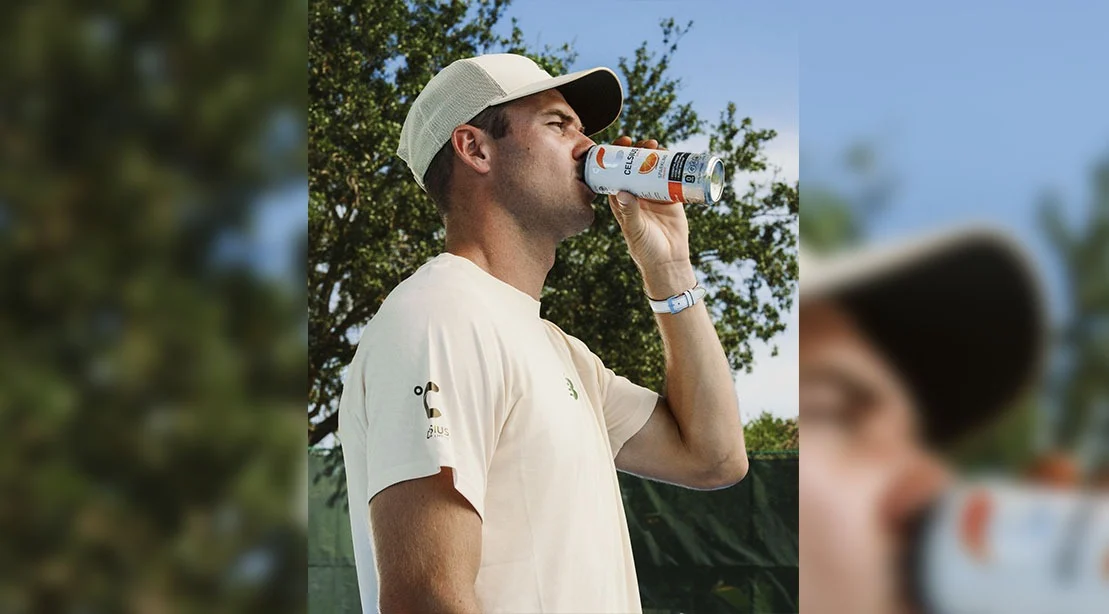
A warmup for Tommy Paul can begin as early as 9:30 in the morning, yet he still might not have the slightest idea when his actual workday will truly get underway. In the world of professional tennis, this kind of fluctuating schedule is simply an accepted part of daily life. Perhaps the opening match on the tournament schedule will wrap up swiftly in straight sets, or it could easily devolve into a grueling three-hour baseline battle under the blazing sun. By the time Paul finally makes his way from the cool sanctuary of the player corridors out onto the court, he could easily have spent several hours trying to stay loose, mentally engaged, and physically prepared without carelessly burning through the vital energy reserves he will desperately need once the first ball is struck.
Navigating this mental and physical waiting game—in a sport where professional livelihoods depend entirely on explosive, multi-directional movements and split-second reactions—is a distinct skill in its own right. It is also the primary reason why Paul is such a strict adherent to his daily routine. He recently discussed the realities of his preparation with Muscle & Fitness through his ongoing partnership with Celsius, a brand that has quickly become a steadfast fixture of both his rigorous at-home training regimen and his chaotic life on the road. When Paul is based at home, he typically prefers to get his core tennis work completed in the morning hours, break for lunch, and then return to the gym for a dedicated fitness session in the afternoon.
It is during that second session of the day that the cumulative fatigue of a long schedule can often catch up with him. Having a consistent source of sustained energy that arrives without the dreaded sugar crash helps make the demanding transition between court and gym significantly easier to manage. As Paul notes, there are plenty of afternoons when his energy levels begin to flag following an extensive morning on the tennis court, making a reliable pick-me-up an essential component of his training arsenal right before he tackles his strength and conditioning work.
On the professional tennis tour, the value of such consistency goes far beyond mere physical stimulation; it is partly about maintaining a sense of familiar structure in a nomadic lifestyle where nearly every external variable changes from week to week. Tournament start times routinely shift, matches regularly run long, and cooling one’s heels for several hours in a locker room before taking the court is standard procedure. His comprehensive training program has to prepare him for a wide spectrum of unpredictable outcomes. Most importantly, it must build the physical resilience required to repeat that demanding cycle week after week throughout a grueling, nearly year-round professional season.
Training for the Match You Can’t Predict
There is no practical way to fully recreate every single physical demand of a grueling five-hour Grand Slam match during a standard training session. Recognizing this reality, Paul and his coaching team choose instead to focus on reproducing the intense stress-and-recovery bursts of effort that make tennis so fundamentally different from traditional steady-state endurance sports like marathon running or cycling.
Paul emphasizes that the foundation is laid long before the tournament draws are released, pointing out that he and his team work exceptionally hard behind closed doors. Particularly when preparing for the grueling demands of the Grand Slams, where players must contest matches best-of-five sets, training sessions are extended and intensely physical, sometimes leaving players on the practice courts for hours on end.
His physical preparation can easily encompass nearly four hours of demanding on-court practice followed immediately by an evening fitness session in the weight room. The ultimate objective is to elevate his body’s physical capacity to such a high threshold that competing in a protracted, punishing match does not introduce an unfamiliar level of stress and physiological fatigue. Inside the gym environment, professional tennis players must focus heavily on dynamic movements, performing countless sprints, lateral cutting maneuvers, and rapid accelerations and decelerations. Consequently, cultivating exceptional functional agility is just as critical as building a remarkably strong athletic base.
A typical conditioning circuit for Paul might feature intervals of maximum-effort work on specialized cardio equipment, such as an assault bike, a standard treadmill, a stationary upright bike, or open running space on a track, followed immediately by short periods of active recovery. He will routinely cycle through these intense intervals multiple times before taking a longer, structured break that closely mirrors the official changeovers between games and sets during a professional match.
Interval training holds an irreplaceable place in his conditioning program because traditional long-distance endurance work does little to prepare the body for the stop-and-start reality of competitive tennis. Because players are not running continuously without interruption, developing the physiological capacity to repeatedly recover during brief pauses in play is paramount. These micro-breaks in the action are not just moments to catch one’s breath; they are an arena where athletic skill is tested, requiring players to not merely tolerate a spiking heart rate, but to rapidly clear fatigue so they can produce another explosive, high-quality effort on the very next point.
Fueling and Recovery Begin Before Paul Feels Tired
Paul’s match-day preparation begins long before he ever steps foot inside the tournament locker room. Fundamental elements such as quality sleep, deliberate hydration, and strategic nutrition in the days leading directly up to a competitive fixture establish the physiological baseline required to handle whatever workload the match eventually demands.
Among these foundational elements, Paul believes that adequate sleep is frequently under-discussed, though he acknowledges that professional athletes are increasingly recognizing its profound impact on overall performance and recovery. Similarly, proper hydration becomes an even more critical variable in the days immediately preceding competition, while his evening meals typically incorporate a substantial, easily digestible carbohydrate source to top off his glycogen stores. Paul notes a personal preference for steak paired with pasta or an alternative carbohydrate source during these preparatory windows.
When match day finally arrives, his dietary choices are entirely dictated by the scheduled start time of his fixture. An early 11 a.m. start might necessitate a streamlined approach consisting of just one carefully timed meal and a light snack, whereas a later afternoon or evening start allows for a more traditional routine involving breakfast, an on-court warmup, and a subsequent pre-match meal. Paul keeps these pre-competition meals intentionally simple, often relying on lean proteins and clean carbohydrates like chicken and rice or plain pasta. This strategy ensures he receives the exact fuel he requires without introducing heavy or acidic foods that could potentially cause digestive distress when heart rates skyrocket and he begins moving at maximum intensity on the court.
Recovery protocols are similarly systematic, scaling in direct proportion to the physical expenditure demanded by the match itself. Following a swift, straightforward victory, Paul might undergo standard physical therapy treatment, utilize a cold tub to mitigate inflammation, secure some rest, and return to the practice courts the following day for a lighter hitting session. Conversely, if a match pushes him to his absolute physical limits across a lengthy five-set encounter, his schedule for the subsequent day is entirely cleared to prioritize extensive soft-tissue mobility work and active flushing of the legs. It is all part of a calculated approach to training intelligently, ensuring his body retains the biological capacity to perform at an elite level when the next competitive challenge inevitably arrives.
Tennis Players Are Strong in a Different Way
For casual observers who look primarily at the lean physiques of many top professional tennis players, it is easy to drastically underestimate the raw functional strength these athletes actually possess. Paul is acutely aware of this widespread misconception among sports fans.
Highlighting some of his peers on the international tour, Paul points out that players like Alexander Zverev, Daniil Medvedev, or Jannik Sinner might outwardly appear to be relatively slender athletes who rarely touch a weight room, leading some to wrongly assume they lack genuine physical power. In reality, those competitors possess a specialized kind of functional strength that is vastly different from what casual observers might traditionally assume.
For elite tennis players, lower-body strength is non-negotiable; it is required to repeatedly absorb and redirect enormous forces as they violently accelerate, decelerate, and change direction against their own momentum. Furthermore, they must maintain exceptional balance and ironclad core control to strike tennis balls cleanly and accurately from heavily compromised, off-balance positions during extended rallies. These athletic attributes become exponentially more valuable as a match wears on, fatigue accumulates, and maintaining precise biomechanical mechanics grows increasingly difficult.
Running parallel to the physical demands is the immense mental fortitude required to survive on the professional circuit. Tennis is a sport that notoriously leaves competitors entirely alone with their mistakes, where a single unforced error on a crucial point can quickly spiral into a lost game or a surrendered set if the player fails to mentally reset immediately. Paul estimates that the sport is heavily weighted toward the psychological side, suggesting that tennis is roughly ninety percent mental. He credits the world’s best competitors with developing reliable mental frameworks and specific cue words that they can deploy in high-pressure situations to quickly snap back into the competitive zone and refocus entirely on the task at hand.
That capacity to continually reset is vital across a grueling season defined by relentless global travel, contrasting playing surfaces, shifting daily schedules, and extended weeks away from the comforts of home. Paul emphasizes that surrounding himself with a supportive, enjoyable team and keeping specific, measurable goals in sight are essential strategies for preventing the relentless tour life from becoming a mental burden. When asked what the everyday recreational athlete might successfully borrow from his meticulous preparation, Paul returns invariably to the foundational habit that holds his entire athletic enterprise together. Routine, he insists, is everything—finding a functional routine, establishing it firmly, and sticking to it with unwavering discipline, because true consistency is nearly impossible to achieve without consistent habits.