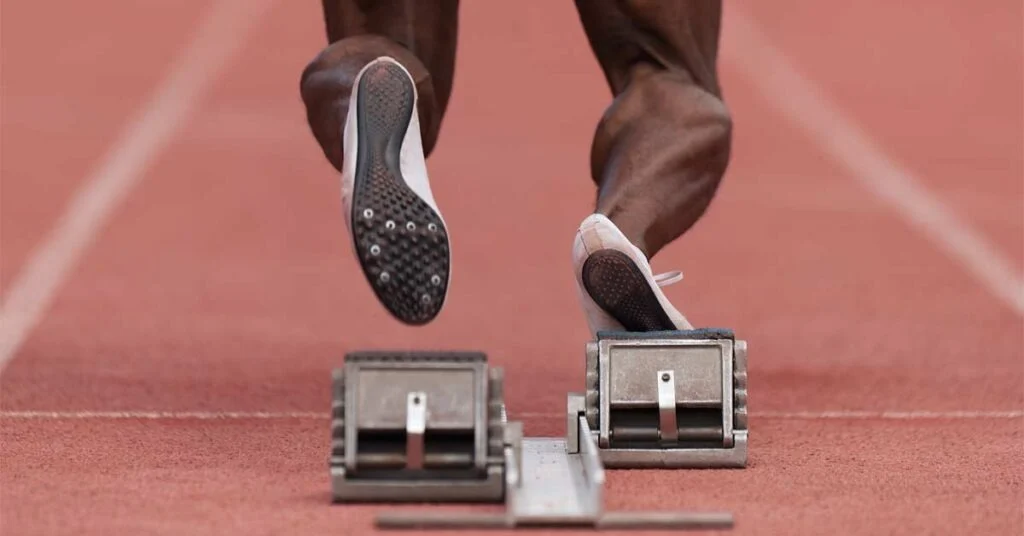
In modern athletic development, few muscle groups are treated with as much casual indifference as the lower leg. Within high-performance weight rooms and collegiate training facilities, strength and conditioning coaches frequently operate under the assumption that the calves receive all the stimulus they could ever need through field work. The rationale appears sound on the surface: sprinting at top speed, absorbing landing forces from maximal jumps, and executing intensive plyometric routines subject the lower extremities to ground reaction forces between three and five times an athlete’s body weight. Replicating those astronomical forces with conventional gym exercises seems neither practical nor necessary. When dedicated calf training does make its way into a strength program, it almost universally appears in the form of standing calf raises.
Yet, according to strength and conditioning specialist Brandon Pigg, this widespread conventional wisdom rests on a major anatomical oversight. While high-impact bounding, sprinting, and standing calf raises place immense tension through the Achilles tendon and the superficial gastrocnemius muscle, they largely bypass the deeper muscular partner situated underneath: the soleus.
Writing for sports performance platform SimpliFaster, Pigg argues that the chronic neglect of isolated soleus development not only leaves potential performance gains on the table, but also deprives athletes of a vital stabilizer capable of protecting the knee from debilitating injuries, including anterior cruciate ligament (ACL) tears and chronic patellar tendinitis.
Drawing upon decades of biomechanical research, Pigg makes the case that understanding the distinct anatomical profile of the triceps surae—the gastrocnemius and the soleus working together—demands a fundamental overhaul of how coaches program lower-leg conditioning.
The Biomechanical Divide: Why Plyometrics Bypass the Soleus
To understand why traditional sprint and plyometric drills fail to fully condition the soleus, one must examine the functional architecture of the calf complex. While both the gastrocnemius and the soleus serve as synergists responsible for plantarflexing the foot at the ankle joint, they differ fundamentally in how they interact with the knee.
The gastrocnemius is a biarticular muscle, originating on the posterior surface of the femur above the knee joint and inserting into the calcaneus via the Achilles tendon. This design enables the gastrocnemius to function simultaneously as a plantarflexor of the ankle and a flexor of the knee. In contrast, the soleus is monoarticular. It originates below the knee on the posterior surfaces of the tibia and fibula, crossing only the ankle joint before joining the Achilles tendon.
This anatomical difference creates a dramatic shift in muscle recruitment depending on the angle of the knee. Research published by Cresswell and colleagues in Experimental Brain Research demonstrated that the neural drive and electromyographic activation of the gastrocnemius drop precipitously as the knee bends into progressively deeper angles of flexion. The soleus, however, maintains consistent neural drive regardless of the knee joint angle.
Subsequent work by Lauber and colleagues in Physiological Reports provided precise structural measurements of this phenomenon. The investigators determined that across a range of 0 to 60 degrees of knee flexion, the fascicle lengths of the soleus remain essentially stable. By contrast, the fascicles of the gastrocnemius shorten progressively by 3.5 millimeters (give or take 1.9 millimeters) until the knee reaches approximately 21 degrees of flexion, where they stay short as flexion deepens. Furthermore, motor units within the gastrocnemius begin to shut down once passive knee flexion reaches roughly 21.1 degrees.
These dynamics were further clarified in a study by Baumbach and fellow researchers in BMC Musculoskeletal Disorders, which revealed that bending the knee beyond 20 degrees suppresses gastrocnemius dominance during ankle dorsiflexion. Interestingly, motor units deactivated at 21.1 degrees during passive flexion reactivated once the knee extended back out to approximately 35.1 degrees.
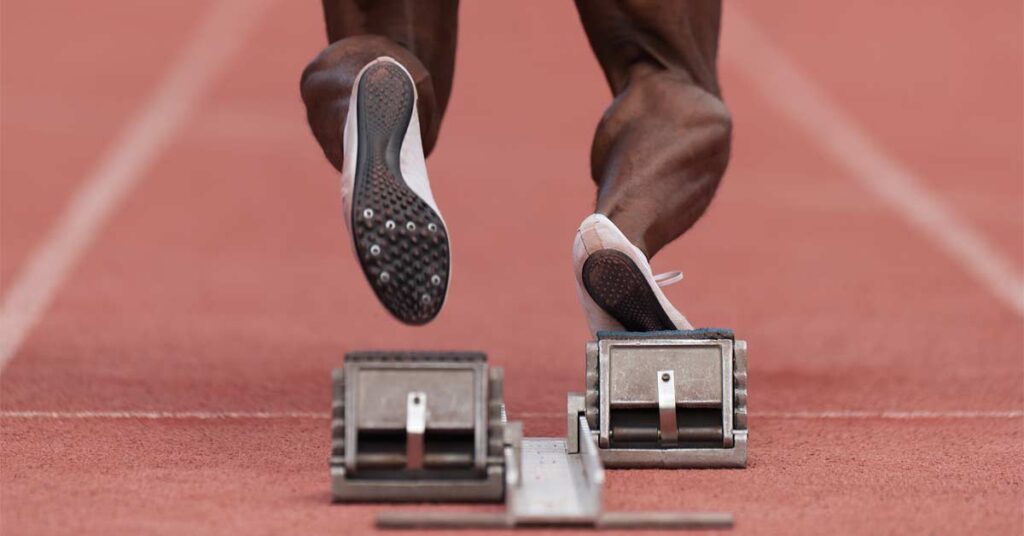
The practical takeaway for athletic preparation is unmistakable: the distribution of work across the calf complex is angle-dependent. When the knee is extended or nearly straight—the very position characteristic of sprint strides, pogo hops, and drop jumps—the gastrocnemius operates at an optimal fascicle length to generate and absorb force, monopolizing the workload. The moment the knee bends past 20 degrees, the primary burden of eccentric plantarflexion abruptly shifts to the soleus, which remains the primary driver until the knee straightens past 35 degrees.
As Pigg observes, popular plyometric exercises like pogos and drop jumps are exceptional for tendon elasticity and gastrocnemius stiffness, but the fleeting, shallow knee angles involved mean they do virtually nothing to develop the soleus.
A Direct Shield for the Knee Joint
The realization that common training methods fail to load the soleus raises an immediate question for performance coaches: does isolated soleus strength genuinely alter real-world athletic outcomes?
According to sports medicine literature, the answer is a definitive yes, particularly regarding knee joint stability and non-contact injury mitigation.
Groundbreaking investigations by Elias and colleagues in the American Journal of Sports Medicine, along with complementary research from Mokhtarzadeh and associates published in the Journal of Biomechanics, established a stark functional contrast between the two calf muscles: the gastrocnemius functions as an antagonist to the anterior cruciate ligament, whereas the soleus serves as an agonist to the ACL.
When the gastrocnemius contracts, its femoral attachment creates a line of pull that can draw the femur posteriorly, effectively translating the tibia forward relative to the knee joint. Elias and his co-investigators observed that when the gastrocnemius acts alone or simultaneously alongside the soleus, the tibia experiences anterior translation. In sports kinesiology, excessive anterior tibial translation is recognized as the exact mechanical stressor that places peak strain on the ACL, often serving as the primary mechanism behind non-contact ligament ruptures during sudden deceleration or landing maneuvers.
The soleus produces the exact opposite mechanical effect. Because it originates directly on the upper tibia and fibula, its contraction pulls the shin bone backward relative to the foot and knee. When the soleus fires in isolation or with sufficient strength, it restrains the tibia, reducing anterior shear stress and taking critical strain off the ACL.
Beyond ACL preservation, Pigg notes that dedicated soleus preparation carries promising implications for managing patellar tendinitis, commonly known as jumper’s knee. By bolstering the capacity of the lower leg to absorb shock during deep-knee landings, the soleus can disperse deceleration forces that would otherwise slam into the quadriceps tendon and patellar complex. Furthermore, by pulling the tibia posteriorly upon ground contact, a conditioned soleus limits the anterior drift of the shin that forces excessive stretch and strain across the patellar tendon.
Practical Protocols for Soleus Conditioning
Recognizing that many athletic weight rooms lack dedicated soleus equipment, Pigg outlines practical training variations designed to isolate the muscle using standard gym equipment, ranging from isometric holds to dynamic deceleration drills.
Targeted Resistance with Resistance Bands
To specifically mimic the protective action of the soleus against anterior tibial displacement, Pigg recommends anchoring a heavy resistance band in front of the athlete and looping it around the upper calf just beneath the knee joint. The band pulls the tibia forward, directly loading the soleus with a horizontal shear force that forces the muscle to actively retract the shin during plantarflexion movements. This banded modification can be seamlessly integrated into various static and split-stance calf exercises.
Seated Calf Raise Variations
The classic seated calf raise remains the gold standard for soleus hypertrophy and capacity, as holding the knee at a fixed 90-degree angle mechanically disadvantages the gastrocnemius. Because many collegiate and high school facilities lack dedicated seated calf machines, coaches can substitute alternative implements:
- Safety Squat Bar Variations: Athletes sit on a bench with the balls of their feet elevated on a block and position a safety squat bar across the lower thighs near the knees. The built-in handles and padding make it an effective, stable platform for loading the ankles directly without placing unpadded steel against the quadriceps.
- Suspended Kettlebell Setups: In resource-constrained environments, coaches can utilize dip belts or heavy-duty nylon tie-down straps secured with carabiners. By draping the strap over the lower thigh and suspending kettlebells on either side of the knee, athletes create a portable, balanced seated calf station.
Isometric Holds Across the Length Continuum
Because many athletes who need lower-leg conditioning simultaneously battle chronic Achilles irritation, isometric contractions offer a high-tension training stimulus without the joint irritation that often accompanies rapid, full-range movement. Pigg recommends training the soleus across distinct positions along the muscle-length curve:
- The 90/90 Soleus Isometric (Shortened Position): Modeled after principles from the Postural Restoration Institute (PRI), this movement places the athlete on their back with hips and knees flexed to 90 degrees and feet against a wall. Instead of driving through the heels, the athlete pushes through the ball of the foot (the first metatarsal head) into maximal plantarflexion, contracting the soleus aggressively in its most shortened state. At 90 degrees of knee flexion, the gastrocnemius is completely muted, exposing the soleus in an angle where it is naturally weak and prone to cramping.
- Rack-Pinned Seated Isometrics (Lengthened Position): Using a barbell seated in a power rack set against bottom safety pins, the athlete wedges their knees upward from a position of deep ankle dorsiflexion, attempting to plantarflex against an immovable pin. This develops isometric rate of force development at the muscle’s end range.
- Prone Single-Leg Ground Presses: For athletes without access to weights, stepping into an upright lunge, driving the front knee forward past the toes while keeping the heel firmly planted, and driving the forefoot hard into the floor mimics the landing position where the soleus takes over eccentric loading.
Dynamic Loading and Deceleration Progressions
To transition strength gains into athletic utility, training must eventually progress from static holds to ballistic movements that demand rapid eccentric absorption:
- Bent-Knee Prowler Bounding: Rather than pushing a sled with fully extended legs, athletes perform repeated hops against the sled handles while deliberately delaying knee extension, ensuring every foot strike occurs with deep knee flexion.
- Short Hill Sprints: High-effort sprints over short, steep inclines (around 10 yards) naturally force the athlete forward into an aggressive shin angle and sustained knee bend, loading the soleus without reaching the extended leg mechanics of upright maximum-velocity sprinting.
- Squat-Landing Drop Jumps: While standard depth drops land with relatively stiff, shallow-angled knees that allow the gastrocnemius to buffer the initial impact, dropping from a plyometric box directly into a deep squat forces the soleus to accept eccentric forces immediately upon contact. Pigg suggests progressing these drills into lateral squat drop landings to prepare athletes for the joint angles encountered during abrupt directional cuts.
To complement these soleus movements, Pigg also advocates for overcoming isometric standing calf raises, performed in both full dorsiflexion and full plantarflexion, ensuring the gastrocnemius retains its capacity to absorb initial ground strikes before force cascades down the kinetic chain.
Building a More Complete Lower Extremity
The prevailing tendency to view sprint volume and plyometric bounds as comprehensive lower-body conditioning overlooks basic neuromuscular architecture. While high-velocity elastic work remains crucial for sports performance, it leaves the soleus undertrained, missing a prime opportunity to stabilize the knee and fortify the lower leg.
As Pigg stresses, targeted soleus training is neither an overnight miracle nor a standalone fix that guarantees an athlete will breeze through a decade of competition without an injury. Nevertheless, by systematically integrating bent-knee calf training, sports performance specialists can eliminate a common blind spot, equipping athletes with the lower-leg capacity required to withstand the physical demands of high-level sport.
References
- Cresswell, A.G., Löscher, W.N., & Thorstensson, A. (1995). Influence of gastrocnemius muscle length on triceps surae torque development and electromyographic activity in man. Experimental Brain Research, 105(2), 283–290.
- Lauber, B., Lichtwark, G.A., & Cresswell, A.G. (2014). Reciprocal activation of gastrocnemius and soleus motor units is associated with fascicle length change during knee flexion. Physiological Reports, 2(6), e12044.
- Baumbach, S.F., Brumann, M., Binder, J., Mutschler, W., Regauer, M., & Polzer, H. (2014). The influence of knee position on ankle dorsiflexion – a biometric study. BMC Musculoskeletal Disorders, 15(1), 246.
- Elias, J.J., Faust, A.F., Chu, Y.H., Chao, E.Y., & Cosgarea, A.J. (2003). The soleus muscle acts as an agonist for the anterior cruciate ligament. An in vitro experimental study. American Journal of Sports Medicine, 31(2), 241–246.
- Mokhtarzadeh, H., Yeow, C.H., Goh, J.C., Oetomo, D., Malekipour, F., & Lee, P.V. (2013). Contributions of the soleus and gastrocnemius muscles to the anterior cruciate ligament loading during single-leg landing. Journal of Biomechanics, 46(11), 1913–1920.