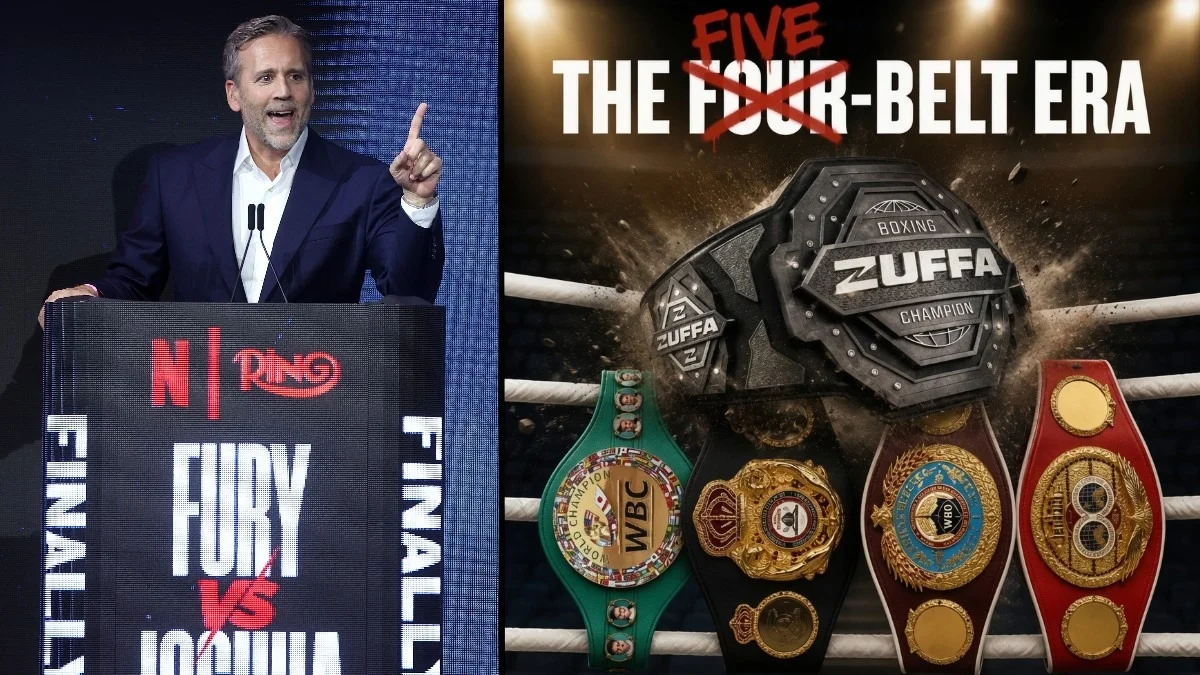
Max Kellerman has never been one to shy away from strong opinions, but his recent public crusade against boxing’s traditional establishment has reached an entirely new level. Since joining forces with Dana White’s Zuffa Boxing venture, the veteran broadcaster has thrown off any remaining diplomatic restraint, launching a scathing critique against the sport’s governing bodies and the very concept of alphabet championships.
During a recent appearance on the Ring Champs with Ak & Barak show, the former HBO and ESPN broadcaster made his position crystal clear. When asked which of the four major sanctioning bodies he respected, Kellerman’s response was swift and uncompromising: "None. Zero."
The intensity of his remarks even caught the attention of the show’s social media handlers initially. The official Instagram description for the interview went a step further, quoting Kellerman as saying he "spits on all of them" before the post was quietly removed from the platform. Yet, the sentiment remained intact, signaling a profound ideological shift in how Kellerman views the administrative landscape of modern professional boxing.
According to Kellerman, this deep-seated contempt for the sport’s governing organizations is not a recent development born from his association with Zuffa Boxing. Instead, he traces the absolute breaking point back more than two decades, long before Dana White ever publicly announced intentions to shake up the sweet science. For Kellerman, the illusion shattered during the controversial 1999 undisputed heavyweight championship bout between Lennox Lewis and Evander Holyfield, which ended in a widely panned draw despite a dominant performance by Lewis.
That night, in Kellerman’s view, exposed the rot at the heart of boxing politics—a system where administrative incompetence and political maneuvering could easily override athletic excellence. Over the years, that initial disillusionment festered into a wholesale rejection of how championships are manufactured and marketed to the public.
At the core of Kellerman’s argument is the belief that the proliferation of titles has severely diluted the value of a world championship. In the current era, multiple sanctioning bodies hand out belts like party favors, creating a confusing landscape of interim, regular, super, and franchise champions. This fragmentation, he argues, has directly damaged boxing’s mainstream appeal and commercial viability, particularly in the United States.
To illustrate his point, Kellerman highlighted the anonymity of elite fighters in everyday American life. He noted that even pound-for-pound talents like Terence Crawford—widely regarded as one of the best fighters of his generation—can walk down a public street without being recognized by the average citizen. In a healthy sports ecosystem, undisputed or unified champions should be household names, yet boxing’s bureaucratic red tape ensures that casual fans remain thoroughly alienated.
"You’re the champion of the world, but there are 10 dudes better than you who weigh what you weigh," Kellerman remarked during the interview, pointing out that these belts function primarily as promotional tools tethered to specific promoters rather than legitimate badges of supremacy.
Despite his vitriol, Kellerman offered a nuanced perspective on where the true blame lies. He stopped short of calling the sanctioning bodies the root cause of boxing’s systemic issues, instead characterizing them as a symptom of a much larger disease. They are, in his view, willing participants in a promotional ecosystem that frequently prioritizes safe, profitable matchups over the gold standard of the best fighting the best.
Furthermore, Kellerman claimed that his boycott of the sanctioning bodies is not just a recent talking point for new audiences. He asserted that he has refused to mention any sanctioning body by name on air for nearly 25 years. "I’m not going to call them by name, not even to insult," he added, emphasizing a personal policy of professional starvation through silence.
Kellerman’s HBO Revelation
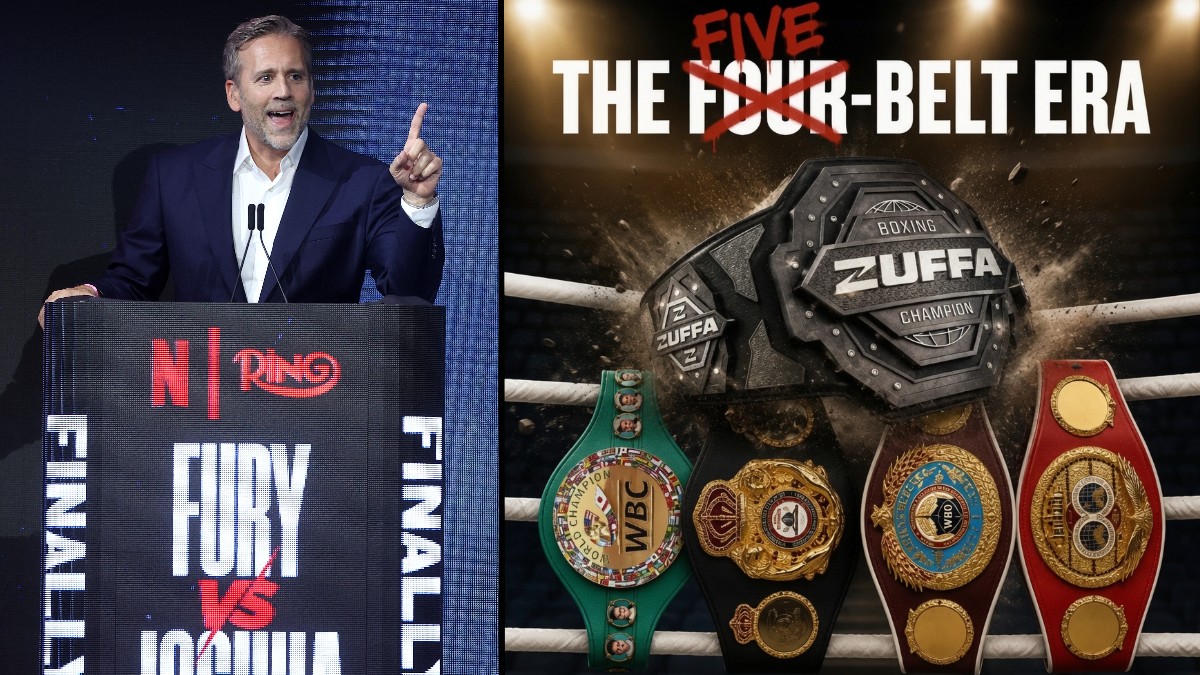
The roots of this hardline stance extend deep into Kellerman’s tenure as one of the premier boxing voices on television. During his time at HBO—once the undisputed cathedral of televised boxing—Kellerman frequently clashed behind the scenes with colleagues and network executives regarding how championships should be covered. He recalled challenging the traditional broadcast approach, arguing that networks had a journalistic duty to recognize genuine champions rather than bending the knee to alphabet organizations.
"Guys, do you know who the belts are for? They’re for everyone else," Kellerman recalled telling his colleagues at the time. "Why should we recognize all these belts?"
His underlying position is certainly understandable to purists. For decades, boxing has been plagued by questionable judging decisions, ducked fights, and championship politics that leave fans utterly exhausted. The alphabet soup of titles has often served to protect undefeated records and inflate pay-per-view prices for bouts that lack genuine competitive merit.
However, the manner in which Kellerman has chosen to express these long-held views has increasingly drawn scrutiny from his detractors. During his lengthy stints at HBO and ESPN, Kellerman regularly discussed sanctioning-body championships, undisputed statuses, and pound-for-pound rankings on air. While he may have held private reservations, his daily television responsibilities required him to engage with the very system he now publicly condemns with such vehement hostility.
It is only in the wake of Zuffa’s entry into the boxing space that his rejection of traditional organizations has transformed from a subtle editorial stance into a fiery, all-out crusade.
The Dana White Connection
That noticeable shift has inevitably aligned Kellerman very closely with Dana White’s emerging blueprint for the sport. The UFC mastermind has made no secret of his desire to bypass traditional boxing governance entirely, advocating for a streamlined, promotion-driven league structure modeled after mixed martial arts.
In September 2025, reports surfaced highlighting Kellerman’s enthusiastic support for White’s vision, with the broadcaster openly praising the decision to completely ignore established sanctioning bodies. While Kellerman’s philosophical opposition to alphabet belts predates his current association with Zuffa, the timing and tone of his public commentary have inevitably raised questions about his independence as a media analyst.
Critics point out that there is a vast gulf between reasonably opposing corrupt or inefficient alphabet organizations and appearing to offer wholesale, uncritical endorsement of an incoming promoter’s alternative power structure. Trading one set of masters for another does not necessarily guarantee a utopian future for the sport.
Moreover, a complete dismantling or ignoring of sanctioning bodies introduces its own set of perilous complications. Chief among them is the potential erasure of decades of boxing history. By sweeping away the alphabet organizations entirely, modern ventures risk diminishing or altogether discarding the historical context of championship lineages that define the achievements of legends like Sugar Ray Leonard, Marvin Hagler, and Roy Jones Jr. in the eyes of younger, impressionable fans.
Max Kellerman undoubtedly remains one of the most articulate and knowledgeable boxing frontmen of the modern era, boasting a career spanning over three decades of ringside insight. Yet, his increasingly aggressive alignment with Zuffa Boxing has sparked fierce debate, often overshadowing the very legacy he spent a lifetime building.
While his blistering critique of the sanctioning bodies carries undeniable merit, whether handing sweeping operational control over to a monolithic promotional entity is the ultimate cure for boxing’s ailments remains an open and fiercely contested question.