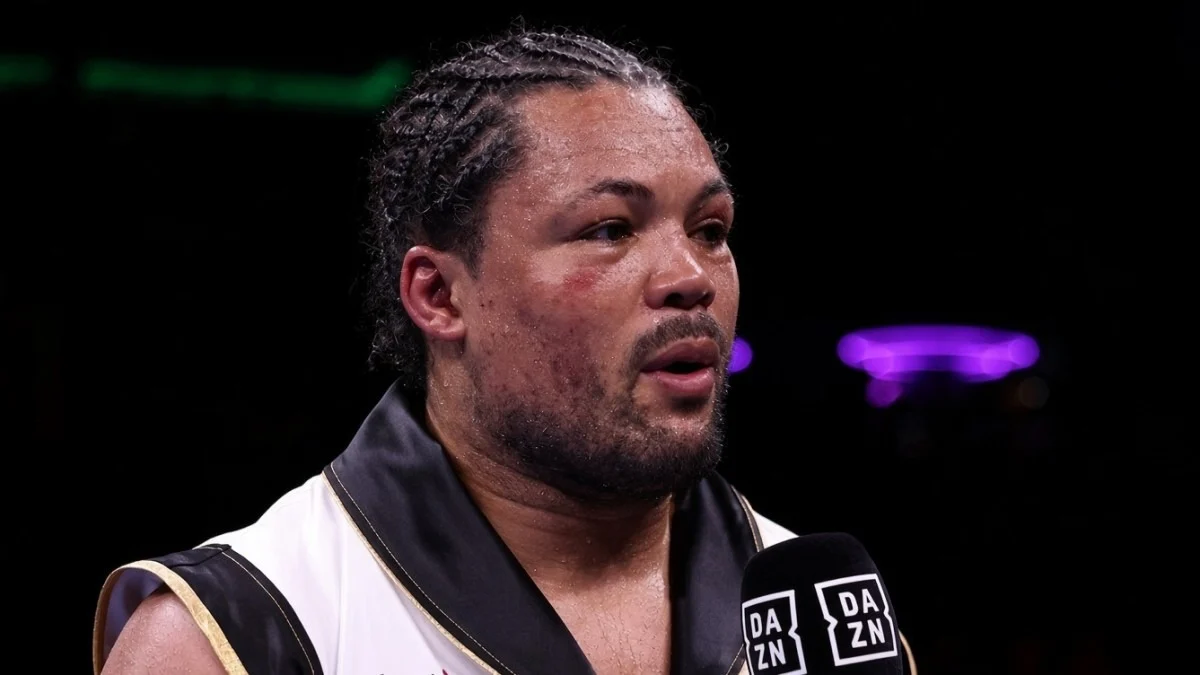
Former interim heavyweight champion Joe Joyce has addressed mounting public concern regarding his health, speech patterns, and the grueling toll of his boxing career, revealing that he received a neurodivergent diagnosis last year.
Known inside the ring as “The Juggernaut,” the 40-year-old British heavyweight remains determined to continue fighting despite a difficult run of recent defeats that have sparked comparisons to aging warriors of the past, such as Danny Williams. As questions swirl across social media and boxing forums regarding whether he should hang up his gloves, Joyce has offered a deeply personal perspective on his speech, his cognitive processing, and what it means to live as a neurodivergent athlete in a sport that has frequently misunderstood him.
The revelations came to light during an emotional and candid interview with The Daily Mail, promoted with the firm headline, “I haven’t got CTE.” In the feature, Joyce addressed recurring public assumptions linking his characteristic slow and deliberate cadence of speech directly to the physical punishment he has absorbed throughout a long and punishing career. The scrutiny over his speech has intensified following a series of stoppage defeats, leading critics and fans alike to question his long-term health and whether he is “punchy.”
However, Joyce provided an alternative explanation for traits that have marked him out for years. He revealed that he learned he was neurodivergent last year, a discovery he described as profoundly liberating after spending the majority of his professional boxing career feeling isolated and misunderstood by peers, media, and fans alike.
While neurodivergence is not a medical diagnosis in its own right, it serves as an umbrella term used to describe individuals whose brains process information, learn, or communicate differently from what is considered neurotypical. This broad spectrum encompasses conditions such as autism, ADHD, and dyslexia, among others. These neurological differences are inherent variations in human brain function rather than illnesses or medical pathologies that require a cure. In his public statements, Joyce did not specify a particular clinical sub-condition under that broader spectrum.
For those who have followed Joyce’s career closely from the very beginning, the revelation provides vital historical context. Long before he was subjected to questions about whether the heavy blows of the heavyweight division had slowed his speech, Joyce spoke in the exact same measured, unhurried manner. World Boxing News remembers this firsthand from an exclusive interview conducted in the weeks following Joyce’s triumphant capture of a silver medal at the 2016 Olympic Games in Rio de Janeiro. Back then, long before he engaged in the brutal wars that later defined his professional journey, his speech patterns were virtually identical to how they sound today.
While that historical observation does not settle every medical question or eliminate the legitimate risks associated with a career in professional boxing, it adds essential perspective to the current public discussion, separating lifelong neurological traits from recent athletic wear and tear.
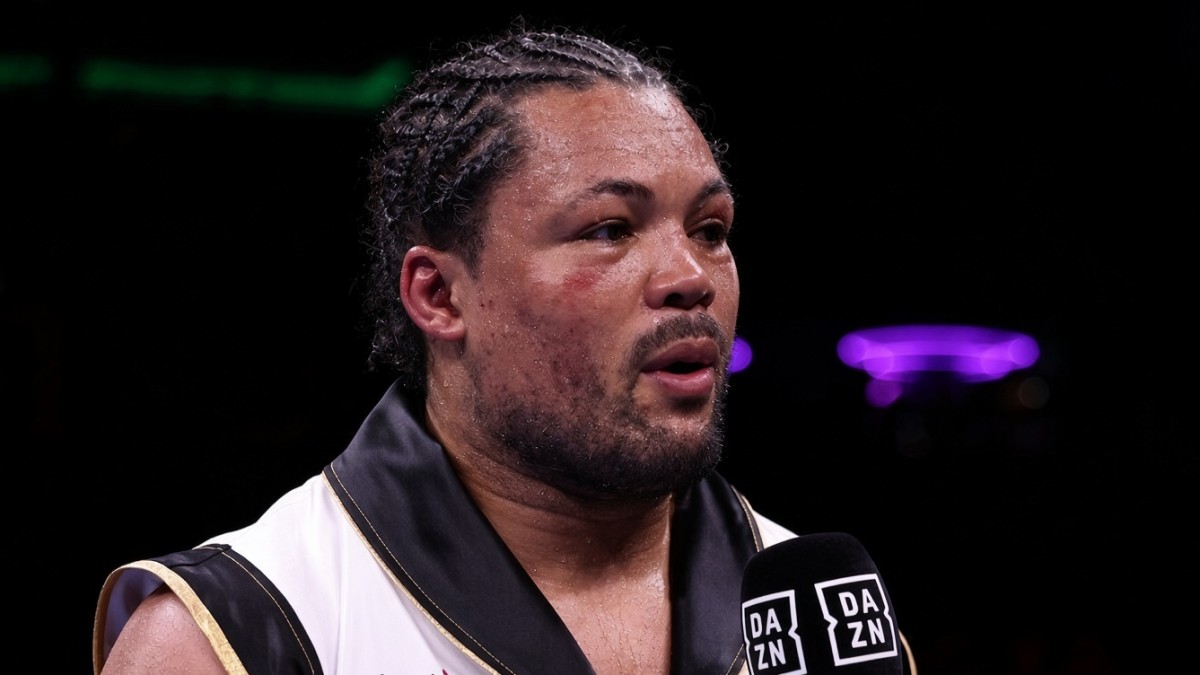
Following the publication of his interview with The Daily Mail, Joyce shared a personal statement elaborating on what the diagnosis has meant to him and explaining the motivation behind his decision to speak out publicly on such a sensitive topic.
“I’m incredibly proud of this interview, and grateful for every message of support,” Joyce stated. “I’ve never been a big talker, and I’ve often felt misunderstood in the boxing world. Being diagnosed as neurodivergent last year was liberating. Working with the team at Kove over the past 12 months has been life-changing. When I was deciding whether to be this public with my story, it was the idea of helping others that motivated me. I want to be a force for good. Being neurodivergent can be very isolating when you don’t have the understanding or the tools. I hope my story can open up more conversation, and make it easier for people to get the support they need. I’m still learning, and for me this is just the beginning.”
Joyce Statement and Advocacy for Others
The timing of Joyce’s revelation coincides with a particularly challenging chapter for the former Team GB standout. Having built an imposing reputation as an undefeated powerhouse who stopped elite contenders like Joseph Parker and Daniel Dubois, Joyce has experienced a sharp turn of fortune in recent years, losing five of his last six bouts. These consecutive setbacks have prompted growing calls from commentators, former fighters, and fans urging him to retire for his own safety and well-being.
Yet, stepping away from the sport is not a straightforward proposition. Joyce has previously acknowledged candidly that he is not currently in a financial position to walk away from boxing permanently, forcing him to weigh the physical risks against his economic realities. At the same time, the veteran heavyweight has actively explored life outside of the squared circle. World Boxing News reported in September that Joyce had begun pursuing acting opportunities in tandem with his athletic career, having already completed work on his first short film and started auditioning for additional dramatic roles as he looks toward a future beyond combat sports.
The ongoing concerns regarding Joyce’s future inside the boxing ring have not vanished with his disclosure, and sports medicine experts emphasize that his neurodivergent diagnosis should not be confused with a formal neurological assessment regarding the cumulative effects of concussive trauma from fighting. The distinction remains crucial in separating his lifelong neurological makeup from the physical impact of a grueling combat career.
Nevertheless, after years of being publicly judged, analyzed, and second-guessed for how he speaks and carries himself, Joyce has finally taken control of the narrative, offering his own explanation of what it means to navigate life under a microscope while feeling fundamentally misunderstood.
For a dedicated athlete who has endured immense physical punishment inside the ring while representing his country and competing at the absolute highest level of the sport, his decision to speak out publicly extends far beyond his own personal boxing future. By sharing his journey, Joyce hopes to shed light on neurodivergence, breaking down stigmas and offering support, understanding, and solidarity to others who have spent years feeling judged for simply being who they are.