



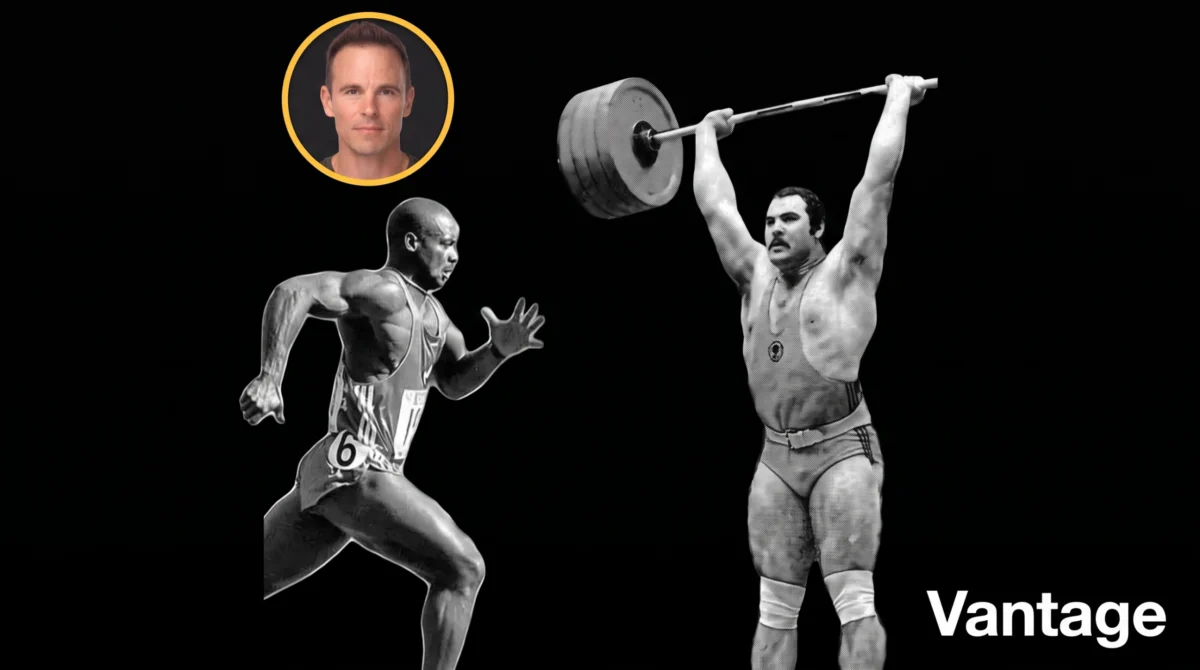
Watching elite athletes explode into motion—a sprinter launching off the starting blocks, a boxer delivering a devastating hook, or a weightlifter hoisting massive loads overhead—reveals something extraordinary about human performance. That snap, that twitch, is what separates good athletes from great ones. It is called explosive power, and while genetics play a significant role, the right training approach can unlock levels of performance most people never thought possible. Understanding how to develop this quality requires looking beyond simple strength and into the mechanics of force, speed, and timing.
Strength Versus Power: Understanding The Difference
Strength and power are frequently confused by casual observers, yet they describe fundamentally different physical qualities. Strength refers to the maximum force someone can generate, regardless of how long it takes. Think of a powerlifter grinding through a heavy squat—it is pure force, with minimal concern for speed. Power, however, combines force and velocity. It is the specific ability to produce significant force in minimal time.
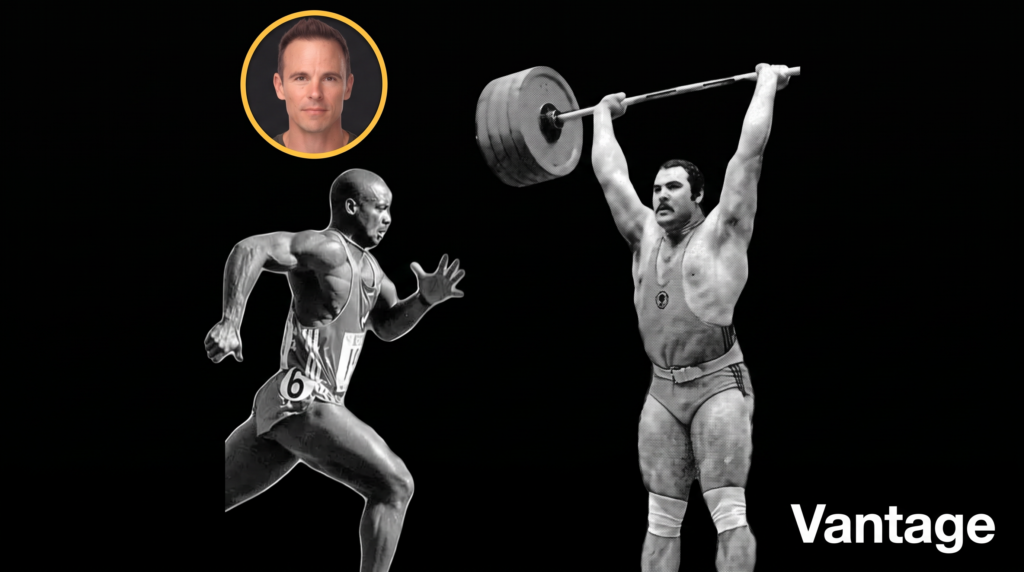
The mathematical relationship governing these attributes is straightforward: power equals force multiplied by velocity. This equation reveals that identical power outputs can come from vastly different combinations of strength and speed. Strongmen and powerlifters exemplify the high-force, low-velocity category. They move tremendous loads, but the velocity is necessarily slow due to the massive resistance. Despite the slower movement speed, their power output remains impressive because of the sheer force involved.
Sprinters and jumpers represent the exact opposite end of the spectrum. They overcome relatively minimal resistance, primarily gravity and body weight, but move at blistering speeds. Their power comes primarily from velocity rather than absolute force. Meanwhile, Olympic weightlifters, track and field throwers, and many combat athletes occupy a balanced middle ground. They display exceptional power through a near-perfect marriage of force and speed.
Explosive Power: The Speed Component
Being powerful does not automatically mean being explosive. The crucial distinction lies in a metric called the rate of force development, which measures how quickly maximum force can be reached during a movement.
Consider two legendary heavyweight boxers. George Foreman was immensely powerful, delivering devastating punches through raw, unadulterated strength. Mike Tyson was equally powerful, but he was also profoundly explosive, generating tremendous force in a fraction of the time Foreman required. That rapid force generation defines explosiveness, and it remains the primary quality most athletes seek when they look to elevate their physical performance to the next level.
Genetics: The Starting Line Nobody Chose
Explosive power has substantial genetic components that create natural advantages for some individuals over others. While this reality might seem discouraging at first glance, understanding these biological factors helps clarify what can actually be improved through targeted training.
Human muscles contain a mixture of fast-twitch and slow-twitch fibers. Fast-twitch fibers contract rapidly and powerfully, making them absolutely essential for explosive movements. Unfortunately, an individual’s fiber type distribution is largely predetermined by genetics and cannot be substantially altered through routine training.
In addition to muscle composition, neuromuscular efficiency plays a massive role. The nervous system coordinates muscle activation through electrical signals traveling from the brain to the muscle. While genetics establish a baseline efficiency, consistent training can significantly enhance signal speed and coordination, representing one of the most trainable aspects of explosive performance.
Furthermore, tendons function like biological springs, storing and releasing elastic energy during movement. Stiffer tendons store more energy and contribute directly to greater explosive power, with tendon properties also having strong genetic influences. Bone length, joint angles, and overall skeletal structure likewise affect how efficiently force transfers through the body, determining why certain individuals excel at specific movements.
However, genetic predisposition sets a ceiling, not a floor. Just as someone would not abandon education simply because a classmate learns faster, there is no reason to avoid explosive power training merely because others start with natural advantages. Everyone can improve their explosive capacity substantially through proper, disciplined training.
Building The Foundation: Maximum Strength Development
Explosive power requires a solid base of absolute strength. Without sufficient underlying strength, attempts to move quickly result in minimal force—yielding speed without any real substance behind it. The most effective approach involves compound exercises targeting major movement patterns, utilizing both bilateral and unilateral variations depending on the athlete’s specific needs and time constraints.
Biological adaptation requires progressive stress. Bodies exposed to identical stimuli eventually stop changing because there is no biological reason to adapt further. Strength development therefore demands systematically increasing resistance at a pace that challenges the body without overwhelming it. Countless methods exist for implementing progressive overload, such as adding weight, increasing volume, or manipulating tempo.
Internet fitness culture frequently relies on simplistic rep range prescriptions, such as one to five repetitions for strength and eight to twelve for hypertrophy. Reality, however, is far more nuanced. Rep ranges do not determine outcomes in isolation; rather, the combination of rep range and intensity dictates the resulting physiological adaptation. Lower reps with heavier loads build strength, but higher reps with appropriate intensity also build strength through different mechanisms.
Crucially, power training must always occur in a non-fatigued state. Fatigue and power production are fundamentally incompatible. Rest intervals between sets should be long enough to ensure full recovery, often lasting three to five minutes or more for heavy compound movements. Rushing through sets in the name of efficiency sacrifices the very quality being developed.
Plyometrics: Harnessing Elastic Energy
In the 1960s, Soviet scientist Yuri Verkhoshansky observed that elite athletes generated more force by utilizing stored elastic energy in their muscles and tendons. This observation led to extensive exploration of the stretch-shortening cycle, which is the rapid transition between the lengthening and shortening phases of muscle action.
Verkhoshansky discovered that minimizing ground contact time between these phases maximized elastic energy utilization, producing greater overall power output. He developed what he initially called the shock method, now universally known as plyometrics. Depth jumps particularly exemplify these principles: an athlete stands on an elevated surface, steps off, and immediately explodes upward upon landing, channeling tremendous elastic energy.
If forced to choose one plyometric movement applicable to virtually every athlete, experts often point to a surprising candidate: sprinting. Though sometimes categorized separately, sprinting fits plyometric criteria perfectly. Each ground contact involves explosive force production through rapid stretch-shortening cycles, making it accessible, scalable, and directly applicable to countless sports.
Plyometrics demand maximal effort on every single repetition. Volume guidelines vary by exercise complexity, but quality repetitions always trump fatigued volume. If power output noticeably decreases within a set, it should be ended immediately.
Olympic Lifting Variations: Training Power Production
Olympic weightlifters rank among the most explosive athletes across all sports. Extensive research has documented extraordinary power outputs during the second pull, which is the explosive hip and knee extension that propels a barbell upward. The catching phase of these lifts offers an equally valuable, though often underappreciated, benefit: training the human body to absorb force rapidly, thereby improving overall injury resilience.
The greatest advantage of Olympic lifts is their built-in incentive structure. To successfully catch a clean or a snatch, athletes must generate tremendous power. Insufficient power results in missing the lift entirely, creating a natural incentive for maximum effort.
The primary drawback of Olympic lifting is its technical complexity. Full snatches, cleans, and jerks require extensive coaching and practice to perform safely. However, simplified variations exist that retain most of the physiological benefits while dramatically reducing technical barriers for athletes without access to expert coaching.
Ballistic Training: Extending Movement Beyond Traditional Ranges
Ballistic exercises involve throwing or jumping with resistance, creating a flight phase where the load or the athlete becomes projectile-like. Standard exercises like traditional squats or bench presses require deceleration at the end range to control the weight safely, which inherently reduces velocity in the final portion of the movement.
Ballistic variations eliminate this deceleration phase entirely. Jump squats do not stop at full extension, and medicine ball chest passes do not slow down at lockout; instead, the athlete or object continues moving at peak velocity. Research suggests that because many sports involve ballistic actions like throwing, jumping, and striking, training with these movements offers superior transfer compared to traditional strength exercises that require deceleration.
The Universal Law: Quality Trumps Quantity
Regardless of the training method utilized—whether Olympic lifts, plyometrics, ballistics, or heavy strength work—one overarching principle supersedes all others: five quality repetitions beat ten mediocre ones. Quality in power training means maximal intensity and effort concentrated into each individual repetition, directly influencing motor unit recruitment and neural signal strength.
Explosive power training is, to a considerable extent, brain training. It is the process of developing neural pathways that enable maximum-effort muscular contractions on demand. Because humans naturally gravitate toward minimal effort, athletes must use strategic incentives, performance benchmarks, and even visualization techniques—such as imagining high-stakes scenarios—to unlock the extraordinary levels of effort required to truly build elite explosive power over time.