

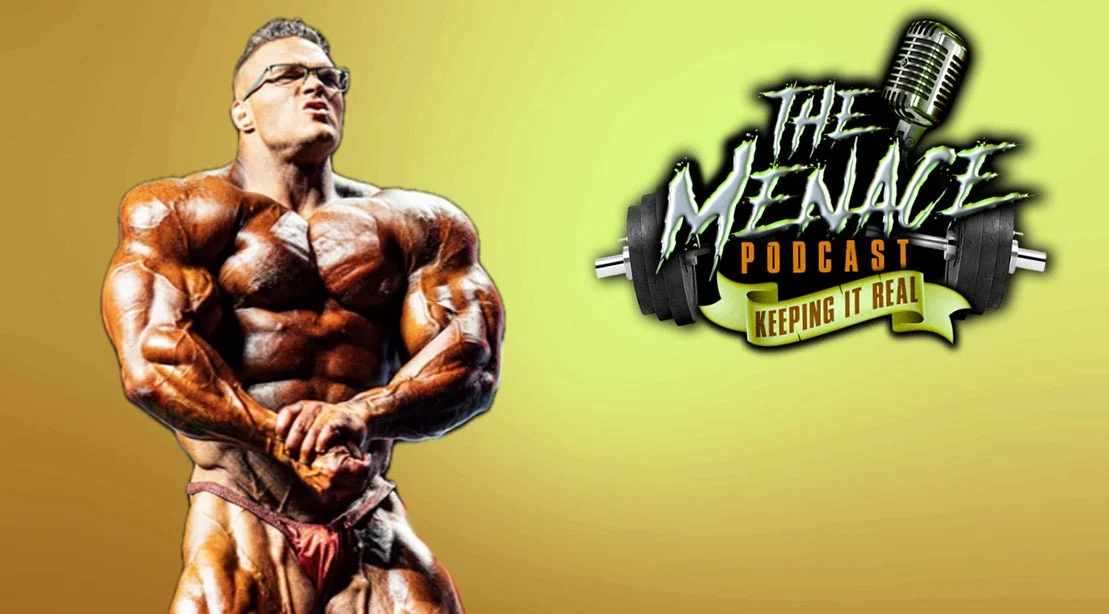
The dust has barely settled in Las Vegas following one of the most electrifying and fiercely contested weekends in modern bodybuilding history, but the post-competition debates are already intensifying across the industry. On Episode 304 of The Menace Podcast, host and bodybuilding legend Dennis James gathered fellow icons Milos Sarcev and Chris Cormier to dissect the dramatic conclusion of the 2026 Mr. Olympia. Recorded in the wake of the September 27 finals, the episode immediately dove into the massive shakeup at the top of the division, focusing heavily on how Nick "The Mutant" Walker seized the coveted Sandow trophy while last year’s champion, Derek Lunsford, slipped to third place.
The primary catalyst for debate among the podcast panel was whether Lunsford’s placement accurately reflected his performance or if the reigning champion was unfairly penalized for inconsistencies between the prejudging round and the finals. With Walker walking away not only with the ultimate title and the life-changing $600,000 first-place prize, but also the prestigious People’s Champion award, the spotlight inevitably turned to the razor-thin margins separating the world’s elite competitors.
According to Dennis James, the evaluation of Lunsford’s physique revealed notable fluctuations in conditioning over the span of twenty-four hours. During the critical prejudging session on Friday, James pointed out that Lunsford’s conditioning fell short of the razor-sharp standard expected of a defending champion. "His abs were washed out on Friday," James stated bluntly, critiquing Lunsford’s initial appearance on the stage. However, James was quick to acknowledge the champion’s resilience and bounce-back ability, noting that Lunsford successfully corrected those flaws before stepping back under the lights. "And he had it more crisp on Saturday," James added.
Milos Sarcev, often referred to in the coaching community as "The Mind" for his analytical approach to training and nutrition, concurred with James’s assessment of Lunsford’s physical trajectory over the weekend. Sarcev noted that despite the initial shortcomings during prejudging, Lunsford managed to pull it together and dramatically improve his ability to isolate and showcase his abdominal control during the final showdown. "This time he had it," Sarcev observed, validating the hard work Lunsford’s camp put in behind the scenes to rectify the Friday-night issues.
Despite these improvements, the panel agreed that both Walker and Lunsford initially appeared to be holding down the top two positions following the conclusion of prejudging. But bodybuilding is a sport of dynamic shifts, and as Sarcev pointed out, the reigning champion’s path was disrupted by an unexpected surge from another competitor. "Nobody really expected the change that Samson was going to make overnight," Sarcev explained, referring to Samson Dauda’s remarkable physical transformation between the preliminary rounds and the finals.
Dauda’s overnight resurgence ultimately reshaped the podium. The panel discussed how Dauda may have lacked a degree of psychological confidence or stage presence during Friday’s prejudging, which might have initially cost him ground against Walker and Lunsford. Yet, after making crucial tweaks to his presentation and utilizing his towering frame and fullness to full advantage, Dauda surged forward, capturing the judges’ attention and ultimately securing second place. This dramatic late-stage shift is what pushed Lunsford down from the runner-up spot into third place, creating a ripple effect of shockwaves throughout the bodybuilding community.
Were the Olympia Judges Right to Put Derek Lunsford in Third Place at the 2026 Olympia?
The core question driving the discussion on The Menace Podcast was whether the judges made the right call in dropping Lunsford to third behind both Walker and Dauda. Wrestling with the nuances of contemporary judging criteria, James offered a candid appraisal of Dauda’s weekend performance, defending the final standings. "I think that was the best Samson, ever," James observed, justifying the decision to place Dauda ahead of the defending champion. Sarcev echoed this sentiment, emphasizing that while Lunsford delivered a valiant and highly competitive defense of his title, his overall package on the night simply could not overshadow the overwhelming mass, density, and conditioning brought by Walker, nor the breathtaking improvements made by Dauda.
Yet, the panel was careful not to paint Lunsford’s third-place finish as a failure, but rather as a reflection of an unprecedented era of parity at the absolute summit of professional bodybuilding. The competitive gap separating the top tier of athletes—specifically Nick Walker, Samson Dauda, Derek Lunsford, and Andrew Jacked—has narrowed to a razor-thin margin. In a lineup of this caliber, the title no longer belongs to whoever holds a comfortable lead; instead, it is decided by microscopic details in conditioning, fullness, presentation, and how an athlete responds from one day to the next.
This extreme level of competition spells a thrilling, albeit grueling, future for the division, particularly for the newly crowned champion. James cautioned that defending the title will prove to be an monumental challenge for Walker when he returns to the stage next year. "It’s going to be the hardest thing for Nick to win that again next year," James warned. "He can do it. We already know he can, now. But it’s going to be super hard because these guys are all so close."
The conversation on The Menace Podcast captured the mood of an industry processing a historic changing of the guard. As athletes and coaches alike turn their attention toward the future, the 2026 Mr. Olympia will long be remembered as the event where the boundaries of the sport were pushed to their absolute limits, proving that at the highest level of professional bodybuilding, perfection is the only acceptable standard, and even a minor lapse in consistency can cost a champion everything.