
When discussing the absolute elite of heavyweight boxing history, the conversation inevitably turns to a select few iconic names who defined their respective eras with devastating punching power, defensive mastery, and an aura of invincibility. Among that legendary pantheon stands Larry Holmes, a fighter whose accomplishments in the ring place him comfortably in the upper echelon of the sport. Widely celebrated as "The Easton Assassin," Holmes carved out a remarkable professional career defined by exceptional longevity, a sublime left jab, and an extraordinary championship reign that cemented his legacy as one of the greatest heavyweights to ever lace up a pair of gloves.
Holmes reigned supreme as the world heavyweight champion for an astonishing seven-year period between 1978 and 1985. During this golden era of his dominance, the formidable champion turned back the challenges of numerous elite contenders, prevailing against some of the era’s finest fighters, including the concussive puncher Earnie Shavers, the exceptionally skilled Tim Witherspoon, and Muhammad Ali—the man frequently regarded by boxing historians and enthusiasts alike as the greatest of all time, much to the occasional frustration of Holmes, who sometimes felt his own remarkable achievements were overshadowed by Ali’s immense global shadow.
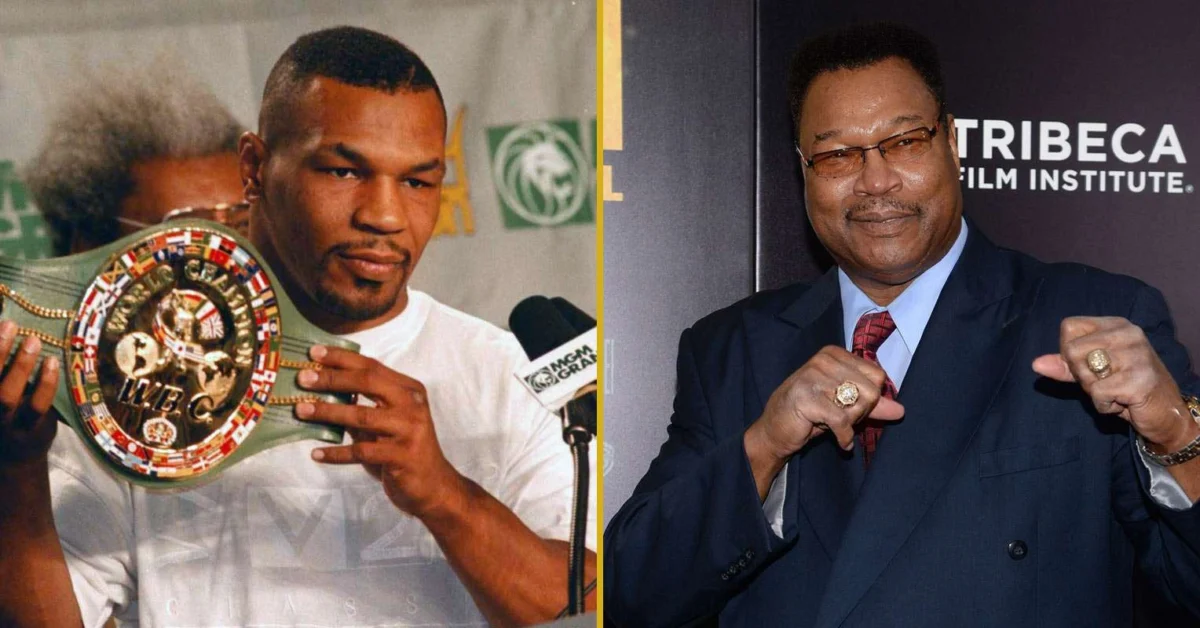
Yet, despite his immense skill and storied longevity, "The Easton Assassin" was not invincible. Like all great fighters, Holmes experienced the bitter taste of defeat as his career progressed into its later stages. One of the most notable and definitive losses of his illustrious career came against the once-ferocious "Iron" Mike Tyson. In their high-profile 1988 showdown, a rampaging Tyson overwhelmed Holmes, securing a dramatic and decisive knockout victory in the fourth round.
Decades after sharing the canvas with Tyson, Holmes recently reflected on his former opponent during an interview with Sky Sports Boxing. The conversation turned toward the historical context of heavyweight greatness, specifically exploring how Tyson might have fared if he had been transported back in time to compete against the legendary figures of an earlier, fiercely competitive golden era of heavyweights—an era defined by relentless pressure fighters, iron-chinned warriors, and tactical masterminds like "Smokin’" Joe Frazier.
When asked whether "Iron" Mike would have been fully competitive and successful against the elite company of that specific bygone era, Holmes offered a candid, highly analytical appraisal of styles and eras. Far from offering sweeping praise or dismissing the hypothetical challenge, Holmes pointed directly to a stylistic matchup that he believed would have spelled trouble for the explosive Brooklyn puncher.
"I ain’t knocking Mike Tyson, no [he wouldn’t survive in that era]," Holmes told Sky Sports Boxing, offering a clear assessment of how styles dictate outcomes in the brutal landscape of heavyweight boxing. Elaborating further on why Tyson would have faced insurmountable stylistic hurdles against the legends of the 1970s, Holmes pinpointed a specific rival who would have neutralized Tyson’s trademark approach: "Joe Frazier would beat him up at his own style. Joe liked guys like that."
To understand Holmes’ evaluation, one must examine the legacy of Joe Frazier, who is universally regarded as one of the most relentless and devastating pressure fighters in the entire history of boxing. Operating with a relentless, forward-moving style, Frazier famously utilized relentless bobbing and weaving to slip punches, close the distance, and unleash devastating hooks from unconventional angles. His conditioning was legendary, and his willingness to absorb punishment in order to deliver his own bone-crushing blows made him a nightmare for any opponent who relied on intimidation and early knockouts.
Frazier’s storied career reached its zenith when he engaged in one of the most anticipated and significant sporting events of the twentieth century. In 1971, he squared off against Muhammad Ali in a monumental encounter dubbed the "Fight of the Century." In a thrilling, brutal battle of attrition, Frazier became the first professional fighter in history to defeat Muhammad Ali, handing "The Greatest" his maiden professional loss after knocking him down in the final round with a signature left hook. Although Ali would ultimately go on to secure redemption by winning their subsequent second and third encounters—including the grueling "Thrilla in Manila"—Frazier’s place in boxing history was forever cemented by his extraordinary exploits.
The later chapters of Frazier’s career, however, were marked by long layoffs and punishing battles both inside and outside the ring. Following a devastating defeat at the hands of the fearsome George Foreman in 1976—another towering icon of that legendary heavyweight era—Frazier stepped away from the sport, taking an extended five-year break from active competition. He eventually made a comeback to the ring in 1981, stepping through the ropes to face Floyd Cummings.
That comeback fight resulted in an underwhelming performance, ending in a hard-fought draw that highlighted the toll the sport had taken on the former champion. Recognizing that he could no longer perform at the elite level that had defined his prime, "Smokin’ Joe" made the definitive decision to draw the curtain on his legendary professional career, hanging up his gloves for good.
Following his retirement, Frazier remained a respected elder statesman of the sport, remembered fondly by fans and contemporaries alike for his immense heart, fierce competitive spirit, and unforgettable wars inside the squared circle. Decades after his retirement, after facing a long and brave battle against cancer, Joe Frazier peacefully passed away in November 2011 at the age of 67, leaving behind a legacy that continues to be studied and revered by boxing purists worldwide.