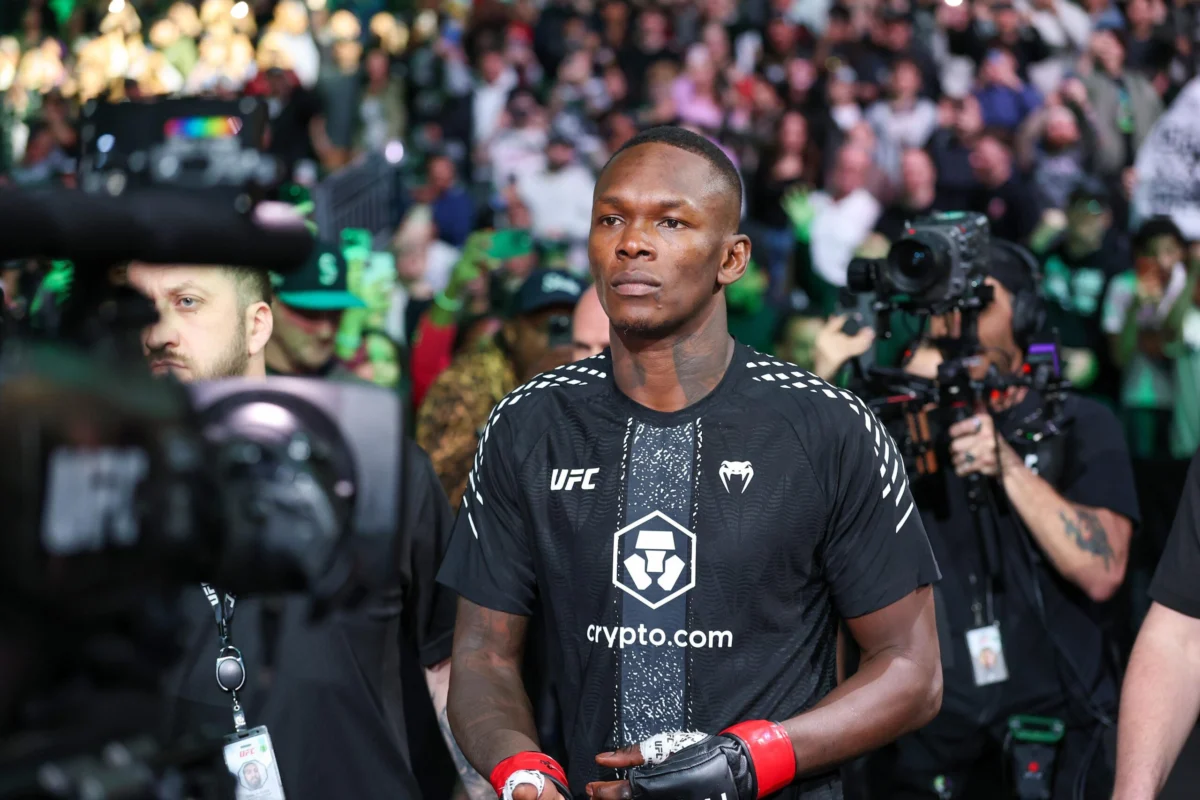
Israel Adesanya is approaching the twilight of his storied combat sports career with a singular, resolute objective: when he walks away from the fight game, he wants to do so with absolutely no regrets and zero intention of ever looking back.
The two-time UFC middleweight champion finds himself navigating the most difficult stretch of his professional tenure, mired in a career-worst slump that has seen him drop his past four consecutive outings. At 37 years old and with more than 16 grueling years of professional combat sports mileage accumulated on his body, Adesanya is acutely aware that the final chapter of his athletic journey is rapidly approaching. However, rather than letting time slip away or being forced out by the inevitable erosion of his physical faculties, Adesanya is intent on dictating the terms of his exit. He wants to leave no lingering window of opportunity that could convince him to feel the itch to compete inside the Octagon again.
Reflecting on the psychological hurdles that frequently plague legendary athletes transitioning away from the sports that defined their lives, Adesanya recently opened up about his future on his official YouTube channel, offering a candid look into his mindset regarding retirement.
"I think, personally, after all this is said and done, every other month, maybe every three months, I’ll need or want to do something," Adesanya shared with his audience. "Not need, I don’t know. Maybe I’d want to do something that’s risky like run with the bulls. I might jump in the World Series of Poker. See, my secret with poker is I don’t know what the f*ck I’m doing, which is my best weapon, I believe. But I’d like to do something like that, just to risk it, because I like the adrenaline. I love the adrenaline, but I guess people have a hard time leaving this life."
The struggle to walk away permanently is a well-documented phenomenon within combat sports history. The industry is littered with the ghosts of former superstars who either hung on far past their competitive expiration dates or discovered too late that they could not cope with the sudden vacuum left by the absence of competition. Legends across disciplines, from former UFC champions such as Chuck Liddell, B.J. Penn, and Conor McGregor, to heavyweight boxing megastars like Tyson Fury, have famously wrestled with the elusive nature of retirement.
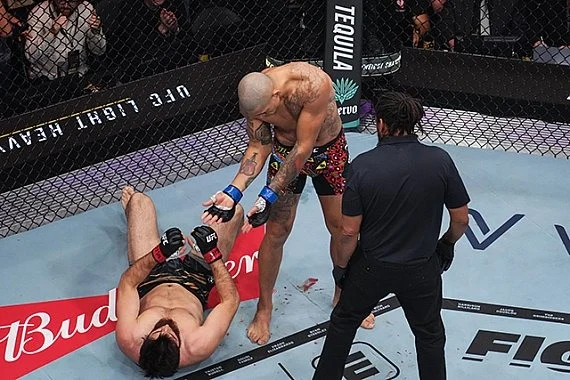
For Adesanya, whose legacy as one of the greatest mixed martial artists to ever compete in the 185-pound division is already firmly cemented in the history books, the danger of overstaying his welcome has become a palpable reality. His recent defeats—losses inside the distance against surging contenders and elite rivals including Joe Pyfer, Nassourdine Imavov, and former champion Dricus du Plessis—serve as stark reminders of the unforgiving nature of elite mixed martial arts. Recognizing these physical realities has only sharpened his focus on ensuring his eventual departure is final, definitive, and untainted by the temptation of a comeback.
"I’ve seen it in this game. The accolades, the spotlight," Adesanya explained. "When they get done, they may come out of retirement because they don’t know what to do with themselves. I never want to be that guy, so once I’m done, I’m f*cking done."
Beyond escaping the gravitational pull of the competitive spotlight, Adesanya is actively looking forward to the simple luxury of reclaimed personal freedom—a commodity that has been in exceedingly short supply during his dominant years at the peak of the middleweight division. Operating as the standard-bearer for the UFC 185-pound weight class required sacrifices that extended far beyond the gym, forcing him to turn down lucrative external opportunities that conflicted with the grueling demands of preparing for elite championship defenses.
"Just the responsibility of being the champ," Adesanya noted, reflecting on the heavy obligations of his championship reigns. "The example I’ll give, I won’t name drop, but I got offered two roles in really big movies, and I turned them down because I had two different title defenses to do. Now, a role possibly just came up, and they’re like, ‘Yeah, we can work around you,’ this and that, and again, I’m not fighting four times a year this time. So I want to do, like, twice a year, you know?"
Crucial to shaping this transition has been the mentorship of those who have successfully navigated the treacherous waters of retirement at the absolute highest level. Adesanya highlighted the influence of former two-division UFC champion Georges St-Pierre, whose guidance has provided a vital sounding board during this reflective period of his career. St-Pierre, widely regarded as one of the few fighters who managed to walk away from the sport on his own terms and stay retired, has served as a steady compass for the former middleweight kingpin.
"And also talking to Georges [St-Pierre], he’s like my Fairy Godmother, he just pops up at the most random places," Adesanya said with a smile. "He’ll just drop gems and just kind of let you know where you are, because not many have been to where we’ve been, so they can’t relate, and Georges can. He’s retired and he’s done it, clocked the game at the highest level. So for me, when he tells me something, I listen. It holds weight."
This network of high-level advice, combined with deep introspection, has left Adesanya feeling increasingly confident about the vast landscape of opportunities waiting for him outside of active competition. Rather than dreading the silence that follows the final walk from the Octagon, he is actively laying the groundwork for a dynamic post-fighting life filled with content creation, global travel, and creative ventures that can satisfy his craving for new experiences without requiring him to step back into a cage.
"So now after talking to him and also consulting with my own self, I kind of feel like I have opportunities now," Adesanya concluded. "Doing stuff like this, so much content we filmed, more that we can film, we’re going to be traveling the next few weeks and then I’ll just line some shit up. It’s fun and it kind of gives me the reassurance that I’ll be OK after this shit is over, like, I don’t need to be the guy who needs to fight."