The annals of boxing history are filled with legendary bouts, iconic rivalries, and the complex, often bittersweet decisions that fighters make long after their prime years have passed. Few figures loom as large in the collective memory of the sport as "Iron" Mike Tyson, whose meteoric rise in the 1980s redefined the heavyweight division. Yet, for all the glamour, financial reward, and historical significance attached to sharing a ring with one of the most devastating punchers the sport has ever seen, the psychological and physical toll often lingers for decades. Among those who know this reality firsthand is legendary heavyweight champion Larry Holmes, who candidly admitted years later that his decision to step out of retirement to face the ferocious young contender remains one of the few true regrets of his storied career.
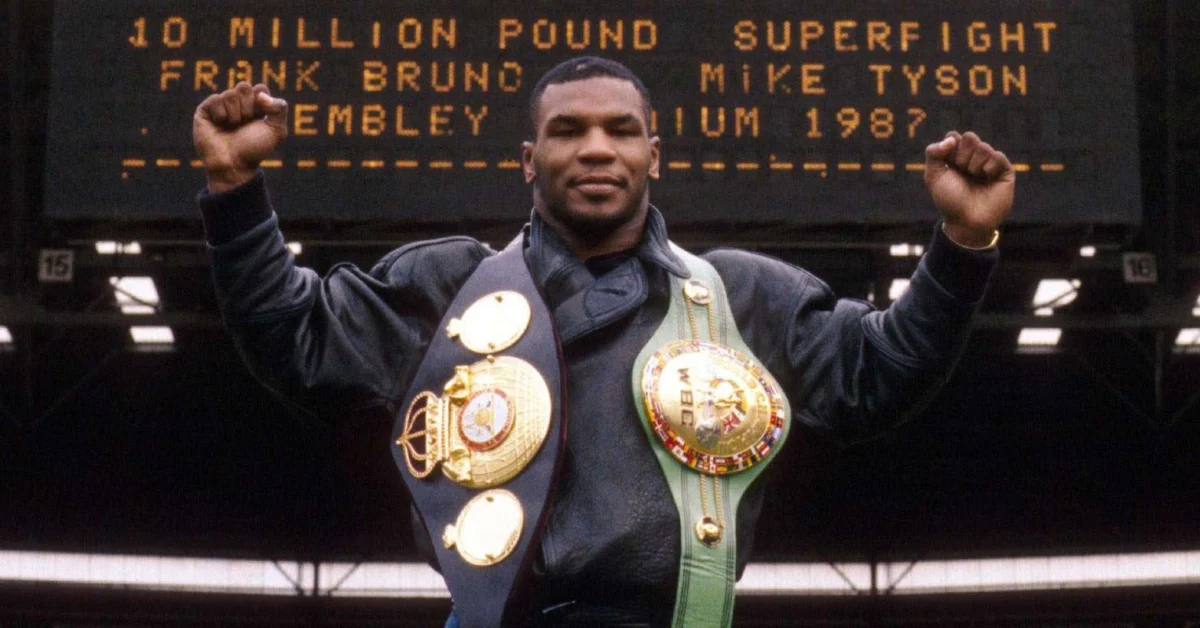
To understand the magnitude of that encounter, one must look back at the sheer aura of invincibility that surrounded Mike Tyson during the peak of his powers. When Tyson burst onto the professional boxing scene, he was not merely winning fights; he was obliterating elite competition with a terrifying blend of speed, defensive head movement, and concussive punching power. His explosive style quickly earned him an astonishing 19 consecutive knockout victories in his first 19 professional fights, with a staggering 12 of those coming inside the very first round. Opponents routinely walked into the ring already psychologically defeated, overwhelmed by the ferocious pressure and the relentless forward momentum of a fighter who seemed almost superhuman.
The defining moment of Tyson’s early career arrived in 1986 when he challenged Trevor Berbick for the WBC world heavyweight title. In a performance that cemented his status as a generational phenomenon, Tyson blasted Berbick out in the second round of their bout, capturing the green belt and etching his name into the record books. With that victory, he became the youngest heavyweight champion in boxing history at just 20 years old—a remarkable record that stands to this very day, defying decades of challengers who have tried to surpass it.
Tyson’s relentless march did not stop with a single title. He continued his unification campaign by securing victories over WBA champion James Smith and IBF champion Tony Tucker, officially consolidating the belts to become the undisputed heavyweight champion of the world. During his dominant reign, Tyson went on to make six successful defenses of his crown, dispatching challengers with ruthless efficiency before suffering the first shocking defeat of his professional career against James "Buster" Douglas in Tokyo in 1990—an upset that is still widely regarded as one of the greatest surprises in sports history.
Long before that fateful night in Tokyo, however, Tyson crossed paths with another titan of the division during his undisputed reign. That fighter was Larry Holmes, who had carved out his own legendary status as one of the most dominant and technically proficient heavyweight champions in boxing history, holding the world heavyweight championship between 1978 and 1985. Holmes had ruled the division with a magnificent left jab and exceptional ring generalship, coming tantalizingly close to matching Rocky Marciano’s legendary undefeated retirement record before falling to Michael Spinks. By the time Holmes was enticed back to the ring to face the younger, peak-version Tyson, he had already stepped away from the sport and tasted the quiet life of retirement.
In a reflective interview with The Telegraph years after hanging up his gloves for good, Holmes opened up about the complex emotions surrounding that 1988 showdown. While acknowledging Tyson’s immense and undeniable talent, Holmes was brutally honest about the error in judgment that brought him out of retirement. He explained that returning to the ring against such a dangerous opponent at that stage of his career was a mistake, even as he maintained steadfast confidence in how a matchup between the two would have unfolded if they had fought during their respective physical primes.
Reflecting on the bout, Holmes admitted that stepping out of retirement was ill-advised. He noted that he fought Mike Tyson, lost the encounter, and was ultimately stopped by the champion. While giving full credit to Tyson’s extraordinary punching power—a facet of the younger fighter’s game that simply could not be dismissed or underestimated—Holmes maintained that the stylistic matchup would have favored him during his absolute best years. He pointed out that while Tyson’s trademark strategy involved standing directly in front of opponents and attempting to bully them backward against the ropes, that tactic would not have succeeded against him in his prime. In Holmes’ view, his technical mastery, superior reach, and exceptional jab would have seen him emerge victorious had they collided on equal footing.
The encounter with Tyson in 1988 did not spell the permanent end of Holmes’ relationship with boxing, nor did it extinguish his remarkable durability. Following his defeat to "Iron" Mike, Holmes demonstrated incredible longevity by continuing his professional career across multiple decades. He fought sporadically through the 1990s and into the 2000s, proving that his legendary stamina and boxing IQ remained potent weapons long after most of his contemporaries had permanently left the sport.
That remarkable longevity culminated in July 2002, when Holmes finally brought the curtain down on his legendary career at the age of 52. In his final professional appearance, Holmes secured a victory against Eric "Butterbean" Esch, capturing the 75th win of a career that spanned nearly three decades. Yet, even with dozens of victories against elite opposition and a rightful place in the International Boxing Hall of Fame, the brief chapter involving Mike Tyson remains a unique point of reflection—a reminder of the fine lines that define the legacies of boxing’s greatest champions.