Frank Grillo has never really known how to sit still. Long before Hollywood came calling, bringing with it high-budget action movies and character roles that demanded he look like he could legitimately handle himself in a physical altercation, Grillo was a dedicated athlete. He wrestled, lifted weights, boxed, and trained in jiu-jitsu long before fitness became a prerequisite for a paycheck. He developed a relationship with physical training that had very little to do with preparing for a specific acting role and everything to do with who he was as a person.
Today, the 60-year-old actor still maintains a rigorous daily training schedule. He boxes for roughly 90 minutes a day, follows that up with strength and conditioning five or six days a week, and remains deeply fascinated by combat sports, physical performance, and the sheer limits of what the human body can accomplish. For Grillo, staying fit is not merely a Hollywood obligation or a contractual requirement; it is an intrinsic part of his identity.
When we recently caught up with the veteran actor, he was right between workouts, eating a modest bowl of cottage cheese and reflecting on a wide range of topics. From his grueling physical preparation for the action-packed dark comedy Boss Level to the medical realities of testosterone replacement therapy, mental health advocacy, personal faith, sobriety, and why modern men need to take a far more responsible and informed approach to their health as they age, Grillo offered an unfiltered look at life in his third act.
Building for More Than Just the Job
If there is one specific project that tested Grillo’s physical limits more than any other in his extensive filmography, it was playing Roy Pulver in the sci-fi action film Boss Level. In the movie, Grillo portrays a former special forces operative who finds himself trapped in an endless, deadly time loop, forced to fight his way through the exact same sequence of assassins and mercenaries repeatedly. The production didn’t simply require him to look like a stereotypical action hero on screen; it demanded that he move, react, and fight like one for the entire duration of the shoot.
To prepare for the grueling role, Grillo altered his life for eight weeks. He embedded a strength and conditioning coach and a boxing trainer directly into his living situation, constructing a fully functional gym right in the house where he was staying during production. His daily regimen consisted of intense boxing sessions for cardiovascular endurance followed by heavy lifting routines designed to pack on dense muscle mass quickly.
Working alongside his trainer, Brendan Johnson, Grillo engaged in a powerlifting-style routine that fundamentally transformed his physique. He notes that they successfully got him significantly stronger, remarkably big, and exceptionally lean for the cameras. However, that cinematic transformation came with a heavy physical toll. Grillo naturally walks around at a lean 165 pounds. For Boss Level, he pushed his body weight up to roughly 190 pounds while maintaining a very low body fat percentage.
The most difficult part of the process, he admits, wasn’t putting on the muscle, but rather getting rid of it once filming wrapped. Shedding the excess mass was not as simple as backing off the weights for a couple of weeks. It took approximately a full year for Grillo to safely return to his natural, sustainable operating weight. Reflecting on the experience today, he is candid about the toll it took, stating that he would never want to do that again because he is simply too old for that kind of extreme weight fluctuation. It is a revealing perspective from an actor who has spent decades pushing his physical boundaries, proving that while extreme cinematic transformations look impressive on the big screen, the human body ultimately keeps the receipts.
Training Has Never Been About Hollywood
The great irony of Grillo’s fitness journey is that he does not actually need a movie role to motivate him to train. Even when he is between filming schedules and completely detached from any upcoming action projects, his daily routine remains demanding and uncompromising. He continues to box for roughly an hour and a half every day and incorporates structured strength and conditioning work into five or six days of his week.
While his training methodologies have naturally evolved over the years, his consistency has never wavered. Wrestling introduced him to the world of competitive athletics during his youth, while boxing, jiu-jitsu, CrossFit, and traditional weightlifting have each served as primary focal points at different stages of his life. He experimented with CrossFit during his time living in New York, admitting that he became somewhat obsessed with it for a period before realizing it was taking too severe of a toll on his central nervous system, especially when combined with his daily boxing regimen.
Ultimately, combat sports became the discipline that held his attention above all others. Grillo’s deep fascination with the global culture of fighting led him to travel around the world for Netflix’s Fight World, a documentary series that allowed him to immerse himself in diverse fighting communities and explore why different cultures developed their own unique approaches to hand-to-hand combat. That lifelong fascination extends directly to jiu-jitsu, which he began practicing long before the martial art achieved its current mainstream popularity, as well as his continuous, close following of professional boxing and mixed martial arts. For Grillo, the fundamental appeal of combat sports is not about looking tough for an audience, but rather about what the grueling process of training reveals about a person’s inner character.
From ‘Boss Level’ to ‘Tulsa King’
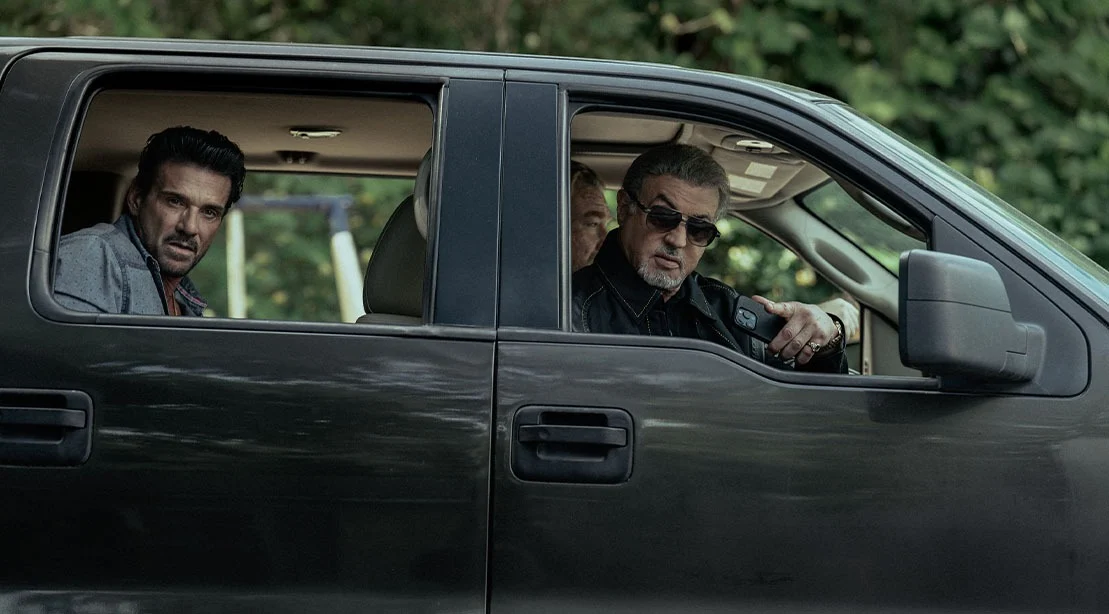
Grillo’s undeniable physicality has become an increasingly recognizable cornerstone of his screen presence, but his recent work on the hit Paramount+ series Tulsa King has allowed him to explore a different, more nuanced side of the modern action genre. Starring alongside Sylvester Stallone, the series brought Grillo into the direct orbit of one of the legendary actors who helped define the larger-than-life action stars Grillo grew up admiring as a kid.
His relationship with Stallone extends far beyond simply sharing television screen time. Grillo has known and worked in the same professional circles as Stallone for years, and he views the opportunity to work alongside him as a direct connection to the generation of cinematic icons who shaped his own personal approach to physical performance and action storytelling. Alongside Stallone and Arnold Schwarzenegger—whom Grillo has also come to know through mutual friends and professional projects—these figures have served as profound sources of inspiration and motivation throughout his life and career.
That connection carries deep personal significance for Grillo because Stallone embodies the very traits he respects most in the entertainment industry: incredible longevity, disciplined physical preparation, and the rare ability to continuously reinvent oneself without ever abandoning the physical credibility that made audiences connect with them in the first place. Whether he is preparing for a complicated fight choreography sequence, stepping into a demanding television role, or simply showing up for his relentless daily training sessions, Grillo approaches his work with the same relentless work ethic he has maintained since childhood. The primary difference today is that Grillo is far more intentional about what it takes to sustain that high level of performance over the long haul. Factors like proper recovery, hormone optimization, sleep hygiene, and mental health have all integrated into a much broader personal philosophy about aging capably.
From Joe Weider to the Olympia
That lifelong appreciation for physical culture also connects Grillo directly to the foundational history of fitness publishing. He grew up during the golden era when fitness pioneers like Joe Weider and Arnold Schwarzenegger were actively helping to transform bodybuilding from a niche, misunderstood subculture into a massive, mainstream fitness movement that captured the global imagination.
Today, Grillo frequently trains at Gold’s Gym in Venice, California, where images of Weider and Schwarzenegger line the walls as a constant reminder of the sport’s rich history. He refers to the legendary gym simply as "the Mecca." Although Grillo does not necessarily view himself as a traditional competitive bodybuilding follower, his reverence for the sport runs deep, particularly when it comes to the iconic physiques and magnetic personalities that defined its most celebrated decades.
For Grillo, bodybuilding has always represented far more than just the mechanical act of building muscle mass. It is a testament to discipline, bodily symmetry, strict athleticism, and the relentless pursuit of physical excellence. He fondly recalls admiring the aesthetic standards set by legends like Arnold Schwarzenegger, Frank Zane, and Lee Haney during his formative years, noting that their physiques were defined by a classic beauty and balance. That enduring appreciation makes the prospect of attending major bodybuilding events like the Olympia a natural fit for Grillo, who views such gatherings as a celebration of the exact same physical culture that influenced him when he first picked up a Joe Weider weight set as a 12-year-old kid. While his personal training has shifted toward combat sports and functional strength, he remains deeply grateful for the path paved by bodybuilding icons.
Grit’s Not Going to Carry You
For the vast majority of his life, Frank Grillo approached the aging process the exact same way he approached his grueling athletic training: by simply working harder, maintaining ironclad personal discipline, and refusing to slow down. Eventually, however, routine bloodwork ordered by his physician provided an undeniable wake-up call, forcing him to reconsider whether sheer willpower and discipline alone were enough to sustain the high level of physical and mental performance he demanded of himself.
Grillo’s physician, Dr. Rand McClain, discovered during a routine checkup that the actor’s natural testosterone levels were remarkably low. Grillo recalls his readings hovering around a meager 200 nanograms per deciliter, a clinical finding that prompted Dr. McClain to openly question how the actor was even managing to maintain such an exhausting, high-intensity training schedule and still recover properly day after day. Grillo’s initial, stubborn reaction was simply that he had always possessed enough grit and mental toughness to push through anything.
His doctor challenged that assumption directly, delivering a piece of advice that ultimately shifted Grillo’s perspective on aging: "Grit’s not going to carry you through the third act of your life."
That frank conversation prompted Grillo to seriously explore testosterone replacement therapy under strict medical supervision. He admits that he initially had reservations and questioned whether he truly needed it, given his relentless training habits. However, after reviewing his comprehensive medical data and committing to the protocol, he began experiencing noticeable physiological changes that he had not anticipated. He realized in hindsight just how chronically fatigued he had been operating before treatment, and how much his substandard recovery times had been quietly holding back his true physical potential.
Grillo frequently compares the realization to the clarity he found when he finally decided to give up alcohol. Much like his previous belief that drinking wine daily wasn’t negatively impacting him—only to realize how much better he felt once he stopped entirely—his experience with TRT brought a profound awakening. It genuinely changed his life, altering both his physical appearance and his daily energy levels for the better. Furthermore, the adjustments yielded massive improvements in his sleep architecture. Where he once scraped by on a meager four or five hours of fragmented sleep each night, he now consistently secures closer to nine hours of restorative rest.
Understanding TRT Before Taking It
As Grillo has become more publicly open and vocal about the realities of testosterone replacement therapy and men’s health, he is careful to emphasize that TRT should never be treated as a quick aesthetic shortcut, nor something men should blindly pursue simply because a celebrity or peer is utilizing it. His primary piece of advice to anyone considering hormone optimization is straightforward and non-negotiable: get comprehensive bloodwork done first.
This point is paramount for Grillo because individual hormone profiles vary wildly from person to person. Simply reaching a certain chronological milestone age does not automatically mean a man has clinical testosterone deficiencies, just as feeling tired or sluggish does not automatically make someone a viable candidate for hormone therapy. Emphasizing that every human body is entirely unique, Grillo notes that some men at age 50 might naturally boast robust testosterone levels well into the high hundreds, while others might require medical intervention.
For these reasons, Grillo firmly believes that any hormone protocol must begin with a qualified physician, objective diagnostic testing, and proper medical oversight, even within the realm of modern telemedicine. This philosophy is precisely what drew him to become involved with initiatives like the $99 TRT Club. Rather than allowing hormone therapy to be trivialized as just another superficial trend within the crowded fitness industry, Grillo advocates for a conversation anchored firmly in consumer education, rigorous diagnostic testing, pharmaceutical-grade medical products, and deeply responsible personal decision-making.
Looking Beyond TRT
The broader cultural conversation surrounding men’s health is expanding rapidly into realms far beyond traditional testosterone replacement therapy. Cutting-edge therapeutic approaches—including advanced peptides, emerging gene therapy, and other novel scientific developments aimed at promoting biological longevity and sustained physical performance—are becoming common points of discussion among elite athletes and aging men striving to maintain their vitality.
While Grillo is genuinely fascinated by the scientific possibilities these innovations represent, he maintains a healthy, cautious skepticism about moving too quickly into uncharted medical territory. He notes that the scientific advancements happening across peptides and gene therapy hold incredible promise not just for extending human lifespan, but for genuinely improving day-to-day physical existence as people grow older.
However, his primary concern lies in what frequently happens when commercial innovation outpaces thorough, long-term clinical research. Grillo points to past generations of bodybuilders and athletes who eagerly experimented with novel chemical substances decades before researchers fully understood their severe long-term biological consequences. He firmly believes that today’s fitness consumers must learn valuable lessons from those historical mistakes rather than blindly repeating them.
That inherent caution governs his own personal health decisions. Grillo prefers to thoroughly understand any substance he introduces into his biological system, give new treatments adequate time to prove their safety, and avoid constantly chasing the newest commercial wellness product simply because it has achieved viral popularity. Emphasizing the urgent need for well-educated consumers, Grillo stresses that the companies and individuals selling health products carry an immense ethical responsibility to be infinitely more cautious and responsible than the everyday people purchasing them. For Grillo, the future of health optimization is undeniably bright, but navigating it successfully requires patience, critical thinking, and a commitment to safety.
The Conversation Men Need to Have About Mental Health
The physical realities of aging represent only one vital half of the comprehensive wellness equation Grillo believes men need to openly discuss. His own personal history with overcoming sobriety challenges and dealing with the devastating loss of close friends to suicide has made mental health an equally foundational pillar of his personal definition of overall health and well-being.
Grillo points out that when an individual is struggling internally and failing to maintain a healthy mental state, simply adding physical variables or hormone protocols into the mix is rarely an effective solution. If someone feels deeply despondent, lost, or completely incapable of finding joy and purpose in their daily life, medical interventions are not a substitute for addressing the root psychological distress.
While Grillo’s personal instinct during difficult life periods has frequently been to turn to physical training—sweating it out in the gym and utilizing the natural endorphin release of exercise to clear his head—he is quick to acknowledge that physical exertion is not a universal cure-all. Exercise is an incredible tool, but it is never a replacement for qualified professional psychological help when real trauma or clinical depression is present.
These personal experiences have also made him far more observant of subtle behavioral shifts in the people surrounding him in everyday life, teaching him to look out for warning signs like sudden withdrawal, isolation, or a noticeable loss of happiness. That profound sense of awareness even extends out into the digital world, where strangers frequently reach out to him via social media to share deeply personal accounts of pain and struggle. While Grillo is the first to admit that he cannot solve a stranger’s life problems, he makes a concerted effort to point them toward professional help, offer words of encouragement, and simply listen when appropriate. In his view, offering the simple kindness and attention of another human voice can sometimes make a life-saving difference for someone walking through a dark season, representing one of the most important responsibilities that comes with maintaining a public platform.
Faith Is Worth the Fight
When asked what ultimately keeps him centered amidst the chaotic, high-pressure demands of a demanding Hollywood career, family life, daily training schedules, and the relentless pace of the entertainment industry, Grillo does not hesitate for a single second. His answer is simple and absolute: his faith.
Maintaining a steadfast spiritual foundation has served as his internal anchor, helping him successfully navigate both the dizzying heights of professional success and the profound valleys of personal hardship. He openly shares that he maintains a constant, active dialogue with God throughout his daily life, anchored by a deep, unshakeable sense of blind faith.
Furthermore, Grillo describes himself as a lifelong, relentless seeker of knowledge and truth. Whether he is studying the nuances of physical training techniques, mastering complex combat arts, exploring cutting-edge longevity science, or simply striving to achieve a deeper understanding of his own internal psychology, that unquenchable curiosity is what keeps him feeling vital and young at heart.
That intellectual and spiritual curiosity may well be the invisible thread connecting every single facet of his life. Rigorous physical training keeps his body engaged and capable, combat sports keep his competitive spirit sharp, continuous learning keeps his mind active and inquisitive, and his deeply rooted faith provides an unshakeable sense of spiritual grounding. Being physically fit is undeniably an essential piece of the puzzle, but for Grillo, all of the mental, emotional, and spiritual components are just as critical to living a full life.
Still Moving Forward
There is currently no indication whatsoever that Frank Grillo has any plans to slow down his pace. At 60 years old, he is still training religiously every day, still stepping into the boxing ring, still seeking out new challenges in combat sports, still riding dirt bikes, and still aggressively hunting down fresh personal and professional experiences.
Even as he speaks candidly about the realities of growing older, his primary focus is entirely removed from the futile pursuit of trying to recreate the exact physical form he possessed at 25. Instead, his entire objective is centered on maintaining the functional capacity to perform, recover, explore, and actively enjoy the myriad experiences that make life worth living. He understands deeply that aging requires a fundamental shift in strategy, but he refuses to accept that growing older means surrendering the pursuit of excellence.
The young boy who first started lifting a basic Joe Weider weight set at 12 years old is still unmistakably present inside him. The dedicated wrestler is still there. The battle-tested boxer is still there. The committed actor who willingly built an entire home gym just to survive the grueling physical demands of Boss Level is still there.
And above all else, the lifelong gym rat remains firmly at the wheel. For Grillo, the ultimate goal of aging has never been about trying to permanently stop the ticking clock. It is about continuing to move forward with purpose while the clock keeps running. And if Grillo has any say in the matter, he intends to keep moving at full speed for a very long time to come.