Mike Tyson possessed a sensational win-to-knockout ratio that sent shockwaves through the sport of boxing during his prime, leaving an indelible mark on the heavyweight division that few fighters in history could ever hope to replicate.
"Iron" Mike burst onto the heavyweight scene during the mid-1980s, making his professional debut in the spring of 1985 when he was just 18 years old. Operating under the legendary tutelage of Cus D’Amato, Tyson quickly became a terrifying force inside the squared circle, utilizing his ferocious peek-a-boo style, blinding hand speed, and devastating concussive force to dismantle opponents before they even had a chance to settle into the bout.
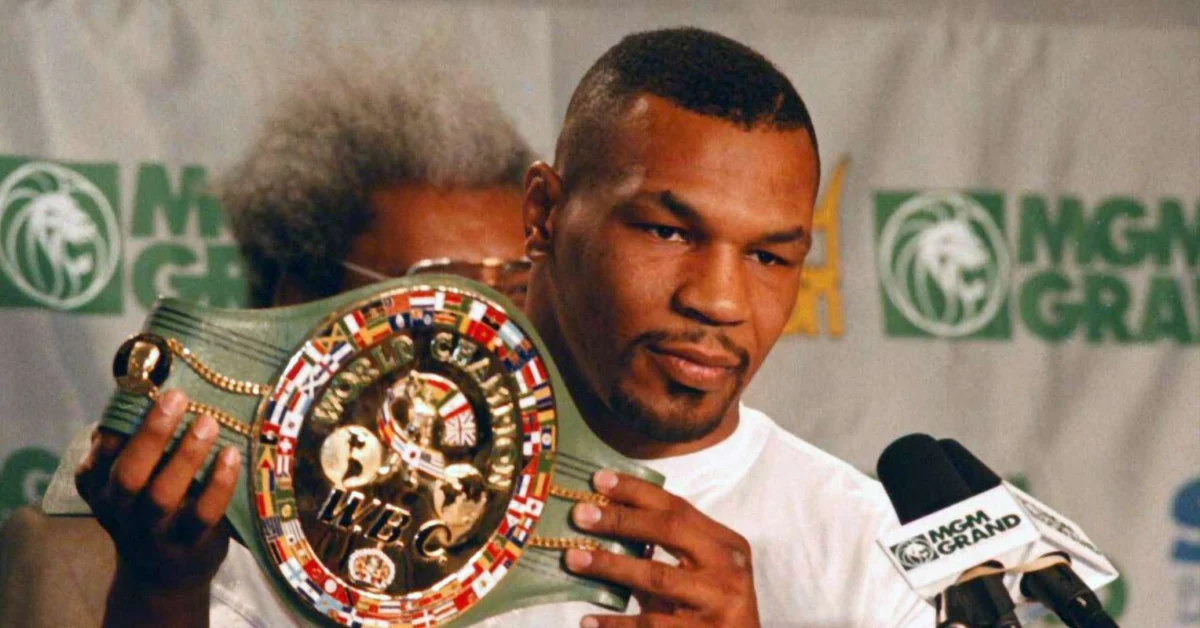
He won his first 19 career outings via stoppage, with an astonishing 12 of these victories coming in the opening round alone. This unprecedented surge of dominance captured the imagination of the sports world and quickly propelled him toward world title contention. Tyson captured world honors for the first time just one year after his professional debut when he stepped into the ring to face Trevor Berbick in November 1986. With a devastating left hook in the second round, Tyson knocked Berbick out cold, capturing the WBC heavyweight championship and etching his name into the history books as the youngest-ever heavyweight champion at just 20 years old.
Tyson’s reign as world champion lasted four dominant years, a period during which he successfully defended his crown and defeated a stellar roster of top-tier contenders, including Michael Spinks, Frank Bruno, and Larry Holmes. His definitive victories over WBA champion James Smith and IBF champion Tony Tucker cemented his legacy further, seeing "Iron" Mike unify the division to become the undisputed heavyweight champion of the world. For a time, it seemed as though nobody could solve the riddle of Tyson’s immense physical gifts and psychological intimidation inside the ring.
However, boxing is a sport where every champion eventually meets their match. Tyson’s historic undefeated streak and initial championship reign were eventually brought to a stunning halt when he was beaten by James "Buster" Douglas in Tokyo in February 1990, in what remains widely regarded as one of the most monumental upsets in the history of sports.
Years later, as his career wound down through various comebacks and high-profile battles, another heavyweight managed to secure a place in the history books alongside Douglas. One fighter who actually got the better of Tyson was Irishman Kevin McBride, who famously defeated the heavyweight icon back in June 2005. The bout at the MCI Center in Washington, D.C., saw McBride wear down the former champion, ultimately leading to Tyson quitting on his stool before the start of the seventh round, a moment that marked the final professional fight of Tyson’s storied career.
Despite holding a career-defining victory over "Iron" Mike, McBride has always maintained a profound respect for the sheer physical capabilities of the man he shared the ring with. Years after their fateful encounter, the Irish heavyweight once paid homage to the thunderous punching power that made Tyson one of the most feared athletes on the planet.
Speaking in an interview with Bloody Elbow, McBride claimed that he can still feel the incredible power of "Iron" Mike two decades since they faced each other across the canvas. Reflecting on the lingering physical impact of taking punches from the former undisputed champion, McBride offered a vivid reminder of what makes Tyson’s legacy so enduring.
"Mike Tyson’s power is unbelievable. I still feel it to this day, more than 19 years later," McBride stated. "He hits so hard and power is the last thing to go. George Foreman proved that against Michael Moorer. Sure he was a bit younger than Mike is now but power-wise it is one of the biggest punches in history."
McBride’s assessment speaks to a fundamental truth about combat sports: while speed, reflexes, and stamina inevitably fade as an athlete ages, raw, natural punching power remains a weapon that lingers long after a fighter has hung up their gloves. By comparing Tyson’s enduring strength to legendary heavyweight champion George Foreman—who famously recaptured the world heavyweight title later in life by relying on his own legendary, clubbing power—McBride highlighted the rare tier of atomic punchers that Tyson occupied throughout his career.
Even as decades have passed since his prime years in the 1980s, Tyson’s name continues to generate immense global interest, drawing headlines and polarizing reactions whenever he steps back into the public eye.
Tyson made a sensational yet controversial return to professional boxing last November when he faced internet personality-turned-boxer Jake Paul at the massive AT&T Stadium in Arlington, Texas. The bout, which was broadcast globally to millions of viewers, followed a frustrating eight-round contest that ultimately saw Paul awarded a decision victory over the veteran icon. The event drew massive commercial attention and record-breaking viewership numbers, but it also received considerable criticism from traditional boxing fans, purists, and sports pundits globally who questioned the competitive nature and the spectacle surrounding a matchup featuring a boxing legend well into his later years.
Nevertheless, whether dominating the heavyweight division as a teenager in the 1980s, trading blows with contemporary heavyweights like Kevin McBride in the mid-2000s, or drawing the eyes of the entire sporting world in modern stadium bouts, the aura surrounding Mike Tyson remains entirely unique. For those who shared the ring with him, the memory of his ferocity is not merely a historical footnote, but a physical reality that continues to resonate long after the final bell has rung.