


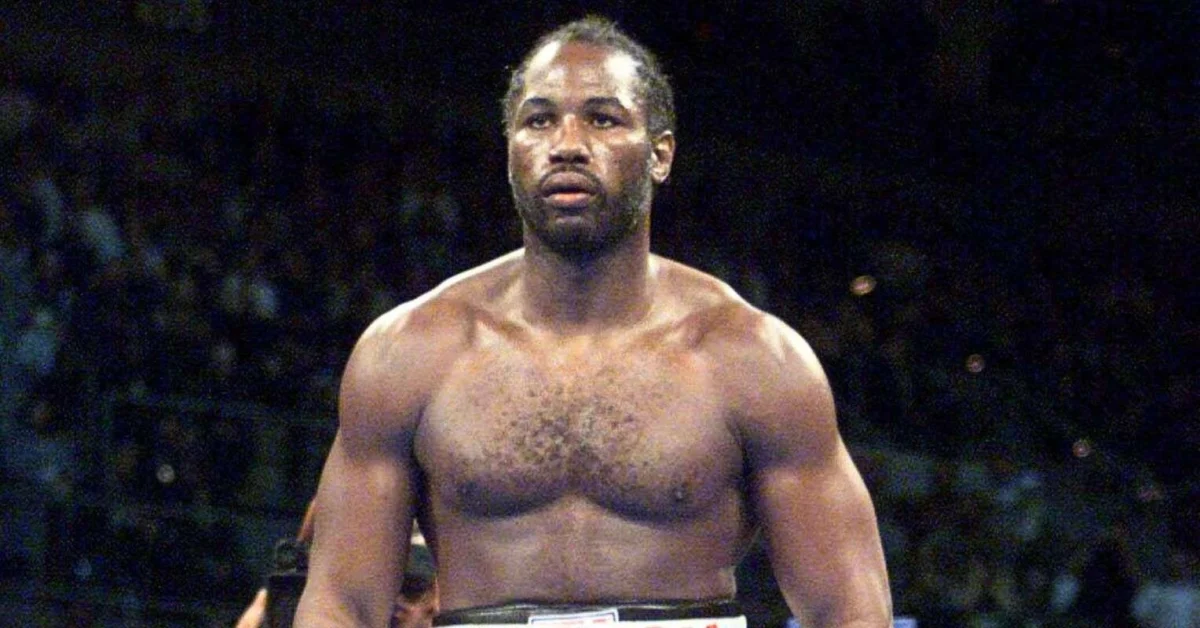
Lennox Lewis stands firmly in the history books as one of the most dominant, technically proficient, and physically imposing heavyweight champions of the modern era. Standing tall with a towering frame, a devastatingly sharp and powerful jab, and an exceptional ring IQ that allowed him to systematically dismantle nearly every elite opponent placed before him, Lewis carved out a legendary career. He achieved the status of undisputed heavyweight champion and cleared out the best contenders of his generation. Yet, the sport of professional boxing has always operated under an unforgiving law: even the most elite and seemingly invincible fighters remain vulnerable, particularly when the dangerous trap of complacency sets in and an opponent is carelessly underestimated.
That timeless boxing truth manifested in spectacular fashion in April 2001, when Lennox Lewis stepped into the ring to face Hasim Rahman for a world heavyweight title defense hosted in the unique and challenging climate of South Africa. At the time, the bout was widely viewed by the global boxing public, promoters, and media as little more than a routine tune-up fight. The grand strategy for Lewis and his team was clear: secure a straightforward victory in South Africa, shake off any ring rust, and then move directly into a lucrative, high-stakes mega-fight against Mike Tyson. The prospective Tyson showdown promised astronomical pay-per-view numbers and massive global attention, overshadowing the immediate defensive obligation standing in the opposite corner.
Hasim Rahman, while recognized as a skilled and dangerous puncher with respectable athletic credentials, entered the championship environment with a notable handicap. He had never before fought for a recognized world title, and oddsmakers firmly cemented that status by installing him as a massive 15-to-1 underdog. The consensus among ringside observers, analysts, and fans was that Lewis would easily navigate the early rounds, impose his physical superiority, and eventually secure a stoppage or a wide decision victory before turning his full attention toward the much-anticipated Tyson sweepstakes.
However, the preparation leading up to the defense in Johannesburg told a vastly different story behind closed doors. "The Lion"—as Lewis was famously nicknamed—had allowed distractions to infiltrate his training camp, spending a significant portion of his preparation period away from the gym to film a motion picture. Consequently, the champion arrived in South Africa late, failing to adequately acclimate to the grueling African altitude and environmental conditions. Acclimatization is a critical factor for elite endurance athletes performing at high physical output, and the failure to respect the local climate would soon extract a heavy toll inside the squared circle.
In stark contrast, Hasim Rahman arrived in South Africa well in advance, fully acclimatized to the local environment, and possessed an unmatched level of hunger and determination. Rahman understood the magnitude of the opportunity before him and left nothing to chance in his preparation. As the opening bell sounded and the fight unfolded under the African lights, the visual evidence of Lewis’s inadequate preparation quickly became apparent. The champion looked uncharacteristically sluggish, flat-footed, and devoid of his usual sharp reflexes and snapping jab, allowing the confident underdog to dictate the rhythm and grow increasingly comfortable as the rounds progressed.
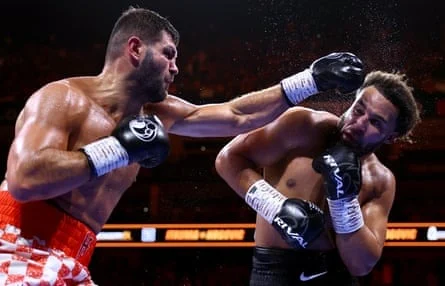
The defining moment arrived suddenly in the fifth round. Rahman, sensing the champion’s vulnerability and physical fatigue, uncorked a devastatingly clean, looping overhand right. The punch caught Lewis flush on the jaw, traveling with blinding speed and catastrophic leverage. The impact was instantaneous and absolute; Lewis went down hard to the canvas, crashing awkwardly, and it was immediately obvious to everyone in the arena that he would not be able to beat the referee’s count.
The knockout sent shockwaves throughout the global sports world, cementing the bout as one of the single biggest upsets in the entire history of the heavyweight division. Hasim Rahman was unexpectedly crowned the new heavyweight champion of the world, realizing a lifelong dream through sheer discipline and seizing the momentary vulnerability of a distracted king.
While Rahman’s reign at the top would prove to be brief—as Lewis immediately activated a contractual rematch clause and decisively reclaimed his titles later that same year with a brutal knockout victory—the initial upset in South Africa remains an enduring cautionary tale of the dangers of complacency in elite sports. It stands as a permanent reminder that in the volatile world of professional boxing, a single punch possesses the power to alter legacies and rewrite history in a fraction of a second.
Reflecting on the dramatic two-fight saga years later, Lennox Lewis offered a candid assessment of the turbulent chapter in his storied career, detailing the profound mental and emotional toll the defeat took on him, as well as the intense drive required to reclaim his throne.
"When Hasim Rahman knocked me out in 2001, it was the lowest point of my career," Lewis later recalled. "I’d been champion, undefeated for years, and I got careless. People said I was done, that I’d never get the title back. I took it personal, he talked about my mom, my life, and I couldn’t let that stand."
The psychological weight of the defeat transformed Lewis’s approach to the subsequent return bout, fueling a training camp designed to erase the doubts that had suddenly surrounded his legacy.
"Training for the rematch was hell, I had to prove I wasn’t a fluke," Lewis explained. "When I knocked him out in the fourth round, it wasn’t just about the belt, it was about showing the world I could come back from a loss and still be the best. That’s what boxing is: you fall, you rise."