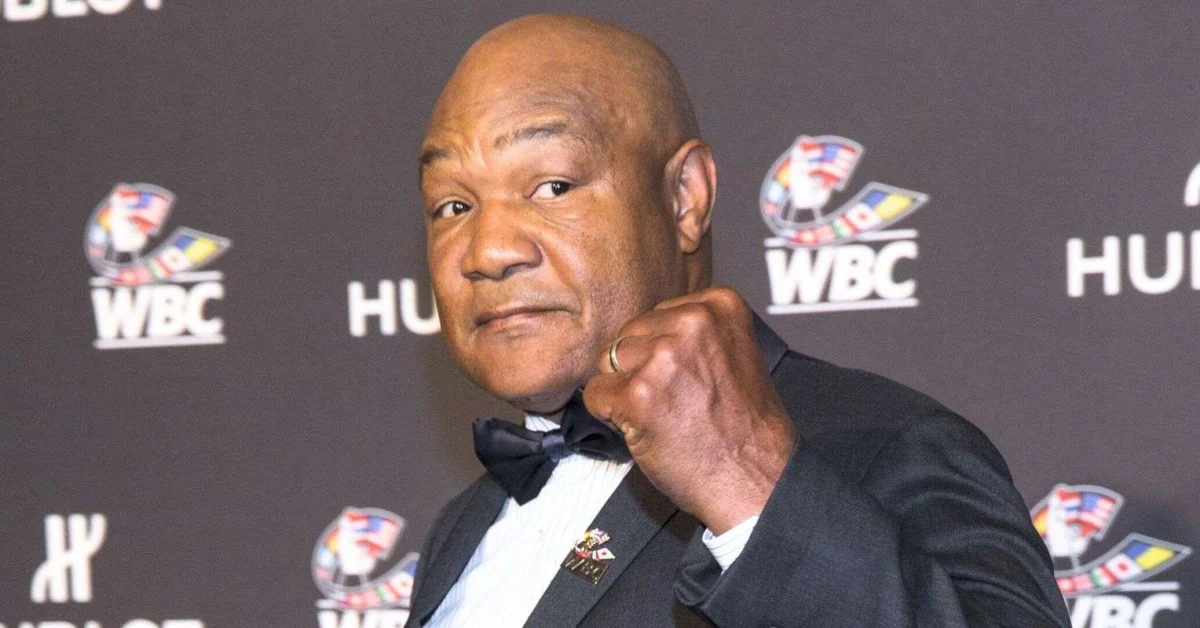
George Foreman occupies a singular, towering space in the rich and often brutal history of professional boxing as the only man to capture the heavyweight championship of the world in two distinct eras separated by nearly two decades. During his first dominant reign in the 1970s, the late and legendary Foreman was viewed as an intimidating force of nature—a menacing, destructive puncher who tore through the division with terrifying ease. In his second incarnation, however, he transformed into the ultimate sporting underdog: a middle-aged veteran competing in a glamorous, high-stakes sport that historically belonged to the young and explosive. Yet, in November 1994, he achieved what the entire sporting world had long considered utterly unthinkable.
At the remarkable age of 45, a weathered and heavy-footed Foreman stepped into the ring to challenge the undefeated, unified WBA and IBF heavyweight champion, Michael Moorer. The championship bout carried profound historical significance, pitting youth and supreme athleticism against veteran guile and immortal puncher’s power. Moorer entered the contest holding an unblemished professional record and boasting the prestigious distinction of being the world’s very first southpaw heavyweight champion. At just 26 years old, Moorer was fast, aggressive, and brimming with the confidence of a prime athlete who had only recently defeated the legendary Evander Holyfield to claim the world titles.
In stark contrast, Foreman appeared to many observers as a relic of a bygone era. Significantly heavier, noticeably slower, and carrying the accumulated mileage of a long career, Foreman was widely and ruthlessly dismissed by boxing critics, analysts, and odds-makers alike. Leading up to the opening bell, mainstream sentiment viewed the championship matchup as an extreme mismatch—a dangerous and unnecessary risk for an aging legend who had already cemented his legacy decades prior. For the vast majority of the championship fight in Las Vegas, that critical consensus appeared entirely accurate, playing out precisely as the skeptics had predicted.
Moorer completely controlled the early and middle rounds with superior speed, fluid movement, and crisp combinations. His southpaw stance continually baffled Foreman, who plodded forward methodlessly, absorbing punches while remaining remarkably calm and composed under heavy fire. From the corner, Foreman’s training staff urged their veteran fighter to increase his output, throw more combinations, and alter the momentum of the bout. Yet, Foreman resisted the panic, maintaining his defensive shell, absorbing the punishment, and waiting patiently for an opening that may or may not ever arrive.
Then, in the tenth round, the dramatic turning point of the fight materialized with sudden, violent clarity. Foreman backed Moorer toward the canvas ropes, trapping the younger champion in a momentary lapse of positioning, and unleashed a textbook, lightning-fast one-two combination. The right hand caught Moorer clean, sending the undefeated champion dropping instantly to the canvas. Moorer was unable to recover his senses or beat the referee’s count, bringing a dramatic and stunning halt to the contest. With that single, devastating punch, George Foreman officially became the oldest heavyweight champion in boxing history, once and for all silencing every remaining doubter and skeptic across the global sporting landscape.
The extraordinary victory in Las Vegas resonated far beyond a simple display of raw power, tactical patience, and championship pedigree; it cemented itself immediately as one of the greatest and most inspirational comeback stories in the history of modern athletics. Nearly two decades earlier, George had suffered a devastating defeat to Muhammad Ali in the famous "Rumble in the Jungle" in Zaire, an emotional and physical setback that eventually led him away from the sport entirely. He spent many subsequent years serving faithfully as an ordained Christian preacher, preaching from a pulpit and stepping away from the squared circle before making a highly scrutinized and improbable return to professional boxing.
On that unforgettable night in Las Vegas, Foreman successfully completed a remarkable circle of personal redemption, athletic achievement, and historical greatness. Reflecting on the tactical brilliance and inner vision that guided his historic victory over Moorer, Foreman famously revealed the deliberate strategy behind his seemingly passive performance throughout the early rounds. Nobody had any idea that he was quietly setting up the knockout all night long, harboring the steadfast belief born from a vivid dream that he would ultimately overcome and knock out Michael Moorer before the opening bell had ever even rung.