


As the fitness technology market continues to expand into specialized combat sports, a growing wave of electronic punch trackers, smart sensors, and companion mobile applications have promised to revolutionize boxing training. Marketed as high-tech tools designed to optimize athletic performance, increase output, and gamify otherwise routine training sessions, these devices typically retail for a couple hundred dollars. They claim to offer metrics ranging from simple punch counts to velocity and force estimations. However, the core question remains whether these gadgets deliver genuine value to athletes, and which models, if any, stand out in a crowded marketplace.
To find out, veteran boxing insiders and dedicated practitioners with years of hands-on experience have put popular systems—including PunchLab, FightCamp, Hykso, Corner, Everlast PIQ, StrikeTec, and various generic alternatives—through rigorous, long-term testing. The general consensus from experienced fighters and coaches suggests a complicated relationship between high-tech wearables and the realities of traditional boxing development. While fitness enthusiasts and casual practitioners often find appeal in the interactive nature of these devices, serious competitors view them through a lens of skepticism, pointing to fundamental limitations in accuracy, convenience, and the ability to measure what truly matters in the ring.
What Are Boxing Punch Trackers and How Do They Function?
Often described by developers as the Fitbit for the hands, boxing performance and fitness trackers are designed to monitor specific aspects of a user’s physical output during training. Just as a standard fitness band tracks daily step counts or sleep patterns, a boxing sensor aims to quantify how many punches a fighter throws over a given period. Depending on the sophistication of the hardware, some devices attempt to differentiate between straight punches like jabs and crosses versus curved strikes like hooks and uppercuts. Advanced marketing materials frequently tout metrics such as "G-force" or "power," though experienced reviewers note that these calculations are often generalized estimates rather than precise physical measurements, serving primarily to expand the perceived utility of the device.
Proponents of these fitness trackers generally point to two distinct user bases that benefit from the technology: professionals seeking marginal gains and beginners looking for engagement. In theory, elite fighters are perpetually curious about training innovations that might provide a competitive edge, and a reliable punch-counting metric could theoretically assist during specific conditioning phases. Meanwhile, casual users and novices training independently are drawn to the gamification aspect. Strapping on a high-tech sensor and connecting it to a smartphone provides a layer of interactivity that makes solo workouts more stimulating, particularly for individuals training without the guidance of a traditional gym environment or a dedicated coach.
Despite these appealing concepts, seasoned boxing analysts harbor notable reservations regarding the practical application of punch sensors. Chief among these concerns is that trackers measure quantity rather than quality. Traditional boxing trainers focus heavily on defensive posture, footwork, weight distribution, proper mechanics, and precision—nuances that a wrist- or hand-worn accelerometer cannot effectively evaluate. Critics argue that relying on trackers can inadvertently encourage poor technique, as users naturally gravitate toward maximizing their score by throwing faster, shallower punches rather than maintaining proper form. Furthermore, because these devices are optimized primarily for heavy bag work and shadowboxing, they find little practical use during dynamic, unpredictable activities like live sparring or rapid mittwork, where the focus shifts entirely to tactical adaptation rather than raw output.
Evaluating the Market: From PunchLab to FightCamp and Beyond
Among the available options tested over extended periods, different platforms have emerged with distinct approaches to hardware and software integration. PunchLab adopts a uniquely minimalist strategy by eliminating wearable hand sensors entirely. Instead, users download a mobile application and strap their smartphone directly to the heavy bag using a specialized belt. The phone’s internal sensors register the impact of the strikes, allowing the app to track punch frequency while providing an interactive visual interface right in the line of sight. Beyond basic tracking, PunchLab’s strength lies in its extensive library of workouts and instructional content led by experienced boxing coaches, emphasizing purist technique and making it a preferred choice for long-term usability without the hassle of cumbersome hand-wraps or secondary gadgets.
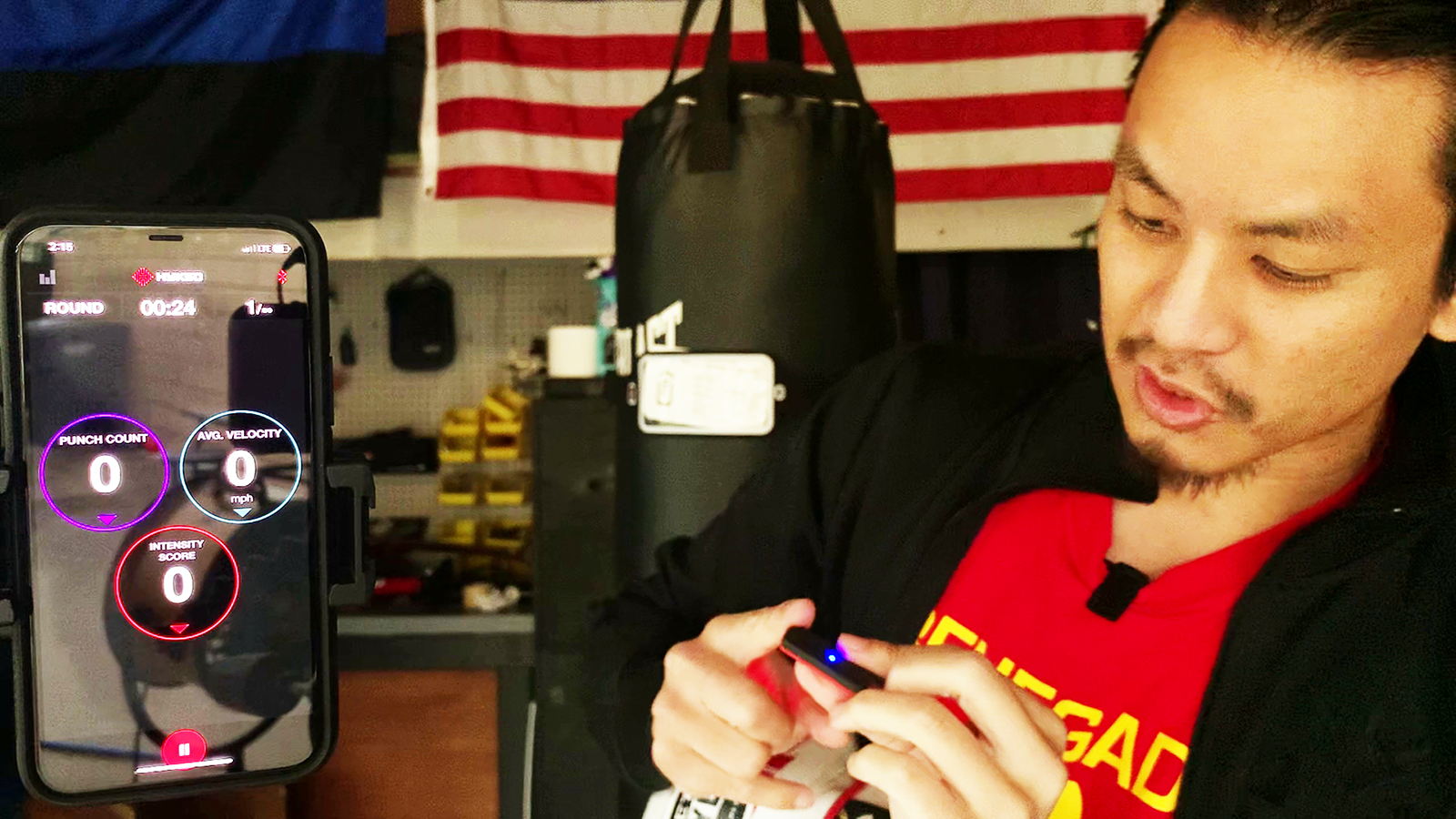
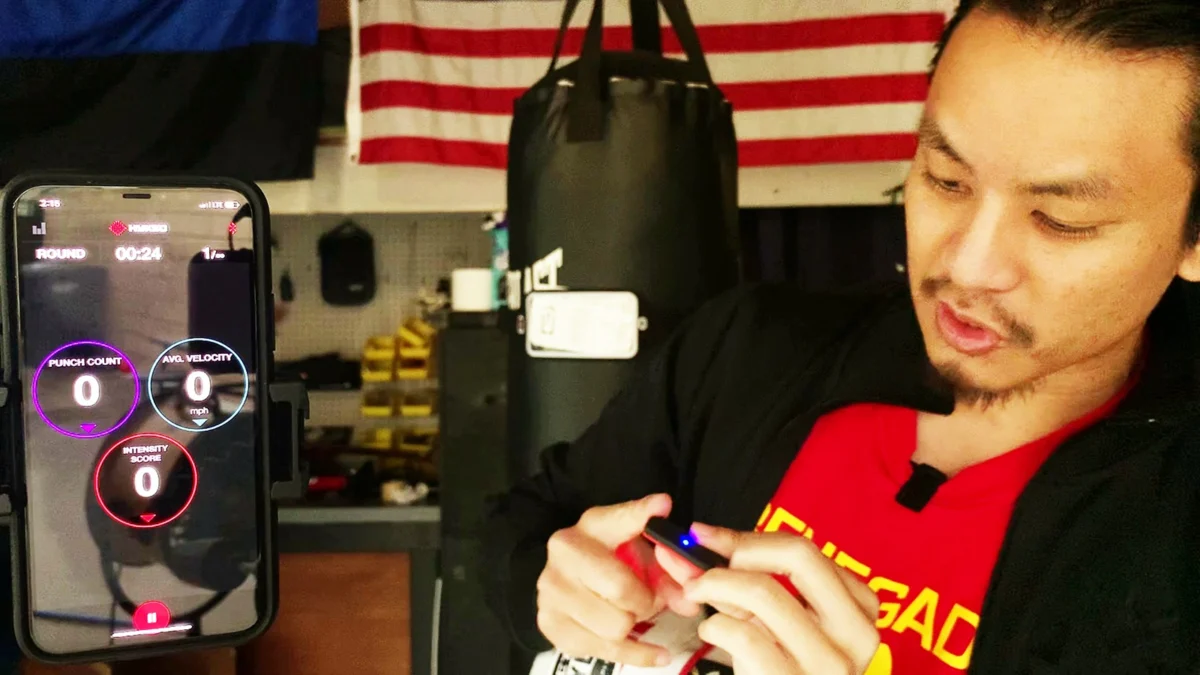
FightCamp, which evolved from the earlier Hykso platform, represents a more traditional hardware-based approach and stands as one of the most recognizable brands in the industry. Utilizing sleek, dedicated trackers that distinguish between left and right hands via color-coded LED lights, the system connects easily to mobile devices. While early iterations of the technology focused narrowly on counting straight punches and measuring velocity, the broader FightCamp ecosystem has evolved into a comprehensive home fitness platform. Backed by polished user interface design, professional instruction from figures with authentic amateur and professional backgrounds, and structured workout programs, FightCamp offers a high-end digital experience, though it requires a significant financial investment for both the physical hardware and ongoing subscription content.
Corner approaches the market primarily as a home fitness application that happens to incorporate well-designed hand trackers. The platform offers a wide variety of classes that extend beyond pure boxing into general conditioning, appealing strongly to users seeking diverse home workout routines. While the hardware itself is praised for its comfortable strap design and ease of use, the app’s primary focus on general fitness instruction means that diehard boxing purists may find the experience leans too far away from traditional combat sports training. Nevertheless, seamless integration with music streaming services and an intuitive interface make it an accessible entry point for casual practitioners.
Everlast PIQ enters the space with advanced tracking hardware capable of gathering a wide array of metrics with notable technical accuracy, backed by a developer experienced in multi-sport sensor technology. The app features comprehensive statistics, leaderboards, and gamified reporting dashboards that appeal to users who enjoy analyzing deep performance data. However, practical drawbacks such as inconsistent battery life, finicky device pairing, and a limited selection of structured training content can diminish long-term engagement. Reviewers note that while the underlying technology is technically impressive, the friction involved in setup and maintenance often discourages consistent use over time.
Other market entrants, such as StrikeTec and various unbranded generic sensors found on online marketplaces, have struggled to establish a lasting foothold. Issues ranging from delayed software rollouts and platform exclusivity—such as launching Android applications long before supporting iOS—to poorly manufactured hardware and abandoned digital infrastructure have left many users frustrated. Reviewers emphasize that generic budget alternatives frequently suffer from poor durability and inaccurate data collection, advising prospective buyers to approach low-cost unbranded sensors with extreme caution.
Ultimately, while the current generation of boxing punch trackers offers intriguing technology for fitness enthusiasts and solo heavy bag users, the consensus among experienced fighters remains that electronic sensors are supplementary novelties rather than essential training tools. True development in boxing continues to rely on expert coaching, technical precision, sparring experience, and deliberate practice—elements that digital metrics have yet to successfully quantify.