



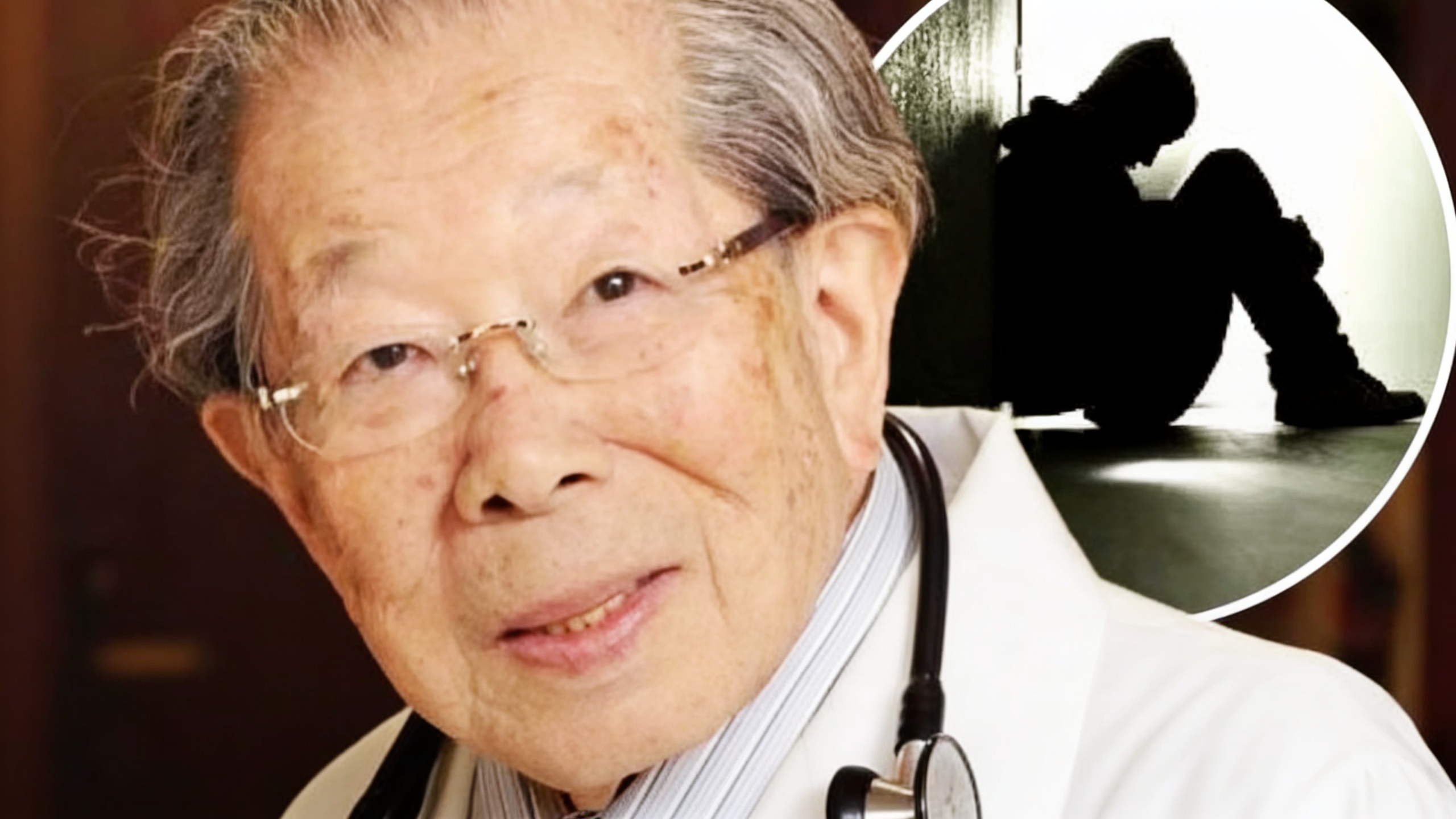
For nearly 18 hours a day, well into his second century of life, Dr. Shigeaki Hinohara operated with a relentless vitality that baffled modern medicine. The renowned Japanese physician, who lived to the age of 105 and remained professionally active until just months before his death in 2017, maintained an appointment calendar booked five years into the future. But Dr. Hinohara’s remarkable longevity was not merely a byproduct of genetic luck or strict adherence to superfoods. Instead, his life’s work and personal philosophy challenged conventional retirement wisdom, pointing to non-physical and psychological factors that he believed accelerate biological aging far faster than nature ever intended.
Long before modern longevity clinics and biohacking trends dominated wellness media, Dr. Hinohara was quietly rewriting the playbook on human aging. His philosophy suggested that most people actively age themselves prematurely through lifestyle habits, societal expectations, and a profound lack of personal purpose. What he discovered during a medical career spanning nearly eight decades goes far beyond the standard advice of eating clean and exercising regularly, offering a compelling look at the intersection of psychology, public health, and human lifespan.
The Doctor Who Rewrote Japan’s Longevity Playbook
Dr. Hinohara served as chairman emeritus of St. Luke’s International University and honorary president of St. Luke’s International Hospital in Tokyo. Throughout his illustrious career, he was widely credited with helping establish Japan as the undisputed global leader in longevity. He was a tireless advocate for annual medical checkups and preventive health measures, policies that fundamentally shaped Japanese public health infrastructure and contributed to the nation’s exceptional life expectancy averages for decades.
His international fame surged later in life, particularly following a landmark 2009 interview with The Japan Times journalist Judit Kawaguchi. That interview offered the world a rare window into the counterintuitive principles that kept him vital, sharp, and deeply engaged past his centennial birthday. Among his most arresting assertions was a direct challenge to fundamental assumptions about human energy: "Energy comes from feeling good, not from eating well or sleeping enough."
For a society obsessed with caloric intake, macro splits, and sleep tracking, Dr. Hinohara’s perspective was radical. He argued that vitality is fundamentally an emotional and psychological output rather than a purely physiological one. When an individual feels motivated, valued, and connected, the body responds with resilience.
The Retirement Trap Nobody Talked About
One of the cornerstones of Dr. Hinohara’s philosophy was a fierce opposition to the conventional retirement age. He frequently pointed out the historical flaw in standard retirement models, noting that when Japan initially established 65 as the standard retirement age, the average national life expectancy was a mere 68 years. Maintaining that same threshold decades later, when life expectancies routinely surpassed 80 and 90 years, made little sense to him.
More importantly, Dr. Hinohara argued that the concept of retirement itself could trigger rapid biological and cognitive decline. When an individual’s daily structure, professional identity, and sense of purpose vanish overnight, the sudden vacuum often unleashes stress and apathy that accelerate aging. His own life served as the ultimate proof of concept. By continuing to see patients, lecture, write books, and manage hospital administration until the final months of his life at 105, he maintained a level of cognitive sharpness and physical capability that completely defied typical aging trajectories.

Modern scientific research increasingly validates this perspective. Extensive population studies examining ikigai—the traditional Japanese concept roughly translating to a "reason for being"—consistently demonstrate that maintaining a robust sense of purpose correlates strongly with a reduced risk of cardiovascular disease, lower rates of cognitive impairment, and a significantly extended lifespan.
Hidden Aging Accelerators Beyond Physical Health
While Dr. Hinohara’s public-facing advice often highlighted practical habits like staying busy, eating sparingly, and choosing stairs over elevators, his broader philosophy delved deeply into the psychological and social drivers that age human beings faster than biology alone dictates.
Public health research underscores the dangers of social isolation, a factor Dr. Hinohara intuitively understood through his decades of interacting with elderly patients. Landmark studies led by researchers such as Julianne Holt-Lunstad at Brigham Young University have shown that chronic social isolation increases the risk of premature mortality by roughly 26 percent, an impact comparable to smoking 15 cigarettes a day. Loneliness is not merely an emotional burden; it triggers systemic inflammatory responses in the human body that accelerate cellular aging over time. Chronic inflammation damages delicate tissues, weakens immune defenses, and speeds up deterioration across multiple major organ systems, proving that human social bonds are just as vital to survival as nutrition or exercise.
Similarly, the absence of purpose functions as a silent catalyst for decline. Research stemming from the analysis of global "Blue Zones"—regions where exceptional longevity clusters naturally—frequently identifies a powerful, sustaining sense of purpose as a primary common denominator among centenarians. Individuals who wake up with clear goals and meaningful responsibilities exhibit superior cognitive preservation and lower rates of chronic illness, extending their healthspan far beyond what traditional risk factors might predict.
Dr. Hinohara also warned against the biological toll of chronic resentment and unresolved anger. Carrying long-term emotional grievances creates a persistent physiological stress state that elevates cortisol levels and continuously triggers inflammatory pathways in the body. Behavioral psychology and cellular biology research indicate that these chronic negative emotional states can measurably accelerate telomere shortening, effectively degrading the protective caps at the ends of chromosomes that serve as a primary biological marker of cellular aging.
Hinohara’s Actual Daily Practices
Despite presiding over a grueling schedule that frequently stretched across 18 hours, Dr. Hinohara’s personal daily routine was remarkably spartan. His nutritional habits famously flew in the face of modern wellness trends that advocate for heavy, protein-dense breakfasts or complex dietary protocols. For breakfast, he reportedly consumed little more than a tablespoon of olive oil and a cup of coffee, sometimes accompanied by a glass of orange juice with a tablespoon of olive oil mixed in. Lunch was often minimal or skipped entirely when he was busy, and dinner consisted primarily of vegetables, a small amount of fish, and a modest portion of rice.
This austere approach starkly contradicted popular health advice emphasizing abundant nutrition, frequent meals, and strict work-life balance. Yet, stripped of excess, his daily routine optimized his time for what he valued most: meaningful work, human connection, and intellectual curiosity.
Beyond his diet, Dr. Hinohara maintained an insatiable curiosity about the world around him. He frequently emphasized the joy found in music, animals, and art, believing that aesthetic and intellectual engagement protected the mind against stagnation. Modern neuroscience supports this view through the lens of neural plasticity—the brain’s capacity to continuously form new neural connections in response to novel experiences, learning, and stimulation. Rigid routines and intellectual retirement can accelerate cognitive decline by depriving the brain of the challenges it needs to remain adaptive.
Physical Inactivity and Modern Longevity
While psychological factors took center stage in Dr. Hinohara’s philosophy, he never downplayed the importance of physical movement. Rather than committing to grueling, structured gym regimens, he wove physical activity naturally into the fabric of his everyday life. His steadfast habit of taking the stairs instead of elevators accumulated a significant volume of daily physical movement over the decades, protecting his joint mobility, cardiovascular health, and muscular strength without requiring formal workouts.
Extensive epidemiological research continues to highlight a sedentary lifestyle as one of the most powerful predictors of accelerated biological aging and early mortality. Daily movement directly influences mitochondrial function, insulin sensitivity, and vascular health. Small, consistent physical choices, compounded over decades, create a formidable defense against the physical deterioration often assumed to be an inevitable part of growing older.
Reframing Aging Beyond Biology
Dr. Shigeaki Hinohara’s extraordinary life suggests that the acceleration of aging stems heavily from human choices regarding meaning, emotional connection, and intellectual engagement, rather than being solely dictated by genetics or baseline physical health. His philosophy fundamentally challenges contemporary assumptions about retirement timing, appropriate activity levels, and what constitutes a healthy life past the age of 65.
This realization holds profound practical implications because psychological and social factors remain modifiable throughout the entire human lifespan. Unlike fixed genetic predispositions, personal purpose can be actively cultivated at any stage, feelings of social isolation can be addressed through community engagement, and intellectual curiosity can be rekindled regardless of how many birthdays have passed.
Ultimately, Dr. Hinohara’s life and legacy demonstrate that working late into life does not inherently mean aging faster—provided that the work itself delivers genuine meaning, autonomy, and fulfillment rather than a mere sense of obligation. As modern medical science continues to validate the deep connections between psychological well-being and cellular health, the Japanese physician’s century-long experiment stands as a powerful reminder that how we live in our minds and communities matters just as much as how we care for our physical bodies.